
Unveiling the secrets of hydrogen compressors: working principles and future prospects for multi-field applications
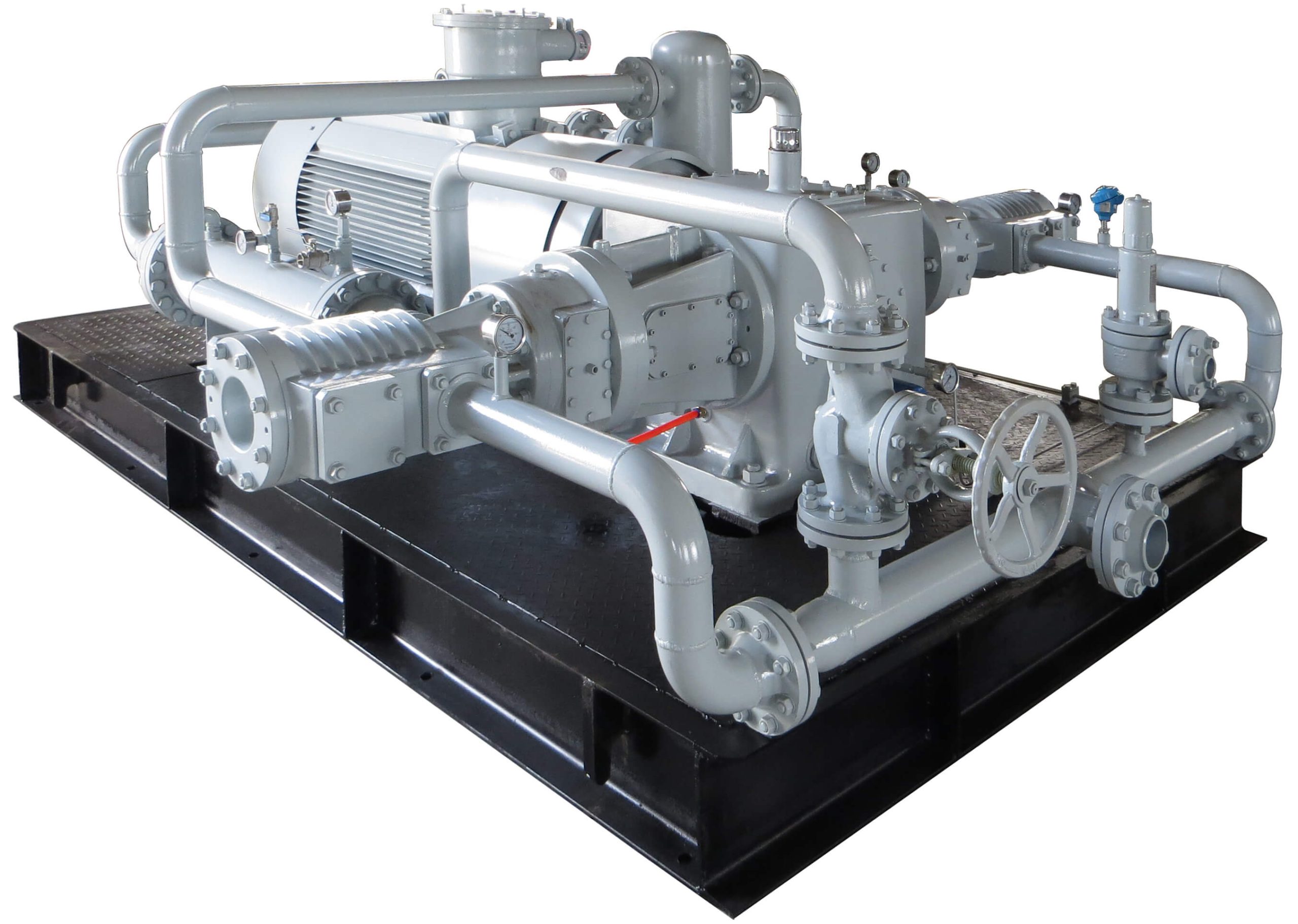
Under the current global energy transformation and sustainable development background, hydrogen energy is being regarded as an important part of the future energy system with its unique clean, efficient and renewable characteristics. From the production, high-pressure storage, efficient transportation to terminal application of “green hydrogen”, the construction and development of the entire hydrogen energy industry chain cannot be separated from the support of a series of key technologies, among which hydrogen compressors play a vital role. It is not only a bridge connecting hydrogen production and consumption, but also a core equipment to ensure the economic feasibility and wide application of hydrogen energy. This article will deeply analyze the multiple working principles of hydrogen compressors, their wide application in various industries, and conduct a forward-looking analysis of future market prospects and challenges, aiming to provide a comprehensive and in-depth perspective for people inside and outside the industry to jointly explore the huge potential of hydrogen energy in sustainable development.
Working principle of hydrogen compressor: in-depth analysis of various technical routes
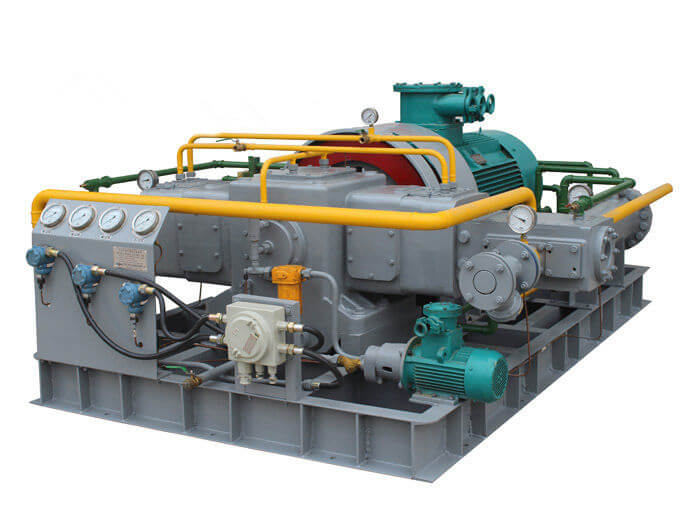
Hydrogen compressor is a key equipment for hydrogen pressurization, storage and transmission. Its core working principle is to increase low-pressure hydrogen to the required high-pressure state to meet the needs of different application scenarios. According to the different ways of achieving compression, hydrogen compressors can be mainly divided into two categories: positive displacement compressors and speed compressors, each with unique technical characteristics and scope of application.
Positive displacement compressors: the main force of high-pressure compression
Positive displacement compressors compress gas by changing the volume of the working chamber. This type of compressor usually has a high compression ratio and pressure range, and is particularly suitable for the compression needs of high-pressure hydrogen.
Reciprocating piston compressor: a stable and reliable cornerstone
Working principle refinement: The reciprocating piston compressor drives the crankshaft connecting rod mechanism through an electric motor to drive the piston to perform periodic linear reciprocating motion in the cylinder. When the piston moves backward, the cylinder volume increases, forming a negative pressure, and low-pressure hydrogen enters the cylinder through the suction valve; when the piston moves forward, the cylinder volume decreases, the hydrogen is compressed, and when the pressure reaches the exhaust pressure, the exhaust valve opens and the high-pressure hydrogen is discharged. In order to achieve higher pressure, multi-stage series compression is usually used, that is, the hydrogen compressed in the previous stage is cooled and enters the next stage for further compression. The compression ratio of each stage is usually controlled at around 3-4 to ensure efficiency and safety.
Features of hydrogen application: In view of the characteristics of small hydrogen molecules (easy to leak), flammable and explosive, and easy to hydrogen embrittlement, reciprocating piston hydrogen compressors must meet strict requirements in design and manufacturing.
Sealing technology: Piston rings and packing seals made of special materials (such as PTFE, PEEK, etc.), as well as high-precision processing technology, ensure that hydrogen leakage is minimized. Some advanced designs also use labyrinth seals or magnetic bearings to further improve sealing performance and reduce friction and wear.
Explosion-proof and safety: The design of the whole machine must comply with explosion-proof standards such as ATEX, and be equipped with multiple safety interlock systems such as gas leak detection, overpressure protection, overtemperature protection, and emergency shutdown.
Hydrogen embrittlement protection: Special alloy materials (such as stainless steel, nickel-based alloys) are selected and surface treated to resist material embrittlement caused by hydrogen.
Cooling system: The high-pressure compression process will generate a lot of heat, and an efficient water cooling or air cooling system must be equipped to reduce the hydrogen temperature and improve compression efficiency and safety.
Application scenarios: Widely used in hydrogen refueling stations (especially small and medium-sized hydrogen refueling stations, with pressures up to 70MPa or even higher), industrial hydrogen supply, long-tube trailer filling and other fields.
Diaphragm compressor: Guardian of pure hydrogen
Working principle details: Diaphragm compressor is a special reciprocating compressor. It drives the flexible metal diaphragm (usually a multi-layer stainless steel or nickel-based alloy diaphragm) to reciprocate through hydraulic oil (or mechanical force), and the diaphragm completely isolates the cylinder from the piston oil chamber. Hydrogen is compressed on the other side of the diaphragm, so hydrogen does not come into contact with any lubricant, fundamentally avoiding oil contamination.
Core advantages:
Oil-free compression: This is its most significant feature, ensuring the high purity of hydrogen, especially suitable for applications with extremely high requirements for hydrogen purity such as fuel cells, electronics industry, and semiconductor manufacturing.
High sealing: The physical isolation of the diaphragm effectively prevents gas leakage, which is particularly important for hydrogen, a medium that is prone to leakage.
High pressure: The single-stage compression pressure can reach tens of MPa, and the multi-stage series can reach hundreds of MPa, which can meet the storage and transportation needs of extremely high pressure.
Limitations: The structure is relatively complex, and the fatigue life of the diaphragm is a key technical indicator, which has extremely high requirements for diaphragm materials and manufacturing processes. The initial investment and maintenance costs are usually higher than piston compressors.
Application scenarios: Mainly used in hydrogen refueling stations (especially hydrogen refueling stations with strict requirements on hydrogen purity), special gas filling, laboratory research, and hydrogen purification and separation processes.
Screw compressor: An ideal choice for medium and low pressure and large flow
Working principle refinement: The screw compressor rotates by a pair of intermeshing spiral rotors (male rotor and female rotor). As the rotor rotates, the volume between the teeth continues to decrease, thereby compressing and discharging the inhaled hydrogen.
Hydrogen application characteristics:
Dry operation: The screw machine used for hydrogen compression usually adopts a “dry” design, that is, there is no oil in the compression chamber, and it relies on precision-machined rotor gaps and special coatings to achieve contactless operation to avoid oil contamination of hydrogen.
Continuous and stable: The gas compression process is continuous, the exhaust pulsation is small, the operation is smooth, and the vibration and noise are low.
Compact structure: Compared with the reciprocating piston machine, the screw machine is smaller in size and easier to install and maintain.
Scope of application: It is mainly suitable for medium and low pressure and large flow hydrogen compression scenarios, such as boosting of large hydrogen production plants, first station pressurization of hydrogen pipeline transportation, etc. For ultra-high pressure applications, screw machines are usually used as pre-compression stages in conjunction with reciprocating piston machines or diaphragm machines.
Speed compressors: Potential stocks for large-scale hydrogen transportation
Speed compressors work on gas through high-speed rotating impellers, converting energy into kinetic energy, and then converting kinetic energy into pressure energy through diffusers. This type of compressor is usually suitable for large flow and continuous operation.
Centrifugal compressors: a combination of high flow and stability
Working principle refinement: Centrifugal compressors inhale hydrogen from the center through high-speed rotating impellers. Under the action of centrifugal force, hydrogen is thrown to the periphery of the impeller, and the speed and pressure increase at the same time. Then, the hydrogen enters the diffuser, the flow rate decreases, and the pressure increases further.
Hydrogen application characteristics: Due to the extremely small molecular weight of hydrogen and the high sound speed, the impeller design of the centrifugal compressor is significantly different from that of traditional air or natural gas compressors, requiring higher speeds and special blade designs to achieve the required compression ratio.
Core advantages: large flow, continuous and stable operation, low vibration, and low foundation requirements.
Limitations: The single-stage compression ratio is relatively low, and multiple stages in series are required to achieve higher pressures. For high-pressure hydrogen, up to dozens of impellers are usually required in series, which is complex and costly.
Application scenarios: Mainly used in hydrogen transportation in large hydrogen production plants, pre-compression of hydrogen storage facilities, and booster stations in future large-scale hydrogen pipelines.
Axial flow compressor: the future direction of ultra-large-scale applications
Working principle refinement: In an axial flow compressor, the gas flows in the axial direction, and the gas speed and pressure are gradually increased through the alternating action of multi-stage rotor blades and stator blades.
Core advantages: high efficiency, huge flow, suitable for ultra-large-scale hydrogen transportation.
Limitations: The structure is extremely complex, and the requirements for blade design, processing accuracy and installation are extremely high. The cost is expensive. Currently, it is rarely used in the hydrogen field. It is mainly in the research and concept verification stage. In the future, it may be used in ultra-large hydrogen transmission pipelines or hydrogen liquefaction plants.
Outlook for new compression technologies: solid compression and liquid piston compression
In addition to traditional mechanical compression methods, some innovative hydrogen compression technologies are also developing and are expected to play an important role in specific fields:
Solid (adsorption) compression: The adsorption and desorption characteristics of hydrogen are cycled by certain materials (such as metal hydrides, MOFs, etc.) at different temperatures and pressures to achieve hydrogen compression. Its advantages are no mechanical moving parts, low noise, and no leakage risk, but it is still in the research and development stage, and the compression efficiency and cycle life need to be improved.
Liquid piston compression: Liquid pistons are used to compress hydrogen. The gas does not directly contact the solid piston, which reduces friction and wear, and also reduces the risk of leakage. This technology usually has high reliability and low maintenance costs, but the efficiency and compression ratio may be limited.
Application fields of hydrogen compressors: key force driving hydrogen economy
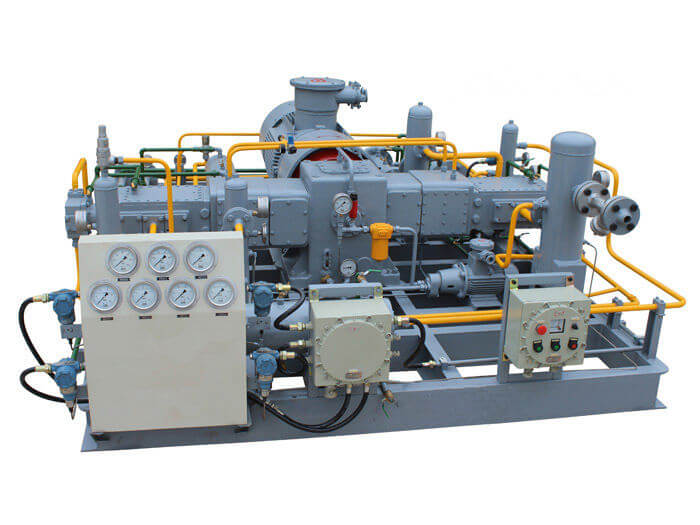
As the core hub of the hydrogen energy industry chain, hydrogen compressors cover almost every link from hydrogen production to utilization, and are the cornerstone of building a complete hydrogen energy ecosystem.
Hydrogen refueling station: energy supply station for fuel cell vehicles
Core role: Hydrogen refueling stations are key infrastructure connecting the hydrogen energy supply side with terminal applications such as fuel cell electric vehicles (FCEV). Hydrogen at hydrogen refueling stations usually comes from pipeline transportation, trailer transportation or on-site hydrogen production, and hydrogen compressors are responsible for pressurizing these low-pressure hydrogen to the 35MPa or 70MPa or even higher pressure required by the vehicle hydrogen storage tank (may reach 700bar/70MPa in the future).
Technical requirements:
High pressure and fast filling: It is necessary to complete the filling of high-pressure hydrogen with a large flow rate in a short time to ensure that the filling efficiency is close to that of traditional fuel vehicles.
Safety: Strict explosion-proof design, leak detection, and emergency shut-off system are essential to ensure safe operation.
Energy efficiency and reliability: The energy consumption of the compressor directly affects the cost of hydrogenation. The long-term stable operation of the equipment is the premise for ensuring the service capacity of the hydrogenation station.
Mainstream choice: At present, hydrogenation stations mostly use reciprocating piston compressors and diaphragm compressors. In particular, diaphragm compressors are more popular because of their oil-free characteristics, which can ensure the strict requirements of fuel cells for hydrogen purity.
Challenge: The investment cost of hydrogenation station compressors is still high, which is one of the main factors affecting the construction and operation costs of hydrogenation stations.
Hydrogen energy storage and transportation: Improving hydrogen energy density and transportation efficiency
High-pressure gas storage and transportation: Hydrogen has extremely low energy density at normal temperature and pressure. By compressing to 20MPa, 35MPa, or even above 90MPa, its energy density can be greatly increased, thereby realizing tube bundle trailer transportation or pipeline transportation. The compressor is responsible for pressurizing the hydrogen so that it can be filled into high-pressure storage tanks or directly transported.
Liquid storage and transportation (pre-compression required): Hydrogen liquefaction needs to be carried out at extremely low temperatures (-253℃), and pre-compression is usually required before liquefaction. Although the liquefaction process mainly relies on refrigeration technology, compressors still play a key role in liquefaction plants to provide high-pressure hydrogen for subsequent low-temperature liquefaction.
Underground hydrogen storage (geological hydrogen storage): Large-scale underground hydrogen storage using abandoned oil and gas fields, salt caverns, aquifers, etc. usually requires high-pressure compressors to inject hydrogen into the ground and extract it when needed.
Pipeline transportation: With the expansion of the scale of hydrogen application, the construction of dedicated hydrogen pipelines or the use of existing natural gas pipelines for hydrogen blending and transportation will become a trend. Hydrogen compressors will set up pressurization stations along the pipeline to overcome pipeline friction and ensure long-distance transmission of hydrogen.
Industrial production: Hydrogen as a key support for production factors
Petrochemical industry: Hydrogen is an indispensable raw material in the hydrocracking and hydrorefining processes of refineries. It is used to remove impurities such as sulfur and nitrogen and improve the quality of oil products. The compressor pressurizes the hydrogen produced by the hydrogen production unit to the pressure required for the reaction.
Synthetic ammonia/methanol: Hydrogen is the key raw material for synthetic ammonia and synthetic methanol. Large-scale chemical production has extremely high requirements for hydrogen flow and stability, and usually requires large industrial-grade hydrogen compressors.
Electronic industry: In the fields of semiconductor manufacturing, optical fiber stretching, LED production, etc., high-purity hydrogen is used as a reducing atmosphere or carrier gas, and has extremely strict requirements on purity and dew point. Diaphragm compressors or oil-free reciprocating piston compressors are usually used.
Metallurgical industry: Hydrogen is used as a reducing atmosphere in powder metallurgy and a protective atmosphere in metal heat treatment. In the future, hydrogen direct reduction iron (DRI) technology will be widely used, and the demand for hydrogen compressors will be huge.
Float glass: In the glass production process, hydrogen is used as a protective gas in the furnace to prevent tin bath oxidation and ensure glass quality.
Fuel cell power generation: a channel for hydrogen to be converted into electrical energy
Fixed power generation: large fuel cell power stations (such as megawatt-level) or small distributed power sources require a hydrogen supply system to provide hydrogen with stable pressure before operation. The compressor is responsible for pressurizing the external low-pressure hydrogen to the working pressure required by the fuel cell system.
Backup power supply/emergency power supply: Hydrogen fuel cells are used as backup power supplies for data centers, communication base stations, hospitals, etc., and their hydrogen storage and gas supply are also inseparable from hydrogen compressors.
Other emerging applications: Expanding the boundaries of hydrogen energy
Hydrogen metallurgy (green steel): Using hydrogen to replace traditional coke to achieve “decarbonization” in the steel production process is an important way to reduce emissions in the industrial field. This will give rise to a huge demand for ultra-large flow and high-pressure hydrogen compressors.
Hydrogen aviation/shipping: In the future, hydrogen will be used as a clean fuel in the aviation and shipping fields, which will require efficient, lightweight, and compact airborne or shipborne hydrogen compression and storage systems.
Hydrogen rail transit: Hydrogen fuel cell trains, trams, etc. also require reliable hydrogen filling and on-board compression systems.
Market prospects and challenges of hydrogen compressors: opportunities and risks coexist
As the “heart” of the hydrogen energy industry, the future development trajectory of hydrogen compressors is full of unlimited opportunities, but also faces considerable challenges.
Market Prospects: The Golden Age of Hydrogen Energy
The global energy transformation is unstoppable: responding to climate change has become a global consensus, and countries have set carbon neutrality goals. As a clean energy with zero carbon emissions, hydrogen energy has shown great decarbonization potential in many fields such as transportation, industry, and construction, providing a solid macro-driving force for the hydrogen compressor market.
Policies, regulations and strategic guidance: Major economies in the world (such as the European Union, the United States, China, Japan, South Korea, etc.) have all issued national hydrogen energy strategies, and have strongly supported the development of the entire hydrogen energy industry chain through various forms such as fiscal subsidies, tax incentives, and R&D investment, including the construction of hydrogen infrastructure, which directly stimulated the demand for hydrogen compressors.
Technological innovation and cost optimization: With the continuous advancement of materials science, manufacturing processes and control technologies, the efficiency, reliability and safety of hydrogen compressors will continue to improve, while the manufacturing cost will gradually decrease, making it more economically competitive, thereby accelerating market penetration. Modularization, intelligence and integration will become future trends, reducing operation and maintenance costs.
Application areas continue to expand: In addition to traditional industrial applications, the popularization of fuel cell vehicles, the improvement of hydrogen refueling station networks, large-scale green hydrogen production, hydrogen pipeline construction, hydrogen metallurgy, hydrogen power generation and other emerging fields will bring explosive growth in market demand for hydrogen compressors. In particular, with the decline in the cost of “green hydrogen” (hydrogen produced by electrolysis of water from renewable energy), it will further promote the large-scale development of the hydrogen energy industry.
Global cooperation and industrial chain synergy: International cooperation in hydrogen energy technology research and development, standard setting and infrastructure construction is becoming increasingly close, which will help break down technical barriers, form economies of scale, and accelerate the global development of the hydrogen compressor industry.
Challenges: Thorns on the road to success
High-pressure sealing and leakage control: Hydrogen molecules are small in size and highly permeable. Sealing under high pressure is the core technical problem of hydrogen compressors. How to ensure zero or extremely low leakage inside and outside the compressor under long-term operation, high-frequency start-stop and extreme working conditions is the focus of technical research. This requires a combination of special materials, precision machining and advanced sealing structures.
Safety and reliability: The flammable and explosive nature of hydrogen places the highest level of safety requirements on the design, manufacture, installation, operation and maintenance of compressors. Hydrogen compressors must integrate multiple safety protection systems, including explosion-proof design, gas leak detection and alarm, overpressure/overtemperature protection, emergency shutdown, remote monitoring and diagnosis, etc., to ensure rapid response in any abnormal situation and minimize risks. At the same time, ensuring long-term high-reliability operation of equipment and reducing failure rates are crucial for continuously operating facilities such as hydrogen refueling stations.
Cost and economy: At present, the manufacturing cost of high-performance hydrogen compressors is relatively high, especially diaphragm compressors and large industrial compressors. High equipment investment is one of the main factors restricting the construction and operation costs of hydrogen energy infrastructure. How to effectively reduce costs and improve the cost-effectiveness of products through technological innovation (such as standardization, modular design, new material application, and mass production) is an urgent task facing the current industry.
Energy consumption problem: Hydrogen compression is an energy-intensive process. In the multi-stage high-pressure compression process, how to maximize the compression efficiency and reduce the energy consumption per unit of compressed hydrogen is directly related to the terminal use cost of hydrogen and the carbon footprint of “green hydrogen”. The development of more efficient compression technology, optimization of operation strategies, and energy recovery and utilization are key.
Material hydrogen embrittlement: Hydrogen will interact with metal materials under certain conditions, resulting in a decrease in the ductility and toughness of the material, and even brittle fracture, that is, the “hydrogen embrittlement” phenomenon. Hydrogen compressors operate in a high-pressure hydrogen environment, and their key components (such as piston rods, gas valves, seals, etc.) must be made of special materials with excellent hydrogen embrittlement resistance and undergo appropriate surface treatment and heat treatment.
Standardization and testing and certification: The hydrogen energy industry is still in a rapid development stage, and technical standards, test methods and product certification systems around the world are still being gradually improved. The lack of unified and mature standards may bring uncertainty to the design, manufacturing, export and application of products, and hinder market development.
Core technology and components are independently controllable: The core technologies and key components of some high-end hydrogen compressors, such as special diaphragms, high-pressure valves, control systems, etc., may still rely on imports, and there are supply chain risks. Realizing independent control of core technologies and improving the level of localization are strategic needs to ensure the safe development of the hydrogen energy industry.
Conclusion
As an indispensable core equipment in the hydrogen energy industry chain, the technological progress and market development of hydrogen compressors will directly determine the progress of large-scale application of hydrogen energy. Despite facing a series of severe challenges such as high-pressure sealing, safety, cost, energy consumption and hydrogen embrittlement, the hydrogen compressor market is ushering in unprecedented development opportunities with the growing global demand for clean energy, the strong support of governments for the hydrogen energy industry and the continuous deepening of technological innovation.
In the future, hydrogen compressors will develop in the direction of higher efficiency, higher safety, lower cost, greater intelligence and greater integration. All sectors of industry, academia and research need to work closely together to jointly overcome technical difficulties, accelerate the construction of a standard system, and promote the coordinated development of the industrial chain. Only in this way can hydrogen compressors better play their “heart” role and contribute to the widespread popularization of hydrogen energy and the construction of a cleaner and more sustainable energy future.
Request a Quick Quote Now

Shanghai Sollant Energy Saving Technology Co., Ltd.
Drawing on our years of experience and expertise in air separation and PSA technologies, we deliver customized solutions tailored to your specific needs.
