
What should I pay attention to when using a nitrogen compressor?
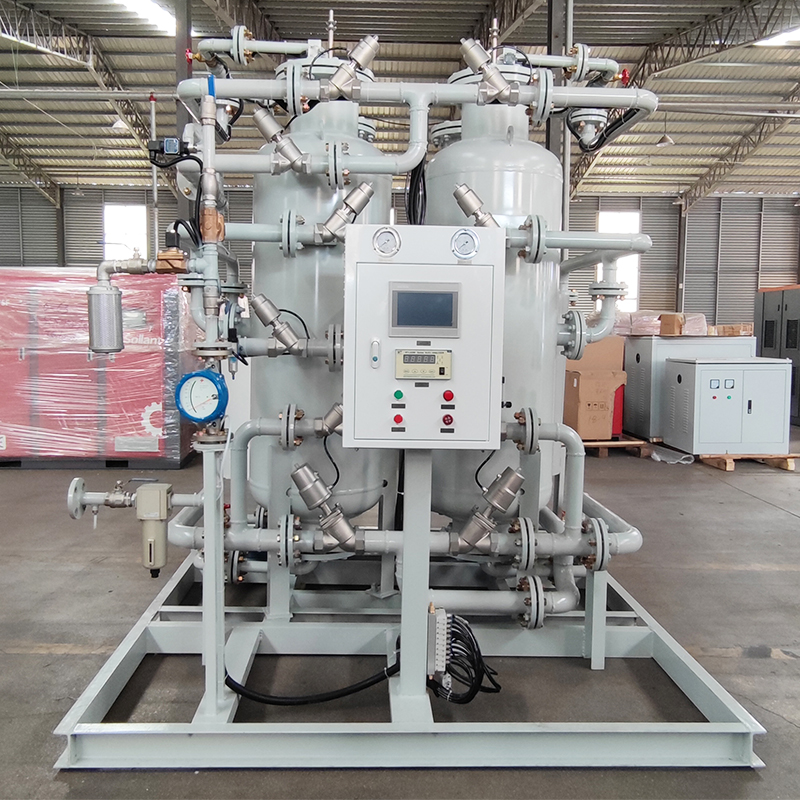
In the process of vigorous development of modern industry, compressed air has become an indispensable key element in the production process of many industrial enterprises. From the manufacturing of precision electronic components to the processing of large-scale mechanical equipment, a large number of production processes are highly dependent on a stable and sufficient supply of compressed air, which makes the deployment of multiple high-power nitrogen compressors inevitable. As a key part of the industrial energy consumption system, the energy consumption of nitrogen compressors accounts for a considerable proportion of the total energy consumption of enterprises, ranging from 8% to 20%. This proportion data clearly shows that there is a huge energy-saving space hidden in the field of nitrogen compressors, which urgently needs industrial enterprises to use advanced technologies and scientific strategies to deeply explore and effectively utilize.
nitrogen compressor energy saving occupies a pivotal position in the entire industrial energy saving system. At present, there are mainly two major technical routes: hardware energy saving and intelligent energy saving. They are like the wings of a bird and the wheels of a car, which jointly help achieve the energy saving goals of nitrogen compressors.
1. Hardware energy saving
Hardware energy saving reduces the energy consumption of nitrogen compressors through a series of specific and effective measures from multiple dimensions such as equipment body, transportation link, operation mode and comprehensive energy utilization. It mainly covers key routes such as equipment efficiency improvement, leakage control, variable frequency speed regulation, and waste heat recovery.
Equipment efficiency improvement

In the long history of industrial development, the production lines of many factories were built early. The technical conditions at that time determined that the equipment used had low energy efficiency, among which the piston nitrogen compressor was a typical representative. With the rapid development of science and technology, screw nitrogen compressors have become the mainstream products in the current nitrogen compressor market with their significant advantages. The screw nitrogen compressor has a clever structural design and a relatively simple internal structure, which greatly reduces the energy loss and potential faults caused by complex components; its small size allows it to be flexibly arranged in a limited production space to improve space utilization; it shows extremely high stability during operation and can continuously and reliably provide stable compressed air for production.
In recent years, screw nitrogen compressor technology has made great progress, and a series of energy-saving products have emerged. The permanent magnet variable frequency screw nitrogen compressor, by introducing permanent magnet technology and variable frequency control, enables the motor to maintain efficient operation under different working conditions, accurately adjusts the output power according to the actual gas consumption, and avoids the energy waste of traditional nitrogen compressors when the gas volume fluctuates. The permanent magnet variable frequency two-stage nitrogen compressor further optimizes the compression structure. Through the two-stage compression method, it significantly improves the compression efficiency and reduces energy consumption. The practical results of many enterprises have fully proved the remarkable results of equipment efficiency improvement. For example, a large machinery manufacturing enterprise, after a comprehensive evaluation of the old piston machines in many of its production lines, resolutely decided to use permanent magnet variable frequency screw nitrogen compressors to replace them. After the transformation, the equipment operation efficiency was greatly improved, the production efficiency was increased by about 20%, and the energy consumption was reduced by about 15%, which not only saved a lot of energy costs for the enterprise, but also enhanced the market competitiveness of the products.
Leakage control
The construction mode of centralized nitrogen compressor room, although it is convenient for the centralized management and maintenance of nitrogen compressors, also brings the problem of long compressed air transmission distance. In the long-distance pipeline transportation process, due to various factors such as pipeline aging, loose joints, and poor valve sealing, the probability of compressed air leakage increases significantly. According to incomplete statistics, the energy loss caused by compressed air leakage in some enterprises is as high as 5%-10% of the total energy consumption.
In order to effectively control this stubborn disease, enterprises need to establish a complete leakage detection and repair mechanism. Regularly conduct meticulous inspections on key parts prone to leakage, such as hoses, joints, and valves. Professional detection tools, such as ultrasonic leak detectors, can accurately locate tiny leaks. At the same time, advanced flow and pressure remote detection devices are introduced, and with the help of Internet of Things technology, these data are transmitted to the monitoring center in real time to achieve 24-hour uninterrupted monitoring of leakage rate and pressure difference. Once an abnormality is found, the system can quickly issue an alarm and quickly locate the leak through data analysis. After implementing this set of leakage control solutions, a chemical company successfully reduced the compressed air leakage rate by 30%, saving hundreds of thousands of yuan in energy costs each year.
Variable frequency speed regulation
The traditional nitrogen compressor starting method mostly adopts star-delta starting. At the moment of starting, the current of the motor will soar to 5-6 times the rated current, which not only has a great impact on the motor’s windings, bearings and other key components, shortening the service life of the motor, but also consumes a lot of electricity during the starting process. Moreover, during operation, the pipeline pressure is controlled by simple start-stop operations. When the pressure reaches the set upper limit, the equipment stops, and restarts when the pressure drops to the lower limit. This extensive adjustment method makes it impossible for the nitrogen compressor to accurately adjust the power according to the actual gas consumption, resulting in high energy consumption.
The emergence of variable frequency speed regulation technology provides an effective solution to this problem. By installing a frequency converter, the nitrogen compressor can achieve soft start, and the starting current is effectively controlled, which greatly reduces the impact on the power grid. During operation, the frequency converter can automatically adjust the motor speed according to the real-time changes in pipeline pressure, thereby accurately controlling the gas production of the nitrogen compressor. When the pipeline pressure increases, the motor speed decreases and the gas production decreases accordingly; conversely, when the pressure decreases, the motor speed increases and the gas production increases. In this way, the nitrogen compressor can always operate in the most energy-saving state. Taking an automobile parts processing plant as an example, after the nitrogen compressor was modified with variable frequency speed regulation, the energy consumption was reduced by about 12%. At the same time, due to the smooth start of the motor, the equipment maintenance cycle was extended and the maintenance cost was also reduced.
Waste heat recovery
During the operation of the nitrogen compressor, a large amount of waste heat will be generated. If this heat cannot be effectively utilized, it will be lost to the environment in vain, causing a huge waste of energy. The traditional air cooling and water cooling methods are only to ensure the normal operating temperature of the nitrogen compressor, but ignore the potential value of waste heat.
Nowadays, with the development of comprehensive energy utilization technology, waste heat recovery has become an important part of nitrogen compressor energy saving. Through the reasonable design of the waste heat recovery system, the waste heat generated by the nitrogen compressor can be used in other production processes, such as material heating and drying processes in the food processing industry, and fabric shaping in the textile industry. Different production processes have different requirements for waste heat parameters such as temperature and flow. Therefore, the waste heat recovery method needs to be customized according to the specific process flow. A food processing company, by installing a set of efficient waste heat recovery devices, introduces the waste heat generated by the nitrogen compressor into the food drying workshop, which can save a lot of natural gas costs every year, while reducing carbon emissions, and achieving a win-win situation of economic and environmental benefits.
2. Smart energy saving
With the rapid development of information technology, smart energy-saving technology has emerged, bringing new ideas and methods for nitrogen compressor energy saving. Smart energy-saving technology integrates cutting-edge technologies such as digital modeling, big data analysis, and AI intelligent algorithms to optimize the operation strategy of nitrogen compressors in an all-round and in-depth manner, effectively making up for the shortcomings of conventional adjustment methods in precise energy saving.
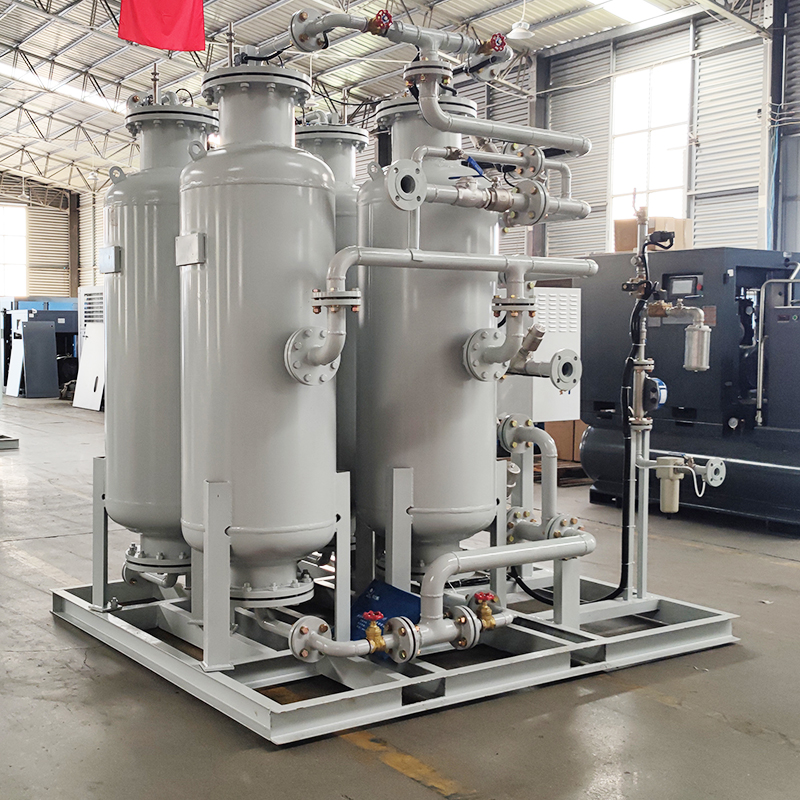
Set economic operation goals
The complexity and dynamics of the production process determine that the demand for compressed air is constantly changing. Through in-depth research and data collection on the production process, the smart energy-saving system can accurately predict the gas consumption and gas pressure in different periods. On this basis, the system can set the minimum gas pressure that meets the production process requirements in real time to avoid the nitrogen compressor from running at too high a pressure and doing useless work. For example, in an electronic manufacturing company, the equipment on the production line has different compressed air pressure requirements in different production links. The smart energy-saving system analyzes the production data in real time and dynamically adjusts the output pressure of the nitrogen compressor, successfully reducing the useless work of the nitrogen compressor by about 20%, and achieving efficient use of energy while ensuring production quality.
Optimize operation strategy
The smart energy-saving system establishes a detailed digital model for each nitrogen compressor, which can accurately simulate the operating status of the nitrogen compressor under different working conditions. By continuously collecting energy consumption data of each nitrogen compressor under different loads, the model is continuously optimized using big data analysis technology to improve the accuracy and reliability of the model. In the actual operation process, the system will simulate the system in advance according to the predicted gas consumption and pressure requirements. For example, when the gas consumption is small, the system will comprehensively consider factors such as the performance, energy consumption, and operating time of the unit, and accurately determine whether it is more energy-saving to let all units run at low frequency, or to stop some units; if you choose to stop the unit, the system will accurately identify the nitrogen compressor with the worst energy efficiency through intelligent algorithms and decisively stop the operation of the equipment. Through this refined operation strategy adjustment, the nitrogen compressor system can always maintain the best operating state and minimize energy consumption.
Cooling system optimization
Large nitrogen compressors are mostly cooled by water cooling, and the energy consumption of the cooling system also accounts for a certain proportion of the total energy consumption of the nitrogen compressor. The intelligent energy-saving system has established accurate models for cooling towers and cooling water pumps, and monitors key parameters such as wet bulb temperature and ambient temperature in real time. When the wet-bulb temperature changes, the system will screen out a variety of adjustment strategies in advance through simulation, such as increasing or decreasing the number of water pumps, increasing or decreasing the speed of cooling tower fans, adjusting the number of cooling towers, etc. By comparing the energy consumption data under different strategies, the lowest energy consumption solution is selected for implementation. Through intelligent optimization of the cooling system, not only can the energy consumption of the cooling system itself be reduced, but also the nitrogen compressor can be guaranteed to operate under the best cooling conditions, thereby improving the overall energy efficiency of the nitrogen compressor.
The smart energy-saving system not only plays a key role in the above three main aspects, but also deeply optimizes many details such as the start-stop control of the equipment and the refinement of pressure regulation, so as to ensure that the overall system achieves the best energy efficiency in all aspects. However, this series of control strategies involves massive data processing and complex calculation and analysis, which can only be achieved with the help of a powerful AI big data system. This is also the core competitiveness of smart energy-saving technology. It deeply integrates industrial production with information technology, and opens up a new development direction for nitrogen compressor energy saving and even the entire industrial energy saving field.
In summary, the energy-saving work of the nitrogen compressor system is a comprehensive project, and hardware energy saving and smart energy saving are interdependent and mutually reinforcing. Hardware energy saving provides a solid material foundation for smart energy saving through equipment upgrades, optimization of transportation links and comprehensive utilization of energy; while smart energy saving relies on advanced technical means to manage the operation of nitrogen compressors in a refined and intelligent manner, further tapping the energy saving potential on the basis of hardware energy saving. Only by organically combining and promoting the two together can the maximum efficiency of nitrogen compressor energy saving be fully utilized, reducing production costs and improving economic benefits for industrial enterprises, and also contributing to the realization of the national strategic goal of energy conservation and emission reduction.
Request a Quick Quote Now

Shanghai Sollant Energy Saving Technology Co., Ltd.
Drawing on our years of experience and expertise in air separation and PSA technologies, we deliver customized solutions tailored to your specific needs.
