
The key role of oilfield oil well gas compressors in oilfield exploitation
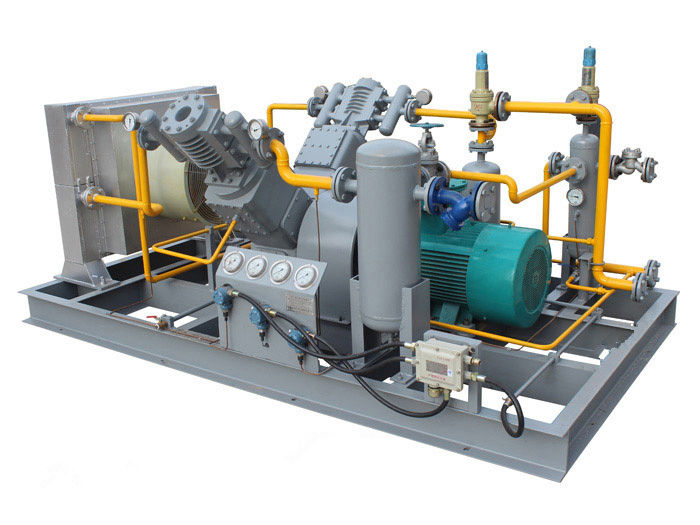
As the most important energy in the world today, the exploitation and utilization of oil and natural gas have a significant impact on global economic development and human social progress. In the complex oil and gas exploitation process, various advanced mechanical equipment play an indispensable role. Among them, oilfield oil well gas compressors are undoubtedly one of the core equipment for efficient, economical and safe production of oil and gas fields. It is not only the key to improving oil and gas recovery and extending the life of oil fields, but also an important guarantee for the deep development and clean and efficient utilization of oil and gas resources. This article will deeply explore the basic concepts of oilfield oil well gas compressors, their multiple roles in oil field exploitation, the key points of daily maintenance and management, and future technological innovation and development trends, aiming to fully reveal their strategic position and huge potential in the modern oil and gas industry.
The basic concept of oilfield oil well gas compressors
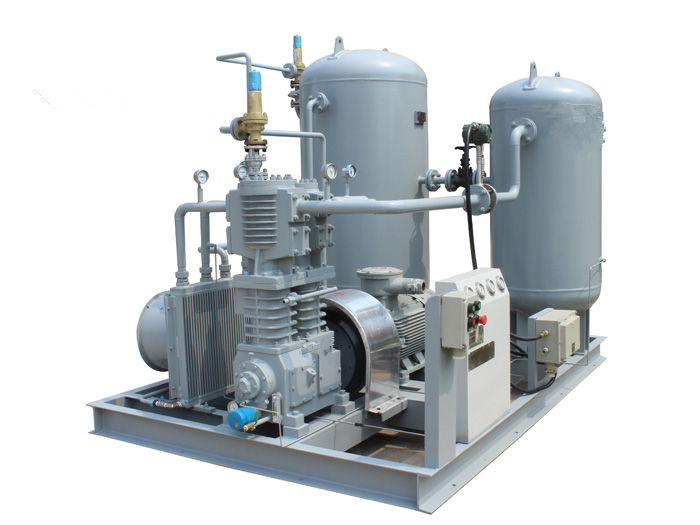
To understand the key role of oilfield oil well gas compressors, we first need to clarify their basic concepts.
What is an oilfield oil well gas compressor?
As the name suggests, an oilfield oil well gas compressor is a mechanical equipment used to compress the associated gas produced in an oil well. During the oilfield exploitation process, a large amount of natural gas is usually produced along with crude oil. These gases are called associated gas or oil well gas. These associated gases are often at a low pressure and cannot directly enter long-distance pipelines or be processed and utilized. The function of the oilfield oil well gas compressor is to pressurize these low-pressure associated gases to the required pressure for subsequent collection, transportation, processing or utilization.
Main components and characteristics of oil well gas
Oil well gas is usually a mixture of various hydrocarbon gases and non-hydrocarbon gases. Its main components include light hydrocarbons such as methane (CH4), ethane (C2H6), propane (C3H8), butane (C4H10), and a small amount of heavy hydrocarbons such as pentane and hexane. In addition, oil well gas may also contain non-hydrocarbon components such as carbon dioxide (CO2), hydrogen sulfide (H2S), nitrogen (N2), and water vapor.
The proportions of these components vary depending on the geological conditions of the oil field, the exploitation stage, and the production process. For example, some oilfields have associated gas rich in methane, which is suitable as fuel; some are rich in liquefied petroleum gas (LPG) components and have higher economic value. The presence of hydrogen sulfide will bring corrosive and toxic problems, and put forward higher requirements on the material and sealing performance of the compressor. The presence of water vapor may lead to the formation of hydrates, blocking pipelines and equipment, so dehydration treatment is required.
The characteristics of oil well gas also include that it often contains liquid entrainment (such as condensate oil, water), and solid particles (such as sand particles, corrosion products). These impurities pose a challenge to the operating reliability and service life of the compressor, so gas-liquid separation and filtration treatment are usually required before compression.
Classification and working principle of compressors
Oilfield oil well gas compressors can be divided into two categories according to their working principles: positive displacement compressors and speed compressors.
Positive displacement compressors
Positive displacement compressors compress gas by changing the volume of the working chamber. Common positive displacement compressors include:
Reciprocating compressors (piston compressors): This is one of the most common types of compressors in oil fields. It inhales, compresses and discharges gas through the reciprocating motion of the piston in the cylinder. Reciprocating compressors have the advantages of wide pressure range, high efficiency and strong adaptability to gas components, but they have complex structure, large vibration, high noise and require regular maintenance.
Screw compressor: Screw compressor compresses gas by rotating a pair of intermeshing spiral rotors. It has the advantages of compact structure, smooth operation, low noise, continuous exhaust and simple maintenance. It is especially suitable for processing gas containing a small amount of liquid or solid particles. Screw compressors are usually divided into dry and wet types. Wet screw compressors spray lubricating oil during the compression process to cool, seal and lubricate the rotor, which is more efficient.
Diaphragm compressor: Diaphragm compressor compresses gas through the reciprocating motion of the diaphragm. Its biggest feature is that the compression chamber is completely isolated from the outside world. It is suitable for compressing high-purity, flammable, explosive, toxic, harmful or corrosive gases, avoiding oil pollution. However, it is less used in the field of oil well gas, mainly for special gases or experiments.
Speed compressor
Speed compressors convert mechanical energy into kinetic energy of gas through high-speed rotating impellers, and then convert kinetic energy into pressure energy to compress gas. Common speed compressors include:
Centrifugal compressors: Centrifugal compressors are a common type of compressor used in large gas fields and natural gas processing plants in oil fields. It uses high-speed rotating impellers to make the gas high-speed, and then converts kinetic energy into pressure energy through diffusers. Centrifugal compressors have the advantages of large flow, stable operation, high reliability, and low maintenance, but their pressure ratio is limited. They are suitable for large flow, medium and low pressure occasions and are sensitive to gas components.
Axial compressors: Axial compressors compress gas through impellers and guide vanes arranged in the axial direction. It is characterized by larger flow and higher efficiency, but complex structure and high requirements for blade processing accuracy. It is mainly used in large natural gas liquefaction units or gas turbines.
In the field of oilfield gas compression, reciprocating, screw or centrifugal compressors are usually selected according to the gas volume, pressure requirements and complexity of gas components. Reciprocating and screw compressors are often used to recover associated gas from oil wells with small gas volumes and high pressure requirements, while centrifugal compressors are more suitable for handling natural gas boosting in large-scale gas fields.
The role of oilfield oil well gas compressors in oil field exploitation
The role of oilfield oil well gas compressors in oil field exploitation is multifaceted. It not only directly affects oil and gas production, but also relates to the economic benefits, environmental protection and sustainable development of oil fields.
Improving oil and gas recovery
This is the most core and direct role of oilfield oil well gas compressors in oil field exploitation.
Gas lift oil production
Gas lift is one of the important artificial lifting methods to improve oil and gas recovery. When the energy of the oil well formation is not enough to lift crude oil to the ground, the associated gas or external gas source (such as natural gas, nitrogen, carbon dioxide, etc.) can be pressurized and injected into the annulus of the oil well through the oilfield oil well gas compressor. The injected gas mixes with the oil and liquid in the wellbore to form a gas-liquid mixture, which reduces the density and specific gravity of the mixture, thereby reducing the back pressure of the oil column on the formation. Under the action of formation pressure, oil can be lifted to the surface more easily.
The role of the oilfield oil well gas compressor here is to provide a high-pressure gas source to ensure that the gas lift system can operate stably and continuously, thereby increasing crude oil production. By precisely controlling the gas injection volume and pressure, the gas lift effect can be optimized and the recovery rate can be maximized.
Associated gas reinjection for oil recovery
In some oil fields, especially gas cap reservoirs or condensate oil and gas reservoirs, reinjecting separated associated gas (or treated natural gas) into the formation is an effective enhanced oil recovery technology (EOR). The oilfield oil well gas compressor can pressurize these low-pressure associated gases to a high enough pressure so that they can overcome the formation pressure and be injected into the reservoir.
The reinjected gas can play the following roles:
Maintaining formation pressure: As crude oil is produced, the formation pressure will gradually decrease. By reinjecting gas, the formation energy can be replenished and the formation pressure can be maintained at a certain level, thereby slowing down the decline in oil well production and extending the production life of the oil field.
Miscible flooding: Under certain pressure and temperature conditions, the injected gas can form a miscible phase with the crude oil in the formation, reduce the viscosity of the crude oil, improve its fluidity, and thus improve the displacement efficiency of the crude oil. In particular, the associated gas rich in C2+ heavy hydrocarbons has a greater potential to form a miscible phase with the crude oil.
Immiscible flooding: Even if a miscible phase is not formed, the injected gas can push the crude oil out through expansion, or increase the recovery rate by reducing the residual oil saturation.
Storing associated gas: In the case of an immature natural gas utilization market or inconvenient transportation, injecting associated gas back into the formation is also a temporary storage method, and it will be mined and utilized after the market conditions improve in the future.
Fluid and drainage of oil and gas wells
In the later stage of oil and gas well production, liquid (water or condensate) may accumulate in the wellbore, resulting in obstruction of gas flow, reduced gas production, or even shutdown. The oilfield oil well gas compressor can provide high-pressure gas, and by continuously or intermittently injecting high-pressure gas into the wellbore, the accumulated liquid in the wellbore is discharged to restore the normal production of the gas well. This is crucial for extending the life of gas wells, especially for the development of low-permeability gas reservoirs.
Associated gas recovery and utilization
During early oilfield exploitation, due to technical and economic limitations, a large amount of associated gas was directly burned (vented) or discharged into the atmosphere, resulting in huge waste of resources and environmental pollution. The application of oilfield oil well gas compressors has completely changed this situation, allowing the associated gas to be efficiently recovered and utilized.
Transportation and gathering
The associated gas produced by oil wells is usually at a low pressure, which is not enough to be transported through long-distance pipelines. After the oilfield oil well gas compressor pressurizes the associated gas, it can be transported to:
Central processing station: At the central processing station, the associated gas can be further processed after purification treatment such as dehydration, desulfurization, and decarbonization.
Natural gas processing plant: used to extract valuable components such as liquefied petroleum gas (LPG) and natural gas condensate (NGL).
Natural gas long-distance pipeline: The pressurized natural gas can be connected to the national or regional natural gas pipeline network and sold as commodity gas.
The effective gathering and transportation of associated gas through compressors is a prerequisite for its subsequent high-value utilization.
Use as fuel gas
The pressurized associated gas can be used directly as fuel gas inside the oil field, for example:
Power fuel for oil field production equipment: used to drive generator sets, boilers, heating furnaces and other equipment to provide electricity and heat for oil field production and reduce operating costs.
Heating and gas in living areas: improve the living conditions of oil field workers.
Gas turbine power generation: In some large oil fields, associated gas can be used for gas turbine power generation, converting waste resources into electricity.
This not only saves the cost of purchasing fuel, but also reduces greenhouse gas emissions, with significant economic and environmental benefits.
Raw materials for producing chemical products
Associated gas rich in heavy hydrocarbons such as ethane and propane can be used as an important chemical raw material to produce basic chemical products such as ethylene and propylene after compression and separation. These chemical products are important raw materials for industries such as plastics, synthetic rubber, and chemical fibers, and have extremely high added value. Oilfield oil well gas compressors are the key link in achieving this value chain extension.
Reduce environmental pollution
Associated gas flaring (flaring) is a common phenomenon in oil fields. It is not only a waste of resources, but also a serious source of air pollution.
Reduce greenhouse gas emissions
The main component of associated gas is methane, whose greenhouse effect is dozens of times that of carbon dioxide. By recycling associated gas through oilfield oil well gas compressors, the direct emission of methane or the carbon dioxide emissions generated by flaring can be greatly reduced, which is of great significance to slowing down global warming. This is in line with the trend of the global energy industry to transform to low carbon and green.
Reduce air pollutant emissions
Flaming also produces harmful gases such as carbon monoxide, nitrogen oxides, sulfur oxides, as well as particulate matter and incompletely burned hydrocarbons, which pollute the regional air quality and affect the health of surrounding residents. Recycling associated gas can effectively eliminate these pollution sources and improve the air quality of the oil field operation area and the surrounding environment.
Reduce noise pollution
The flaring will produce continuous noise when burning, affecting the surrounding environment. The associated gas recovery system can effectively reduce noise pollution.
Improve the economic benefits of oil fields
Through the above multiple effects, oilfield oil well gas compressors can ultimately significantly improve the economic benefits of oil fields.
Increase crude oil production and sales
Through gas lift and associated gas reinjection, crude oil production can be directly increased, thereby increasing sales.
Associated gas sales revenue
Processing associated gas into natural gas, liquefied petroleum gas or chemical raw materials for sale can bring additional sources of income to oil fields.
Reduce operating costs
Using associated gas as internal fuel in oil fields reduces the cost of purchasing electricity and fuel. In addition, reducing flaring can also avoid potential carbon taxes or environmental fines.
Extend the economic life of oil fields
By improving recovery and optimizing production, the economic recoverable life of oil fields can be effectively extended to maximize the value of oil and gas resources.
Maintenance and management of oilfield oil well gas compressors
As the core equipment of oilfield production, the reliability of oilfield oil well gas compressors directly affects the stable operation of the entire production system. Therefore, it is very important to carry out scientific and standardized maintenance and management.
Daily inspection and monitoring
Daily inspection is the basis for discovering potential faults and ensuring the normal operation of equipment.
Check operating parameters
Pressure and temperature: monitor the suction pressure, exhaust pressure, pressure between each stage, exhaust temperature of each stage, bearing temperature, lubricating oil temperature, etc. to ensure that they are within the design range. Abnormal fluctuations may indicate equipment failure or process abnormality.
Flow: monitor the inlet and outlet gas flow to evaluate the working efficiency of the compressor.
Vibration and noise: regularly check the vibration and noise of the compressor body, motor, pipeline and other parts. Abnormal vibration and noise are often the precursors of mechanical failure.
Current and voltage: monitor the motor operating current and voltage to determine whether the motor load is normal.
Check the oil level and oil quality
Lubricating oil level: ensure that the lubricating oil level is within the specified range.
Lubricating oil quality: Observe the color and transparency of the lubricating oil, and check whether there is emulsification, deterioration, odor or particulate matter. Regularly conduct lubricating oil testing and analysis to evaluate its performance and degree of contamination.
Check seals and leaks
Gas leakage: Use a gas detector or soap solution method to check the sealing of the compressor body, pipelines, valves, flanges and other joints to ensure that there is no gas leakage, especially for associated gases containing toxic gases such as H2S.
Oil leakage: Check whether there is leakage of liquids such as lubricating oil and cooling water.
Cleaning and dust removal
Keep the surface of the equipment and the surrounding environment clean, remove dust and oil, ensure good heat dissipation, and help to find potential problems.
Regular maintenance and overhaul
Regular maintenance is the core of preventive maintenance, which can effectively extend the life of the equipment and reduce sudden failures.
Lubrication system maintenance
Regular replacement of lubricating oil: Regularly replace the lubricating oil according to the operating time, oil quality analysis results and manufacturer’s recommendations.
Replace the oil filter: Regularly replace the oil filter to maintain the cleanliness of the lubricating oil.
Clean the oil tank and oil circuit: Clean the oil tank and oil circuit as needed to remove dirt and impurities.
Cooling system maintenance
Clean the cooler: Regularly clean the heat exchange surface of the cooler (air cooler or water cooler) to remove dirt and scale to ensure heat dissipation efficiency.
Check the cooling medium: Check the circulation and water quality of the cooling water to ensure that there is no leakage. For air coolers, check whether the fan is running normally.
Gas system maintenance
Replace the air filter: Regularly replace the filter elements of the intake filter and the inter-stage filters at all levels to prevent impurities from entering the compressor and protect the internal components.
Check the valves and pipelines: Check the opening and closing flexibility and sealing of each valve (such as the intake valve, exhaust valve, and safety valve), and check whether the pipeline is corroded, deformed or blocked.
Power system maintenance
Motor maintenance: Check the motor bearings, windings, terminals, etc. to ensure that the motor is running normally.
Coupling maintenance: Check the alignment and wear of the coupling to ensure smooth power transmission.
Overhaul and medium overhaul
Develop and implement medium overhaul and overhaul plans based on the equipment operating conditions, cumulative operating time and manufacturer recommendations. Overhaul usually includes disassembly, inspection, replacement of worn parts (such as piston rings, air valves, bearings, rotors, etc.), reassembly and commissioning of the compressor body.
Fault diagnosis and troubleshooting
Establish a complete fault diagnosis process and emergency plan to quickly locate problems and take effective measures.
Common faults
Abnormal pressure: too low suction pressure, insufficient or too high exhaust pressure.
Too high temperature: too high exhaust temperature, bearing temperature, and lubricating oil temperature.
Abnormal vibration: severe vibration of the equipment body and pipelines.
Abnormal noise: knocking, friction, whistling, etc.
Difficult or impossible to start: motor failure, control system problem, valve failure, etc.
Leakage: gas or liquid leakage.
Diagnostic methods
Observation method: Perceive abnormal phenomena through vision, hearing, smell, etc.
Instrument method: Read data with the help of pressure gauges, thermometers, ammeters, voltmeters, etc.
Detector method: Use professional tools such as vibration analyzers, noise meters, infrared thermometers, gas detectors, etc. for quantitative detection.
Trend analysis method: Trend analysis of long-term monitoring data to predict the occurrence of failures.
Logical analysis method: According to the failure phenomenon, logical reasoning is combined with equipment principles and experience.
Elimination measures
According to the diagnosis results, take corresponding elimination measures, such as adjusting operating parameters, replacing damaged parts, cleaning blocked parts, repairing leaks, etc.
Spare parts management and technical archives
Spare parts management
Establish a complete spare parts library, including wearing parts, key parts and long-term spare parts. Ensure the quality, quantity and timeliness of spare parts to avoid long-term production stoppage due to lack of spare parts.
Technical Files
Establish a complete technical file for each compressor, including equipment model, parameters, installation records, operation logs, maintenance records, fault records, repair reports, spare parts replacement records, etc. These files are an important basis for equipment management and fault analysis.
Safety Management
Oilfield oil well gas compressors handle flammable and explosive gases, and their safe operation is crucial.
Explosion-proof measures: Ensure that all electrical equipment and instruments meet explosion-proof requirements.
Fire and anti-static: Equip fire-fighting equipment and take anti-static measures.
Toxic and harmful gas protection: For associated gas containing toxic gases such as hydrogen sulfide, corresponding gas detection alarm devices and personal protective equipment should be equipped.
Safety operating procedures: Develop and strictly implement safety operating procedures, and conduct strict training for operators.
Emergency stop system: Install a complete emergency stop system that can quickly cut off the power supply and stop the equipment operation in the event of an abnormal situation.
Pressure vessel management: The compressor body, gas storage tank, etc. are pressure vessels, which should comply with relevant regulations and be inspected regularly.
Through the above maintenance and management measures, the safe, efficient and stable operation of oilfield oil well gas compressors can be guaranteed to the greatest extent, providing solid guarantee for oil field production.
Technological innovation and future trends of oilfield oil well gas compressors
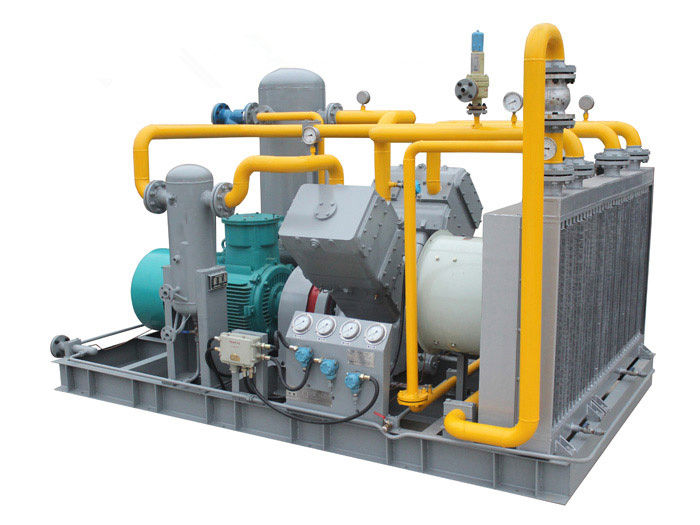
With the development of the oil and gas industry and technological progress, oilfield oil well gas compressors are also evolving to adapt to more complex and demanding working conditions, and to achieve higher efficiency, lower energy consumption and smarter operation.
High efficiency and low energy consumption
Energy efficiency is the eternal theme of compressor technology development.
Variable frequency drive technology
By applying the inverter to the compressor drive motor, the motor speed can be adjusted steplessly according to actual production needs, thereby accurately controlling the flow and pressure output of the compressor. Compared with the traditional loading/unloading control method, the variable frequency drive can significantly reduce the energy consumption during non-full load operation, especially when the oil field gas volume fluctuates greatly, the energy saving effect is more significant. At the same time, variable frequency starting can also reduce the impact on the power grid.
Optimize pneumatic design
Through fluid dynamics (CFD) simulation and optimization, improve the design of pneumatic components such as compressor impellers, diffusers, and air valves, reduce gas flow resistance, and improve compression efficiency. For reciprocating compressors, optimizing valve plate design and reducing dead volume can also improve efficiency.
Recycling waste heat
A large amount of heat is generated during the gas compression process. Recycling this waste heat, such as for heating produced fluids, driving absorption chillers, generating electricity, or providing domestic hot water, can further improve the comprehensive utilization efficiency of energy.
Modular and skid-mounted design
Modular and skid-mounted design makes the construction of compressor stations faster and more convenient, especially for remote oil fields or short-term development projects. At the same time, standardized modules also facilitate equipment maintenance and upgrades.
Intelligence and automation
Industry 4.0 and Internet of Things (IoT) technologies are profoundly affecting the oil and gas industry, and oilfield oil well gas compressors are also moving towards intelligence.
Condition Monitoring and Fault Diagnosis
Integrate advanced sensors (such as vibration sensors, acoustic sensors, temperature sensors, pressure sensors, etc.) to monitor the various operating parameters of the compressor in real time. Through big data analysis and machine learning algorithms, the health of the equipment can be evaluated in real time, potential faults can be predicted, and predictive maintenance (PdM) can be achieved, thereby reducing unplanned downtime and reducing maintenance costs.
Remote Monitoring and Control
Remote monitoring and operation of the compressor can be achieved through the Internet of Things technology. Operators can view the operating status of the equipment in real time at the control center, receive alarm information, and perform remote start and stop, parameter adjustment and other operations to improve operation and maintenance efficiency and safety, especially for unmanned or undermanned oil fields.
Expert System and Adaptive Control
Develop an adaptive control system based on expert knowledge and artificial intelligence, so that the compressor can automatically optimize the operation strategy according to factors such as oil well conditions, gas volume changes, and external environment to achieve optimal efficiency and stability. For example, automatically adjust the speed and interstage pressure, and even self-diagnose and eliminate simple faults to a certain extent.
Digital Twin Technology
Establish a digital twin model of the compressor, and through the integration of real-time data and physical models, simulate the operating status of the equipment under different working conditions, perform performance optimization, fault simulation and life prediction, and provide comprehensive digital support for the operation, maintenance and management of the equipment.
Ability to adapt to complex gas sources
With the development of oil and gas resources extending to deeper and more complex formations, as well as the development of unconventional oil and gas (such as shale gas and tight gas), oilfield oil well gas compressors need to adapt to more severe and complex working conditions.
Wide range adaptability
Develop compressors that can adapt to a wider range of gas volume, pressure, and temperature fluctuations to improve their adaptability to working conditions.
Anti-corrosion and anti-wear materials
For associated gas with high H2S, CO2, water or solid particles, develop and apply high-performance anti-corrosion and anti-wear materials to improve the service life and reliability of compressor components (such as valves, piston rods, impellers, and seals).
Advanced gas purification technology
Before the compressor, more advanced gas pretreatment technology is needed, such as high-efficiency gas-liquid separation, sand removal, desulfurization, dehydration, decarbonization, etc., to protect the compressor body and ensure its long-term stable operation.
Environmentally friendly design
In addition to the environmental benefits brought by the recycling of associated gas itself, the design and operation of the compressor itself also pay more attention to environmental protection.
Noise and vibration control
Use low-noise design, soundproof cover, vibration reduction foundation and other measures to reduce the noise and vibration of the compressor during operation and improve the working environment and surrounding community environment.
Lubricant management and oil-free compression
Promote the use of environmentally friendly lubricants and strengthen the recovery and treatment of lubricants. For occasions with extremely high requirements for gas purity, the application of oil-free compressors (such as dry screw and diaphragm compressors) is also increasing to avoid lubricant contamination of gas.
Leakage control and emission monitoring
Strengthen the equipment sealing design to reduce gas leakage. Equipped with a gas leak detection alarm system, and real-time monitoring of a small amount of unavoidable emissions.
New Energy Drive Mode
Traditional oilfield oil well gas compressors are mostly driven by electric motors or gas engines. In the future, with the development of new energy technologies, more diversified drive modes may emerge.
Solar/wind energy drive
In remote oil fields far from the power grid, combining solar or wind power generation systems to drive small associated gas compressors can achieve self-sufficient energy supply and reduce external dependence and transmission costs.
Hydrogen energy drive
With the development of hydrogen energy technology, compressors driven by hydrogen fuel cells or hydrogen internal combustion engines may appear in the future to achieve ultra-low emissions.
Conclusion
The role of oilfield oil well gas compressors in oil field exploitation is far more than a simple gas boosting equipment. It has become a strategic core equipment for modern oil and gas fields to achieve increased production, improved efficiency, environmental protection and sustainable development. From improving oil and gas recovery, achieving efficient recovery and utilization of associated gas, significantly reducing environmental pollution, to significantly improving the economic benefits of oil fields, oilfield oil well gas compressors run through the entire process of oil and gas development and utilization.
Looking into the future, with the continuous advancement of science and technology and the profound changes in the global energy landscape, oilfield oil well gas compressor technology will develop in a more efficient, intelligent, environmentally friendly and adaptable direction. The integrated application of advanced technologies such as variable frequency drive, Internet of Things, big data, and artificial intelligence will enable compressor equipment to better adapt to complex and changing working environments, and achieve predictive maintenance, remote control, and autonomous optimization. At the same time, the application of new materials and new processes and the exploration of new energy drive methods will further enhance its performance and environmental friendliness.
It can be foreseen that in the future journey of oil and gas exploration and utilization, oilfield oil well gas compressors will continue to play an irreplaceable key role, and contribute important forces to ensuring global energy security and promoting the green transformation and sustainable development of the oil and gas industry. In-depth understanding and continuous innovation of oilfield oil well gas compressor technology have important practical significance and far-reaching strategic value for every oil and gas practitioner and related technicians.
Request a Quick Quote Now

Shanghai Sollant Energy Saving Technology Co., Ltd.
Drawing on our years of experience and expertise in air separation and PSA technologies, we deliver customized solutions tailored to your specific needs.
