
The essential difference between diaphragm compressors and piston compressors
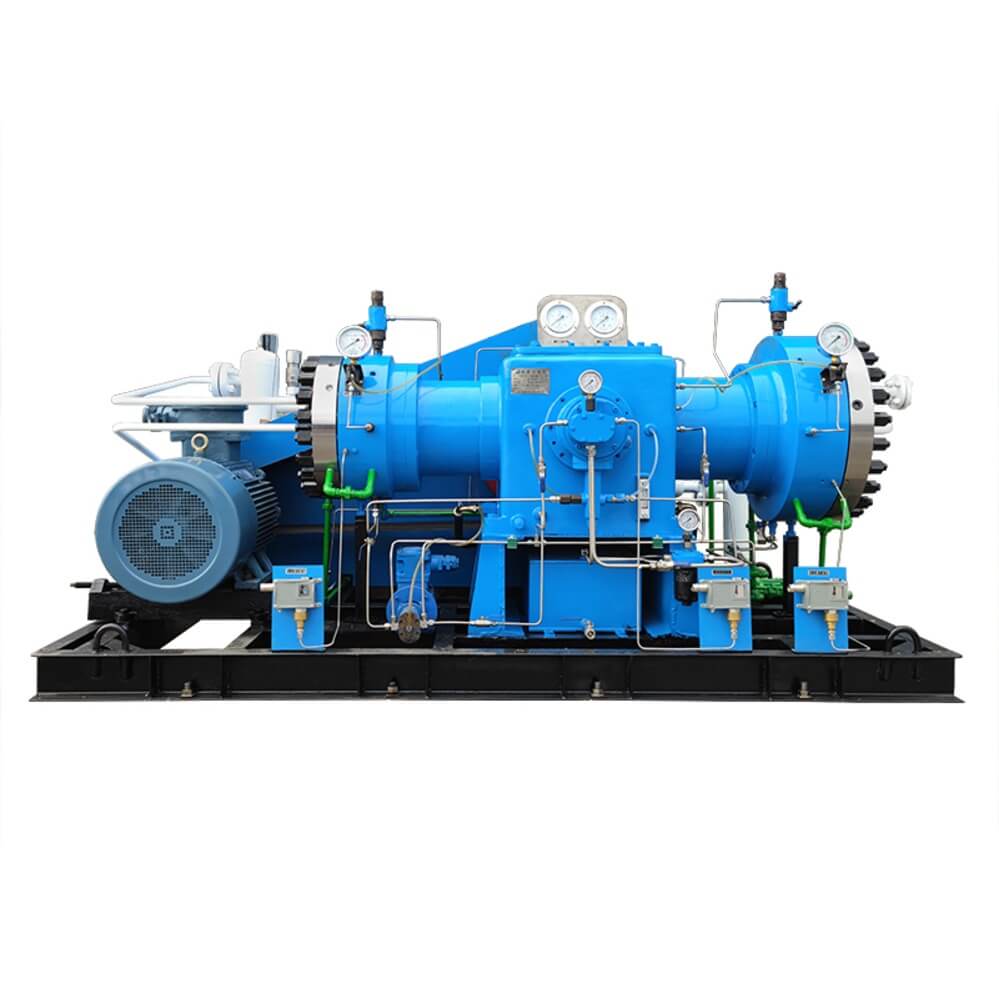
In modern industrial production, compressors are the core equipment for providing gas source power, and their importance is self-evident. Whether it is driving pneumatic tools, conveying gas, conducting chemical reactions, or in cutting-edge fields with strict requirements on gas purity and safety, compressors play a vital role. Faced with a wide variety of compressors on the market, how to choose the equipment that best suits their own working conditions has become a major challenge for many engineers and business managers. Among the many reciprocating compressors, diaphragm compressors and piston compressors are undoubtedly the two mainstream and distinctive representatives. Although they can both achieve gas compression, their working principles, structural characteristics, performance and applicable scenarios are very different.
This article aims to provide you with a comprehensive and in-depth analysis report, detailing the main differences between diaphragm compressors and piston compressors. We will conduct a multi-dimensional comparison based on their respective working principles, core structures, performance advantages and limitations, and finally provide a set of practical selection guides to help you accurately locate and select the compressor solution that best meets your needs in complex industrial applications, especially in situations where there are extreme requirements for gas purity and safety, and deeply understand the irreplaceable nature of diaphragm compressors.
1.Diaphragm compressor: principle and characteristics
A diaphragm compressor, as the name implies, is a positive displacement compressor that compresses gas through the reciprocating motion of a flexible diaphragm. Its uniqueness lies in that the compressed gas and the driving mechanism are completely isolated by one or more diaphragms, thus achieving a “zero leakage” and “oil-free” compression process.
1.1 Working principle: the secret of zero leakage and no pollution
The core compression process of the diaphragm compressor is completed by one or more flexible diaphragms. The diaphragm is usually made of metal or non-metallic materials and installed in the compression chamber. On one side of the diaphragm is the gas to be compressed, and on the other side is the hydraulic oil. When the hydraulic system drives the piston in the hydraulic oil chamber to reciprocate, the pressure change of the hydraulic oil will cause the deformation and displacement of the diaphragm.
Inhalation process: the hydraulic oil retreats, the diaphragm bends backward, a negative pressure is formed in the compression chamber, the suction valve opens, and the gas to be compressed enters the compression chamber.
Compression process: the hydraulic oil pushes forward, the diaphragm bends forward, the volume of the compression chamber decreases, the gas is compressed, and the pressure increases.
Exhaust process: When the pressure in the compression chamber reaches the exhaust pressure, the exhaust valve opens and the compressed gas is discharged.
During the whole process, the compressed gas is completely separated from the hydraulic oil, and no moving parts are in direct contact with the gas, which fundamentally avoids the contamination of the gas by the lubricating oil and ensures the high purity of the gas. At the same time, since the diaphragm is the only dynamic sealing component, its excellent sealing performance ensures “zero leakage” of the gas during the compression process, which is essential for handling highly toxic, flammable, explosive or expensive gases.
1.2 Core structure: the inner beauty of exquisite design
The structural design of the diaphragm compressor is precise and unique, mainly including:
Diaphragm assembly: This is the heart of the diaphragm compressor, usually composed of multiple layers of metal or non-metallic films. In order to prevent the failure of a single-layer diaphragm, a double-layer or three-layer structure is often used, and a leakage alarm system is set between the layers to ensure safety.
Compression chamber: The cavity in contact with the gas, the internal surface is smooth, and the material selection needs to be customized according to the properties of the gas to prevent gas contamination or corrosion of the equipment.
Hydraulic system: including hydraulic pump, hydraulic cylinder, oil tank, filter, cooler, etc., providing stable and reliable driving force for the diaphragm and controlling the stroke and movement frequency of the diaphragm.
Valve system: The suction valve and exhaust valve are usually self-controlled or forced, with compact design and optimized flow channel to reduce pressure loss and ensure efficient ventilation.
Transmission mechanism: usually driven by a motor, driving the hydraulic plunger pump through the crankshaft connecting rod mechanism.
Cooling system: high-pressure compression will generate a lot of heat, and an efficient gas cooler is required to ensure compression efficiency and gas temperature.
1.3 Main advantages: unique performance highlights
Extreme gas purity: This is the core advantage of the diaphragm compressor. Due to the oil-free lubrication and the gas not contacting any moving parts, the compressed gas can reach extremely high purity, oil-free, water-free, and particle-free, meeting the industry standards for semiconductors, medical, food, hydrogen energy, etc. that have strict requirements on gas purity.
Excellent sealing performance: The complete isolation characteristics of the diaphragm make it an ideal choice for handling highly toxic, flammable, explosive, corrosive and other dangerous gases, significantly improving operational safety and complying with strict environmental regulations.
High compression ratio and high pressure capability: Diaphragm compressors can achieve single-stage or multi-stage ultra-high pressure compression, and are particularly suitable for high-pressure gas storage, special gas filling, and hydrogen fuel cell hydrogenation stations for new energy vehicles.
Low maintenance requirements and long life: Since the gas does not contact the moving parts, the wear is small, and there is no need to replace lubricating oil, which greatly reduces the maintenance frequency and cost. As the main wearing part, the diaphragm is relatively easy to replace.
Wide range of media compatibility: As long as the appropriate diaphragm and cavity materials are selected according to the properties of the gas, the diaphragm compressor can compress almost any type of gas.
Lower noise and vibration: Compared with piston compressors, diaphragm compressors run more smoothly and quietly, and have less impact on the working environment.
1.4 Limitations: Trade-offs and considerations
Relatively small flow rate: The design of diaphragm compressors determines that the flow rate of a single unit is usually not as good as that of piston compressors of the same power. For large flow requirements, multiple units may need to be connected in parallel.
High initial investment cost: The precise structure, the use of special materials and the complex hydraulic system make the manufacturing cost of diaphragm compressors much higher than that of piston compressors.
High requirements for diaphragm materials: The fatigue life and corrosion resistance of the diaphragm are key. Once it fails, it will affect the operation of the equipment.
Relatively high maintenance technical requirements: Although the maintenance frequency is low, operations such as diaphragm replacement require professional technicians.
2.Piston compressor: principle and characteristics
The piston compressor is a type of positive displacement compressor with a long history and wide application. It changes the cylinder volume through the reciprocating motion of the piston in the cylinder to achieve the suction, compression and discharge of gas.
2.1 Working principle: a powerful classic
The working principle of the piston compressor is similar to that of an internal combustion engine. The motor drives the piston to make reciprocating linear motion in the cylinder through the crankshaft connecting rod mechanism.
Inhalation process: the piston moves downward, the cylinder volume increases, negative pressure is formed, the suction valve opens, and the gas is sucked into the cylinder.
Compression process: the piston moves upward, the cylinder volume decreases, the gas is compressed, and the pressure increases.
Exhaust process: when the pressure in the cylinder reaches the exhaust pressure, the exhaust valve opens, and the compressed gas is discharged.
According to the lubrication method, piston compressors can be divided into oil-lubricated and oil-free lubrication types. Oil-lubricated piston compressors use lubricating oil to form an oil film between the piston ring and the cylinder wall to reduce friction, sealing and cooling. The oil-free lubrication type uses piston rings and cylinder liners made of special materials, or achieves oil-free compression through special structural design.
2.2 Core structure: a sturdy and durable industrial cornerstone
The core structure of the piston compressor mainly includes:
Cylinder and piston: The piston reciprocates in the cylinder, and the inner surface of the cylinder is usually precision machined.
Piston ring: An annular component installed on the piston, used to seal the gas, prevent gas leakage, and scrape off excess lubricating oil in the oil lubrication type.
Crankshaft and connecting rod: Convert the rotary motion of the motor into the reciprocating linear motion of the piston.
Valve system: The suction valve and exhaust valve are usually self-controlled or forced to control the in and out of the gas.
Flat body: Supports all moving parts and bears the operating load.
Lubrication system: Including oil pump, oil filter, oil cooler, etc., to provide lubricating oil and keep it clean.
Cooling system: Cools the cylinder wall, gas valve and compressed gas, usually water cooling or air cooling.
2.3 Main advantages: the basis for wide application
Mature technology and wide application: Piston compressors have a history of 100 years of development, very mature technology, standardized manufacturing process, huge market share, and a complete maintenance service system.
Wide flow range and strong adaptability: Piston compressors can provide a wide range of flow and pressure ranges from small to large, from low pressure to high pressure, and can meet the needs of various industrial production scales.
Relatively low initial investment cost: Compared with diaphragm compressors with more sophisticated structures, piston compressors usually have lower manufacturing costs and are more suitable for initial investment with limited budgets.
High efficiency: Under certain working conditions, especially when operating at high pressure ratios or variable working conditions, piston compressors can maintain high isothermal efficiency.
Relatively simple maintenance: Conventional lubricating oil replacement, piston ring inspection and replacement operations are relatively intuitive and can usually be completed by technicians in the factory.
2.4 Limitations: Challenges and improvements
Gas is susceptible to contamination: During the compression process of oil-lubricated piston compressors, the lubricating oil will inevitably come into contact with the gas, causing the compressed gas to carry oil mist, affecting the purity of the gas, and is not suitable for occasions with strict purity requirements.
The sealing performance is relatively poor: As a dynamic seal, the piston ring has inherent problems of wear and leakage, and cannot achieve zero leakage. For the treatment of toxic and harmful gases, it may bring safety hazards.
Noise and vibration are large: The reciprocating motion of the piston will generate inertial force, resulting in the noise and vibration of the machine during operation being generally greater than that of the diaphragm compressor, and vibration reduction measures need to be taken.
There are many vulnerable parts and high maintenance frequency: piston rings, valve plates and other components are vulnerable parts, which need to be inspected and replaced regularly, resulting in a higher maintenance frequency than diaphragm compressors.
3.Comparison of key differences between diaphragm compressors and piston compressors
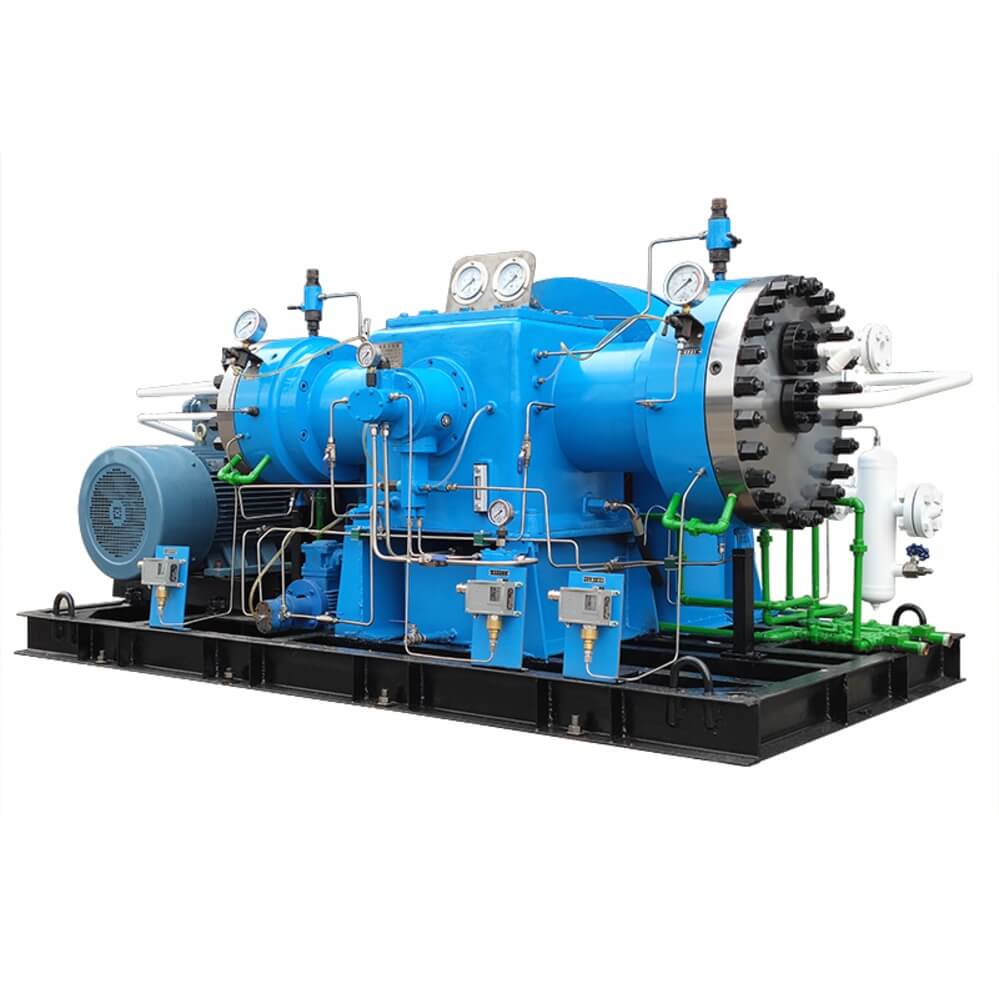
There are significant differences between diaphragm compressors and piston compressors in many aspects, and these differences determine their respective application scenarios and performance.
First of all, in terms of compression method, diaphragm compressors use the diaphragm isolation and non-contact compression principle, and the gas is completely isolated from any lubricant or other moving parts. The piston compressor is a piston that directly contacts the gas for compression, and there is usually lubricant or friction between the piston ring and the cylinder wall inside.
This fundamental difference directly leads to a huge difference in gas purity between the two. Diaphragm compressors can provide extremely high gas purity and achieve oil-free and particle-free clean gas, which is crucial for fields such as semiconductor manufacturing, medical pharmaceuticals, food industry and new energy that have extreme requirements for gas purity. In contrast, oil-lubricated piston compressors will inevitably carry oil mist during the compression process. Even oil-free piston machines may bring in particles due to piston ring wear, and their purity is far inferior to that of diaphragm compressors.
In terms of sealing performance, diaphragm compressors perform excellently. The integrity of their diaphragms ensures near-zero leakage, making them an ideal choice for handling highly toxic, flammable, explosive or corrosive gases, and can maximize production safety and environmental protection. Piston compressors rely on piston rings for sealing. Although they have a certain sealing effect, there is an inherent risk of leakage due to the wear and aging of the piston rings, and they cannot achieve complete sealing like diaphragm compressors.
There is also a clear distinction between the two types of compressors in terms of applicable media. Diaphragm compressors focus on handling harsh, high-purity or hazardous gases, such as hydrogen, oxygen, chlorine, fluorine, silane and other special gases. Piston compressors are more versatile and are widely used for common gases such as ordinary air, nitrogen, and natural gas.
Flow and pressure range is another important consideration. Diaphragm compressors are usually designed for small flow and high pressure applications, especially in the ultra-high pressure field, showing strong capabilities. Piston compressors have a wider flow range, ranging from small to large equipment, and pressure covers medium and low pressure to some high pressure.
Regarding noise and vibration, diaphragm compressors are relatively quiet and stable with less vibration due to their stable hydraulic drive and no piston reciprocating impact. In contrast, piston compressors generally have greater noise and vibration due to the inertial force generated by the reciprocating motion of the piston, especially on large units.
From an economic perspective, in terms of initial investment, diaphragm compressors usually have higher purchase costs due to their precision manufacturing, special materials and complex structures. Piston compressors have relatively low initial investment due to mature technology and standardized production. However, the situation is different in terms of operating and maintenance costs. Diaphragm compressors have a low maintenance frequency, almost no fuel consumption, and the main consumable is the diaphragm itself, which has a long life. Piston compressors require more frequent maintenance, and lubricating oil, piston rings, valve plates and other consumable parts need to be replaced regularly. Their consumables and labor maintenance costs are relatively high. From the perspective of the whole life cycle cost, although the initial investment of diaphragm compressors is high, if we consider their gas purity guarantee, safety performance improvement and long-term maintenance cost reduction, they are more economical in specific applications.
Finally, in terms of environmental impact, diaphragm compressors are considered to be a greener and more environmentally friendly choice due to their zero leakage and oil-free characteristics, especially when handling hazardous gases, which can effectively reduce the risk of environmental pollution. Piston compressors have the risk of oil mist emission and gas leakage.
4.How to choose a suitable compressor?
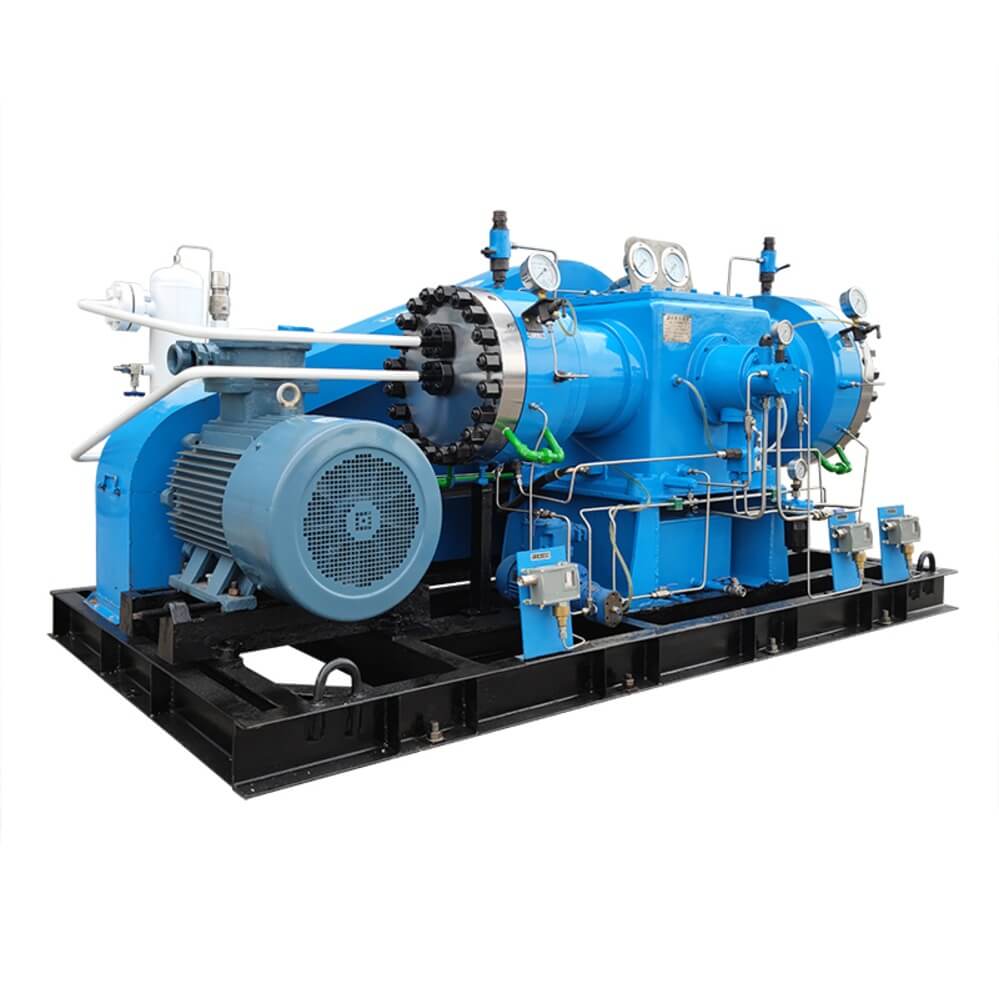
Choosing a suitable compressor is not an easy task. It involves an in-depth understanding of the working conditions, precise matching of technical parameters and a comprehensive evaluation of the whole life cycle cost.
4.1 Clarify the needs: Systematically analyze the core elements of the working conditions
The nature of the compressed medium: This is the first consideration. Is the gas a general gas such as air and nitrogen, or a high-purity, flammable, explosive, highly toxic or corrosive gas such as hydrogen, oxygen, chlorine, and silane? Are there any special requirements for gas purity? For high purity requirements, diaphragm compressors are the best choice.
Flow and pressure requirements: Determine the required rated flow and outlet pressure. Do you need a large flow and low pressure, or a small flow and high pressure?
Application scenarios and industry standards: What specific regulations and standards does the industry have for the equipment? For example, the medical and food industries have strict standards for air cleanliness and may require diaphragm compressors.
Environmental factors: The installation space of the equipment, ambient temperature, humidity, and restrictions on noise and vibration.
Economic considerations: Including initial purchase budget, operating energy consumption costs, maintenance costs, spare parts costs, and possible downtime losses. The full life cycle cost of the equipment needs to be calculated, not just the purchase price.
4.2 In-depth analysis of diaphragm compressor application scenarios: When is a “diaphragm compressor” necessary?
When any of the following situations occur in your application scenario, it is strongly recommended to give priority to diaphragm compressors:
Extreme gas purity requirements: semiconductor manufacturing, medical, pharmaceutical, food and beverage, new energy, any oil or impurities may lead to serious consequences.
Handling highly toxic, flammable, explosive and corrosive gases: chemical industry, petrochemical industry. The zero leakage characteristics of diaphragm compressors can maximize the safety of personnel and the environment.
Ultra-high pressure compression is required: for example, hydrogen filling stations, special gas filling, and laboratory ultra-high pressure applications.
Places with strict restrictions on noise and vibration: such as laboratories, precision instrument rooms, and near medical institutions.
4.3 In-depth analysis of the applicable scenarios of piston compressors: the power of classics and universality
Piston compressors perform well in the following scenarios:
Ordinary industrial compressed air: factory power sources, pneumatic tools, instrument air, etc., which require gas purity but do not need to reach the “oil-free” level.
Large flow, medium and low pressure gas transportation: metallurgy, mining, building materials and other industries require large flow of air for purging and transportation.
Non-pure gas compression: such as natural gas gathering and transportation, where the gas may contain a small amount of impurities.
Occasions with limited budgets but certain performance requirements: small and medium-sized enterprises or start-up projects are more sensitive to initial investment costs.
Summary
Although both diaphragm compressors and piston compressors are reciprocating compressors, they play completely different roles in industrial applications. Piston compressors have become the first choice for many general industrial applications with their mature technology, wide flow and pressure coverage, and relatively low initial cost. However, in the face of cutting-edge fields such as semiconductors, hydrogen energy, medical treatment, and chemical industry, which have extreme requirements for gas purity, safety, and zero leakage, diaphragm compressors have become an irreplaceable solution with their unique advantages of “no oil pollution and zero leakage”.
There is no best compressor, only the compressor that best suits your working conditions. Wise selection requires us to have an in-depth understanding of the working principles, advantages and limitations of each compressor, and to conduct a comprehensive evaluation based on our actual needs, budget, and safety and environmental protection considerations. I hope this article can provide you with valuable reference when choosing a diaphragm compressor or a piston compressor, helping you make the most optimized, economical, and safest decision to protect your industrial production.
Request a Quick Quote Now

Shanghai Sollant Energy Saving Technology Co., Ltd.
Drawing on our years of experience and expertise in air separation and PSA technologies, we deliver customized solutions tailored to your specific needs.
