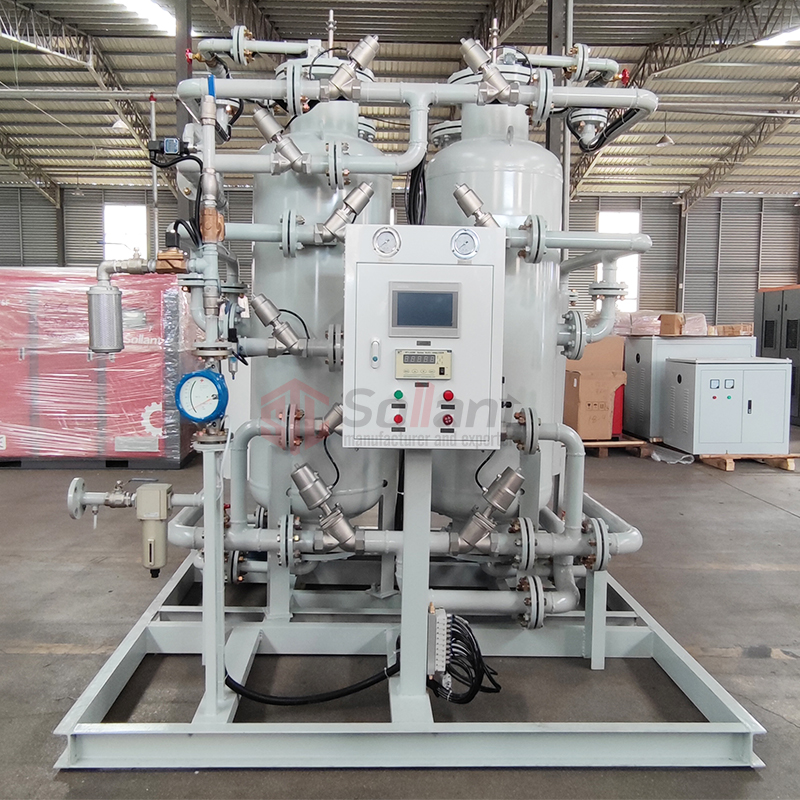
In the field of modern industry, oxygen, as a key industrial gas, is widely used in multiple industries, including steel manufacturing, fertilizer production, pharmaceuticals, electronics manufacturing, glass production, metal cutting and welding, etc. Industrial oxygen generation systems not only provide necessary oxygen supply in these areas, but also play an important role in improving production efficiency, ensuring product quality, and optimizing the production process.
With the continuous development of industrial technology and changes in market demand, the technology of oxygen production systems is also constantly improving. Currently, the main oxygen production technologies on the market include pressure swing adsorption (PSA), vacuum pressure swing adsorption (VPSA), membrane separation technology and low-temperature fractionation technology. Each of these technologies has its own characteristics and is suitable for different application scenarios and production needs.
In business operations, choosing the appropriate oxygen generation technology not only affects production efficiency, but is also directly related to cost control and long-term economic benefits. Different oxygen generation technologies have significant differences in terms of initial investment, operating costs, energy consumption, and maintenance requirements. These differences may result in companies facing different financial burdens in their long-term operations. Therefore, technology selection has become one of the key factors in corporate decision-making.
Choosing the right oxygen production technology is crucial for the operation and cost control of an enterprise. First, the initial investment is one of the important factors that enterprises need to consider when purchasing equipment. The equipment costs of different technologies vary greatly, and enterprises need to make wise decisions based on their own financial situation and expected returns.
Secondly, the operating cost of the oxygen production system is also a key factor affecting the economic benefits of the enterprise. Including energy consumption, maintenance, material replacement, etc., will have a direct impact on the operating costs of the enterprise. For example, some technologies may perform well in energy efficiency, thereby reducing long-term operating costs, while other technologies may have high maintenance requirements, increasing operating expenses.
Furthermore, the reliability and maintenance requirements of the equipment directly affect the stability of production and the operating efficiency of the enterprise. Highly reliable equipment can reduce the risk of production interruptions and ensure the continuity of the production process, thereby improving overall production efficiency.
Finally, comprehensive consideration of the life cycle cost of the technology can help enterprises more accurately evaluate the long-term economic benefits. Life cycle cost analysis includes not only the initial investment and operating costs of the equipment, but also repairs, replacements, and potential production losses. Through a comprehensive cost-benefit analysis, enterprises can better understand the economic impact of different technologies and make the choice that best suits their needs.
In short, the technical selection of industrial oxygen production systems not only involves technical considerations, but also directly affects the economic benefits and operational efficiency of enterprises. In-depth understanding of the advantages and disadvantages of different technologies and comprehensive cost-benefit analysis will help enterprises make more informed decisions when choosing a suitable oxygen production system.