
Industrial nitrogen generator: a comprehensive strategy for optimizing operating costs and increasing energy efficiency

In the landscape of modern industrial production, nitrogen has become an indispensable key industrial gas with its unique inert, low-activity and non-toxic characteristics. From nitrogen filling and preservation in the food industry, reaction protection and inertization in the chemical industry, to the packaging of electronic devices, the sterile environment of pharmaceuticals, to annealing protection in the metallurgical industry and auxiliary gas for laser cutting, nitrogen is everywhere and plays an important role in ensuring product quality, improving production efficiency and ensuring operational safety. With the continuous rise in global energy costs and increasingly stringent environmental regulations, companies have become particularly concerned about the control of production costs. As the main equipment for enterprises to obtain nitrogen on site, the operating cost of industrial nitrogen generators is directly related to the profit margins and market competitiveness of enterprises. Therefore, how to deeply tap the energy-saving potential of industrial nitrogen generators, effectively reduce their operating costs, and achieve a win-win situation of economic and environmental benefits has become a core issue that many industrial enterprises need to solve urgently. This article aims to systematically analyze the basic working principle of industrial nitrogen generators from macro to micro, accurately identify the key factors that affect its operating costs, and on this basis, propose a series of forward-looking and practical energy-saving technologies and optimization solutions to provide a comprehensive and in-depth reference guide for enterprises committed to improving operational efficiency and achieving sustainable development.
Understand the basic working principle of industrial nitrogen generators
Understanding the operating mechanism of industrial nitrogen generators is the cornerstone of cost optimization. At present, the mainstream industrial nitrogen production technology on the market is mainly based on the principle of air separation, among which pressure swing adsorption (PSA) nitrogen production and membrane separation nitrogen production are the most common.
Pressure swing adsorption (PSA) nitrogen generator:
PSA technology is the most widely used and technologically mature solution in the current industrial nitrogen production field. Its core essence lies in the difference in adsorption capacity of different gas components (mainly oxygen and nitrogen) in the air under different pressures by using carbon molecular sieve (CMS). The work process usually includes:
- Compression and pretreatment: The ambient air is first compressed by an air compressor, and then cooled, dehydrated, deoiled and dusted by equipment such as cold dryers and multi-stage filters to obtain clean and dry compressed air. This is a key step to ensure the life of the molecular sieve and the efficiency of nitrogen production.
- Adsorption separation: Clean and dry compressed air enters the adsorption tower equipped with carbon molecular sieve. Since the carbon molecular sieve has a strong selective adsorption capacity for oxygen, carbon dioxide, water vapor, etc., these impurity gases are adsorbed in the pores of the molecular sieve, while nitrogen (with a very small adsorption amount) penetrates the molecular sieve and flows out from the top of the tower as product gas.
- Desorption and regeneration: When the molecular sieve in the adsorption tower reaches saturation, the adsorbed oxygen, carbon dioxide and other impurity gases are desorbed and discharged from the molecular sieve by rapidly reducing the pressure (i.e. “pressure change”), and the molecular sieve is regenerated to restore its adsorption capacity.
- Circulation operation: PSA nitrogen generators usually consist of two or more adsorption towers operating alternately, one tower for adsorption and nitrogen production, and the other tower for desorption and regeneration to ensure a continuous and stable supply of nitrogen.
PSA nitrogen generators have become the first choice for small and medium-sized nitrogen-using enterprises due to their simple process flow, high degree of automation, fast startup speed, wide adjustable range of nitrogen purity (95%~99.9995%), and relatively simple operation and maintenance.
Membrane separation nitrogen generator:
Membrane separation nitrogen generation technology uses the speed differences of different gas molecules passing through hollow fiber membranes to achieve nitrogen and oxygen separation.
- Compression and pretreatment: Similarly, air needs to undergo strict compression and purification to prevent pollutants from clogging or damaging membrane components.
- Membrane separation: Clean and dry compressed air enters the hollow fiber membrane bundle in the membrane separator. Since oxygen, water vapor, carbon dioxide and other molecules are relatively small and have a fast permeation rate, they will preferentially permeate through the membrane wall and be discharged, while nitrogen molecules are larger and have a slow permeation rate, so they are trapped on the other side of the membrane and collected as nitrogen-rich gas.
Membrane separation nitrogen generators have the advantages of compact structure, small footprint, no moving parts, low noise, minimal maintenance, no adsorbent required, and strong environmental adaptability. However, the purity of nitrogen is usually between 95% and 99.5%, which is relatively low, and the energy consumption is greatly affected by the purity. It is suitable for occasions where the requirements for nitrogen purity are not extremely high but the simplicity and stability of the equipment are high.
A deep understanding of the working principles of these two mainstream nitrogen production technologies will help us more accurately identify their energy consumption characteristics and potential optimization space, thereby laying a solid foundation for the subsequent energy-saving strategy formulation.
Key factors to reduce the operating cost of industrial nitrogen generators
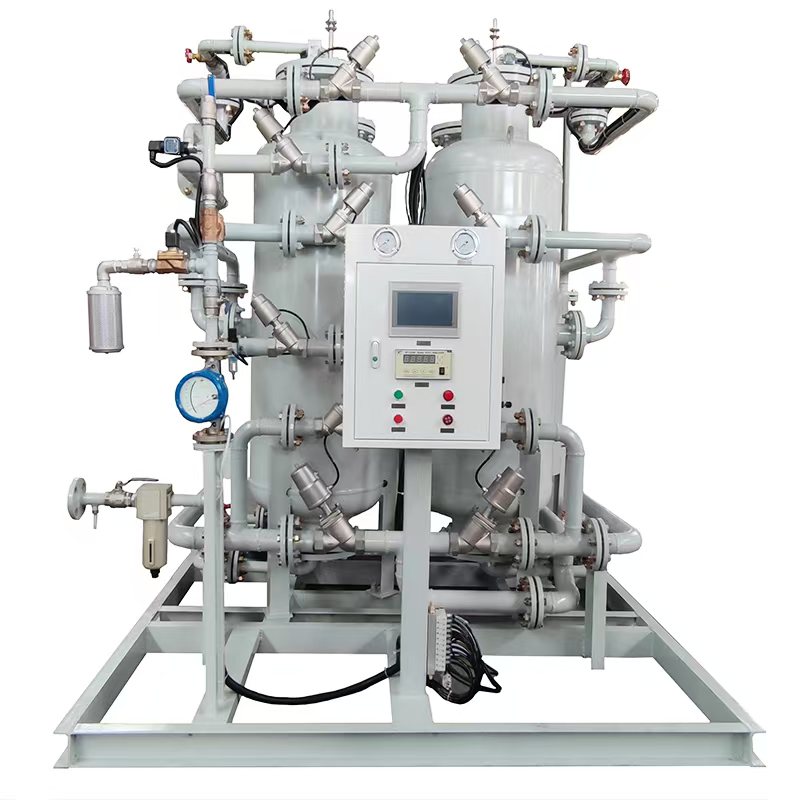
In an industrial production environment where efficiency and economy coexist, accurately analyzing the operating cost structure of industrial nitrogen generators and identifying their key influencing factors are the fundamentals for enterprises to achieve energy conservation and consumption reduction and enhance competitiveness. The total operating cost of industrial nitrogen generators is not determined by a single factor, but the result of the interaction of multiple complex factors. A detailed disassembly and quantitative analysis of it will help us grasp the core of cost control and point out the direction for subsequent optimization strategies.
Power consumption: the “big head” of the operating cost of industrial nitrogen generators
There is no doubt that power consumption is the largest and most critical part of the operating cost of industrial nitrogen generators, usually accounting for 70% or even more of the total operating cost. By deeply analyzing the source of power consumption, we can find that:
Air compressor: the energy consumption “monster” of the nitrogen making system: The air compressor that provides the air source for the industrial nitrogen generator is the absolute energy consumer in the entire system. Its power consumption usually accounts for 80%~90% of the total energy consumption of the entire nitrogen making system. This is because the air compressor needs to compress a large amount of ambient air from normal pressure to high pressure (usually 0.6-1.0 MPa), and this physical process itself consumes a huge amount of energy. Its selection, operating efficiency and maintenance status directly determine the energy consumption baseline of the nitrogen generator.
Auxiliary equipment energy consumption: In addition to the air compressor, other auxiliary equipment in the industrial nitrogen generator system also consumes electricity. This includes cold dryers (or adsorption dryers) for removing moisture from compressed air, precision filters for removing oil and particulate matter (energy consumption increases with pressure difference), and electrical control units and valve movements for controlling the operation of the entire system. For PSA industrial nitrogen generators, the opening and closing of valves and pressure balance during the periodic switching of the adsorption tower also require a certain amount of electrical energy to drive.
Equipment maintenance and repair costs: investment to ensure the long-term operation of industrial nitrogen generators
This part of the cost covers all investments made to ensure the continuous, stable and efficient operation of the industrial nitrogen generator system. It includes the cost of preventive maintenance (Planned Maintenance) and sudden maintenance (Breakdown Maintenance):
Replacement of consumables: Regular replacement is a rigid cost. This includes the “three filters and one oil” (air filter element, oil filter, oil-gas separator filter element, lubricating oil) of the air compressor; the filter element of the nitrogen generator pre-precision filter (dust removal, oil removal, sterilization, etc.); for the PSA industrial nitrogen generator, the core carbon molecular sieve (CMS) will also gradually age or fail with the passage of operating time, the influence of intake air quality and fluctuations in operating conditions, and needs to be supplemented and replaced regularly or irregularly.
Wear and replacement of parts: Valves (especially switching valves), seals, pneumatic components, instruments, sensors and bearings of the air compressor body in the industrial nitrogen generator system will wear out over time and need to be replaced after reaching a certain lifespan to avoid affecting equipment performance or causing downtime.
Professional service and emergency repair: Regularly invite professional engineers to conduct equipment inspection, performance evaluation, parameter calibration; and in case of sudden equipment failure, emergency repair labor costs, spare parts costs, etc.
Manual operation and management costs: Hidden costs of professional operation
Although modern industrial nitrogen generators generally have a high level of automation, their daily operation still requires a certain amount of manpower investment:
Daily inspection and monitoring: Operators need to inspect the equipment regularly to check operating parameters, abnormal noise, vibration or leakage, etc.
Parameter adjustment and optimization: According to changes in production needs, it may be necessary to fine-tune the flow, purity and other parameters of the nitrogen generator.
Fault diagnosis and troubleshooting: Even equipment with a high degree of automation cannot completely avoid failures. At this time, professionals are required to quickly diagnose and troubleshoot.
Maintenance and execution: Maintenance operations such as replacement of various consumables and equipment cleaning also need to be completed manually. For large-scale enterprises or enterprises with high nitrogen requirements, full-time equipment management personnel may even be required.
Compressed air quality: the “behind-the-scenes pusher” that affects the efficiency and life of industrial nitrogen generators
The quality of compressed air entering the industrial nitrogen generator is a key factor in determining its operating efficiency and the life of its core components. Its impact is often hidden but far-reaching:
Damage of pollutants to molecular sieves/membrane components: If the compressed air contains excessive oil, water or solid particles, they will directly contaminate the carbon molecular sieve in the PSA industrial nitrogen generator, reduce its adsorption performance, and even cause the molecular sieve to be “poisoned” and fail prematurely, forcing the company to make expensive replacements. For membrane separation industrial nitrogen generators, unclean air will clog or damage the membrane filaments, resulting in a decrease in nitrogen production or substandard purity.
Shortened filter life and increased energy consumption: Pollutants will also accelerate the clogging of the pre-precision filter element, resulting in an increase in the frequency of filter element replacement, which directly increases the cost of consumables; at the same time, filter element clogging will cause an increase in pressure drop, forcing the air compressor to operate at a higher load, thereby increasing power consumption.
Nitrogen purity and flow requirements: Energy consumption differences under customized requirements
Customers’ specific requirements for nitrogen purity and actual gas flow have a significant impact on the operating cost of industrial nitrogen generators:
Positive correlation between purity and energy consumption: Nitrogen purity is a key parameter affecting energy consumption. Producing higher purity nitrogen usually means longer adsorption time, smaller gas flow or more frequent regeneration cycles, which consumes more electricity. For example, from 99.5% purity to 99.999% purity, the unit nitrogen energy consumption may increase exponentially.
Flow matching and efficiency: Industrial nitrogen generators should match the actual gas flow as much as possible. If the equipment operates at a load far below the rated gas output for a long time, it may lead to inefficiency and unnecessary energy waste. Conversely, if the gas consumption exceeds the design capacity of the equipment, it may not be able to meet production needs.
Environmental factors: subtle effects of the operating environment of industrial nitrogen generators
Although not as significant as the previous items, environmental factors will also have a certain impact on the energy consumption of industrial nitrogen generators:
Ambient temperature: Too high ambient temperature will increase the heat dissipation load of air compressors and cold dryers, resulting in reduced working efficiency and increased power consumption.
Ambient humidity: A high humidity environment means more water vapor in the air, which will increase the load of cold dryers or adsorption dryers to remove moisture, thereby increasing their energy consumption.
Energy-saving technology and solutions
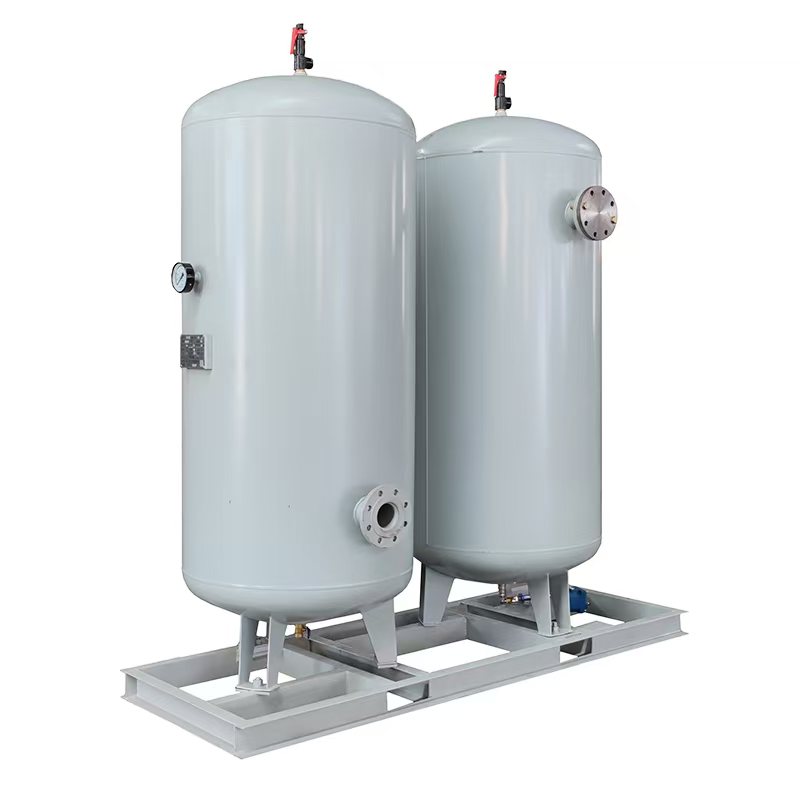
For the above key cost factors, we can implement refined energy-saving optimization strategies from multiple dimensions to maximize the operating efficiency and minimize the cost of industrial nitrogen generators.
Optimize the compressed air system:
Since the air compressor is a major energy consumer in the entire nitrogen production system, optimizing it is the top priority for energy saving and cost reduction.
Choose an efficient air compressor: Permanent magnet variable frequency screw air compressor is preferred. The variable frequency technology can automatically adjust the speed and gas output of the air compressor motor according to the fluctuation of the terminal nitrogen demand, so that it always runs in the high-efficiency zone, effectively avoiding the huge energy waste caused by frequent loading/unloading of traditional industrial frequency air compressors when the gas consumption is low (unloading energy consumption is usually still as high as 30%~40%). Its investment payback period is usually short.
Regular maintenance and testing: Strictly implement the daily inspection and regular maintenance plan of the air compressor. Including but not limited to regular inspection and replacement of consumables such as air filters, oil filters, oil-gas separators, coolers, etc. to ensure that they are unobstructed and prevent the system pressure drop and air compressor load from increasing due to blockage. Regularly test the operating parameters of the air compressor, such as current, voltage, exhaust pressure, temperature, etc., to promptly identify potential problems and deal with them.
Pipeline network optimization and leakage control: Systematically optimize the compressed air delivery pipeline. Use pipes of appropriate size to reduce pressure drop and avoid unnecessary elbows and joints. The most important thing is to regularly detect leaks in the entire compressed air pipeline network (such as using an ultrasonic leak detector) and repair all leaks in a timely manner. According to statistics, the leakage rate of a factory pipeline network may be as high as 20%~30%. Controlling leakage is the lowest cost and fastest energy-saving measure.
Waste heat recovery: During the operation of the air compressor, about 85%~95% of the electrical energy is converted into heat energy and dissipated into the air. By installing an air compressor waste heat recovery device, this part of waste heat can be used to heat production water, domestic hot water or as a winter heating heat source, realizing the cascade utilization of energy and significantly reducing the overall energy cost.
Improve the efficiency of the nitrogen generator:
Reasonably select the model and configuration of the nitrogen generator: When purchasing a nitrogen generator, it is necessary to accurately match it according to the actual nitrogen demand of the enterprise (peak, average, night/weekend usage), the required nitrogen purity, pressure and other parameters. Avoid choosing too large or too small equipment to avoid waste of initial investment or low efficiency in later operation. Within the range allowed by purity, appropriately reducing the nitrogen purity can significantly reduce the unit nitrogen energy consumption. For example, reducing from 99.999% to 99.9% may bring more than 30% energy savings.
Choose high-quality molecular sieves/membrane components: High-quality carbon molecular sieves have higher adsorption capacity, faster adsorption/desorption rates and longer service life. Selecting high-quality molecular sieves provided by reputable suppliers can effectively improve nitrogen production efficiency and reduce the frequency of molecular sieve replacement. For membrane separation nitrogen generators, membrane components produced with advanced materials and processes can provide higher separation efficiency and longer service life.
Optimize adsorption/separation cycle parameters: For PSA nitrogen generators, the adsorption-desorption cycle process can be optimized by accurately adjusting parameters such as adsorption time, regeneration pressure, and regeneration flow rate to ensure efficient regeneration of molecular sieves and maximize nitrogen production. Many modern PSA nitrogen generators are equipped with intelligent control algorithms that can automatically adjust operating parameters according to inlet conditions and outlet gas requirements to further improve efficiency. For example, by setting “economy mode” or “deep sleep mode”, energy consumption can be reduced when gas consumption is low.
Regular maintenance and calibration: Regularly inspect, clean and calibrate key components such as valves, pipes, sensors, and instruments inside the nitrogen generator. Ensure that the valves are sensitive and leak-free; the pipes are not blocked; and the sensor readings are accurate so that the control system can accurately control based on real data. Maintain the cold dryer to ensure a stable dew point and prevent moisture from entering the molecular sieve.
Intelligent control and management:
Central monitoring and remote management system: Establish a centralized nitrogen production system monitoring platform to display and record various operating parameters in real time, such as the operating status of the air compressor, the pressure difference of each filter, the gas flow rate of the nitrogen generator, the nitrogen purity, the dew point, and the pressure change in the tower. Through data analysis, abnormal conditions (such as excessive pressure difference and decreased purity) can be discovered in time, and remote fault diagnosis and parameter adjustment can be carried out to reduce the frequency of manual inspections and improve the response speed.
Energy management system (EMS) integration: Incorporate the nitrogen production system into the overall energy management system of the factory. Accurately measure, count and analyze the power consumption related to nitrogen production, and generate energy consumption reports. By mining historical energy consumption data, identify energy consumption peaks and valleys, evaluate the effect of energy-saving transformation, and provide data support for continuous optimization.
On-demand nitrogen supply control strategy: Implement a dynamic control strategy based on actual needs. For example, when the amount of nitrogen used is reduced, the speed is automatically reduced by the variable frequency air compressor or the nitrogen generator operation mode is adjusted by the control system to avoid unnecessary full-load operation and reduce standby energy consumption. Combined with the production plan, adjust the production load of the nitrogen generator in advance to achieve precise matching.
Optimize the use of nitrogen:
Completely eliminate nitrogen leakage: Although nitrogen is non-toxic and harmless, leakage is a huge cost waste. Perform thorough leak detection (such as using foam water or ultrasonic leak detector) on all pipelines, valves, joints, equipment interfaces, etc. that use nitrogen in the factory, and repair them in time. In some occasions where high nitrogen purity is required, small leaks can also cause external air to enter, affecting product quality.
Reasonably set nitrogen purity: This is one of the most direct and lowest-cost energy-saving measures. Many companies often blindly pursue high purity when planning, but in actual production, not all applications must reach 99.999% or even higher purity nitrogen. In some inerting, protection or transportation applications, 99% or 99.5% purity is sufficient to meet the requirements. For every 0.5%~1% reduction in nitrogen purity, the energy consumption of the nitrogen generator may be reduced by 10%~30%, or even higher. Enterprises should conduct detailed evaluation and graded nitrogen supply according to the actual needs of each gas consumption point.
Optimize nitrogen use process: Re-examine and optimize the consumption mode of nitrogen in the existing production process. For example, in the process of purging or cleaning, can the nitrogen consumption be reduced by optimizing the purge time, pressure, flow rate or using pulse purge? In the inerting protection of reactors or storage tanks, can more precise flow control or layered inerting technology be used?
Nitrogen recovery and reuse: For nitrogen discharged from certain processes (especially tail gas with high purity or containing other valuable components), it can be considered to be recycled and purified for reuse. This can not only save nitrogen consumption, but also reduce waste gas emissions.
Summary
The optimization of the operating cost of industrial nitrogen generators is a complex and promising project. It requires enterprises to pay attention not only to the advancement of the equipment itself, but also to pay attention to comprehensive consideration and fine management from the system level. By making simultaneous efforts in multiple dimensions such as the efficient transformation of the air compression system, the intelligent operation of the nitrogen generator, and the refined management of the terminal nitrogen use link, enterprises can significantly reduce the energy consumption and operating costs of nitrogen production. Selecting permanent magnet variable frequency air compressors with excellent performance, using high-quality molecular sieve/membrane components, combining advanced automation control systems, and strictly implementing daily maintenance plans, while reasonably configuring nitrogen purity and flow according to actual needs and eliminating leakage will be the key path to maximize cost-effectiveness. Under the current wave of global green manufacturing and sustainable development, deep energy-saving optimization of industrial nitrogen generators is not only a strategic choice for enterprises to enhance their own competitiveness, but also an inevitable trend to fulfill social responsibilities and move towards an efficient and environmentally friendly industrial production model. Through the various strategies and technical solutions detailed in this article, we hope to provide a comprehensive and practical blueprint for industrial enterprises in achieving the economy and environmental friendliness of nitrogen production.
Request a Quick Quote Now
Shanghai Sollant Energy Saving Technology Co., Ltd.
Drawing on our years of experience and expertise in air separation and PSA technologies, we deliver customized solutions tailored to your specific needs.
