
Working principle of oilfield oil well gas compressor
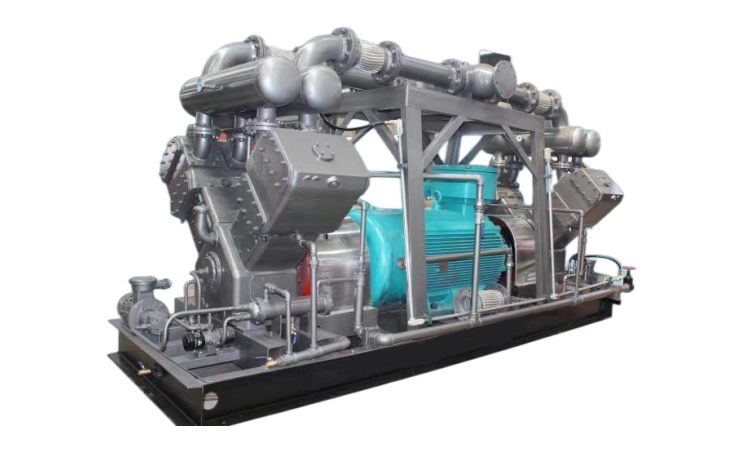
In the global energy landscape, natural gas, as an efficient and clean fossil energy, is playing an increasingly important role. It is widely used in power generation, industrial fuel, civil heating and chemical raw materials, and has a profound impact on global economic development and environmental protection. However, it is not a one-time thing for natural gas to be extracted from deep underground and finally be safely and efficiently delivered to end users. In this complex industrial chain, oilfield well gas compressors play a key role in connecting the upper and lower levels. It is not only the “heart” of the natural gas production process, but also the core equipment for realizing the transformation of natural gas from low-pressure dispersed state to high-pressure centralized transportation. Starting from the source of natural gas collection, this article will analyze in detail the definition and key role of oilfield well gas compressors, deeply analyze their working principles, and fully reveal the complete process of natural gas pressurization, and finally explore their indispensable maintenance and maintenance strategies. It aims to build a comprehensive, in-depth and technically detailed cognitive framework for oilfield well gas compressors and their status in the natural gas industry for readers.
Natural gas collection and initial oil field processing: the starting point of the natural gas journey
The life cycle of natural gas begins with millions of years of sedimentation deep in the earth’s crust. Natural gas collection is the process of extracting it from these natural “treasures”, and its complexity is no less than a perfect combination of geology and engineering:
Exploration and evaluation: Before formal drilling, geologists will use seismic exploration, geological mapping and other technologies to conduct detailed analysis of underground geological structures to locate potential natural gas reservoirs. Subsequently, through drilling exploration wells, coring, logging and other means, the natural gas content, permeability, porosity and formation pressure of the reservoir are evaluated. These data are important bases for determining the extraction plan and predicting production.
Drilling engineering: Drilling is the physical entrance to natural gas extraction. Modern drilling technologies, such as directional drilling and horizontal drilling, enable the drill bit to accurately penetrate complex formations and even extend several kilometers underground to maximize contact with the reservoir and improve recovery. During the drilling process, the mud circulation system is used to cool the drill bit, carry cuttings and stabilize the well wall.
Completion operations: After drilling, completion is required. This includes running casing and cementing to isolate different formation fluids and protect the wellbore; then running oil pipes, packers and other production equipment to provide channels for natural gas to flow out.
Perforation operation: In order to enable natural gas to flow from the reservoir into the wellbore, perforation is required. The perforating bullet forms perforation channels in the casing, cement ring and formation through high-energy jets to open up the connection between the reservoir and the wellbore.
When natural gas is produced from the wellhead along with formation fluids, it is usually a mixture of gas, liquid, solid and other phases. Therefore, the initial treatment of oil fields is a key link to ensure the quality of natural gas, prevent equipment corrosion and blockage, and prepare for subsequent transportation and deep processing:
Multiphase separation: This is the core of the initial treatment. The commonly used equipment is a three-phase separator, whose working principle is based on the difference in fluid density. After the mixed fluid enters the separator, due to gravity, the densest formation water will settle to the bottom, the middle layer is crude oil, and the lightest natural gas will float to the top. The baffle and flow channel design inside the separator can effectively slow down the flow rate and promote phase separation. The separated natural gas usually contains a certain amount of liquid hydrocarbons and water vapor, which requires further processing.
Solid phase removal: The produced natural gas flow may carry tiny solid particles such as mud, rock chips, etc. If these solid impurities are not removed in time, they will wear the equipment and block the pipeline. Therefore, after the separator, a filter (such as a cyclone filter, a cartridge filter) is usually set to separate the solid particles by physical interception or centrifugal force.
Dehydration process: Water vapor in natural gas is a potential “time bomb”. During transportation, especially in low temperature environments, water vapor may combine with hydrocarbon molecules in natural gas to form solid natural gas hydrates, which in turn block pipelines and even cause safety accidents. Therefore, dehydration is essential.
Absorption dehydration: The most commonly used method is ethylene glycol (TEG) dehydration. TEG has a strong water absorption capacity. By allowing natural gas to contact with liquid TEG in countercurrent, TEG can absorb water vapor in natural gas, and then the water-rich TEG is recycled after regeneration and heating to remove moisture.
Adsorption dehydration: Use the physical adsorption of solid adsorbents (such as molecular sieves, silica gel, activated alumina) to remove water vapor. After the adsorbent is saturated, it can be regenerated by heating. Adsorption dehydration can usually achieve a lower dew point and is suitable for occasions with higher requirements for the water content of natural gas.
Desulfurization and decarbonization: Natural gas from some oil and gas fields contains high concentrations of hydrogen sulfide (H2S) and carbon dioxide (CO2), collectively referred to as acid gas. H2S is highly toxic and corrosive and must be removed before the natural gas enters the pipeline network. Although CO2 is non-toxic, it will reduce the calorific value of natural gas and may form corrosive acids when coexisting with water.
Amine desulfurization and decarbonization: This is the most common industrial desulfurization and decarbonization method. The selective absorption of H2S and CO2 by different amine solutions (such as MDEA, MEA, DEA) is used to purify natural gas.
Liquid hydrocarbon recovery and stabilization: The light liquid hydrocarbons (condensate) separated by the initial treatment usually contain volatile components, which need to be separated by a stabilization tower to recover high-value liquefied petroleum gas (LPG) and stabilized condensate.
After this series of initial treatments, the natural gas reaches the quality standard for transportation and further processing, and is ready for the subsequent pressurization link.
Oilfield oil well gas compressor: “Pump” of natural gas artery

In the long journey of natural gas from production wells to consumer terminals, oilfield oil well gas compressors are the core power to drive gas flow. It is not just a simple mechanical device, but also the heart and artery of the entire natural gas gathering and transportation system.
Definition: Oilfield oil well gas compressors are a kind of power machinery specially designed to increase the pressure of natural gas so that it can overcome pipeline resistance for long-distance transportation, meet storage conditions or achieve specific process requirements. They are usually arranged in natural gas production bases, gas gathering stations, processing plants and booster stations of long-distance pipelines.
Detailed analysis of key roles:
Realize long-distance transportation of natural gas: Most natural gas fields are far away from major consumer markets. The pressure of natural gas produced at the wellhead is usually low, which is not enough to overcome the huge friction resistance of long-distance pipelines. Compressors increase the pressure of natural gas to tens or even hundreds of megapascals (MPa), giving it the potential energy to flow, so that it can reach the user end efficiently and economically through thousands of kilometers of pipelines. This is like the blood pressure of the human body. Without sufficient blood pressure, blood cannot flow to the whole body.
Improve the efficiency of natural gas gathering and transportation: In a large oil and gas field, there may be dozens or even hundreds of production wells. The production and pressure of each well may be different. Without compressors, these scattered low-pressure natural gases are difficult to be effectively collected and centrally processed. Compressors can collect and pressurize the natural gas from each well to form a unified high-pressure flow, which is convenient for centralized delivery to the processing plant or external transmission pipeline, thereby significantly improving the operating efficiency and economy of the gathering and transportation system.
Meet the requirements of natural gas processing technology: Many deep natural gas processing processes have clear requirements for the inlet pressure. For example, natural gas liquefaction (LNG) requires extremely high pressure to cool the natural gas to -162°C and liquefy it. The compressor is a key equipment in the liquefaction plant. In addition, desulfurization, decarbonization and other links sometimes also need to be pressurized to improve reaction efficiency or separation effect.
Realize natural gas storage and peak shaving: Natural gas demand fluctuates in different seasons or different times of the day. In order to balance supply and demand, natural gas is often stored in underground gas storage or liquefied natural gas (LNG) tanks. Whether filling underground gas storage or liquefying natural gas for storage, compressors are required to provide high pressure. During peak gas consumption, compressors can also be used to pressurize stored natural gas and send it to the pipeline network.
Enhanced oil and gas recovery (EOR): In some old oil fields or low-permeability reservoirs, when the formation energy is exhausted and the self-flowing capacity decreases, secondary oil recovery technologies such as gas injection (such as natural gas drive, CO2 drive) or gas lift can be used. The compressor is responsible for pressurizing the natural gas and injecting it into the ground to replenish the formation energy, reduce the viscosity of crude oil or reduce the pressure of the crude oil column, thereby increasing the ultimate recovery of oil and gas. This is of great significance for extending the life of the oil field and maximizing the exploitation of underground resources.
Recovering low-pressure associated gas: In some oil fields, natural gas is produced as an associated gas with crude oil. If the associated gas pressure is too low to be directly sent to the pipeline or processed, it may be directly burned (flared) in the past. Now, by installing a low-pressure compressor, these low-pressure associated gases can be recovered and pressurized, turning waste into treasure, reducing environmental pollution and improving resource utilization.
In summary, gas compressors are not only engineering machinery, but also the core strategic assets for the natural gas industry to achieve efficient, safe and economical operation.
Working Principle of Oilfield Oil Well Gas Compressor: The Art of Energy Conversion
The core of the working principle of gas compressor is to convert the external input mechanical energy into the pressure energy inside the gas. The way of realizing this energy conversion determines the type and application scope of the compressor. It is mainly divided into two categories: positive displacement compressor and dynamic compressor.
Positive displacement compressor: compression by changing volume
Positive displacement compressor sucks in, closes, compresses and discharges gas by periodically changing the volume of its working chamber. They are usually suitable for small flow and high pressure ratio occasions.
Reciprocating compressor:
Principle: This is one of the oldest and most common types of compressors. Its core components are cylinder, piston, crankshaft connecting rod mechanism, and suction valve and exhaust valve. When the crankshaft rotates, the piston moves back and forth in the cylinder.
Features: Reciprocating compressors can achieve very high pressure ratios and are usually used in natural gas pipelines that require high-pressure transportation, or as pre-stage compression for processes such as cryogenic liquefaction. But its disadvantages are that the exhaust is pulsating, vibrates greatly, has a complex structure, has many moving parts, and requires more maintenance.
Structure: It includes cylinder (usually with cooling jacket), piston, piston rod, crosshead, connecting rod, crankshaft, fuselage, flywheel, and intake and exhaust valves. Lubrication system and sealing system are crucial.
Principle: It is mainly composed of a pair of intermeshing screw rotors (male rotor and female rotor) installed in a precision-machined casing. When the rotor rotates, the working volume formed between the teeth changes continuously.
Features: Screw compressors have the advantages of compact structure, small size, smooth operation, low vibration, low noise, continuous and pulsation-free exhaust, few wearing parts, and easy maintenance. They are usually used in medium pressure and flow occasions, and are widely used in natural gas gathering and transportation stations and process compression.
Type: It is divided into dry screw compressors (no oil between rotors, relying on precision gear synchronization) and wet (oil injection) screw compressors (lubricating oil is sprayed into the working chamber to play a role in lubrication, sealing, and cooling). Natural gas compressors are mostly dry or have a small amount of oil injection to avoid mixing oil with natural gas.
Dynamic compressors: converting kinetic energy into pressure energy by increasing kinetic energy
Dynamic compressors transfer kinetic energy to the gas through a high-speed rotating impeller or rotor, and then convert this part of the kinetic energy into pressure energy. They are usually suitable for large flow and medium and low pressure ratio occasions.
Principle: The gas enters from the air intake, passes through the high-speed rotating impeller, and is accelerated by the centrifugal force, and the speed and kinetic energy of the gas increase sharply. Subsequently, the gas enters the diffuser and volute outside the impeller. In the diffuser, the flow channel cross-section gradually expands, the gas flow rate decreases, and its kinetic energy is converted into pressure energy. The volute collects the gas and guides it to the exhaust port.
Features: Centrifugal compressors have the advantages of large flow, continuous gas supply, no pulsation, simple structure, few wearing parts, reliable operation, and low maintenance. They are widely used in large natural gas gathering and transportation stations, long-distance pipeline booster stations, and circulating compressors in natural gas processing plants (such as LNG plants). However, its pressure ratio is relatively low, and multiple stages in series are required to achieve high pressure.
Structure: It is mainly composed of impeller, diffuser, volute, shaft, bearing, seal, casing, etc.
Drive: It is usually driven by a gas turbine, a high-power motor or a steam turbine.
Axial compressor:
Principle: The gas passes through a series of alternating rotor blades and stator blades in the axial direction. The rotor blades work on the gas to increase its speed and pressure; the stator blades guide the gas flow to the next rotor and further convert kinetic energy into pressure energy. Each stage provides a certain amount of boost, and multiple stages in series can achieve high efficiency and pressure.
Features: Axial compressors have very high efficiency and the ability to handle large flows, but their structure is the most complex and the cost is high. They are mainly used in large natural gas compression stations, the compressor part of gas turbines, and large chemical plants.
Selecting the right type of compressor requires comprehensive consideration of factors such as natural gas flow, required pressure, energy consumption, floor space, operating reliability, maintenance cost, and investment budget. Usually, in the same oil and gas field or gas pipeline, different types and combinations of compressors are configured according to different working conditions and requirements.
Analysis of the natural gas boosting process: the transformation journey from low pressure to high pressure
Natural gas boosting is not simply to compress the gas into the compressor and then discharge it, but a complex system engineering involving multiple stages and multiple equipment working together. Its purpose is to increase the natural gas pressure to a level that meets the transportation or process requirements under the premise of ensuring safety and efficiency. A typical natural gas boosting process usually includes the following key links:
Intake air pretreatment and buffering:
Intake air filtration and separation: Before natural gas enters the compressor, it usually passes through a high-efficiency inlet filter and inlet separator. The inlet filter is used to remove tiny solid particles and dust that may remain in the pipeline to prevent them from entering the compressor and wearing the impeller or piston ring. The inlet separator is used to completely separate the trace droplets (such as condensate or water) that may be carried in the natural gas, because the droplets entering the high-speed rotating compressor impeller or the high-speed reciprocating piston cavity will cause liquid impact (liquid hammer) and cause serious damage to the equipment.
Intake buffer tank (or pulse damper): Especially for reciprocating compressors, the suction and exhaust are pulsating. In order to stabilize the airflow and eliminate the impact of pulsation on the compressor and pipeline, a large intake buffer tank is usually set at the compressor inlet. This helps to stabilize the suction pressure and ensure the stable operation of the compressor.
Multi-stage compression and interstage cooling:
Why is multi-stage compression needed? It is uneconomical and unsafe to compress natural gas from a very low pressure to a very high pressure (i.e., a large pressure ratio) at one time. The main reasons are:
Too high temperature: The temperature rises sharply during the gas compression process. Single-stage high pressure ratio compression will cause the exhaust temperature to be too high, which may exceed the tolerance limit of the equipment material, cause safety hazards, and reduce the efficiency of the compressor.
Inefficiency: Isothermal compression (temperature remains unchanged) has the highest efficiency, but the actual compression process is approximately adiabatic compression. Multi-stage compression with interstage cooling can make the entire compression process closer to an isothermal process, thereby significantly improving the overall efficiency and reducing energy consumption.
Mechanical stress: A single-stage high pressure ratio will cause huge mechanical stress on the compressor components.
Intercooling: After each stage of compression, the natural gas will pass through an intercooler (usually an air cooler or a water cooler). The function of the cooler is to cool the high-temperature natural gas to a temperature close to the inlet temperature or the preset temperature.
Energy saving: The density of the cooled gas increases and the volume decreases, and the compression work required when entering the next stage of compression will be reduced.
Safety: Reduce the gas temperature to prevent overheating and equipment damage or explosion.
Removal of condensate: Cooling will condense some heavy hydrocarbon components and water vapor in the natural gas into liquid.
Interstage separation:
After the interstage cooler, an interstage separator (or condensate tank) is usually set. Its function is to capture the liquid (water or light hydrocarbons) condensed by cooling and prevent these liquids from entering the next stage of the compressor. The removal of liquid is essential to protect the subsequent compression stage, and it also recovers valuable liquid hydrocarbons.
Final cooling and outbound separation:
Final cooling (Aftercooling): After completing all compression stages, the high-pressure natural gas also needs to pass through a final cooler. Its purpose is to reduce the temperature of natural gas to a temperature that meets the requirements of downstream transportation or storage, usually ambient temperature or slightly higher. This can prevent the pipeline from deforming due to thermal expansion and contraction, and also help to further remove possible residual water vapor and reduce the risk of hydrate formation.
Outbound separator: After the final cooler, an outbound separator is usually set up. This is the last safety barrier in the process, used to capture trace liquids that may condense after the final cooling, ensuring that the natural gas entering the long-distance pipeline is clean and dry.
Drive system: The power source of the compressor is the drive system. At the oil and gas field site, common drive methods are:
Gas turbine: suitable for large centrifugal compressors, high efficiency, self-use natural gas as fuel, no external power supply required.
Gas engine: suitable for reciprocating or small and medium-sized screw compressors, the fuel is also natural gas, and it is highly flexible.
Electric motor: used in areas with stable power supply and economical electricity costs, low noise and relatively low maintenance costs.
The entire boosting process is an interlocking and precisely controlled system. The design and operation of each link directly affects the efficiency, safety and economy of natural gas boosting. Modern booster stations are usually equipped with advanced automated control systems to monitor parameters such as pressure, temperature, and flow in real time to ensure efficient and stable operation of the compressor units.
Common gas compressor maintenance and care in oil fields: the cornerstone of ensuring continuous production
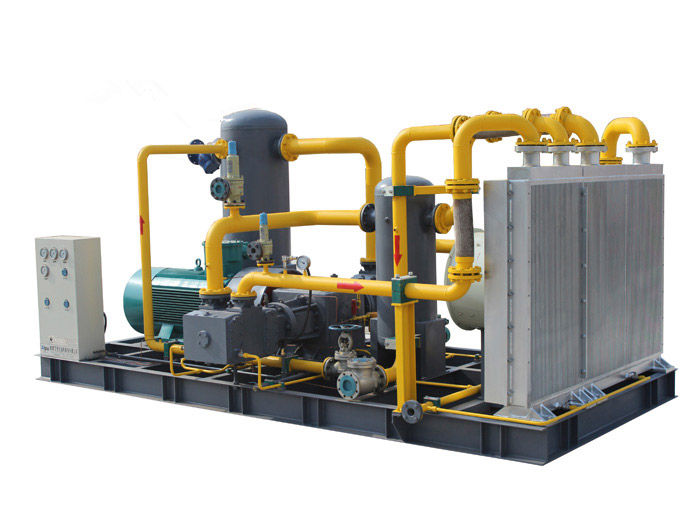
As the core equipment of oil field production, the continuous, stable and efficient operation of gas compressors is directly related to the output and economic benefits of natural gas. Therefore, it is crucial to formulate and strictly implement scientific and systematic maintenance and care plans. This can not only extend the life of the equipment and reduce operating costs, but also avoid production stoppage losses and safety risks caused by sudden failures.
Daily inspection and monitoring: prevent problems before they happen
Daily inspection is the “first line of defense” to discover potential problems. Operators should strictly follow the prescribed routes and frequencies for inspections and record various parameters:
Operation parameter monitoring:
Pressure: Monitor the inlet and outlet pressures, lubricating oil pressure, cooling water pressure, etc. at all levels to ensure that they are within the design range. Abnormal fluctuations may indicate blockage, leakage or valve failure.
Temperature: Monitor exhaust temperature, bearing temperature, lubricating oil temperature, cooling water temperature, etc. at all levels. Excessive temperature is a signal of equipment overheating, increased friction or cooling system failure.
Flow: Monitor the inlet and outlet flow of natural gas to ensure that the compressor operates within the design flow range to avoid surge or overload.
Vibration and noise: Use a stethoscope or hand to check if the compressor, motor, and pipeline have abnormal vibration and noise. Sudden knocking, friction, or whistling sounds often indicate that the internal parts are worn, loose, or damaged.
Liquid level: Check the liquid level of the lubricating oil tank and separator condensate tank to ensure that it is within the safe range.
Leakage: Use a gas leak detector or visually check whether there is natural gas, lubricating oil, or cooling water leakage in the pipeline, valve, and seal. Natural gas leaks are particularly dangerous and must be dealt with immediately.
Appearance inspection: Check whether there is rust, paint peeling, loose fasteners, etc. on the surface of the equipment. Clean the surface of the equipment to maintain good heat dissipation.
Safety device inspection: Regularly check whether the safety interlock devices such as overpressure protection, overtemperature shutdown, and low oil pressure protection are sensitive and reliable.
Regular maintenance and preventive maintenance: the key to extending life
Regular maintenance is a planned inspection, cleaning, adjustment, and component replacement of the equipment based on the equipment’s operating time, operating conditions, and manufacturer’s recommendations.
Lubrication system maintenance:
Lubricating oil replacement: Replace the lubricating oil strictly according to the manufacturer’s specified cycle and oil specifications. Lubricating oil is the “blood” of the compressor, and its quality directly affects the life of bearings and moving parts.
Oil filter replacement: Regularly replace the oil filter to ensure that the lubricating oil is clean and prevent impurities from clogging the oil circuit or wearing parts.
Oil cooler cleaning: Clean the external fins and internal tube bundles of the oil cooler to maintain good heat dissipation and ensure that the lubricating oil temperature is normal.
Oil circuit inspection: Check the cleanliness of the lubricating oil pump, oil pipe, valve, and oil tank to ensure smooth circulation of the lubricating oil.
Air and natural gas filtration system maintenance:
Intake filter cleaning/replacement: Regularly check and clean or replace the intake filter element to prevent dust and impurities from entering the compressor cylinder or impeller and causing wear.
Separator drainage: Regularly discharge condensed water and oil in each level of separator to prevent accumulation of liquid from affecting the separation effect or being brought into the compressor.
Valve inspection and maintenance (for reciprocating):
Valve inspection: Regularly disassemble and check whether the valve plate, valve seat, spring and other parts of the suction valve and exhaust valve are worn, deformed, carbonized or broken. Replace damaged parts in time to ensure that the valve seals well and opens and closes flexibly.
Safety valve verification: Regularly verify the safety valves on the exhaust pipes of the compressor at all levels to ensure that they can open accurately at the set pressure to prevent overpressure.
Moving parts inspection and adjustment:
Bearing inspection: Regularly check whether the main bearing, connecting rod bearing, crosshead bearing, etc. are worn or loose. Adjust or replace the clearance when necessary.
Piston ring and packing seal: Check the wear of the piston ring and packing seal to ensure that their sealing performance is good and reduce gas leakage.
Coupling alignment: Regularly check and correct the coupling alignment between the compressor and the driver to prevent vibration and premature bearing damage caused by misalignment.
Cooling system maintenance:
Cooler cleaning: Clean the air cooler fins or water cooler heat exchange tube bundles to remove scale and dirt to ensure a good cooling effect.
Cooling medium inspection: Check the quality of cooling water to prevent scaling or corrosion. For air coolers, check the fan operation regularly.
Conclusion
Oilfield oil well gas compressors play a vital role in the natural gas industry and are the key bridge connecting the source of natural gas with the consumer market. This article starts from the collection of natural gas in underground reservoirs, to the initial complex processing process, and then deeply analyzes the definition of gas compressors, its core role in the industrial chain, and the working principles of two types of compressors, volumetric and dynamic. Finally, it thoroughly analyzes the complete boosting process of natural gas from low pressure to high pressure, and emphasizes the importance of strict maintenance and maintenance.
We recognize that the raw natural gas produced from the wellhead must be precisely purified to remove impurities and moisture before it can be prepared for subsequent boosting. The gas compressor is the core of energy conversion in this process. Whether it is reciprocating and screw types that change volume, or centrifugal and axial flow types that convert kinetic energy, they are committed to converting low-pressure natural gas into high-pressure gas that can be transported and utilized. The ingenious combination of multi-stage compression, interstage cooling and separation constitutes an efficient and safe natural gas boosting system.
However, even the most advanced equipment cannot be separated from scientific maintenance and care. Daily inspections, regular maintenance, fault diagnosis, and the adoption of predictive maintenance strategies are all indispensable links to ensure the long-term and efficient operation of gas compressors, thereby ensuring the safe and stable supply of natural gas.
Looking to the future, as the global demand for clean energy continues to grow and oil and gas field development moves toward deeper and more complex formations, gas compressor technology will continue to evolve towards higher efficiency, lower energy consumption, greater intelligence, and greater environmental protection. The integrated application of advanced technologies such as new materials, the Internet of Things, big data, and artificial intelligence will make future gas compressor systems more reliable and easier to maintain, contributing more to global energy transformation and sustainable development. Understanding and mastering these key technologies is of great significance to all those who are engaged in or concerned about the energy industry.
Request a Quick Quote Now

Shanghai Sollant Energy Saving Technology Co., Ltd.
Drawing on our years of experience and expertise in air separation and PSA technologies, we deliver customized solutions tailored to your specific needs.
