Menu Close

Membrane Nitrogen Generators vs. PSA: Which Is Right for You?

Membrane Nitrogen Generators

In modern industry, nitrogen is a key industrial gas widely used in various fields, such as food packaging, electronic manufacturing, chemical production, and metal processing. The main role of nitrogen in these applications is to provide an oxygen-free environment to prevent oxidation, explosion and contamination, thereby ensuring product quality and safety.

As industrial demand grows, various nitrogen generation technologies have emerged, providing enterprises with a variety of nitrogen supply solutions. Among them, membrane nitrogen generators and PSA (pressure swing adsorption) nitrogen generators are two common and widely used technologies. Although the ultimate goal of both technologies is to generate high-purity nitrogen, they have significant differences in working principles, application scenarios, equipment complexity, and cost.

Membrane nitrogen generators use the selective permeability of gas separation membranes to separate nitrogen and oxygen in the air. In this way, nitrogen can be extracted from other gases. The generation process does not require high pressure or complex chemical reactions, so the equipment structure is relatively simple and the operation is more convenient. Membrane nitrogen generators are particularly suitable for small industrial applications that do not require high nitrogen purity, such as food packaging, storage and transportation of electronic products, etc.

In contrast, the PSA nitrogen generator uses pressure swing adsorption technology, a process that uses adsorbents to separate nitrogen and oxygen at different pressures. This technology can produce high-purity nitrogen, usually reaching purity levels of 99.9% or higher, and is suitable for use in chemical industry, pharmaceuticals, metal processing and other applications that require high-purity nitrogen. Although the equipment structure of the PSA system is relatively complex and the initial investment is high, its stability and reliability in large-scale industrial production make it the first choice for many enterprises.
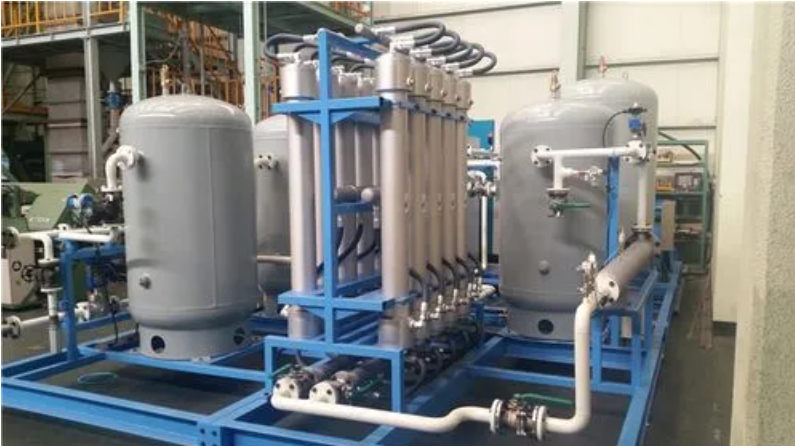
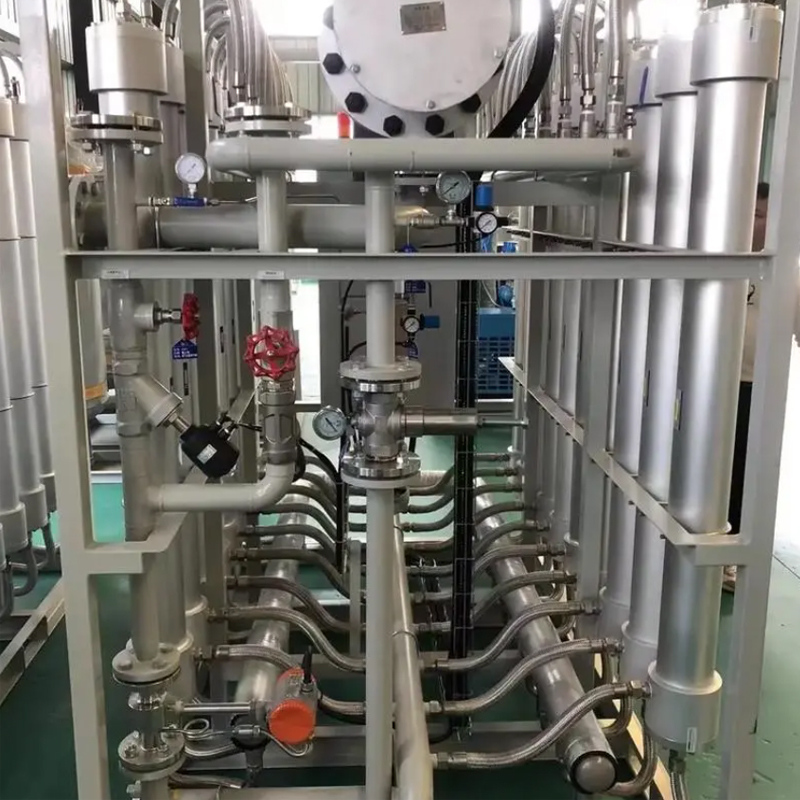
Overview of Membrane Nitrogen Generator

Working Principle

Membrane nitrogen generators utilize the selective permeability of gas separation membranes to extract nitrogen from the air. Gas separation membranes are made of special materials that can effectively separate gases based on the size and solubility of gas molecules. When air enters the membrane separation system, gas molecules such as oxygen, carbon dioxide and water vapor can quickly pass through the membrane due to their small size, while nitrogen molecules are blocked on one side of the membrane, thereby separating high-purity nitrogen.

This process does not require chemical reactions or significant compression of t

Membrane Nitrogen Generators

he air, so membrane technology is simpler and more efficient to operate than other nitrogen generation technologies. Membrane nitrogen generators are usually composed of an air compressor, an air treatment unit, a membrane separation module and a control system. The entire system is compact and easy to install and operate. Since membrane separation technology can operate continuously, it can generate a stable nitrogen flow in a short period of time.

Advantages

Membrane nitrogen generators have many advantages in industrial applications, which makes them an ideal choice in certain occasions.

  1. Simple structure and low maintenance cost
    Membrane nitrogen generators are relatively simple in design, mainly relying on physical separation processes, without complex mechanical parts or chemical treatments, so the equipment has a low failure rate and requires less maintenance. Usually, maintenance is limited to regular inspection and replacement of air filters or membrane components, which greatly reduces operating costs.
  2. Strong continuous operation capability and short response time
    Membrane separation technology enables continuous nitrogen production and can quickly adjust the flow and purity of nitrogen according to demand. Since the system can reach a stable state within a short time after startup, membrane nitrogen generators are particularly suitable for application scenarios that require rapid response.
  3. Suitable for small or mobile application scenarios
    Due to the small size, compact structure and no need for complex installation and setup, membrane nitrogen generators are very suitable for environments with limited space or occasions that require frequent movement. For example, in the fields of food packaging, electronic manufacturing, laboratory gas supply, etc., membrane nitrogen generators can flexibly meet the needs of these applications.

Limitations

Despite the many advantages of membrane nitrogen generators, there are still some limitations in some applications.

Nitrogen purity may be low (usually between 90-99%)
The nitrogen purity generated by membrane separation technology is usually between 90% and 99%. For some applications that require extremely high purity nitrogen, such as specialty chemicals, pharmaceuticals, or electronic manufacturing, membrane nitrogen generators may not be able to achieve the required purity level.

Not suitable for applications requiring high purity nitrogen
When the application scenario has strict requirements on nitrogen purity, membrane nitrogen generators may not be the best choice. For example, in some high-precision manufacturing fields, the purity requirement of nitrogen may be as high as 99.99% or higher, at which time PSA nitrogen generators or other high-purity gas generation equipment are more suitable.

In summary, membrane nitrogen generators have wide application potential in many industrial fields due to their simple structure, low maintenance cost and suitability for small or mobile applications. However, for those industries with extremely high requirements for nitrogen purity, the limitations of membrane nitrogen generators must also be taken into account. In the next section, we will explore the working principle and application scenarios of another common nitrogen generation technology – PSA nitrogen generator.

PSA Nitrogen Generator Overview

Working Principle

PSA (Pressure Swing Adsorption) nitrogen generator uses an advanced gas separation technology, which mainly separates nitrogen and oxygen in the air through the selective adsorption of adsorbents. The core of PSA technology is to use specific adsorbent materials, such as molecular sieves, to selectively adsorb gases at different pressures. When air enters the PSA system, impurity gases such as oxygen and carbon dioxide are preferentially captured by the adsorbent, while nitrogen is retained due to its lower adsorption, thereby achieving the separation of nitrogen from other gases.

PSA systems usually consist of two or more adsorption towers. When the system is working, it performs adsorption and desorption processes by alternating the pressure in the adsorption tower. Under high pressure conditions, the adsorption tower will adsorb impurity gases such as oxygen; while under low pressure or vacuum conditions, the adsorption tower will release these adsorbed gases and restore the adsorption capacity of the adsorbent. In this way, through continuous circulation, the PSA system can continuously produce high-purity nitrogen. Since this technology does not require high-temperature heating or complex chemical reactions, the operation process is relatively environmentally friendly and energy-saving.

Advantages

PSA nitrogen generators have significant advantages in industrial applications, especially where high purity nitrogen is required.

  1. Achieves high-purity nitrogen production (99.9% or higher)
    The biggest advantage of PSA technology is its ability to produce extremely high purity nitrogen, typically 99.9% or higher. This high-purity nitrogen is crucial in many industrial fields, such as chemical production, pharmaceuticals, electronics manufacturing, etc. The purity of nitrogen directly affects the quality and safety of products. Therefore, PSA nitrogen generators are widely used in industries that have strict requirements on gas purity.
  2. Flexible to adapt to large-scale industrial production needs
    PSA nitrogen generators are highly flexible and can be adjusted according to different production needs, thus adapting to industrial applications of different sizes. Whether it is a small manufacturing company or a large industrial group, PSA systems can provide a stable and efficient supply of nitrogen according to demand. In addition, the PSA system can start up and meet the set purity requirements in a short time, making it suitable for industrial processes with large-scale continuous production.

Limitations

Although PSA nitrogen generators have many advantages, their limitations in some aspects also need to be considered when making decisions.

Complex equipment, high initial investment
PSA systems usually have high initial investment due to their complex equipment structure and precision-controlled operating processes. The design, installation and commissioning of the equipment require professional technical support, which makes PSA nitrogen generators more expensive than other nitrogen generation technologies in terms of initial investment. Therefore, for some small companies with limited budgets, the high initial cost of PSA systems may become a challenge.

Regular maintenance is required to ensure the normal operation of the system
In order to ensure the long-term stable operation of the PSA nitrogen generator, the system requires regular maintenance. This includes regular inspection and maintenance of key components such as adsorption towers, compressors, valves, and replacement of adsorbents. These maintenance tasks require the participation of professional technicians and may be costly. Therefore, companies need to consider long-term operating and maintenance costs when choosing PSA nitrogen generators.

In summary, PSA nitrogen generators have become the first choice in many industrial fields due to their high-purity nitrogen production capacity and flexible adaptation to large-scale production. However, the complexity of the equipment and the high initial investment and maintenance costs also require companies to conduct a full cost-benefit analysis when choosing this system. In the next section, we will compare the application scenarios of membrane nitrogen generators and PSA nitrogen generators to help readers make a more informed choice.

Comparison of applicable scenarios

Applicable scenarios of membrane nitrogen generators

1. Small industrial applications
Membrane nitrogen generators are very suitable for small industrial scenarios due to their simple structure and compact equipment. These devices can provide a reliable supply of nitrogen to meet the needs of small-scale production lines. Due to their high efficiency and no need for complex maintenance, membrane nitrogen generators can bring economical nitrogen solutions to small businesses.

2. Food packaging, electronic product protection
In the food packaging industry, nitrogen is often used to prevent oxidation and extend the shelf life of products. Membrane nitrogen generators can effectively provide the required nitrogen flow and purity, and are suitable for nitrogen protection for food packaging. Similarly, the protection of electronic products also requires a nitrogen environment to prevent oxidation, and membrane nitrogen generators can meet this demand.

3. Applications requiring fast response and lower purity nitrogen
Membrane nitrogen generators have a short startup time and can quickly provide nitrogen, which is very suitable for application scenarios that require fast response. For example, in laboratories or production lines where the gas environment needs to be changed quickly, membrane nitrogen generators can instantly provide the required nitrogen volume and purity. In addition, the purity of membrane nitrogen generators is usually between 90% and 99%, which is suitable for application scenarios where purity requirements are not particularly high.

PSA nitrogen generator applicable scenarios

1. Large-scale industrial manufacturing
PSA nitrogen generators are particularly suitable for large-scale industrial manufacturing, and their high-purity nitrogen production capacity can meet the needs of large-scale production. For example, in industries such as steel smelting and fertilizer production that require a large amount of high-purity nitrogen, PSA nitrogen generators can provide a stable supply of nitrogen to ensure the smooth progress of the production process.

2. Chemical, pharmaceutical, metal processing and other occasions requiring high-purity nitrogen
The chemical and pharmaceutical industries have strict requirements on nitrogen purity to ensure the safety of the reaction and the quality of the product. PSA nitrogen generators can provide nitrogen with a purity of up to 99.9% or higher, which meets the requirements of these industries. In the metal processing process, high-purity nitrogen is used to protect molten metal and prevent oxidation, so PSA systems are also widely used in this field.

3. Applications for long-term use and requiring stable purity
PSA nitrogen generators are designed for long-term and stable operation, which is particularly important for applications that require a continuous and stable nitrogen supply. Because it can maintain stable nitrogen purity over a long period of time, the PSA system is very suitable for applications that have strict requirements on nitrogen quality and require long-term operation, such as large chemical plants, pharmaceutical production lines, etc.

When choosing the right nitrogen generator, it is important to understand the applicable scenarios of membrane nitrogen generators and PSA nitrogen generators. Due to its simplicity and economy, membrane nitrogen generators are suitable for small industries and applications that do not require high nitrogen purity. PSA nitrogen generators, with their high purity and stability, have become the first choice for large industries and applications that require high-purity nitrogen. By deeply analyzing your needs and application scenarios, you can make a more informed choice and ensure that the nitrogen generator you choose can best meet your business needs.

Selection Guide

Evaluate your needs

When choosing the right nitrogen generator, you first need to evaluate your specific needs. This includes the following aspects:

  1. Nitrogen Purity Requirements
    Determining your nitrogen purity requirements is a key factor in choosing the right nitrogen generator. If your application requires high-purity nitrogen, such as chemical reactions, pharmaceutical production, or precision manufacturing, a PSA nitrogen generator may be a more suitable choice because it can provide nitrogen with a purity of up to 99.9% or even higher. If your required purity is relatively low, a membrane nitrogen generator may meet your requirements and its cost is usually lower.
  2. Application Size
    Choose the right nitrogen generator based on the size of your application. If your production line is small or in the early stages, a membrane nitrogen generator may be an affordable choice due to its simple structure and low cost. However, for large production facilities or occasions where a high-yield nitrogen supply is required, a PSA nitrogen generator can provide higher nitrogen production and stability.
  3. Budget
    Budget is an important factor in deciding which nitrogen generator to choose. Membrane nitrogen generators generally have lower initial investment and maintenance costs, suitable for projects with limited budgets. Although the initial investment of PSA nitrogen generator is higher, its long-term stability and high-purity nitrogen supply can bring greater economic benefits in long-term operation. When making a decision, considering the initial cost of the equipment as well as the long-term operation and maintenance costs will help you make the best choice within your budget.

Consider future expansion

When choosing a nitrogen generator, you also need to consider future production expansion plans:

  1. Production scale expansion
    If you expect to expand your production scale in the future, it may be more appropriate to choose a PSA nitrogen generator. The PSA system has a large processing capacity and flexible adjustment functions to cope with the increased demand for nitrogen in the future. Its scalability makes it an ideal choice for large-scale industrial production and long-term operation. In contrast, although the membrane nitrogen generator is suitable for current small or medium-sized applications, it may require additional equipment to meet the needs when facing scale expansion.
  2. Technology upgrade
    The technology and equipment of the PSA nitrogen generator are relatively mature and can support a variety of complex production needs. If your business development requires the introduction of a higher-tech nitrogen production system, the system design and technical support of the PSA nitrogen generator can better adapt to these changes. The technical upgrade of the membrane nitrogen generator may require additional equipment or modification, and its expansion capacity in handling high-purity needs is limited.

In conclusion

When choosing a nitrogen generator, membrane nitrogen generators and PSA (pressure swing adsorption) nitrogen generators each have different characteristics and applicable scenarios. Based on the selective permeability of its gas separation membrane, membrane nitrogen generators are suitable for small industrial applications and those occasions with low nitrogen purity requirements, such as food packaging and electronic product protection. Its simple structure, low maintenance cost, and fast startup response are suitable for applications that require fast response and lower purity nitrogen. However, its nitrogen purity is usually between 90%-99%, so it is not suitable for occasions with strict requirements on nitrogen purity.

On the other hand, PSA nitrogen generators can provide 99.9% or higher purity nitrogen through pressure swing adsorption technology, which is suitable for large-scale industrial manufacturing, chemical, pharmaceutical and metal processing fields, which have high requirements for nitrogen purity. Although the PSA system has more complex equipment and higher initial investment, its long-term stability and efficiency make it the preferred choice for large-scale production and long-term operation.

When making the final decision, companies need to choose the right nitrogen generator according to their specific needs. Understanding the nitrogen purity requirements, application size, and budget are key factors in the selection process. If your business plans to expand production or have a growing demand for nitrogen supply in the future, the high output and scalability of PSA nitrogen generators will provide you with a better long-term solution. In contrast, while membrane nitrogen generators are suitable for small applications today, they may require additional equipment investment for future expansion.

Considering the initial investment, operating costs, and maintenance costs of the equipment can ensure that the nitrogen generator you choose not only meets the current business needs, but is also fully prepared for future growth and expansion.

Request a Quick Quote Now

  • Shanghai Sollant Energy Saving Technology Co., Ltd.

    Drawing on our years of experience and expertise in air separation and PSA technologies, we deliver customized solutions tailored to your specific needs.

  • Subscribe to Our Blog

    We will never rent or sell your email to anyone.