
How to optimize energy efficiency through LPG compressor technology?
.png)
In the context of the global energy structure transformation, the development and efficient use of clean energy has become the focus of attention of all countries. As an efficient, environmentally friendly and clean fuel, liquefied petroleum gas (LPG) is widely used in industrial, commercial and civil fields. However, during the storage, transportation and use of LPG, the compression and expansion of its volume pose a challenge to energy consumption. As a key equipment in the LPG system, the technical level of LPG compressor directly affects the efficiency of LPG energy utilization. This article will deeply explore the working principle of LPG compressor, the significance of energy optimization, and elaborate on how LPG compressor technology can significantly improve energy efficiency through innovation and upgrading, thereby contributing to sustainable development.
Working principle of LPG compressor
LPG compressor is a device that reduces the volume and increases the pressure of gaseous LPG through mechanical action. Its core working principle is to use mechanical parts such as pistons, screws or blades to compress the LPG gas volume.
Volumetric compression: This is the most common type of LPG compressor. The gas is inhaled, compressed and discharged by changing the volume of the working chamber.
Reciprocating compressor: mainly composed of cylinder, piston, connecting rod, crankshaft and other parts. The piston reciprocates in the cylinder. When the piston moves outward, LPG gas is sucked into the cylinder; when the piston moves inward, LPG gas is compressed and discharged after the pressure increases. Its advantages are simple structure and convenient maintenance, suitable for medium and low flow and medium and high pressure occasions.
Screw compressor: It consists of a pair of intermeshing yin and yang rotors. After LPG gas enters the suction end, as the rotor rotates, the gas is continuously pushed to the exhaust end, and the volume gradually decreases, thereby achieving compression. Screw compressors have the advantages of smooth operation, low vibration, low noise, continuous exhaust and no pulsation, etc., and are suitable for large flow and continuous operation occasions.
Rotary vane compressor: The rotor is eccentrically installed in the stator, and the blades on the rotor are close to the stator wall under the action of centrifugal force to form several working chambers. As the rotor rotates, the volume of the working chamber changes continuously, realizing the suction, compression and discharge of gas.
Speed compression (dynamic compression): Use a high-speed rotating impeller to do work on the gas, increase the gas speed, and then convert kinetic energy into pressure energy through the diffuser. Centrifugal compressors are typical speed compressors.
Centrifugal compressors: Mainly composed of high-speed rotating impellers, diffusers and volutes. LPG gas enters from the center of the impeller. Driven by the high-speed rotation of the impeller, the gas speed increases rapidly, and then enters the diffuser, where the kinetic energy is converted into pressure energy, and is discharged after the pressure increases. Centrifugal compressors have large flow, compact structure, and smooth operation, but their adaptability to changes in gas flow and pressure is relatively poor.
Regardless of the type of LPG compressor, its core purpose is to minimize energy loss while ensuring safe and efficient transmission of LPG.
The significance of energy optimization
Energy optimization has far-reaching significance in LPG compressor technology. It is not only related to economic benefits, but also directly affects environmental protection and sustainable development.
Reduce operating costs: Compressors are high-energy-consuming equipment, especially in industrial applications, where electricity or fuel costs account for a considerable proportion. By optimizing energy and reducing the energy consumption of the compressor, the operating costs of the enterprise can be directly reduced and the economic benefits can be improved.
Reduce carbon emissions: Energy consumption is usually directly related to carbon emissions. By improving energy utilization efficiency and reducing the energy required for the operation of LPG compressors, greenhouse gas emissions can be effectively reduced, helping to achieve the goals of carbon peak and carbon neutrality.
Improve system reliability: Energy optimization is often accompanied by the improvement of equipment performance and the optimization of operating conditions. For example, reducing operating temperature and friction loss can help extend equipment life and reduce failure rates, thereby improving the reliability of the entire LPG system.
Comply with environmental regulations: With the improvement of global environmental awareness, countries have increasingly stringent regulations on energy efficiency and carbon emissions. The use of energy-optimized LPG compressor technology can help companies meet or exceed these regulatory requirements and enhance their corporate image.
Promote technological innovation: The pursuit of energy optimization is the driving force for continuous innovation in LPG compressor technology. In order to achieve higher efficiency, manufacturers will invest in research and development to develop more advanced materials, more optimized structures and smarter control systems, thereby promoting the progress of the entire industry.
How LPG compressor technology improves energy efficiency
LPG compressor technology covers all aspects from design, manufacturing to operation and maintenance in improving energy efficiency, which is mainly reflected in the following aspects:
High-efficiency motor and drive system: Using IE3 or IE4-level high-efficiency motors and variable frequency drive (VFD) technology can enable the compressor to maintain high operating efficiency under different loads. The inverter can intelligently adjust the motor speed according to the LPG flow demand to avoid unnecessary energy loss.
Optimize compression chamber design:
Reduce leakage: Precision processing technology and high-quality sealing materials can effectively reduce LPG leakage inside the compression chamber and avoid ineffective power consumption.
Optimize flow channel: Improve the structure of the suction and exhaust valves and the design of the internal flow channel to reduce gas flow resistance and pressure drop loss. For screw compressors, optimizing the rotor profile can improve volumetric efficiency.
Advanced cooling system: Compressing LPG will generate a lot of heat. Efficient cooling systems (such as water cooling, air cooling or oil cooling) can effectively take away the compression heat, reduce the exhaust temperature, thereby improving compression efficiency and extending equipment life. Heat recovery technology can also convert this part of waste heat into usable energy, further improving the overall energy utilization rate.
Intelligent control and monitoring system: Modern LPG compressors are generally equipped with PLC (programmable logic controller) or DCS (distributed control system), which can monitor the operating parameters of the compressor (such as pressure, temperature, flow, power, etc.) in real time. Through data analysis, predictive maintenance can be carried out, potential problems can be discovered and solved in time, and unplanned downtime and energy waste can be avoided. In addition, the intelligent control system can automatically adjust the operating mode according to actual needs to achieve energy-saving operation.
Waste heat recovery: If the heat generated during the compression process is directly discharged, it will cause energy waste. By installing a waste heat recovery device, the heat generated by the LPG compressor can be used to preheat other media, provide heating, or drive absorption refrigeration, etc., to achieve the cascade utilization of energy.
Lubrication system optimization: The use of special LPG compressor lubricants with low friction and high lubrication performance can reduce mechanical friction loss and energy consumption. At the same time, optimize the lubricating oil circulation system to ensure that lubrication is in place without waste.
Modular and integrated design: The modular design facilitates installation, maintenance and upgrading, reducing the complexity of on-site construction. The integrated design integrates the compressor, drive system, control system and cooling system into a compact unit, reducing pipes and connectors and reducing energy loss.
Application scenarios of LPG compressor technology
The efficient operation of LPG compressors is crucial to many industries, and its application scenarios are wide and diverse:
LPG storage and transportation and refueling stations: In the storage and transportation of LPG (such as shipping, rail tank trucks, road tank truck loading and unloading) and LPG refueling stations, LPG compressors are used to transport LPG from tanks to vehicles or from one tank to another to ensure fast, safe and efficient LPG transportation.
LPG gasification stations and peak load regulation: In LPG gasification stations, compressors are used to increase the pressure of gasified LPG so that it can be stably transported to the gas pipeline network to meet industrial or civilian needs. In gas peak load regulation, compressors are used to pressurize and gasify liquid LPG to supplement natural gas supply during peak demand periods.
Industrial fuel supply: Many industrial production processes, such as ceramics, glass, steel, chemicals, etc., use LPG as a clean fuel. LPG compressors are responsible for delivering high-pressure LPG stably in such applications to meet the fuel pressure requirements of burners or industrial furnaces.
Chemical and refining: In the petrochemical and refining industries, LPG is an important by-product and raw material. LPG compressors are used to recover, separate, refine and transport LPG to ensure the smooth progress of the production process.
LPG filling and cylinder liquefaction: In LPG cylinder filling plants, compressors are used to extract LPG from large-capacity storage tanks and pressurize them into domestic or commercial LPG cylinders.
Agricultural and civil use: In some remote areas or areas not covered by natural gas pipelines, LPG is widely used as a living fuel, and compressors play an auxiliary transportation role in such applications.
Cost-effectiveness analysis of LPG compressor technology
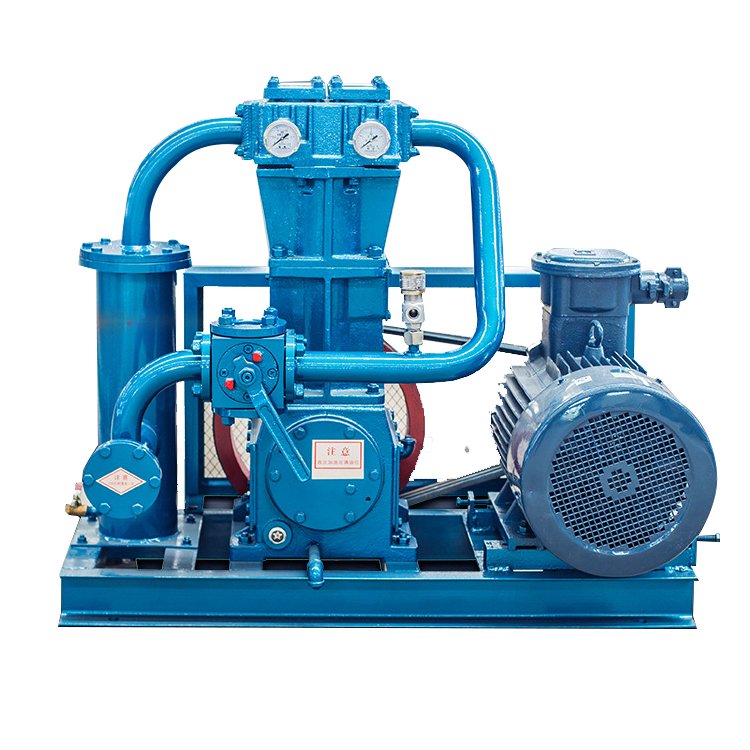
Investing in LPG compressor technology upgrades can bring significant cost benefits in the long run:
Initial investment: The initial purchase cost of using efficient and intelligent LPG compressors may be higher than that of traditional equipment. This includes additional investments such as high-efficiency motors, inverters, intelligent control systems, and possible heat recovery devices.
Operating cost savings: This is the main source of benefits.
Electricity/fuel costs: High-efficiency compressors significantly reduce energy consumption. Over the long term, the electricity or fuel costs saved will be considerable, and the initial investment difference can usually be recovered within a few years.
Maintenance costs: High-quality, optimized compressors usually operate more stably and have lower failure rates, so maintenance costs and downtime losses are also reduced.
Spare parts consumption: Improved operating efficiency means reduced equipment wear, thereby reducing the frequency of spare parts replacement.
Environmental benefits and social responsibility: Although this is not directly reflected in financial statements, reducing carbon emissions and environmental pollution will help improve the company’s social image, comply with national environmental protection policies, and may even receive government subsidies or tax incentives.
Improved production efficiency: A more reliable and stable LPG supply can ensure the continuous operation of the production line, avoid shutdowns or inefficiencies caused by LPG supply problems, and indirectly improve overall production efficiency.
Improved asset value: Equipment using advanced technology usually has a higher residual value, and better returns can be obtained when the equipment is upgraded.
Overall, although the initial investment of high-efficiency LPG compressors is relatively high, its long-term savings in operating costs, maintenance costs and environmental benefits make its total cost of ownership (TCO) lower and its return on investment (ROI) higher. For industrial users with long-term operation, this investment is completely worthwhile.
How to choose the right LPG compressor
Choosing the right LPG compressor is the key to ensuring the efficient operation of the system, and the following factors need to be considered comprehensively:
Flow and pressure requirements: This is the most basic parameter. According to the LPG flow (volume or mass per unit time) and pressure (suction pressure and exhaust pressure) required by the actual application scenario, select a compressor of corresponding specifications.
LPG components and properties: Different LPG components (propane, butane ratio) will affect its physical properties. It is necessary to ensure that the compressor materials and seals are compatible with LPG to avoid corrosion or leakage.
Working environment conditions: Consider the ambient temperature, humidity, altitude, dust level and whether there are corrosive gases at the installation site, and select a compressor with a protection level and explosion-proof level (if necessary) suitable for the environment.
Energy efficiency level: Prioritize LPG compressors with high energy efficiency levels (such as IE3/IE4 motors with inverters). Although the initial investment may be slightly higher, the long-term energy consumption is low and the operating cost is lower.
Reliability and durability: Choose well-known brands with good market reputation and successful cases. Understand the manufacturer’s production process, quality control system and after-sales service.
Convenience of maintenance and overhaul: Consider the difficulty of daily maintenance and overhaul cycle of the equipment, and choose models with reasonable structural design and convenient maintenance.
Noise and vibration: If the installation environment has strict requirements on noise and vibration, low-noise, low-vibration screw or specially designed reciprocating compressors should be selected.
Safety features: LPG is a flammable and explosive gas, so LPG compressors must have a complete safety protection system, such as overpressure protection, overtemperature protection, gas leakage detection, emergency shutdown and other functions, and comply with relevant explosion-proof standards.
Cost budget: Under the premise of meeting performance and safety requirements, choose the most cost-effective product. In addition to the purchase cost, installation cost, operation cost and maintenance cost should also be considered.
Supplier technical support and after-sales service: High-quality after-sales service, including spare parts supply, technical guidance, troubleshooting and regular maintenance, is essential to ensure the long-term stable operation of LPG compressors.
Conclusion
LPG compressor technology plays a pivotal role in optimizing energy efficiency. Through an in-depth understanding of the working principle of the compressor, as well as technological innovations in multiple dimensions such as high-efficiency motors, optimized design, intelligent control, and waste heat recovery, LPG compressors can not only significantly reduce energy consumption and operating costs, but also effectively reduce carbon emissions, helping companies fulfill their environmental responsibilities and achieve sustainable development. In the face of increasingly severe energy challenges and environmental pressures, continuously promoting the advancement and application of LPG compressor technology will be a key link in building an efficient and green energy system, contributing to the healthy development of the LPG industry and the optimization of the global energy structure. Choosing the right LPG compressor and making full use of its energy-saving technology will bring considerable economic and environmental benefits to the company.
Request a Quick Quote Now

Shanghai Sollant Energy Saving Technology Co., Ltd.
Drawing on our years of experience and expertise in air separation and PSA technologies, we deliver customized solutions tailored to your specific needs.
