
Low-emission technology for natural gas compressors: environmental challenges and opportunities
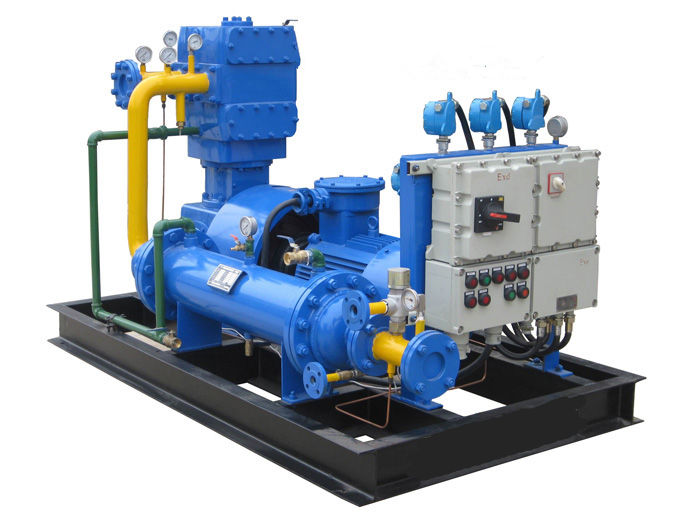
As a relatively clean fossil energy, natural gas plays a vital role in the transformation of the global energy structure. Compared with coal and oil, natural gas combustion produces lower carbon dioxide emissions and almost no ash and sulfide, so it is widely regarded as a “bridge” connecting traditional energy and new energy. However, there are still environmental challenges in its entire industrial chain, especially in the natural gas compression link. Natural gas compressors are core equipment in the process of natural gas extraction, transportation, storage and distribution. Their operating efficiency and environmental friendliness are directly related to the carbon footprint and environmental performance of the entire natural gas industry. With the increasingly severe global climate change and the increasingly tightened carbon emission and environmental protection regulations of various countries, the development of “low-emission” technology for natural gas compressors has become urgent. This is not only an inevitable trend of technological innovation, but also a core issue for the sustainable development of the industry.
This article aims to deeply explore the basic principles and applications of natural gas compressors, and analyze their emission sources and environmental impacts in detail. The article will comprehensively explain the development status of natural gas compressor low-emission technology, the significant environmental benefits, and frankly face the many challenges currently faced by natural gas compressor low-emission technology. Through the discussion of these aspects, it is hoped that useful insights can be provided for the future development of the natural gas compressor industry.
1.Basic principles and applications of natural gas compressors
1.1 Basic principles of natural gas compressors
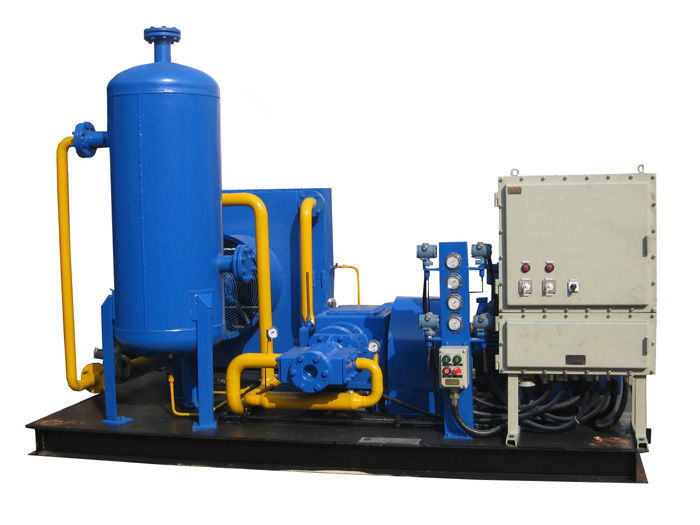
Natural gas compressors are devices that mechanically work low-pressure natural gas to increase its pressure and usually reduce its volume. Its core principle is to use rotating or reciprocating parts to increase gas pressure by changing the gas volume or directly applying force to the gas.
Positive displacement compressor: compresses gas by changing the volume of the working chamber.
Reciprocating compressor: uses the reciprocating motion of the piston in the cylinder to complete the pressurization through the suction, compression and discharge processes. Widely used in high-pressure and large-displacement applications.
Rotary compressor: includes screw type, vane type, etc. The gas is compressed by the rotation of the rotor or the movement of the vane. Screw compressors are becoming increasingly popular due to their compact structure and smooth operation.
Speed compressor (dynamic compressor): Work is performed on the gas by a high-speed rotating impeller to convert kinetic energy into pressure energy.
Centrifugal compressor: The gas is accelerated by a high-speed rotating impeller, and then the kinetic energy is converted into pressure energy through a diffuser. It is characterized by large flow rate and wide range of pressure increase, and is suitable for large occasions such as long-distance pipelines.
Axial flow compressor: The gas flows axially through multi-stage blades and is pressurized step by step. It is usually used in occasions that require large flow and high pressure ratio, such as large gas turbine intake compression.
1.2 Core application scenarios of natural gas compressors
Natural gas compressors run through all links of the natural gas industry chain and are the key to ensuring the safe and efficient transportation and utilization of natural gas.
Natural gas extraction and gathering:
Pressurized extraction: For natural gas wells with insufficient pressure, compressors are used to increase the recovery rate.
Gas field gathering: The gas produced by scattered gas wells is collected and sent to the processing plant through compressors.
Natural gas processing and liquefaction:
Gas processing: In processes such as dehydration, desulfurization, and decarbonization, compressors are required to provide the pressure required for processing.
Liquefied natural gas (LNG): In the process of natural gas liquefaction, the compressor is the core equipment, which is responsible for compressing the natural gas multiple times and cooling it to extremely low temperatures.
Long-distance natural gas pipelines:
Gas transmission booster stations: Gas stations set up along the way, which re-pressurize the natural gas during transportation through compressor units to overcome pipeline friction and ensure long-distance transportation capacity. This is the most important single application of natural gas compressors.
Natural gas storage:
Underground gas storage: Compress natural gas and inject it into underground salt caverns, abandoned oil and gas reservoirs, etc. for peak load regulation or strategic reserves.
CNG/LNG filling stations: In compressed natural gas (CNG) and liquefied natural gas (LNG) filling stations, compressors are used to compress natural gas to high pressure or liquefy it.
Industrial and civil use:
Fuel gas booster: Provide high-pressure fuel gas for industrial boilers, gas turbines, etc.
Urban gas pipeline network: In urban gas transmission and distribution systems, compressors are sometimes required for regional booster.
2.Sources of emissions and environmental impacts of natural gas compressors
During operation, natural gas compressors will produce various types of emissions, which may have negative effects on the environment and human health. Understanding these emission sources is the basis for formulating effective emission reduction strategies.
2.1 Main emission sources
Gas turbine/engine exhaust emissions:
Nitrogen oxides (NOx): mainly generated by the reaction of nitrogen and oxygen in the air at high combustion temperatures. NOx is a precursor to the formation of photochemical smog and acid rain, which is harmful to the respiratory system.
Carbon monoxide (CO): a product of incomplete combustion of fuel. CO is a toxic gas that reduces the oxygen-carrying capacity of the blood.
Unburned hydrocarbons (UHC/VOCs): hydrocarbons that are not completely burned or leaked from fuel. Some VOCs are toxic and are also active substances that form ozone.
Particulate matter (PM): mainly comes from impurities in the fuel or carbon soot produced by incomplete combustion.
Carbon dioxide (CO2): a product of complete combustion of fuel, it is the main greenhouse gas.
Sulfur oxides (SOx): mainly comes from the combustion of sulfur compounds in the fuel, but the sulfur content of natural gas is much lower than that of coal and oil, so the SOx emissions are relatively small.
Methane (CH4) leakage and escape:
Leakage at compressor seal points: poor sealing of compressor shaft seals, valves, flanges, pipe fittings and other connection points causes methane to escape directly into the atmosphere. This is one of the main sources of methane emissions in the natural gas industry.
Venting and sewage discharge: During equipment start-up and shutdown, maintenance, emergency pressure relief or system sewage discharge, unburned or unrecovered natural gas is directly discharged.
Metering and pressure regulating station: trace leakage in instruments, valves, pipelines and other parts.
Emissions during the process: gas emissions during some treatment processes.
Noise pollution:
High-speed operation of compressors and exhaust of gas turbines will generate high-decibel noise, which will affect the surrounding environment and employee health. Although it is not a gas emission, it is also an important environmental pollution problem.
Wastewater and solid waste:
Equipment cleaning, cooling system drainage, etc. may generate wastewater. Solid waste such as waste lubricating oil and waste filter elements.
2.2 Environmental impact
Greenhouse gas effect and climate change:
Methane (CH4): Although it stays in the atmosphere for a shorter time than CO2, its global warming potential (GWP) on a 20-year scale is more than 80 times that of CO2. The contribution of methane emissions caused by natural gas leaks to global warming cannot be ignored.
Carbon dioxide (CO2): As the main greenhouse gas, long-term accumulation leads to rising global temperatures.
Deterioration of air quality and harm to human health:
Nitrogen oxides (NOx): Lead to the formation of acid rain, photochemical smog and fine particulate matter. It is irritating to the respiratory tract and can cause respiratory diseases.
Carbon monoxide (CO): It affects the oxygen delivery capacity of the blood. Inhalation of high concentrations can cause hypoxia and even death.
Unburned hydrocarbons (UHC/VOCs): Some VOCs are toxic and carcinogenic; they are precursors to ozone generation and lead to near-ground ozone pollution.
Particulate matter (PM): Especially fine particulate matter (PM2.5), can penetrate deep into the lungs and even enter the blood, causing cardiovascular and respiratory diseases.
3.Development of low-emission technology in natural gas compressors

In response to environmental challenges, the natural gas compressor industry has invested in research and development to promote the development and application of low-emission technologies, including combustion optimization, seal improvement, leak detection and new energy applications.
3.1.Combustion technology improvement: reducing exhaust emissions from gas turbines/engines
Lean Burn Technology:
Principle: Increase the amount of air so that the gas burns under excess air, lower the temperature to suppress NOx generation, and sufficient oxygen helps complete combustion, reducing CO and UHC.
Application: Widely used in reciprocating engines and gas turbines.
Advantages: Relatively simple structure, effectively reducing NOx, CO and UHC emissions.
Challenges: There is a lean burn limit, and too low fuel-air ratio may cause unstable combustion or flameout.
Dry Low NOx Combustion Technology (DLN):
Principle: For gas turbines, the flame temperature and residence time are precisely controlled through premixing and staged combustion to suppress NOx generation without spraying water or steam.
Implementation: premixed combustion chamber, staged combustion chamber, multi-fuel nozzle design, etc.
Advantages: No additional water treatment system is required, low operating cost, and good emission control effect.
Challenges: Complex design, high requirements for fuel quality and operating conditions, which may affect combustion stability.
Selective Catalytic Reduction (SCR):
Principle: Ammonia (or urea solution) is injected into the exhaust gas of the gas turbine or engine, and NOx is reduced to harmless nitrogen and water under the action of the catalyst.
Application: As a post-treatment device, it is widely used in occasions with extremely high NOx emission requirements.
Advantages: High NOx removal efficiency, up to more than 90%.
Challenges: High investment and operating costs, ammonia escape risk, and requirements for catalyst life.
Advanced burner design: Develop new burner structures and fuel injection strategies, optimize the mixing process, improve combustion stability, and further reduce pollutant generation.
3.2. Sealing technology upgrade: reducing methane leakage
Dry Gas Seals (DGS):
Principle: non-contact sealing, providing sealing effect through a tiny air film between the surfaces of precisely machined dynamic and static rings, no friction, low wear, long life, and low energy consumption.
Advantages: significantly reduce methane leakage (close to zero leakage), reduce friction loss, improve operational reliability, and reduce maintenance. It is a standard configuration for modern centrifugal compressors and some reciprocating natural gas compressors.
Challenges: high initial investment, high requirements for gas cleanliness, and extremely high requirements for design and installation precision.
Zero leakage valves and flanges: use high-performance packing, gaskets and valve structures, such as bellows sealing valves, self-tightening flanges, etc., to ensure long-term sealing performance of the connection points.
Advanced sealing materials: develop new sealing materials that are corrosion-resistant, high-temperature-resistant, wear-resistant and have good elasticity to meet the sealing needs under different working conditions.
3.3. Methane Leak Detection, Monitoring and Control (LDAR)
High-precision leak detection equipment:
Infrared Gas Imager (OGI): Through infrared spectroscopy technology, fast and non-contact leak detection is achieved.
Laser Methane Detector: Using the principle of laser absorption spectroscopy, high-sensitivity detection is performed.
Portable Gas Detector: Used for point-to-point detection and precise positioning of leak sources.
UAV/Satellite Remote Sensing: Combined with high-precision gas sensors, rapid inspection of large-area, long-distance pipelines and facilities and preliminary identification of potential leak sources are achieved.
Smart Sensor Network: Deploy distributed methane sensors in key areas to monitor gas concentrations in real time, alarm for abnormalities, and upload data through the Internet of Things technology to achieve intelligent management.
Leak Repair and Management Strategy: Establish a complete LDAR program to promptly evaluate, classify and repair detected leaks, and formulate preventive maintenance plans.
Waste Gas Recovery and Reuse System: Minimize direct methane emissions through flare recovery, compression recovery or direct integration into the fuel gas system.
3.4. Electrification and new energy drive: Replace gas drive
Electric drive:
Principle: Use high-efficiency electric motors to replace gas turbines or gas internal combustion engines as the driving source of natural gas compressors.
Advantages: Achieve zero emissions at the compressor site (carbon emissions are transferred to the power generation end), significantly reduce noise, relatively low operating and maintenance costs, and more convenient startup.
Challenges: Requires a stable power supply, high initial investment, and the carbon intensity of the power source affects its “cleanliness”.
Renewable energy drive:
Direct solar/wind power supply: In remote areas or areas with imperfect power infrastructure, combined with energy storage systems, solar or wind power is directly used to power small compressors or auxiliary equipment.
Green hydrogen/biomethane drive: With the development of hydrogen energy and biofuel technology, green hydrogen or biomethane can be directly used as fuel for gas turbines/engines in the future, thereby achieving true “zero carbon” or “negative carbon” emissions.
3.5. Intelligent control and operation optimization
Predictive maintenance: Use sensor data and AI algorithms to predict equipment failures, perform maintenance in advance, and avoid venting emissions caused by unplanned downtime.
Operation parameter optimization: Through big data analysis and model optimization, the operation parameters of natural gas compressors are adjusted in real time to enable them to operate under the conditions of highest efficiency and lowest emissions.
Remote monitoring and diagnosis: Improve the visibility and control of operations, detect abnormalities in a timely manner and take measures.
4.Environmental benefits of low-emission technologies
The application of low-emission technologies in the field of natural gas compressors has had a profound and positive impact on environmental protection. These technologies can not only significantly reduce greenhouse gas emissions and improve regional air quality, but also improve resource utilization efficiency and economic benefits, while enhancing corporate social responsibility and brand image.
First, low-emission technologies can effectively reduce greenhouse gas emissions. During the operation of natural gas compressors, methane leakage and escape can be greatly reduced by adopting measures such as dry gas seals, LDAR (leak detection and repair) programs and exhaust gas recovery. As a potent greenhouse gas, even a small reduction in methane emissions can bring significant climate benefits. In addition, improving combustion efficiency through technologies such as lean combustion and DLN (dry low nitrogen oxides) can make fuel combustion more complete, thereby reducing unit output emissions of carbon dioxide. If the natural gas compressor is electrified and the electricity comes from renewable or low-carbon energy, it can even achieve net zero carbon dioxide emissions. Even for coal-fired power generation, concentrating emissions in power plants makes it easier to capture and treat them centrally.
Second, low-emission technologies are crucial to improving regional air quality. Technologies such as lean burn, DLN and SCR (selective catalytic reduction) can effectively control the generation and emission of nitrogen oxides, thereby reducing the formation of photochemical smog and acid rain. This has made a great contribution to improving air quality in cities and densely populated areas. At the same time, combustion optimization technology can also reduce the emission of incomplete combustion products such as carbon monoxide and unburned hydrocarbons (UHC/VOCs), reducing the pollution of these harmful substances to the atmospheric environment. Improved combustion quality also means less particulate matter (PM) emissions, which helps to reduce haze and improve visibility.
Furthermore, low-emission technologies significantly improve resource utilization efficiency and bring considerable economic benefits. Efficient combustion technology and electrification drive usually mean higher energy conversion efficiency, thereby reducing fuel consumption of natural gas compressors. Dry gas sealing technology also reduces shaft power loss and improves compressor efficiency. Reducing methane leakage directly means saving natural gas resources and improving the effective utilization rate of natural gas in the entire industrial chain, which has significant economic value. Although the initial investment may be high, in the long run, low-emission technologies can bring considerable operating cost savings by reducing fuel consumption, reducing emission fines, extending equipment life and reducing maintenance requirements.
Finally, actively adopting and promoting low-emission technologies reflects the company’s commitment to environmental protection and helps enhance the company’s green image in the minds of the public and investors. This can not only help companies comply with increasingly stringent environmental regulations, avoid potential legal risks and fines, and ensure the company’s continued operation, but also play a leading role in addressing climate change and sustainable development and attract more green investment.
5.Challenges faced by low-emission technologies
Despite the many benefits of low-emission technologies, there are still multiple challenges in their promotion and application, which require joint efforts from the industry, government and research institutions to overcome.
5.1 Technology cost and economic efficiency
High initial investment: The initial investment for purchasing and installing compressors equipped with advanced low-emission technologies or modifying existing equipment is often significantly higher than that of traditional equipment. For example, DLN gas turbines, SCR systems, dry gas seals, etc. all require higher procurement costs.
Operation and maintenance costs: Some low-emission technologies may require specific fuel quality, more sophisticated operation control or additional consumables (such as ammonia and catalysts for SCR systems), which increases operating costs. At the same time, high-precision equipment may require more professional maintenance teams and higher maintenance costs.
Economic benefit lag: Although it can bring energy saving and emission reduction benefits in the long run, it may be difficult for companies to see a return on investment in the short term, especially when natural gas prices fluctuate or the carbon trading market is immature.
5.2 Technology maturity and reliability
Long new technology verification cycle: Many cutting-edge low-emission technologies, especially under complex working conditions, require long-term operation verification to ensure their reliability, stability and life.
Environmental adaptability challenges: Natural gas compressors often operate in extreme climatic conditions (such as high desert temperatures and low Arctic temperatures) and complex working conditions (such as high altitudes and corrosive gases). New technologies must be able to withstand these tests.
Maintenance complexity: The maintenance of some advanced technologies (such as high-precision sensors and complex control systems) may be more complex and require higher technical levels and expertise.
5.3 Differences and tightening of regulations and standards
Global emission standards are not unified: There are differences in regulations and standards for natural gas compressor emissions in various countries and regions, which increases the compliance difficulties for multinational operating companies.
Emission standards are becoming increasingly stringent: With the increase of global environmental protection pressure, emission standards in various countries will continue to tighten, requiring companies to continuously upgrade their technology, which puts higher requirements on companies’ R&D investment and equipment updates.
Methane emission supervision needs to be improved: Compared with CO2 and NOx, the precise monitoring, accounting and supervision system for methane emissions in the entire natural gas industry chain is still imperfect, resulting in some companies’ lack of motivation to reduce methane emissions.
5.4 Challenges of existing equipment transformation
Difficulty in transformation: For a large number of existing traditional compressor units, low-emission technology transformation faces huge technical and engineering challenges. For example, installing an SCR system on an existing gas turbine requires sufficient space and considers integration compatibility with the original system.
Loss of shutdown: Transformation usually requires equipment shutdown, which will result in production losses and affect the normal operation of the company.
Low return on investment: For some old equipment, the economic benefits of transformation may be poor, and companies prefer to wait for the end of the equipment life to replace it with new equipment.
5.5 Energy infrastructure and power supply
Limitations of electrification drive: Although electrification is a trend, the deployment of high-power electric drive compressors in remote areas lacking stable grid infrastructure faces huge challenges.
Carbon intensity of power sources: If the power comes from high-carbon emission coal-fired power generation, then electrification only transfers emissions from the terminal to the power generation end, and fails to achieve real emission reduction benefits. This requires the power system itself to undergo a low-carbon transformation.
5.6 Industry talent and technical barriers
Lack of professional talent: The research and development, application, operation and maintenance of low-emission technologies require high-quality talents with relevant professional knowledge and experience. There is still a talent gap in the industry.
Technical barriers: Core low-emission technologies are often in the hands of a few leading international companies. For other companies, especially those in developing countries, there may be barriers to obtaining and applying these technologies.
Conclusion
As a key hub in the natural gas industry chain, the advancement of low-emission technology for natural gas compressors is an inevitable choice to respond to global climate change and environmental protection pressures, and is also the core path for the natural gas industry to achieve sustainable development. At present, low-emission technology has made significant progress in combustion optimization, sealing improvement, methane leakage control and electrification drive, effectively reducing greenhouse gas and air pollutant emissions, and improving resource utilization efficiency and corporate competitiveness.
However, the promotion of low-emission technology for natural gas compressors faces many challenges, which require us to continue to invest in research and development to find more cost-effective, more reliable and easier to promote solutions. Looking to the future, low-emission technology for natural gas compressors will pay more attention to multi-technology integration, digitalization and intelligent transformation. At the same time, with the rapid development of renewable energy and hydrogen energy, using green electricity or green fuel to drive natural gas compressors will become the ultimate goal of achieving “net zero emissions” in the natural gas industry. Ultimately, achieving green and sustainable development in the natural gas compressor industry requires joint efforts from the government, industry enterprises, scientific research institutions and the international community. Only in this way can natural gas compressors contribute to the global energy transformation while minimizing their environmental footprint and truly achieving a harmonious win-win situation of economic and environmental benefits.
Request a Quick Quote Now

Shanghai Sollant Energy Saving Technology Co., Ltd.
Drawing on our years of experience and expertise in air separation and PSA technologies, we deliver customized solutions tailored to your specific needs.
