Menu Close

Industrial Nitrogen Generator: PSA and VPSA

In modern industry, nitrogen, as an important gas, is widely used in many fields, including chemical industry, electronic manufacturing, food processing, medicine and metal processing. The main functions of nitrogen include protecting products from oxidation, improving product quality, extending shelf life and providing stable environmental conditions. Therefore, efficient and stable nitrogen production technology is essential for many industrial production processes.

As a key equipment for producing nitrogen, the choice of nitrogen generator technology directly affects production efficiency, cost and the quality of the final product. Among the many nitrogen generation technologies, PSA (Pressure Swing Adsorption) technology and VPSA (Vacuum Pressure Swing Adsorption) technology are the two main solutions. These two technologies have their own characteristics and are suitable for different industrial needs and application scenarios. Understanding their basic principles and their advantages and disadvantages is crucial for industrial users to choose suitable nitrogen generator equipment.

Importance of Nitrogen Generator in Industry
The main function of nitrogen generator is to separate and produce high-purity nitrogen from air. Nitrogen has a wide range of applications in industry, such as:

  1. Chemical industry: used as protective gas in chemical reactions to prevent oxidation or explosion during the reaction.
  2. Electronic manufacturing: used to provide an oxygen-free environment to ensure the quality and stability of electronic components.
  3. Food processing: used for packaging and preservation of food, extending shelf life, and preventing oxidation and deterioration.
  4. Pharmaceutical industry: used for gas protection during drug production and storage to ensure the purity and stability of drugs.
  5. Metal processing: used as protective gas in welding and heat treatment processes to improve processing quality.

With the continuous development of industrial production, the demand for nitrogen is also increasing, so efficient and economical nitrogen production technology has become particularly important.

PSA (pressure-free adsorption) technology is a mature nitrogen production technology that mainly separates nitrogen through the pressure-free adsorption process. The PSA system uses molecular sieve materials to selectively adsorb and desorb oxygen and nitrogen in the air. Under high pressure, the molecular sieve adsorbs oxygen and other impurities, while nitrogen flows out through the system. When the pressure is reduced, the adsorbed oxygen is released, thereby achieving nitrogen purification and recovery. PSA technology is widely used in medium and high flow nitrogen demand scenarios due to its high nitrogen purity, stable nitrogen production capacity and mature technical background.

VPSA (vacuum pressure-free adsorption) technology is a variant of PSA technology, which speeds up the gas separation process through a vacuum environment at a lower pressure. The VPSA system uses vacuum to reduce the pressure of the gas, thereby improving the regeneration efficiency of the molecular sieve. This method makes nitrogen production more energy-efficient and is particularly suitable for scenarios with low flow demand. VPSA technology generally has a lower initial investment cost and a smaller equipment size, but the purity and production capacity of nitrogen may be slightly inferior to PSA.

By understanding these two technologies, industrial users can choose the most suitable nitrogen generator according to actual needs to achieve the best nitrogen production effect. The following section will analyze the advantages and disadvantages of these two technologies in depth to help readers make more informed decisions in specific applications.
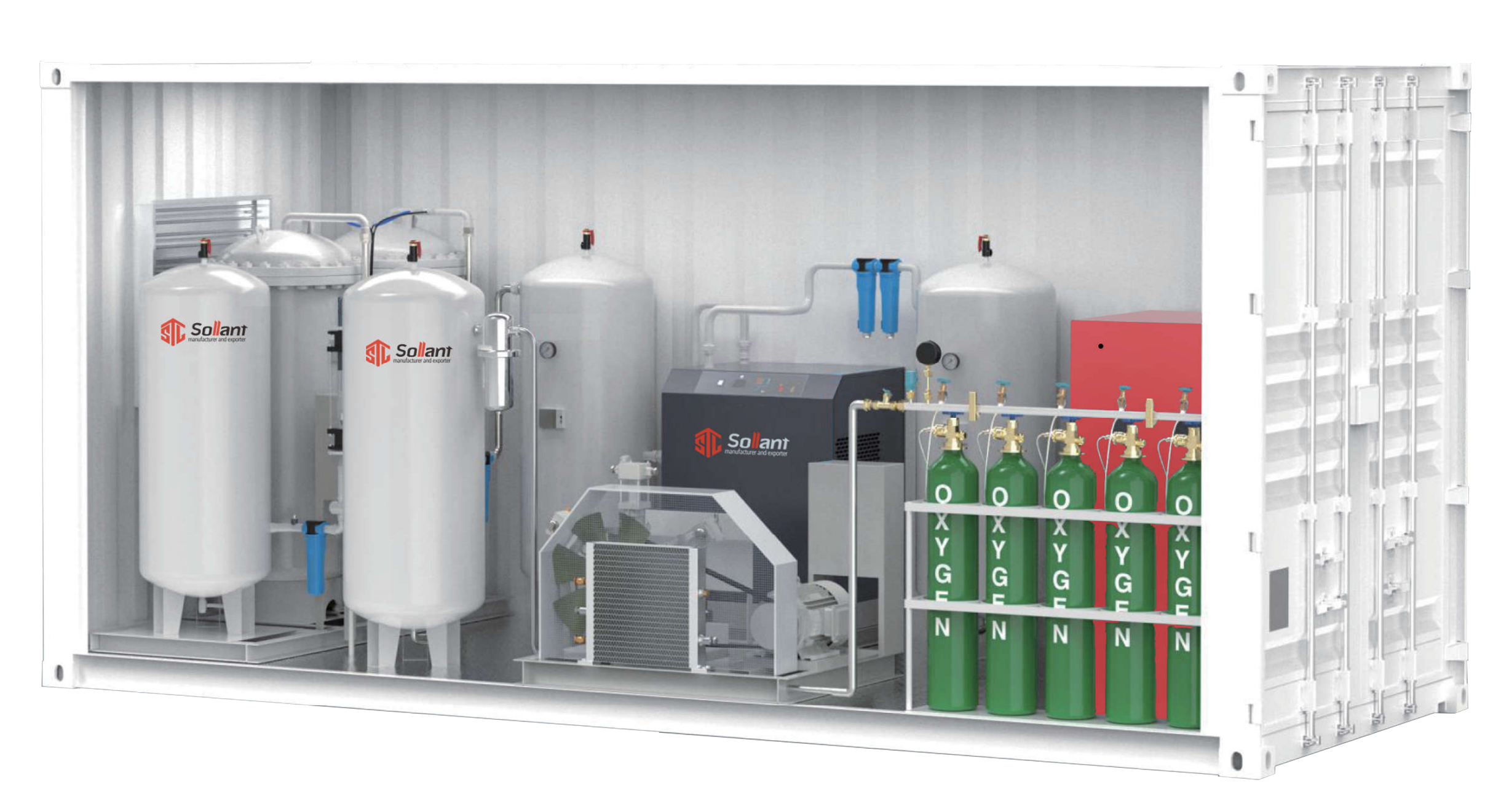
Industrial Nitrogen Generator

PSA Technology Overview

Basic Principle
PSA (Pressure Swing Adsorption) technology is a gas separation technology widely used in industrial nitrogen production. Its basic principle is to separate nitrogen from other components (mainly oxygen) in the air by utilizing the adsorption characteristics of molecular sieve materials. The core of this technology is the pressure swing adsorption process.

In the PSA system, air is first compressed and sent to the adsorption tower. The adsorption tower is filled with molecular sieve materials, which have a strong adsorption capacity for oxygen and other gases, but a low adsorption capacity for nitrogen. When the gas passes through the molecular sieve at high pressure, oxygen and other impurities are adsorbed on the surface of the molecular sieve, while nitrogen flows out through the system to form a high-purity nitrogen product.

After the adsorption process is completed, the system will reduce the pressure and enter the desorption stage. Under low pressure conditions, the adsorbed gas (such as oxygen) on the molecular sieve is released, so that the molecular sieve material regains its adsorption capacity. The gas released during the desorption process can be discharged from the system to prepare for the next round of adsorption. This periodic pressure change enables efficient production of nitrogen.

Adsorption and desorption process
Adsorption process: Under high pressure, air is introduced into an adsorption tower filled with molecular sieves. The molecular sieve material selectively adsorbs oxygen and other gases based on the size of gas molecules and adsorption characteristics. Since nitrogen molecules are small and not easily adsorbed, they flow out of the adsorption tower to form a high-purity nitrogen product.

Desorption process: After the adsorption process is completed, the system will quickly reduce the pressure and enter the desorption stage. At this time, the adsorbed gas (such as oxygen) on the molecular sieve will be released and discharged from the system. During the desorption process, the molecular sieve material is regenerated and ready for the next round of adsorption process.

How nitrogen is produced
The PSA system continuously produces nitrogen through a cyclic adsorption and desorption process. The nitrogen production process generally includes the following steps:

  1. Air compression: The air is compressed to a high pressure state to improve the adsorption efficiency of the molecular sieve.
  2. Gas separation: The compressed air enters the adsorption tower, and the nitrogen is separated after selective adsorption by the molecular sieve.
  3. Nitrogen extraction: Nitrogen flows out of the adsorption tower and becomes the final product after treatment.
  4. Desorption and regeneration: Under low pressure conditions, impurities such as oxygen on the molecular sieve are desorbed and discharged, allowing the molecular sieve material to restore its adsorption capacity.

Advantages

  • High nitrogen purity: PSA technology can produce high-purity nitrogen, usually reaching 99.5% or higher purity levels, suitable for applications requiring high-purity nitrogen.
  • Stable nitrogen production capacity: The technology can provide a stable nitrogen supply to ensure gas quality and stability during the production process.
  • Suitable for medium and high flow requirements: The PSA system design can meet the demand for medium and high flow nitrogen, so it is suitable for larger industrial applications.
  • High technical maturity: PSA technology has a long history of application, mature technology, reliable equipment, and rich maintenance and operation experience.

Disadvantages

  • High initial investment: Due to the complexity and equipment cost of the PSA system, the initial investment is relatively high. This may put pressure on projects with limited budgets.
  • Relatively high energy consumption: The PSA system requires high energy to maintain high pressure and gas circulation, so the energy consumption is high and the operating cost is relatively large.
  • Requires regular maintenance and replacement of adsorbents: Molecular sieve materials will gradually lose their adsorption capacity during long-term use, so they need regular maintenance and replacement, which increases maintenance costs and workload.

VPSA Technology Overview

Basic Principle
VPSA (Vacuum Pressure Swing Adsorption) technology is a gas separation technology used to produce nitrogen. It is an improvement on the traditional PSA technology. The VPSA system achieves nitrogen separation by performing a pressure swing process under a vacuum environment. The technology uses vacuum to reduce the pressure of the gas, thereby improving the gas separation efficiency and energy efficiency.

In the VPSA system, air is first compressed and sent to the adsorption tower. Under high pressure, the molecular sieve material selectively adsorbs oxygen and other gases in the air, while nitrogen is separated. Subsequently, the system reduces the pressure by applying a vacuum, so that the adsorbed gas (such as oxygen) on the molecular sieve material is released. This vacuum pressure swing process has higher energy efficiency and lower operating pressure than the traditional PSA technology.

Vacuum pressure release process

  1. Adsorption process: Similar to PSA, air enters an adsorption tower filled with molecular sieve material under high pressure. The molecular sieve has a strong adsorption capacity for gases such as oxygen, while nitrogen flows out of the tower as product gas.
  2. Desorption process: After the adsorption process is completed, the VPSA system reduces the pressure by applying a vacuum to desorb the oxygen and other gases on the molecular sieve. This vacuum environment allows the molecular sieve to regenerate more effectively and improves overall energy efficiency.
  3. Nitrogen production method: The VPSA system continuously produces nitrogen through a periodic vacuum adsorption and desorption process. The nitrogen production process includes air compression, gas separation, nitrogen extraction, and vacuum desorption and regeneration. This method enables the system to achieve efficient nitrogen production under low energy conditions.

Advantages

  • Higher energy efficiency and relatively energy-saving: VPSA technology reduces energy consumption through the desorption process under vacuum environment, which is more energy-efficient than traditional PSA technology. This makes the VPSA system have lower energy costs in long-term operation.
  • Suitable for low-flow nitrogen demand: VPSA system is particularly suitable for application scenarios with low-flow nitrogen demand, such as small industrial and laboratory use. Its flexible design can meet smaller nitrogen needs.
  • Low initial investment: Since VPSA technology is less complex than PSA technology, the initial investment cost of its equipment is relatively low. This makes it an economical choice for projects with limited budgets.
  • Small equipment size: VPSA system equipment size is usually small, suitable for installation environments with limited space. This also helps to reduce the transportation and installation costs of the equipment.

Disadvantages

  • Nitrogen purity is slightly lower than PSA: Although VPSA technology is capable of producing high-purity nitrogen, its purity is generally slightly lower than PSA technology. This may limit its use in applications that require extremely high nitrogen purity.
  • The technology is relatively new and the equipment life is short: As a relatively new technology, the VPSA system may not be as advanced as PSA technology in terms of equipment life and technical maturity. This may result in the equipment requiring more frequent maintenance and replacement of parts.
  • Requires more operation monitoring and adjustment: The operation of the VPSA system involves the management of the vacuum environment, so more operation monitoring and adjustment are required to ensure the stability and operating efficiency of the system. This increases the complexity of operation and maintenance.

In general, VPSA technology has advantages in low-flow nitrogen production due to its high energy efficiency, low initial investment and small equipment size. However, the issues of nitrogen purity and equipment life also need to be weighed in practical applications.

Comparison of PSA and VPSA techniques

Production capacity and nitrogen purity

High purity of PSA: PSA (pressure-free adsorption) technology provides high-purity nitrogen with its superior separation performance, usually reaching purity levels of 99.5% or higher. This makes PSA systems perform well in applications with strict requirements on nitrogen purity, such as high-precision manufacturing and certain chemical processes.

Economic benefits of VPSA: Although VPSA (vacuum pressure-free adsorption) technology is slightly inferior in nitrogen purity, usually between 98% and 99.0%, it provides economic benefits in low-flow applications. Its low production cost is suitable for scenarios with less high purity requirements, and its low energy consumption also reduces long-term operating costs.

Energy efficiency and operating costs

Energy efficiency comparison between PSA and VPSA: The PSA system needs to operate under high pressure, which results in higher energy consumption. Relatively speaking, VPSA technology reduces pressure by applying vacuum, thereby improving energy efficiency and reducing energy consumption. Therefore, VPSA systems are generally more energy-efficient than PSA systems under the same production conditions.

Impact of long-term operating costs: Although the PSA system has a higher initial investment, its higher nitrogen purity and stability may make it more economical in long-term operation. However, higher energy consumption may increase operating costs. Due to its lower energy consumption and initial investment cost, the VPSA system has relatively low long-term operating costs and is suitable for application scenarios with limited budgets.

Equipment maintenance and life

Maintenance requirements of PSA and VPSA: PSA systems have higher maintenance requirements because the molecular sieve materials inside the equipment need to be replaced and maintained regularly to maintain their adsorption performance. The complexity of the system and high-pressure operation also require more maintenance and inspection. In contrast, the maintenance of the VPSA system is relatively simple, but due to the operation of the vacuum environment, the vacuum system also needs to be monitored and adjusted regularly.

Equipment life and reliability analysis: After years of application, PSA technology has a high equipment life and technical maturity, and generally provides a long service cycle. However, equipment complexity and high-pressure operation may cause certain wear and tear on the equipment. As a relatively new technology, the equipment life and reliability of VPSA technology are still being improved. It may not be as stable as the mature PSA technology, but its simple design and lower operating pressure help to extend the equipment life.

Applicable scenarios and requirements

Application scenarios suitable for PSA: PSA systems are suitable for application scenarios that require high-purity nitrogen, such as large-scale industrial production, precision manufacturing, chemical industry, and pharmaceutical industry. These scenarios usually require nitrogen purity to be above 99.5% to meet strict production requirements.

Application scenarios suitable for VPSA: VPSA systems are suitable for scenarios with low flow nitrogen demand, such as small industries, laboratories, and low-demand production processes. Due to its lower initial investment and energy efficiency advantages, VPSA systems perform well in applications with limited budgets or low nitrogen purity requirements.

Selection Guide

When choosing the right nitrogen production technology, you need to consider multiple factors, including flow requirements, nitrogen purity requirements, energy efficiency, cost and benefits, etc. Here are some guidelines to help you make a wise technology choice based on your specific needs:

1. Flow requirements

PSA technology: Suitable for medium to large flow nitrogen production needs. Since the PSA system is designed to handle higher gas flow rates, it is suitable for large industrial facilities and high-demand production lines.
VPSA technology: Suitable for applications with low flow nitrogen demand. VPSA systems are suitable for smaller-scale production processes, such as laboratories, small industrial applications, or low-demand operating scenarios.

2. Purity requirements

PSA technology: Provides higher nitrogen purity, usually up to 99.5% or higher. Suitable for applications with strict requirements on nitrogen purity, such as precision manufacturing, chemical processes, or pharmaceutical industries.
VPSA technology: Nitrogen purity is usually slightly lower than PSA, usually between 98% and 99.0%. Suitable for scenarios with lower purity requirements, such as general industrial use or food packaging.

3. Energy efficiency considerations

PSA technology: Relatively high energy consumption, because the system needs to operate at high pressure. Suitable for scenarios with high requirements for nitrogen purity and less stringent requirements for energy efficiency.
VPSA technology: Has higher energy efficiency and lower energy consumption. This makes it more economical in long-term operation and suitable for applications with limited budgets or high requirements for energy efficiency.

4. Investment budget

PSA technology: The initial investment is high, the equipment is complex and requires a higher compression and processing system. Suitable for projects with sufficient budgets and high requirements for nitrogen purity and stability.
VPSA technology: The initial investment is low, the equipment is small, and the installation and operating costs are relatively low. Suitable for projects with limited budgets or applications requiring lower flow rates.

5. Long-term operating costs

PSA technology: Although the initial investment is high, in long-term operations, due to its high purity and stability, it can reduce production problems caused by substandard gas purity. However, higher energy consumption may increase operating costs.
VPSA technology: Long-term operating costs are generally low due to higher energy efficiency and lower equipment maintenance costs. Suitable for application scenarios that require economical operation and low operating costs.

In conclusion

When choosing a nitrogen production technology, PSA (pressure get rid of adsorption) technology and VPSA (vacuum pressure get rid of adsorption) technology each have their own unique advantages and disadvantages. PSA technology can provide extremely high nitrogen purity, usually reaching 99.5% or higher, which makes it excellent in industrial applications with strict gas purity requirements. In addition, PSA systems have stable nitrogen production capacity, suitable for medium to large flow requirements, and mature technology and reliable equipment. However, PSA systems have a high initial investment, relatively large energy consumption, and require regular maintenance and adsorbent replacement, all of which increase operating costs.

In contrast, VPSA technology improves energy efficiency by performing pressure get rid of adsorption under vacuum, so it has lower energy consumption and higher energy saving effects. This makes VPSA systems have obvious advantages in applications with low flow nitrogen demand, especially suitable for projects with limited budgets. VPSA technology has a lower initial investment, small equipment size, and limited floor space, but the nitrogen purity is usually slightly lower than PSA, usually between 98% and 99.0%. Because VPSA technology is relatively new, its equipment life and technical maturity are lower, and it requires more operational monitoring and adjustments.

In the future, the development trend of nitrogen production technology will continue to move towards improving nitrogen purity, optimizing energy efficiency and miniaturization of equipment. PSA technology may improve energy efficiency to reduce operating costs, while VPSA technology may improve nitrogen purity to enable it to compete in a wider range of application scenarios. Intelligence and automation will become an important direction for technology development, with the help of advanced monitoring systems and data analysis to optimize equipment operation and maintenance. At the same time, the needs of environmental protection and sustainable development will drive technology to pay more attention to reducing environmental impact and improving resource utilization efficiency.

In general, PSA and VPSA technologies are adaptive to different demand scenarios. PSA technology is suitable for applications that require high-purity, high-flow nitrogen, such as precision manufacturing and chemical processes, while VPSA technology is suitable for low-flow, limited budget or low-purity applications. Choosing the right technology based on specific needs, budgets and application scenarios will help achieve the best economic benefits and production efficiency.

Request a Quick Quote Now

  • Shanghai Sollant Energy Saving Technology Co., Ltd.

    Drawing on our years of experience and expertise in air separation and PSA technologies, we deliver customized solutions tailored to your specific needs.

  • Subscribe to Our Blog

    We will never rent or sell your email to anyone.