
How to improve the overall performance of the gas compression system with efficient and stable diaphragm compressors

In the current era of booming industry 4.0 and high-tech industries, gas, as an important industrial medium, has become a key indicator for measuring the advanced production process and product quality, with its purity, compression efficiency and transportation stability. From semiconductor chip manufacturing to biomedicine research and development, from food and beverage processing to hydrogen energy applications in new energy vehicles, almost all cutting-edge fields have an extreme pursuit of high-purity, pollution-free gas. Although traditional piston, screw or centrifugal compressors play an important role in the general industrial field, their inherent oil lubrication characteristics, dynamic seal wear and potential leakage risks expose obvious limitations in the compression scenarios of high-purity, flammable, explosive, toxic, corrosive or rare gases. Faced with these severe challenges, diaphragm compressors stand out with their revolutionary “oil-free compression” technology and excellent zero leakage characteristics, becoming an ideal solution to these complex problems. This article will deeply analyze how efficient and stable diaphragm compressors can comprehensively improve the overall performance of gas compression systems from multiple dimensions such as working principles, core advantages, performance optimization strategies, fault prevention and maintenance, typical application cases, and scientific selection methods, and provide a set of systematic and forward-looking solutions for related industries.
Basic principles of diaphragm compressors
As the name suggests, the core working component of a diaphragm compressor is a high-strength and extremely flexible diaphragm, which reciprocates in a closed cavity like the “diaphragm” of the human body to achieve the suction, compression and discharge of gas. Unlike pistons or rotors that directly contact the gas, the gas side and the drive side of the diaphragm compressor are completely physically isolated by the diaphragm, which is the fundamental source of its “oil-free” and “zero leakage” characteristics.
Its precise operating mechanism can be elaborated in detail as follows:
Drive system: The power source of the diaphragm compressor is usually provided by an electric motor. The motor drives the crankshaft connecting rod mechanism through a coupling, converting the rotational motion into the linear reciprocating motion of the plunger (or piston rod) in the oil chamber. Some small diaphragm compressors may also use electromagnetic drive or pneumatic drive.
Hydraulic transmission and isolation: The reciprocating motion of the plunger causes the hydraulic oil in the oil chamber to produce periodic pressure changes. This layer of hydraulic oil is the key “force transmission medium”, which effectively and accurately transmits the mechanical force on the drive side to the diaphragm. It is important that this layer of hydraulic oil is completely separated from the compressed gas by the diaphragm. The hydraulic oil itself circulates in the sealed oil chamber without contacting the external gas, thus completely eliminating the possibility of oil contamination of the gas. There are usually oil replenishment valves and oil drain valves in the oil chamber to maintain the appropriate pressure and volume of the hydraulic oil to ensure the normal movement of the diaphragm.
Diaphragm deformation and gas compression:
Intake stroke: When the plunger moves backward, the hydraulic oil pressure in the oil chamber decreases, and the diaphragm sinks downward under the action of the pressure difference. At this time, the volume of the compression chamber (located above the diaphragm) increases rapidly, forming a negative pressure. The pre-designed suction valve (usually self-excited, that is, automatically opened by the pressure difference) opens, and the external gas to be compressed is sucked into the compression chamber.
Compression and exhaust stroke: Then, the plunger moves forward, the hydraulic oil pressure increases, pushing the diaphragm upward, the compression chamber volume decreases, and the inhaled gas is compressed. As the gas pressure gradually increases, when its pressure exceeds the exhaust pipe pressure, the exhaust valve (usually self-excited) automatically opens, and the compressed gas is efficiently discharged to the downstream system.
Key components and materials:
Diaphragm: The diaphragm is the heart of the compressor, and its material selection is crucial. Common diaphragm materials include stainless steel (such as 304L, 316L), Hastelloy, Teflon (PTFE), polyimide, etc. The selection of these materials depends on the corrosiveness, temperature, pressure and required fatigue strength of the compressed gas. In order to improve reliability, modern diaphragms usually adopt a multi-layer structure, such as a safety diaphragm and a leakage alarm channel sandwiched between two or three layers of metal diaphragms to deal with emergencies.
Gas valve: The gas valve (intake valve and exhaust valve) is the control component for gas in and out, and its design directly affects the compression efficiency and stability. Common ones include diaphragm valves, ring valves, plate valves, etc. The materials also need to be compatible with the gas and have good wear resistance and sealing properties. The optimized design of the gas valve can effectively reduce the dead volume and improve the volumetric efficiency.
Cylinder body and head: Usually made of stainless steel or special alloys to withstand high pressure and be well compatible with gas. The cylinder body is usually designed with a water-cooling jacket to cool the compression chamber and the gas valve and control the gas temperature.
Advantages of efficient and stable diaphragm compressors in gas compression
The reason why diaphragm compressors can stand out in many industrial fields is that their core advantages are reflected in multiple levels. These advantages together build their irreplaceable role in improving the overall performance of gas compression systems:
Extremely pure, zero oil pollution: This is the most fundamental and core advantage of diaphragm compressors. Traditional piston compressors require oil to lubricate piston rings and cylinder walls, and screw compressors also require oil to lubricate rotors and cool. These oils will inevitably come into contact with compressed gas, producing oil mist or oil droplets, thereby polluting the gas. The diaphragm compressor completely blocks the contact between hydraulic oil and compressed gas through the physical isolation of the diaphragm. This means that the output gas can reach the highest purity level of “oil-free”, without the need for additional oil removal filters, greatly simplifying the downstream gas processing system and reducing operating costs. This is of decisive significance for industries such as semiconductors, medical pharmaceuticals, food and beverages, and new energy (fuel cells) that have strict requirements on gas purity.
Excellent sealing, approaching zero leakage: diaphragm compressors have almost no other dynamic sealing points except for the inlet and exhaust valves and the fixed area of the diaphragm edge. The diaphragm itself forms a perfect barrier in the compression chamber, preventing the compressed gas from leaking into the external environment or being contaminated by the external air. This near-zero leakage feature is particularly critical for compressing expensive rare gases (such as helium, krypton, xenon), flammable and explosive gases (such as hydrogen, natural gas), highly toxic gases (such as chlorine, sulfur dioxide, ammonia) and radioactive gases. It not only protects the life safety of operators and prevents environmental pollution, but also greatly reduces the loss of precious gases, bringing significant economic benefits.
Wide range of gas compatibility and corrosion resistance: The material selection of diaphragms and valves is extremely flexible, and can be customized according to the chemical properties of the compressed gas (such as strong acids, strong bases, oxidants, etc.), temperature and pressure. From ordinary air, nitrogen, oxygen to highly corrosive chlorine, hydrogen sulfide, halogen gases, to light and easily leaking gases such as hydrogen and helium, diaphragm compressors can provide reliable solutions. For example, the use of Hastelloy or Teflon diaphragms can effectively cope with extremely corrosive media, greatly broadening its application range.
Smooth operation, low noise and vibration: The diaphragm reciprocates under the drive of hydraulic oil, and its movement is smoother than the direct friction between the piston and the cylinder wall. The presence of hydraulic oil also acts as a buffer, reducing mechanical shock. In addition, the precise balance design and the use of sound-absorbing materials make the noise and vibration levels generated by diaphragm compressors during operation much lower than traditional piston compressors, which is conducive to improving the working environment, reducing the impact on surrounding precision equipment, and extending the service life of the equipment itself.
High-pressure compression capability: Diaphragm compressors can easily achieve ultra-high pressure gas compression, with a single stage reaching hundreds of MPa, and multi-stage series connection can even achieve higher pressure levels. This makes it irreplaceable in certain specific fields, such as high-pressure hydrogen filling, supercritical fluid extraction, etc.
Low maintenance cost and long life: Due to the absence of oil pollution problems, the cumbersome steps of replacing and handling lubricating oil are eliminated, and the maintenance of auxiliary equipment such as oil filters and oil separators is also reduced. As the main wear parts, diaphragms and gas valves have a relatively long life, and the replacement process is usually relatively simple. Compared with the wear and replacement of complex valves, piston rings and cylinder liners of traditional compressors, diaphragm compressors show lower maintenance frequency and lower overall operating costs in long-term operation.
Key factors to improve the performance of gas compression systems
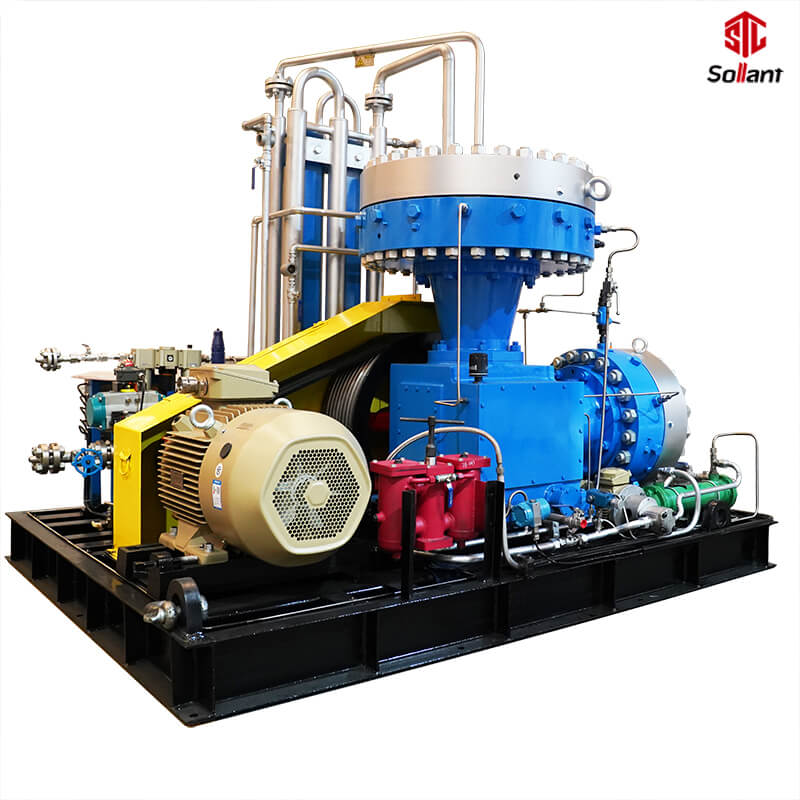
To fully tap the potential of diaphragm compressors and transform their advantages into excellent performance of the entire gas compression system, it is necessary to carry out refined management and consideration from multiple dimensions such as system integration, control optimization, and auxiliary equipment matching:
System overall matching and optimization design:
Accurate selection: Based on the precise gas flow (maximum, minimum, average), inlet and outlet pressures, gas types, purity requirements, and working environment conditions, select the diaphragm compressor model that best meets the needs. This includes determining the number of compressor stages, drive power, cooling method, and the materials of the diaphragm and gas valve.
Integration of supporting equipment: The compressor is not an isolated device, but a part of the entire gas processing system. It must be reasonably matched and integrated:
Intake pretreatment system: including filters (removing solid particles), dehumidifiers (removing moisture), and adsorbers (removing specific impurities) to ensure that the gas entering the compressor is clean, protect the diaphragm and gas valve, and extend the life of the equipment.
Gas storage tank/buffer tank: used to stabilize air pressure fluctuations, meet instantaneous large flow requirements, and provide stable working conditions for the compressor.
Cooling system: Efficient cooling towers, heat exchangers or chillers ensure that heat is dissipated in time during the compression process, maintain the optimal working temperature of the diaphragm, air valve and hydraulic oil, and prevent overheating from causing performance degradation or component damage.
Safety protection devices: Overpressure relief valves, temperature sensors, vibration sensors, emergency stop buttons, etc., constitute multiple safety guarantees to ensure that the system can respond in time and cut off power under abnormal conditions.
Pipeline design and material selection: The pipeline system should minimize flow resistance, avoid dead ends, and ensure no leakage. The selection of pipeline materials must be compatible with the compressed gas and able to withstand the corresponding pressure. Reasonable pipeline layout can also effectively reduce noise and vibration.
Accurate intelligent control and automation:
Application of PLC and HMI: Modern diaphragm compressors generally use advanced PLC (programmable logic controller) as the control core, and cooperate with HMI (human-machine interface) to achieve intuitive operation and data visualization. This allows operators to easily monitor and adjust the operating parameters of the compressor.
Real-time monitoring and feedback of multiple parameters: The system should be able to monitor and display key operating parameters in real time, such as suction/discharge pressure, gas/oil temperature, motor current, vibration value, liquid level, etc. These data are transmitted to the PLC through the sensor network and compared with the preset values.
Frequency conversion control technology: For applications with large flow fluctuations, the use of frequency conversion drive technology can automatically adjust the motor speed and compressor displacement according to the actual gas consumption. This can not only significantly reduce energy consumption, but also reduce the number of equipment starts and stops, and extend the life of the equipment.
Remote monitoring and diagnosis: Through industrial Ethernet, wireless modules and other technologies, remote monitoring of equipment and data upload to the cloud platform can be achieved. Combined with big data analysis and artificial intelligence algorithms, predictive maintenance, early warning of faults, and even remote fault diagnosis and repair suggestions can be achieved for equipment, greatly improving operating efficiency and management level.
Efficient and reliable cooling system:
Cooling medium and method: According to site conditions and cooling requirements, water cooling (circulating water, cooling tower) or air cooling can be selected. Water cooling usually has better cooling effect and is suitable for large or continuously running equipment; air cooling is easy to install and is suitable for places where there is a lack of water source or strict requirements on water quality.
Cooling efficiency optimization: The design of the internal flow channel of the cooler, the heat exchange area, the selection of the cooling fan, etc. directly affect the cooling efficiency. Effective cooling can not only ensure that the compressor components work within a safe temperature range, but also improve the compression efficiency of the gas (close to isothermal compression).
Anti-corrosion and anti-scaling: The water quality management of cooling water is very important, and regular inspection and treatment are required to prevent scaling, corrosion or microbial growth in the cooling pipe, thereby affecting the cooling effect and equipment life.
Refined design and material selection of air valves and diaphragms:
Air valve optimization: The air valve is a key component that is repeatedly opened and closed, and its performance directly affects the volumetric efficiency and operating life of the compressor. Optimizing the air valve structure (such as low dead volume design), selecting special alloys or polymer materials that are wear-resistant and fatigue-resistant, and improving processing accuracy can reduce gas resistance, reduce energy consumption, and extend the life of the air valve.
Diaphragm material selection and manufacturing process: In addition to the material selection mentioned above, the manufacturing process of the diaphragm is also very important, such as welding quality, surface treatment, prestressing treatment, etc., which directly affect its fatigue life and reliability. The multi-layer diaphragm design (usually three layers, with the middle layer as a safety layer) can provide additional safety protection when a single-layer diaphragm is accidentally damaged, and an alarm is issued through the pressure sensor in the middle layer.
Gas pretreatment and post-treatment:
Pretreatment: In addition to filtering impurities, for humid gases, a dryer (such as a refrigerated dryer or an adsorption dryer) may be required to reduce the humidity of the incoming air to prevent moisture from condensing in the compression chamber and corroding or affecting the gas valve and diaphragm. For gases containing corrosive components, specific chemical adsorption or washing towers may be required for pretreatment.
Post-treatment: Although diaphragm compressors are oil-free, the output gas may still need further processing to meet higher requirements, such as removing dust through precision filters, or removing trace impurities through specific adsorbents to achieve semiconductor-grade ultra-high purity.
How diaphragm compressors reduce system failures and maintenance
Although diaphragm compressors are known for their high reliability, any mechanical equipment requires reasonable maintenance to ensure long-term stable operation. By implementing a scientific maintenance strategy, system failures can be minimized, maintenance costs can be reduced, and the service life of the equipment can be extended.
Deeply understand the failure modes and causes:
Diaphragm rupture/fatigue: Common causes include overpressure operation, diaphragm material mismatch, manufacturing defects, lack of hydraulic oil in the oil chamber resulting in uneven diaphragm force, or long-term fatigue accumulation.
Valve failure: wear, spring fatigue, foreign matter stuck, poor valve seat seal, high-pressure impact, etc.
Hydraulic system problems: hydraulic oil contamination, insufficient or excessive hydraulic oil, hydraulic pump failure, oil circuit blockage, safety valve failure, etc.
Drive system failure: motor bearing wear, coupling damage, poor lubrication, aging of electrical components.
Pipeline leakage: loose joints, aging seals, pipeline corrosion.
Understanding these common failure modes and their underlying causes is the prerequisite for formulating an effective maintenance plan.
Implement refined preventive maintenance (PM):
Regular inspection and maintenance:
Visual inspection: Regularly check the appearance of the equipment, such as whether there is leakage, abnormal vibration, loose bolts, and abnormal instrument readings.
Hydraulic oil management: Strictly check the oil level, color, and transparency of the hydraulic oil according to the manufacturer’s recommended cycle. Take samples regularly for oil analysis to monitor its viscosity, acid value, water content and particulate contaminant content. Once the oil is found to be deteriorating, it should be replaced immediately and the oil tank and pipelines should be thoroughly cleaned.
Cooling system maintenance: Check the flow and water quality of cooling water regularly to ensure the cooling effect. Clean the dirt and scale in the cooler fins or pipes to prevent blockage and affect heat dissipation. For water cooling systems, attention should be paid to the addition of antifreeze and anti-corrosion agents.
Pipes and connections: Regularly check all gas pipelines, hydraulic pipelines and cooling water pipeline connection points, valves, flanges and gaskets to ensure no leakage and tighten all bolts.
Electrical system inspection: Check whether the cable joints are firm, the insulation is intact, the motor and the control cabinet are clean, and the fan is operating normally.
Planned replacement of wearing parts: According to the equipment operation time, actual working conditions and manufacturer’s recommendations, formulate a preventive replacement plan for wearing parts such as diaphragms, air valves, oil seals, O-rings, gaskets, etc. Even if these parts appear normal on the surface, they should be replaced when they reach the design life or recommended replacement cycle to avoid sudden failures.
Using predictive maintenance (PdM) technology:
Vibration analysis: By installing vibration sensors, continuously monitoring the vibration spectrum of the compressor (especially the motor and crankshaft connecting rod mechanism), and analyzing the changes in vibration signals, mechanical faults such as bearing wear, loose components, and misalignment can be detected early.
Temperature monitoring: Install temperature sensors at key locations (such as motors, bearing seats, hydraulic oil tanks, and compression chamber outlets) to monitor temperature changes in real time. Abnormal temperature increases are often a precursor to failure.
Pressure monitoring: Continuously monitor suction pressure, discharge pressure, and hydraulic oil pressure, analyze their fluctuation patterns, and determine whether there are abnormal valves or diaphragms.
Acoustic analysis: Through auscultation or professional acoustic sensors, capture abnormal sounds during compressor operation, such as knocking, friction, and airflow, to assist in determining internal faults.
Data trend analysis: Aggregate the above sensor data to establish equipment health files. Through trend analysis and data modeling, predict the remaining life of the equipment and potential failure risks, so as to transform maintenance activities from passive response to active planning and maximize equipment utilization rate.
Fault diagnosis and efficient troubleshooting:
Standardized troubleshooting process: Establish a detailed fault tree or troubleshooting manual with fault codes, phenomena, possible causes and preliminary troubleshooting steps.
Professional technician training: Ensure that operators and maintenance personnel receive professional diaphragm compressor technical training and are familiar with equipment structure, working principle, maintenance procedures and troubleshooting methods.
Spare parts management: Establish a fast-response spare parts supply system to ensure sufficient inventory of key wearing parts and commonly used spare parts to shorten downtime.
Manufacturer and service provider support: When encountering complex or difficult-to-judge faults, contact the equipment manufacturer or authorized service provider in time for professional technical support. They usually have more in-depth knowledge and special tools.
Extend equipment life cycle:
Optimize operating habits: Avoid frequent start-stop, overload operation and long-term no-load operation.
Clean working environment: Keep the environment around the compressor clean, dry and ventilated to avoid dust, moisture and corrosive gases from corroding the equipment.
Regular calibration: Calibrate pressure gauges, temperature sensors and other measuring instruments regularly to ensure accurate readings.
Follow manufacturer’s guidelines: Strictly follow the operating manuals and maintenance guidelines provided by the equipment manufacturer.
The role of diaphragm compressors in different fields
Diaphragm compressors play an indispensable role in many market segments with extreme requirements for gas quality and process safety due to their unique advantages in gas purity, sealing, corrosion resistance and safety:
Semiconductor and microelectronics industry:
Function: In high-precision fields such as chip manufacturing, wafer processing, and flat panel display production, ultra-high purity nitrogen, hydrogen, helium, argon, carbon dioxide and various special mixed gases are required as protective gas, carrier gas, process gas or purge gas.
Advantages: Diaphragm compressors can ensure that these gases are absolutely oil-free, particle-free, and moisture-free during transportation, reaching PPB (parts per billion) or even PPT (parts per trillion) cleanliness requirements, which is crucial to preventing product defects and improving yield rates. For example, in key processes such as photolithography, etching, and thin film deposition, any tiny contaminants may cause the chip to be scrapped.
Food and pharmaceutical industry:
Function: used for pharmaceuticals (such as vaccine production, freeze drying), biological fermentation, food packaging (such as nitrogen filling for preservation), medical device manufacturing, laboratory clean air supply, etc.
Advantages: Strictly comply with GMP (Good Manufacturing Practice) and ISO 8573-1 Class 0 (oil-free air) standards to ensure that the compressed or transported gases (such as air, nitrogen, oxygen, carbon dioxide) do not introduce any oil stains, microorganisms or particles during the entire production process, ensuring the safety of drugs, the freshness of food, and the sterility of the medical environment.
Chemical and petrochemical industries:
Function: Widely used in the compression, transportation, recovery and recycling of highly toxic, flammable, explosive and corrosive gases (such as chlorine, hydrogen fluoride, hydrogen sulfide, sulfur dioxide, ethylene, propylene, natural gas, vinyl chloride, ammonia, etc.).
Advantages: The zero leakage characteristic can prevent the harm of toxic gas leakage to operators and the environment to the greatest extent, and ensure production safety. Its excellent corrosion resistance enables it to stably handle various extreme media and extend the life of the equipment. It plays a key role in processes such as high-pressure hydrogenation and synthesis gas conversion.
New energy field (especially hydrogen energy):
Function: As a clean energy, hydrogen requires high-pressure compression for its storage, transportation and refueling. Diaphragm compressors are core equipment in hydrogen fuel cell hydrogenation stations, hydrogen production/storage devices, hydrogen purification and separation, etc.
Advantages: Hydrogen molecules are extremely small, very easy to leak, and flammable and explosive. With its unique zero-leakage design, the diaphragm compressor can safely and efficiently compress hydrogen to hundreds of megapascals (such as 35MPa, 70MPa), meeting the pressure requirements of fuel cell vehicles and industrial hydrogen, while ensuring gas purity and avoiding contamination of the fuel cell stack.
How to choose a suitable diaphragm compressor to improve the performance of the gas compression system
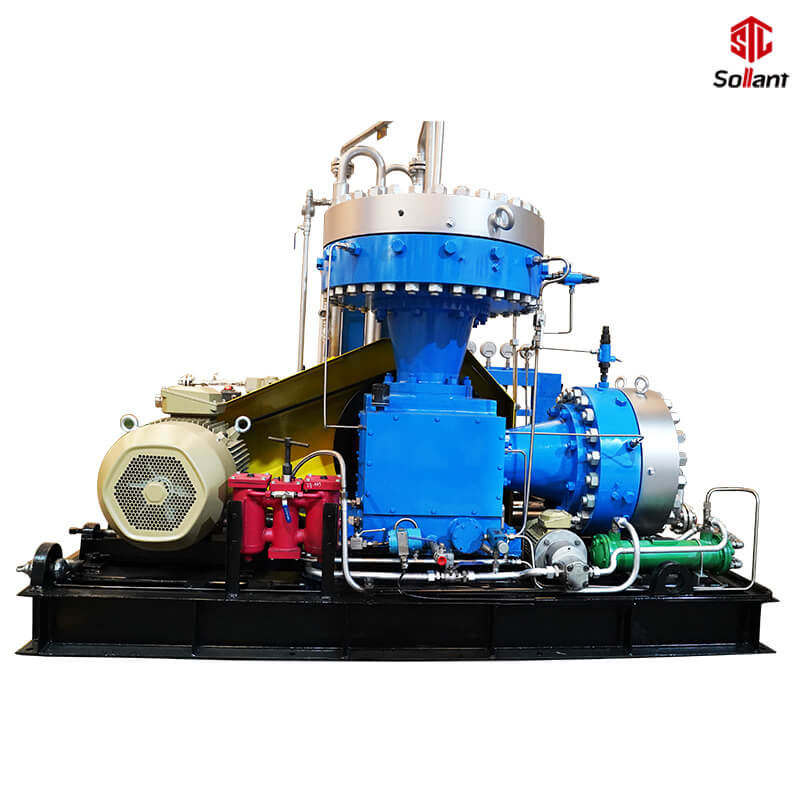
Choosing a diaphragm compressor that best meets your needs is the key to ensuring efficient, stable and safe operation of the gas compression system. This requires a systematic evaluation and decision-making process:
Step 1: Clarify core requirements and gas parameters
Gas type and characteristics: This is the primary consideration. List in detail the chemical name and molecular formula of the compressed gas. Is it a single gas or a mixed gas? Is it flammable, explosive, toxic, or corrosive? Is there a tendency to polymerize? Physical constants such as density, viscosity, and specific heat capacity? This information will directly determine the material selection and explosion-proof level of the diaphragm, valve, cylinder, and seal.
Flow requirements: Determine the maximum flow, minimum flow, and average flow, as well as the instantaneous flow fluctuations. This determines the exhaust volume of the compressor.
Pressure requirements: Clarify the inlet pressure (usually close to atmospheric pressure or slightly positive pressure) and the outlet pressure (that is, the required final compression pressure). This will determine the number of stages and power of the compressor.
Purity requirements: Select a compressor with the corresponding cleanliness level according to the specific requirements of the final application for gas purity (PPM level, PPB level, etc.).
Temperature conditions: gas suction temperature, ambient temperature, and whether the exhaust gas needs to be cooled or heated.
Step 2: Evaluate key technical parameters
Exhaust volume and working pressure range: Ensure that the exhaust volume and working pressure range of the selected model can fully cover or even slightly exceed your actual needs, leaving room for future expansion.
Diaphragm and valve material: According to the characteristics of the gas, select the most matching corrosion-resistant, fatigue-resistant, and temperature-resistant diaphragm (such as stainless steel, Teflon, Hastelloy) and valve material.
Cooling method: Select water cooling or air cooling according to whether there is sufficient cooling water supply, ambient temperature, energy-saving requirements, etc. on site, and ensure sufficient cooling capacity.
Drive power and energy efficiency: Pay attention to the input power and actual efficiency of the compressor, and select a model with high energy efficiency ratio and low operating cost.
Noise and vibration: For places with strict requirements on the working environment, it is necessary to pay attention to the noise (dB(A)) and vibration level of the equipment.
Explosion-proof level: If you compress flammable and explosive gases, you must choose an explosion-proof compressor that meets the corresponding explosion-proof standards (such as ATEX, IECEx).
Control system and automation level: whether PLC control, touch screen HMI, remote monitoring, frequency conversion adjustment and other functions are required.
Step 3: Consider brand, supplier and after-sales service
Brand reputation and industry experience: Choose a well-known brand with deep accumulation, good reputation and many successful cases in the field of diaphragm compressors. They usually have more mature technology, more reliable products and a more complete service system.
Technical support and R&D capabilities: Understand the supplier’s R&D investment and technological innovation capabilities, whether it can provide customized solutions, and its grasp of cutting-edge technologies.
Manufacturing and quality control: Inspect its production process, quality control system, and whether it has passed international certifications such as ISO9001 to ensure the reliability of product quality.
After-sales service network and response speed: This is the most important guarantee for long-term operation. Including:
Installation and commissioning guidance: Ensure that the equipment is installed and started correctly.
Operation and maintenance training: Provide comprehensive training for customer operators so that they can operate and maintain it proficiently.
Spare parts supply: ensure timely and sufficient supply of spare parts, as well as quality assurance of original spare parts.
Fault response and maintenance: understand the professional level, response time and maintenance capabilities of its service engineers.
Long-term technical support and upgrade services: be able to provide full life cycle management and technical upgrade solutions for equipment.
Step 4: Comprehensive cost-benefit analysis (LCC)
Initial purchase cost: the purchase price of the equipment itself.
Operating cost: mainly includes energy consumption (electricity fee), cooling medium consumption (water fee), and consumables (such as hydraulic oil, filter) costs.
Maintenance cost: replacement cost of wearing parts (diaphragm, air valve, etc.), labor maintenance cost, and preventive maintenance cost.
Downtime loss cost: loss caused by production interruption or delay due to equipment failure.
By calculating and comparing the LCC of different solutions, choose the solution with the lowest comprehensive cost and the best economic benefit throughout the life cycle, rather than just focusing on the initial investment. Although the initial investment of a high-quality and high-reliability diaphragm compressor may be slightly higher, its long-term benefits in energy saving, maintenance, safety and production stability are often more considerable.
Step 5: On-site inspection and case reference
If conditions permit, conduct on-site inspections of potential suppliers to understand their production lines, R&D laboratories and quality control processes.
Request successful application cases in the same industry or similar working conditions from suppliers, and try to contact case users for consultation to listen to their actual experience and feedback.
Conclusion
In summary, efficient and stable diaphragm compressors have become indispensable key equipment in the field of modern industrial gas compression due to their revolutionary advantages in gas purity, sealing safety, media compatibility and low maintenance requirements. It fundamentally solves the oil pollution and leakage problems caused by traditional compressors, and provides excellent solutions for industries such as semiconductors, medicine, chemicals, and new energy that have strict requirements on gas quality and safety. By deeply understanding its exquisite working principles, making full use of its core advantages, and supplemented by systematic optimization design, intelligent precision control, forward-looking predictive maintenance and scientific and rigorous selection strategies, we can significantly improve the performance of the entire gas compression system, maximize energy efficiency, minimize operating costs, optimize production processes, and maximize safety assurance.
In the future industrial development process, as the demand for high-purity and high-safety gases continues to grow, the technology of diaphragm compressors will continue to innovate and the application areas will continue to expand. It is not only a powerful tool for achieving industrial upgrading and technological progress, but also an important cornerstone for promoting all walks of life to move towards higher quality and more sustainable development. Selecting and reasonably applying diaphragm compressors is undoubtedly a key step for enterprises to enhance their core competitiveness and move towards intelligent and green production.
Request a Quick Quote Now

Shanghai Sollant Energy Saving Technology Co., Ltd.
Drawing on our years of experience and expertise in air separation and PSA technologies, we deliver customized solutions tailored to your specific needs.
