
Why does the oil industry still rely on high-pressure air compressors? Key application analysis
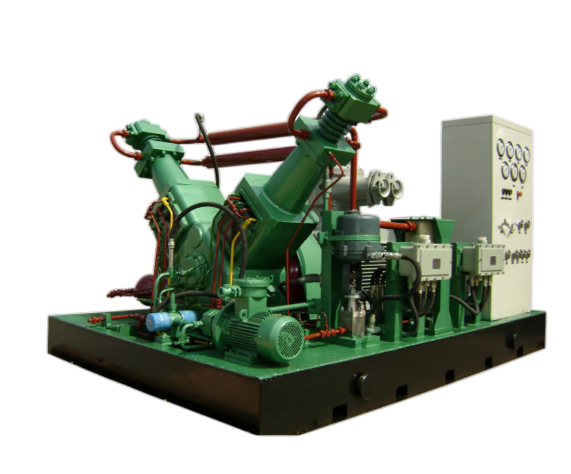
In the long process of human civilization development, energy has always been the core driving force for social progress. Since the Industrial Revolution, oil, as a non-renewable fossil fuel, has been firmly in the “top spot” of global energy supply with its high energy density and easy storage and transportation characteristics, profoundly affecting geopolitics, economic development and daily life. From fuel for cars, airplanes, and ships to raw materials for various products such as plastics, fertilizers, and medicines, oil and its derivatives are almost everywhere. However, this huge industry cannot simply operate by relying on abundant underground reserves. The extraction, transportation, processing and application of oil is an extremely complex and technology-intensive system engineering, which is inseparable from a series of advanced industrial equipment as support.
Among these many key equipment, high-pressure air compressors play a seemingly low-key but indispensable “behind-the-scenes hero” role. It is not only a machine that provides power, but also a lifeline that runs through the entire oil industry chain, from oil and gas exploration to the output of terminal products. Although the general trend of global energy transformation is becoming increasingly obvious, and renewable energy and new energy technologies are developing rapidly, in the foreseeable future, oil will still be an indispensable and important part of the global energy structure. It is based on this industry background that in-depth exploration of why high-pressure air compressors still play an important role in the oil industry, analyzing their key application scenarios, technical advantages and challenges, is of far-reaching significance for understanding the operation mechanism of the modern oil industry and its future development direction. This article aims to comprehensively analyze the core role of high-pressure air compressors in the oil industry and reveal their irreplaceable value.
What is a high-pressure air compressor?

To understand the importance of high-pressure air compressors in the oil industry, you first need to have a clear understanding of them. High-pressure air compressors, as the name suggests, are mechanical equipment specifically used to compress air or other industrial gases (such as nitrogen, natural gas, etc.) to extremely high pressures. Unlike general industrial air compressors (usually with an output pressure of 0.7-1.0 MPa, i.e. 7-10 bar), the output pressure of high-pressure air compressors can easily reach or even exceed several MPa (tens of bar), and even hundreds of MPa in some professional fields. This high-pressure characteristic makes it irreplaceable in specific industrial applications.
From the working principle, high-pressure air compressors are mainly divided into several types:
Reciprocating Compressor: This is the most common high-pressure compression method. The reciprocating motion of the piston in the cylinder changes the cylinder volume, thereby achieving the suction, compression and discharge of the gas. The piston air compressor can be designed in multi-stage series to gradually increase the pressure and achieve extremely high pressure output. Its advantages are high efficiency, wide pressure range, and relatively low requirements for gas source, but its disadvantages are high vibration and noise, and relatively fast wear of parts.
Screw Compressor: The screw air compressor changes the working chamber volume through the rotation of two intermeshing spiral rotors to achieve gas compression. High-pressure screw air compressors usually use two-stage or multi-stage compression. It is characterized by compact structure, smooth operation, low noise, continuous exhaust, and relatively simple maintenance. In many medium and high pressure applications, screw air compressors are a common choice.
Centrifugal air compressor: Centrifugal air compressor uses high-speed rotating impeller to accelerate gas through centrifugal force, and then converts kinetic energy into pressure energy through diffuser. This type is suitable for large flow, medium and high pressure occasions. Its advantages are non-contact compression, no lubricating oil pollution, smooth operation, low noise, but high requirements for gas source purity, and efficiency may decrease under partial load.
Diaphragm air compressor: Diaphragm air compressor compresses gas through the reciprocating motion of flexible diaphragm. The gas does not contact with mechanical moving parts, so it can provide extremely high purity compressed gas. It is suitable for occasions with extremely high gas purity requirements, such as laboratories or special gas transportation.
Regardless of the type, the design and manufacture of high-pressure air compressors must follow strict industrial standards to cope with the huge mechanical stress, heat accumulation and potential safety risks brought by high pressure. They are usually equipped with advanced cooling systems (water cooling or air cooling), efficient oil and gas separators, multi-stage filters and precision control systems to ensure the quality of the output gas (such as cleanliness and dryness) and the stability and safety of equipment operation. In special industries such as oil and gas, special design requirements such as explosion-proof, corrosion-proof and earthquake-proof must also be considered to adapt to complex and dangerous working environments. It is this ability to combine high-pressure technology, reliability and adaptability to special environments that makes high-pressure air compressors an indispensable core power equipment for modern industry, especially the oil industry.
Reasons for the oil industry’s reliance on high-pressure air compressors
The oil industry’s reliance on high-pressure air compressors is jointly determined by its production characteristics, safety requirements and technological development, and is not a simple equipment replacement. This dependence is rooted in the following core reasons:
Stable power source under harsh working conditions: The exploration, mining, transportation and refining of oil and natural gas are often carried out in the harshest environments on earth. From hot deserts to the cold Arctic, from deep-sea oil fields to high-pressure refining units, these environments are full of high temperature, low temperature, high pressure, high humidity, corrosive media (such as hydrogen sulfide, carbon dioxide), flammable and explosive gases, and severe vibrations. Under these extreme conditions, any equipment downtime may lead to huge economic losses and even cause serious safety accidents. As a key equipment for providing high-pressure gas sources, the design of high-pressure air compressors must exceed conventional industrial standards and have excellent durability, corrosion resistance, explosion-proof performance and environmental adaptability. They must be able to maintain stable output under extreme temperature fluctuations, operate for a long time without damage in environments containing corrosive gases, and work safely in areas where flammable and explosive mixtures may occur. This ability to provide a stable and reliable high-pressure gas source under harsh working conditions is difficult to completely replace by other forms of power (such as electricity and hydraulics).
Rigid demand for high-pressure gas in process flows: Many core oil industry processes cannot do without high-pressure gas as a driving force or medium.
Gas Lift Technology: In the later stage of crude oil production, when the formation pressure is not enough to push the crude oil to the ground, the high-pressure air compressor (or nitrogen compressor) injects high-pressure natural gas or nitrogen into the oil well to help the crude oil rise by reducing the density of the oil column or directly providing lifting force. This is an efficient production increase measure with strict requirements on the pressure and flow of the gas.
High-pressure water injection/gas injection: In secondary oil recovery (such as water drive, gas drive) or tertiary oil recovery (such as CO2 drive), high-pressure pump stations and compressors inject water or gas into the reservoir at high pressure to replenish formation energy and improve crude oil recovery.
Drilling and completion: In certain formations or special drilling technologies (such as underbalanced drilling), high-pressure air or nitrogen is used to drive the drill bit, clean the bottom of the well, and even as part of the drilling fluid. In completion operations, high-pressure gas is used for production increase measures such as fracturing and acidizing.
Catalyst regeneration: In the process of oil refining, many catalysts (such as fluid catalytic cracking, FCC units) will become less active due to carbon deposition. The high-pressure air provided by the high-pressure air compressor is used to “burn” the carbon layer on the surface of the catalyst to regenerate and restore its activity. This is a continuous link with extremely precise temperature and pressure control.
Instrumentation and automation control: Modern petroleum and petrochemical plants are highly automated, and a large number of pneumatic actuators, regulating valves, instruments and sensors rely on clean, dry and pressure-stable instrument air to accurately control process parameters. High-pressure air compressors are the “blood circulation system” of these “nerve endings”.
Safety and emergency protection: The oil industry involves a large number of flammable, explosive and toxic substances, and safety is the highest criterion for its production. High-pressure air compressors play a key role in safety protection:
Emergency Shutoff System (ESD): Critical valves in oil and gas pipelines and refining plants are usually equipped with pneumatic emergency shutoff systems. When leaks, fires or other abnormal conditions are detected, the high-pressure air source provided by the high-pressure air compressor can quickly drive the valve to close, isolate the dangerous area, and prevent the accident from expanding.
Fire prevention and extinguishing system: In high-risk areas such as oil depots, pumping stations, and drilling platforms, high-pressure air compressors provide power for foam fire extinguishing systems or dry powder fire extinguishing systems to ensure rapid start of fire extinguishing in emergency situations.
Inert gas protection: High-pressure air compressors are used in conjunction with nitrogen generators to generate high-pressure nitrogen, which is used for inert gas protection inside storage tanks, pipelines, and equipment to prevent the formation of explosive mixtures, or for purging and replacement to ensure maintenance safety.
Economic benefits and efficiency: Although the initial investment in high-pressure air compressors is high, the economic benefits and efficiency improvements they bring are significant over the entire life cycle. They can replace some electric drive equipment and provide an independent power source when the power supply is insufficient in some remote areas; their high-efficiency pneumatic tools can significantly improve operating efficiency; and the stable high-pressure gas source ensures the continuity of production and reduces downtime losses caused by insufficient gas source. In addition, by optimizing the pneumatic system, the overall operating cost can also be reduced.
In summary, the oil industry’s reliance on high-pressure air compressors is multi-dimensional and deep, involving safety, production efficiency, process requirements, and extreme environmental adaptability, making it an indispensable core equipment in the oil industry.
Key applications of high-pressure air compressors in the oil industry
The wide range of applications of high-pressure air compressors in the oil industry almost covers the entire industry chain from upstream oil and gas exploration and development to midstream gathering, storage and transportation, and then to downstream refining and sales. The following will analyze its key applications in each link in detail:
Upstream-Oil and Gas Exploration and Development:
Drilling Operation Power: On onshore and offshore drilling platforms, high-pressure air compressors are an indispensable source of power. They provide high-pressure air for various pneumatic tools, such as:
Pneumatic wrenches: Used to quickly tighten or loosen drill pipe joints to improve operating efficiency.
Pneumatic winches/hoists: Used to lift and carry heavy drilling equipment and tools.
Pneumatic mud pump assistance: In some special formations, high-pressure gas can assist mud circulation or serve as a cleaning medium.
Underbalanced Drilling (UBD): This is an advanced drilling technology that makes the fluid pressure in the wellbore lower than the formation pressure under the action of high-pressure gas (usually air or nitrogen) provided by a high-pressure air compressor. This can avoid the pollution and damage of the drilling fluid to the formation, increase the drilling speed, reduce formation blockage, and monitor the oil and gas display in real time to improve the success rate of exploration.
Gas Lift: This is one of the important methods to enhance oil recovery (EOR). When the formation pressure drops and the self-flowing capacity of the oil well weakens, the high-pressure air compressor injects high-pressure nitrogen or natural gas (wellhead gas) into the annulus of the oil well and enters the oil pipe through the gas lift valve. After the injected gas mixes with the crude oil, the density of the oil-water mixture is reduced, making the mixture easier to be pushed to the ground by the formation pressure, thereby increasing production. This process has strict requirements on the pressure, flow rate and purity of the injected gas.
Completion and production increase measures: During the completion stage of oil and gas wells, high-pressure air compressors provide gas sources for cementing, perforating and other operations. For low permeability oil and gas reservoirs, high-pressure gas can be used in the “flowback” process after hydraulic fracturing or acid fracturing operations to promote the outflow of fracturing fluid and oil and gas.
Midstream – Oil and Gas Gathering, Transportation, Storage and Transportation:
Pipeline Purging and Cleaning: Long-distance oil and gas pipelines need to be purged with high-pressure air or nitrogen after construction, before being put into operation or during regular maintenance, to remove mud, welding slag, water stains and other debris inside the pipeline to ensure pipeline cleanliness and prevent blockage and corrosion. High-pressure air flow can effectively remove these impurities.
Pipeline Pressure Test: High-pressure air compressors can be used to perform air pressure tests on newly built or repaired oil and gas pipelines to verify the sealing and strength of the pipelines and ensure that they will not leak under actual operating pressure.
Valve and Actuator Control: A large number of valves, shut-off stations and pumping stations are set up along the oil and gas pipelines. Key valves (such as ball valves and gate valves) and actuators (such as regulating valves) in these facilities are usually pneumatically driven. High-pressure air compressors provide stable and dry instrument air as a control air source to achieve remote control, emergency shut-off and precise adjustment of valves, ensuring the safety and stability of the transportation process.
Storage tank maintenance and safety: High-pressure air is used for internal cleaning, ventilation and anti-corrosion coating of oil and gas storage tanks. At the same time, the high-pressure air compressor is used in conjunction with nitrogen generators to produce inert nitrogen that can be used for nitrogen filling protection in the top space (gas phase space) of the storage tank to prevent flammable steam from mixing with air to form an explosive environment, especially during crude oil storage and loading and unloading.
Downstream – Petroleum Refining and Chemical Industry: This is one of the most intensive and critical links for high-pressure air compressor applications.
Catalyst Regeneration: In the core units of petroleum refining (such as fluid catalytic cracking, FCC; continuous reforming; hydrocracking, etc.), catalysts are crucial. Catalysts will be deactivated due to carbon accumulation on the surface after a period of use. The high-pressure, high-temperature air (or oxygen-depleted air) provided by the high-pressure air compressor is precisely injected into the regenerator to burn off the coke on the surface of the catalyst and restore its activity. This process is the key to the continuous and stable production of refineries, and has extremely high requirements for the pressure, flow and purity of the gas.
Instrument Air: Refineries and chemical plants are highly automated and complex systems. Thousands of sensors, transmitters, control valves, actuators and analyzers rely on clean, dry, oil-free instrument air to accurately control process parameters, achieve interlocking protection and emergency shutdown. As the core of the instrument air system, the stability and reliability of the high-pressure air compressor are directly related to the operating safety and product quality of the entire plant.
Process gas source and inert gas:
Oxidation reaction: In some chemical production processes (such as the production of acetic acid, phthalic anhydride, etc.), high-pressure air directly participates in the oxidation reaction as a reactant.
Pneumatic conveying: When conveying powdered or granular materials (such as catalyst powder), high-pressure air can be used as a power source for pneumatic conveying.
Purging and replacement: Before the equipment is shut down for maintenance or startup, it is necessary to use high-pressure air or nitrogen to purge and replace the pipeline and equipment to remove residual flammable, toxic or corrosive gases and ensure the safety of operators.
Flare system assistance: In some cases, high-pressure air can be used to assist the flare system to stably burn and discharge exhaust gas.
Auxiliary and general applications:
Firefighting system: In various places in the oil industry, high-pressure air compressors provide power for foam fire extinguishing systems, dry powder fire extinguishing systems or pneumatic fire water systems to ensure that the fire extinguishing equipment can be quickly activated when a fire occurs.
Pneumatic maintenance tools: In various maintenance operations, high-pressure pneumatic tools (such as grinders, cutters, impact wrenches, air drills, etc.) are widely used because of their lightness, high efficiency, and explosion-proof characteristics.
Equipment cleaning and drying: High-pressure air is used to clean the surface of equipment, blow dry wet parts, or perform pressure tests.
It can be seen that the application of high-pressure air compressors in the oil industry has penetrated into every key link, and is an indispensable power core to ensure production continuity, improve operating efficiency, ensure operational safety, and optimize process flow.
Technical advantages of high-pressure air compressors
The reason why high-pressure air compressors can occupy such a core position in the oil industry and continue to play their value is inseparable from a series of significant technical advantages they possess:
Excellent reliability and adaptability to extreme environments:
Heavy-duty industrial design: In view of the characteristics of continuous production and harsh working conditions in the oil industry, high-pressure air compressors generally use more durable materials, thicker wall panels, more precise components and longer design life. Its internal structure and mechanical tolerances are optimized to withstand mechanical stress, vibration and temperature fluctuations under long-term, high-load operation.
Wide temperature adaptability range: Specially designed lubrication system, cooling system and material selection enable high-pressure air compressors to start and operate stably in environments ranging from extremely cold -40℃ to hot environments of 50℃ or even higher.
Anti-corrosion and explosion-proof certification: In flammable and explosive areas (such as drilling platforms and refining units), high-pressure air compressors must meet strict explosion-proof standards (such as ATEX, IECEx), and their motors, electronic control systems, sensors, etc. must all be explosion-proof. At the same time, the surface and internal components of the equipment will be specially treated for corrosion to cope with corrosive media such as salt spray and hydrogen sulfide.
Continuous improvement of energy efficiency:
Variable frequency drive technology (VSD): Variable frequency drive technology is widely used in modern high-pressure air compressors. By precisely adjusting the motor speed, the gas output of the compressor is matched with the actual demand in real time, avoiding the “idling” waste caused by traditional fixed-speed compressors when running at low load. This can significantly reduce energy consumption, especially in application scenarios with large demand fluctuations, and the energy saving effect can reach more than 30%.
Efficient compression stage design: Optimizing the geometry of the compression chamber, improving the machining accuracy of the rotor/piston, and using advanced coating technology are aimed at reducing internal leakage and friction loss and maximizing the compression efficiency of the gas. Multi-stage compression with interstage cooling can effectively reduce heat loss during the compression process and improve overall efficiency.
Waste heat recovery: High-pressure air compressors generate a lot of heat during operation. Advanced systems can recover this heat for heating water, heating or driving other equipment, further improving energy utilization and reducing operating costs.
High level of automation and intelligence:
PLC/DCS control system: High-pressure air compressors are equipped with advanced PLC (programmable logic controller) or can be integrated into DCS (distributed control system) to achieve automatic start and stop, remote monitoring, fault diagnosis and parameter adjustment of equipment.
Condition monitoring and predictive maintenance: Integrate various sensors (pressure, temperature, vibration, oil quality, etc.) to monitor the operating status of equipment in real time. Through big data analysis and artificial intelligence algorithms, equipment failures can be predicted, preventive maintenance can be achieved, sudden downtime can be avoided, and equipment life can be extended.
Remote control and Internet of Things (IoT): Operators can monitor and control air compressors through remote interfaces or mobile devices, which improves the convenience and efficiency of management. The application of IoT technology enables equipment data to be uploaded to the cloud in real time, providing support for expert diagnosis and maintenance around the world.
Excellent gas quality assurance:
Multi-stage filtration and drying: Especially for applications with strict requirements on gas quality such as instrument air, the high-pressure air compressor system will integrate multi-stage precision filters (to remove particulate matter and oil mist) and high-efficiency dryers (such as adsorption dryers and refrigerated dryers) to ensure that the output gas meets the “instrument grade” standard of oil-free, water-free and dust-free, avoiding damage to downstream precision equipment or affecting process accuracy.
Oil-free compression technology: For applications with extremely high requirements for gas purity (such as certain chemical reactions or special gas transportation), high-pressure air compressors provide oil-free compression solutions (such as dry screw, centrifugal or diaphragm type) to prevent lubricating oil from entering the compressed gas and further ensure gas purity.
Implementation of safety design concepts:
Multiple safety protections: High-pressure air compressors are usually equipped with multiple safety interlocks and alarm systems such as overpressure protection, overtemperature protection, overload protection, and phase loss protection. Once an abnormality is detected, it can automatically shut down or alarm to prevent accidents.
Explosion-proof and intrinsically safe design: For air compressors used in explosion-proof areas, all electrical components, sensors, control cabinets and even the body itself are strictly designed and manufactured in accordance with explosion-proof standards to ensure that they will not become ignition sources in hazardous gas environments.
Perfect grounding and anti-static measures: To prevent static electricity accumulation from causing sparks, the equipment has strict grounding specifications and anti-static treatment.
These technical advantages together constitute the irreplaceable core competitiveness of high-pressure air compressors in the oil industry, enabling them to efficiently, safely and reliably meet the complex needs of this key industry.
Challenges faced by the oil industry in using high-pressure air compressors
Although high-pressure air compressors play a vital role in the oil industry, they also face a series of challenges that cannot be ignored in actual application and operation. These challenges are mainly reflected in multiple aspects such as cost, environment, safety and technology:
High initial investment and operating costs:
Equipment procurement costs: High-pressure air compressors, especially those customized for the special requirements of the oil industry (such as explosion-proof, corrosion-resistant, and extreme temperature adaptation), have complex design, manufacturing and certification processes, resulting in procurement costs that are much higher than ordinary air compressors. Especially for equipment with large flow and high pressure, the price is even more expensive.
Energy consumption: Compressed air is one of the most energy-intensive forms of power. Although modern high-pressure air compressors have significantly improved in energy efficiency, electricity costs (or fuel costs) are still the main component of operating costs due to their long operating time and high power. Especially in areas where electricity prices fluctuate or the cost of self-generation is high, the pressure on energy costs is even greater.
Maintenance costs: High-pressure equipment requires extremely high professionalism and precision in maintenance. Precision filters, lubricants, and wearing parts (such as valve plates and seals) that need to be replaced regularly are expensive. Professional maintenance technicians and spare parts inventory also increase maintenance costs. Any improper maintenance may lead to equipment failure and greater economic losses.
Reliability and maintenance difficulty in extreme environments:
Harsh working environment: Oil and gas operations are often carried out under extreme geographical and climatic conditions, such as sandstorms and high temperatures in the desert, severe cold in the Arctic, and salt spray and high humidity on offshore platforms. These environments pose huge challenges to the mechanical components, electrical systems, lubrication and cooling systems of the equipment, accelerate component aging, and increase the risk of failure.
Complexity and danger of maintenance operations: Maintenance operations of high-pressure air compressors in high-altitude, high-humidity, flammable and explosive areas require strict compliance with safety regulations, and the operation is difficult and risky. For example, on offshore platforms, spare parts transportation and the arrival of maintenance personnel are more difficult and expensive.
Safety risk management:
Potential dangers of high pressure: Compressed air itself has huge energy. Leakage of high-pressure gas, pipeline rupture or equipment explosion may cause serious casualties and property losses. This requires that every link from design, manufacturing, installation to operation and maintenance must strictly comply with safety standards and operating procedures.
Flammable and explosive environment: In refineries and oil and gas fields, there may be flammable and explosive oil and gas mixtures in the air. Electrical sparks, high-temperature components or static electricity accumulation of high-pressure air compressors may become ignition sources. Therefore, strict explosion-proof certification, grounding protection, anti-static measures and a complete fire protection system are essential.
Noise and vibration: High-power and high-pressure air compressors generate significant noise and vibration during operation. Long-term exposure will affect the health of operators and may have adverse effects on surrounding structures and precision equipment. Effective sound insulation and vibration reduction measures need to be taken.
Technology upgrade and compatibility:
Connection between old and new equipment: Many devices in the oil industry have long operating cycles. How to achieve seamless integration and compatibility between new technology air compressors and existing old systems is a common challenge. Sometimes it is necessary to transform existing infrastructure, which increases complexity and cost.
Digital and intelligent transformation: Although new equipment has a high level of automation and intelligent functions, how to fully integrate these advanced functions into the existing production management system, achieve data interconnection, and cultivate operators and maintenance personnel with corresponding skills are obstacles that need to be overcome in the digital transformation of enterprises.
Environmental regulations and sustainable development:
Noise and emissions: Strict environmental regulations have clear restrictions on noise and exhaust emissions of industrial equipment (such as gas-driven compressors), requiring companies to invest more resources in noise control and emission management.
Continuous optimization of energy efficiency: With the global attention to carbon emissions and sustainable development, the oil industry is facing pressure to further reduce energy consumption and improve energy efficiency, which has prompted companies to continuously seek more efficient and environmentally friendly high-pressure air compressor technology and operation solutions.
Condensate treatment: During the cooling and drying process of compressed air, a large amount of condensate containing oil pollution will be generated, which must be professionally treated before discharge, otherwise it will cause environmental pollution.
To meet these challenges, the oil industry needs to continue to invest in research and development, introduce more advanced equipment and technology, strengthen personnel training, establish a sound safety management system, and continuously optimize operational processes. Only through technological innovation and management innovation can we ensure that high-pressure air compressors continue to play a key role in the future oil industry, while achieving a balance between economic benefits, safety and environmental benefits.
Conclusion
In summary, as an industrial equipment that can compress gas to extremely high pressure, the position of high-pressure air compressors in the oil industry is irreplaceable and vital. From oil and gas exploration deep in the earth, to complex and sophisticated refining processes, to safe and efficient storage and transportation, high-pressure air compressors, with their excellent performance and versatility, provide powerful power, precise control and reliable safety guarantees for every key node in the oil industry. It is not only the “strong heart” that drives drilling tools, the “life pump” that maintains oil well production, but also the “breathing system” that ensures the continuous and efficient operation of refining equipment, and the “nerve center” that ensures factory automation control.
Although we are at the crossroads of energy transformation, renewable energy and clean technology are developing at an unprecedented rate, oil, as a strategic resource with high energy density and easy storage and transportation, will remain an indispensable and important part of the global energy structure in the next few decades. The global industrial, transportation and chemical demand for oil and its derivatives is difficult to completely replace in the short term. Therefore, as long as the oil industry exists, the dependence on high-pressure air compressors will not disappear. Instead, with the advancement of technology and the improvement of production efficiency, safety and environmental protection requirements, higher and more refined requirements will be put forward.
Request a Quick Quote Now

Shanghai Sollant Energy Saving Technology Co., Ltd.
Drawing on our years of experience and expertise in air separation and PSA technologies, we deliver customized solutions tailored to your specific needs.
