
Five major application areas of CO2 compressors

In the context of the current global focus on addressing climate change and promoting sustainable development, carbon dioxide (CO2) is no longer just seen as a greenhouse gas, but is increasingly seen as an industrial resource with great potential. In order to fully tap this potential and convert low-pressure carbon dioxide into a usable high-pressure form, efficient and reliable carbon dioxide compressors play a vital role. It is not only the cornerstone of the carbon capture, utilization and storage (CCUS) strategy, but also shows an indispensable position and far-reaching impact in diversified fields such as food processing, fine chemicals, modern refrigeration, biomedicine, and energy and environmental protection. This article will deeply analyze the working principle and unique characteristics of carbon dioxide compressors, and elaborate on how it drives technological innovation, improves industrial efficiency, and leads all walks of life towards a greener and low-carbon future in five core application areas.
At present, the global industry is undergoing a profound green transformation. Reducing carbon footprint, optimizing energy structure, and realizing resource recycling have become key indicators for measuring corporate competitiveness and sustainable development capabilities. In this context, the effective management and utilization of carbon dioxide has become particularly important. As a mechanical device specialized in increasing the pressure of CO2 gas, the core value of CO2 compressor lies in its ability to convert low-pressure waste gas generated in industrial production processes or carbon dioxide captured from the environment into high-pressure gas or liquid through compression, so that it can be stored, transported and used as industrial raw materials. From the refreshing bubbles of carbonated beverages to the precision extraction of pharmaceutical products, from efficient and energy-saving refrigeration systems to the development of future clean energy, CO2 compressors are undoubtedly the key link between CO2 resources and diversified application scenarios, and a powerful driving force for promoting the transformation of industry to a more environmentally friendly and efficient model.
Working principle and unique features of CO2 compressors
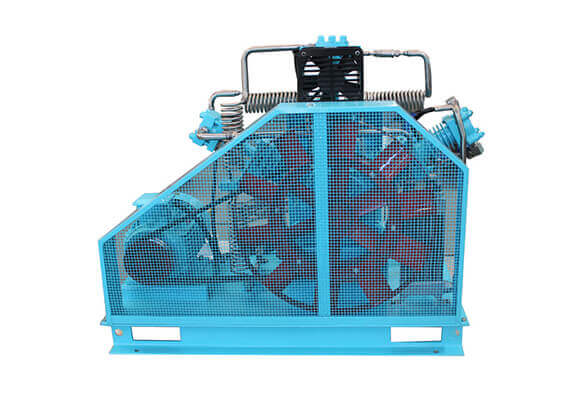
CO2 compressors are precision engineering equipment whose main function is to increase the pressure of carbon dioxide gas at a specific temperature and pressure to a higher level through mechanical work. According to the working principle, CO2 compressors are mainly divided into two categories: positive displacement and dynamic.
Working principle details:
Positive displacement compressors: This type of compressor uses mechanical parts to perform reciprocating or rotational motion in a closed space, periodically changing the volume of the working chamber, thereby achieving gas inhalation, compression and discharge.
Piston compressors: This is one of the most common types. It drives the piston to reciprocate in the cylinder through a crank-connecting rod mechanism. When the piston moves outward, the cylinder volume increases, and low-pressure CO2 gas enters through the suction valve; when the piston moves inward, the cylinder volume decreases, the gas is compressed, and when the pressure reaches the exhaust pressure, it is discharged through the exhaust valve. Piston compressors are often used in high-pressure and ultra-high-pressure CO2 applications due to their high pressure ratio and wide adaptability.
Screw compressor: It consists of a pair of intermeshing yin and yang rotors. The gas enters the tooth groove between the rotors from the suction port. As the rotor rotates, the tooth groove volume gradually decreases, the gas is compressed, and finally discharged from the exhaust port. The screw compressor has the advantages of compact structure, smooth operation, low vibration, and good air supply continuity. It is suitable for medium flow and pressure range.
Scroll compressor: Through the eccentric rotation of the movable scroll relative to the static scroll, a gradually shrinking compression chamber is formed to compress the gas. It is characterized by low noise, low vibration, high efficiency, and small leakage. It is suitable for small refrigeration systems and occasions with noise requirements.
Dynamic compressor: This type of compressor mainly converts kinetic energy into pressure energy by working on the gas through a high-speed rotating impeller.
Centrifugal compressor: Under the action of the high-speed rotating impeller, the gas obtains huge centrifugal force and the kinetic energy increases. Subsequently, the gas enters the diffuser, and the kinetic energy is converted into pressure energy, and the pressure increases. Centrifugal compressors are usually used to handle large-flow gases. They have the advantages of continuous gas supply, no pulsation, simple structure, and reliable operation, but their applicable pressure ratio range is relatively narrow.
Unique characteristics of carbon dioxide compressors:
Demanding sealing requirements: CO2 molecules are small in size and highly permeable, especially under high pressure, and are prone to leakage. This requires the compressor to use specially designed, high-performance sealing materials and structures in key parts such as shaft seals, valves, and flanges to ensure system safety and efficiency.
Challenges of dealing with corrosion: When CO2 comes into contact with trace amounts of water vapor, carbonic acid (H2CO3) is formed, which is a weak acid, but is sufficient to corrode ordinary carbon steel. Therefore, the parts of the CO2 compressor that come into contact with CO2, such as cylinders, piston rods, valve plates, etc., usually need to be made of stainless steel, special alloys or undergo special anti-corrosion treatment to extend the life of the equipment.
Efficient thermal management: The compression of any gas is accompanied by an increase in temperature, and this is especially true for the compression of CO2. The critical temperature of CO2 under high pressure is relatively low (31.1°C), so an effective cooling system (such as interstage coolers and aftercoolers) is essential, which can not only improve the compression efficiency, but also prevent the deterioration of lubricating oil and protect equipment components.
Selection and compatibility of lubricating oil: Since CO2 has the characteristic of dissolving lubricating oil, it may cause the viscosity of the oil to decrease, affecting the lubrication effect. Therefore, it is necessary to select synthetic lubricating oil that has good compatibility with CO2 and is not easily dissolved, and design a reliable oil-gas separation system. For some applications with extremely high purity requirements (such as food and medicine), oil-free lubricated compressors may be required.
High pressure ratio and multi-stage compression: Many CO2 applications require extremely high pressures, such as supercritical state (7.38 MPa, 31.1°C) or higher pressure injection. In order to achieve such high pressures, a multi-stage compression system is usually required, with cooling between each stage to improve compression efficiency and reduce exhaust temperature.
Application field 1: Food industry – innovation from bubbles to preservation
In the food industry, carbon dioxide has become an indispensable medium due to its non-toxic, residue-free, antibacterial and unique physical properties. Carbon dioxide compressors play a pivotal role here.
Cornerstone of carbonated beverage production: This is one of the most well-known applications of CO2. In the production of carbonated beverages such as soda, beer, and sparkling wine, CO2 is pressurized by a compressor and injected into the liquid to form a saturated solution, giving the beverage a unique “killing taste” and bubbles. The compressor ensures that CO2 can be stably dissolved at high pressure to achieve the required degree of carbonation.
Food preservation and modified atmosphere packaging (MAP): CO2 has a significant antibacterial effect and can effectively inhibit the growth and reproduction of aerobic microorganisms. In modified atmosphere packaging technology, air is extracted and filled with a certain proportion of mixed gases such as CO2 and N2 to extend the shelf life of products such as meat products, seafood, baked goods, fruits and vegetables, while maintaining their freshness and sensory quality. High-pressure CO2 is transported to the mixed gas preparation unit through a compressor to ensure the accurate ratio of the packaging gas.
Supercritical CO2 extraction technology (SFE): This is a green and environmentally friendly extraction and separation technology. For example, in the coffee industry, it is used for decaffeination. Its core advantage is that it can selectively remove caffeine while retaining the original rich flavor substances of coffee beans, avoiding the residues and environmental problems caused by traditional organic solvents. Similarly, in the production of edible oils (such as sunflower oil and rice bran oil), SFE can also be used for refining and degumming to obtain high-quality edible oils. The CO2 compressor is responsible for providing and maintaining high-pressure CO2 in a supercritical state (i.e., above the critical temperature of 31.1°C and the critical pressure of 7.38MPa), so that it can work efficiently as a non-toxic solvent.
Dry ice production and cold chain logistics: Solid carbon dioxide, or dry ice, is an excellent refrigerant with the characteristics of low temperature and no water residue. Dry ice is often used in cold chain transportation, food preservation, industrial cleaning, etc. The production of dry ice requires that high-pressure liquid CO2 be rapidly depressurized and expanded through an expansion valve, causing part of the CO2 to quickly vaporize and absorb heat, thereby condensing the remaining CO2 into a solid. The CO2 compressor is a key equipment to ensure the supply of liquid CO2.
Application Field 2: Chemical Industry – Driver of Green Synthesis and Resource Circulation
The chemical industry is one of the most widely used and strategically significant fields for CO2 compressors, especially in promoting green chemistry and carbon resource utilization.
The core link of urea production: Urea is one of the world’s largest fertilizers and an important industrial raw material. Its production process mainly generates methylamino ammonium formate through the reaction of ammonia and high-pressure CO2 under high temperature and high pressure, and then dehydrates to obtain urea. CO2 compressors provide stable high-pressure CO2 in this process, which is an essential raw material gas for urea synthesis reaction.
Methanol synthesis and carbon conversion: Hydrogenation of carbon dioxide to methanol is an important way to realize the resource utilization of CO2, which can convert CO2 into fuel or important chemical intermediates. This reaction needs to be carried out under high temperature and high pressure. CO2 compressors raise CO2 to the high pressure required for the reaction and are key equipment for realizing CO2 to methanol technology.
Production of polymer materials such as polycarbonate: Polycarbonate is an engineering plastic with excellent performance, which is widely used in electronic appliances, automobiles, medical devices and other fields. In the synthesis process of some polycarbonates, CO2 is used as a green raw material to replace the traditional phosgene method, thereby reducing the use of toxic substances. CO2 compressors provide clean, high-pressure CO2 required for the reaction.
Arteries of Carbon Capture and Utilization (CCU): Carbon dioxide captured from large industrial emission sources (such as coal-fired power plants, cement plants, and steel plants) is usually a low-pressure gas. In order to facilitate pipeline transportation, geological storage, or use as a chemical raw material, the captured CO2 must be compressed in multiple stages to reach a high-pressure state (usually liquid or supercritical). CO2 compressors are critical core equipment in the CCU technology chain, and their efficiency and reliability directly determine the economic feasibility of CCU projects.
Application Area 3: Refrigeration and Air Conditioning Industry-The Rise of Environmentally Friendly Refrigerants
With global attention to ozone layer depletion and greenhouse effects, traditional Freon refrigerants are gradually being eliminated. As a natural refrigerant (R744), carbon dioxide is becoming an ideal choice for replacing refrigerants due to its excellent environmental characteristics (ozone depletion potential ODP=0, global warming potential GWP=1) and excellent thermodynamic properties.
Supermarket refrigeration system: More and more modern supermarkets use CO2 cascade refrigeration system or transcritical CO2 refrigeration system. In these systems, CO2 is used as the primary or secondary refrigerant to provide refrigeration for freezers, refrigerators and cold storage. The CO2 compressor is the “heart” that drives the entire cycle. It compresses the low-pressure CO2 gas in the evaporator to high pressure, allowing it to release heat in the air cooler or condenser to complete the refrigeration cycle.
CO2 heat pump system: CO2 heat pumps can provide higher water outlet temperatures than traditional heat pumps (up to 90°C), giving them significant advantages in hot water supply (domestic, commercial, industrial), floor heating, and industrial waste heat recovery. As the core component of the heat pump system, the CO2 compressor increases its temperature and pressure by compressing CO2, thereby efficiently absorbing heat from the environment and transferring it to water.
Automotive air conditioning: Although not yet widely popularized, CO2 automotive air conditioning systems are becoming a research hotspot in the automotive industry due to their environmental friendliness and potential for efficient cooling and heating at high ambient temperatures. Compared with traditional R134a refrigerants, CO2 systems can achieve faster cooling speeds and better comfort. CO2 compressors in such systems need to meet the stringent vibration, noise and efficiency requirements of automobiles.
Industrial refrigeration and ultra-low temperature applications: CO2 refrigeration systems can also provide solutions for some industrial processes that require ultra-low temperature environments. For example, in specific chemical production, pharmaceutical storage or scientific research, CO2 can be used as a secondary refrigerant or as a low-temperature stage in a cascade system.
Application Area 4: Pharmaceutical Industry – Guarantee of Purity and Efficiency
The pharmaceutical industry has extreme requirements for production environment, raw material purity and process accuracy. Carbon dioxide plays a unique and important role in the pharmaceutical field due to its non-toxic, volatile and controllable characteristics.
Supercritical fluid extraction (SFE) of drugs: SFE technology uses supercritical CO2 as an extraction solvent to extract effective drug ingredients from plants, animals or microorganisms, such as artemisinin, paclitaxel, curcumin, etc. Compared with traditional organic solvent extraction, SFE technology has the advantages of no solvent residue, non-toxicity, environmental protection, high extraction efficiency and little damage to heat-sensitive components. CO2 compressor provides and maintains the high-pressure environment required for supercritical CO2 during this process, ensuring the accuracy and efficiency of the extraction process.
Preparation and supply of medical carbon dioxide: In clinical medicine, medical CO2 is used for a variety of purposes, such as:
Laparoscopic surgery inflation: In minimally invasive surgery, CO2 is injected into the abdominal cavity to expand the surgical space and provide doctors with a clear view. This requires that the medical CO2 is extremely pure and the supply pressure is stable.
Respiratory therapy: In the treatment of certain lung diseases, small doses of CO2 are used to stimulate breathing or regulate blood pH.
Drug sterilization: High-pressure CO2 can sterilize certain heat-sensitive medical devices and drugs at relatively low temperatures, avoiding the damage that may be caused by high-temperature sterilization without leaving harmful residues. CO2 compressors ensure the purity and high-pressure delivery of medical-grade CO2.
Drug micronization and crystallization: Supercritical CO2 anti-solvent method or rapid expansion method can be used to produce drug microparticles with uniform particle size and narrow distribution, improving the solubility and bioavailability of drugs. CO2 compressors are key equipment for achieving these precision crystallization and micronization processes.
pH adjustment in biopharmaceutical processes: In some bioreactors, CO2 can be used as a convenient and safe pH regulator to maintain the optimal growth environment for microorganisms or cell cultures.
Application Area 5: Energy and Environmental Protection – Strategic Pillar of Carbon Neutrality
Against the global background of addressing climate change and achieving the goal of “carbon neutrality”, the strategic position of carbon dioxide compressors in the field of energy and environmental protection has become increasingly prominent, becoming a key technology to promote green energy transformation and carbon emission reduction.
The core of carbon capture, utilization and storage (CCUS): CCUS technology is considered to be a key means to achieve large-scale carbon emission reduction. Low-pressure CO2 captured from large industrial emission sources (such as coal-fired power plants, cement plants, steel mills, chemical plants, etc.) must undergo multi-stage compression to increase its pressure to 15~20 MPa or even higher for long-distance pipeline transportation or injection into deep underground geological structures for permanent storage. CO2 compressors are one of the most energy-consuming links in the CCUS chain, and their efficiency is directly related to the operating cost and economic feasibility of CCUS projects. Efficient and low-energy CO2 compression technology is the key to the success of CCUS.
Enhanced Oil Recovery (EOR): Injecting high-pressure CO2 into oil fields is one of the effective ways to enhance oil recovery. The injected CO2 can reduce the viscosity of crude oil, expand it, and improve its fluidity, thereby displacing more residual crude oil. CO2 compressors are responsible for compressing captured CO2 or CO2 from natural CO2 reservoirs to the ultra-high pressure required for injection, usually up to tens of MPa. This not only helps increase production, but also provides a way to utilize and store captured CO2.
CO2 geothermal power generation: Some cutting-edge geothermal power generation technologies are exploring the use of CO2 as a working fluid to replace water. CO2 has a lower critical point and better thermodynamic properties, which can improve the utilization efficiency of geothermal resources. In this closed-loop system, the CO2 compressor is responsible for compressing the CO2 after expansion and work, forming a cycle to drive the turbine to generate electricity.
Waste to energy and biofuel production: In some biomass gasification or waste incineration gas treatment processes, CO2-rich gas may be produced. Through capture and compression, this CO2 can be further utilized, such as as a carbon source for microalgae cultivation to produce biofuels, or used in other industrial processes to achieve waste recycling and energy.
Conclusion
As an indispensable power device in modern industry, CO2 compressors play a core role in improving the utilization efficiency of CO2 and promoting green transformation in all walks of life. From providing production power for daily consumer goods to supporting cutting-edge carbon capture and utilization technologies; from ensuring food and drug safety to helping optimize energy structure and protect the environment, its wide range of applications and profound importance have far exceeded traditional cognition.
Looking ahead, with the acceleration of the global “carbon neutrality” goal and increasingly stringent environmental regulations, the demand for efficient, reliable and energy-saving CO2 compressors will continue to grow. Technological innovation will drive them to be more compact, smarter and more adaptable to extreme working conditions, while focusing on reducing energy consumption and operating costs. CO2 compressors are not only a tool for optimizing industrial processes, but also a key bridge connecting the vision of sustainable development with real industrial practices. They will continue to be the vanguard of the green industrial revolution, leading us towards a cleaner, more efficient and prosperous future.
Request a Quick Quote Now

Shanghai Sollant Energy Saving Technology Co., Ltd.
Drawing on our years of experience and expertise in air separation and PSA technologies, we deliver customized solutions tailored to your specific needs.
