Application of Nitrogen Generator in Food Packaging
In today’s globalized market, the production, transportation and sale of food all involve long storage and distribution. This makes food packaging a key factor in ensuring food quality, extending shelf life and reducing waste. Consumers are paying more and more attention to the freshness and safety of food, so how to extend the shelf life of food without using preservatives has become a focus of the food industry.
When food is exposed to air, oxidation reactions will occur, which will not only cause changes in the taste and color of the food, but also accelerate the spoilage of the food. This oxidation process is particularly prone to occur in perishable foods such as oils, dried fruits, and coffee. To meet this challenge, the food industry needs an effective way to protect food from oxidation.
As an inert gas, nitrogen can effectively isolate oxygen in the air, so it has been widely used in food packaging. By replacing oxygen in the air with nitrogen, food packaging can greatly slow down the occurrence of oxidation reactions, thereby extending the shelf life of food. Nitrogen not only helps to maintain the original flavor and appearance of food, but also prevents the growth of microorganisms and improves the safety of food.
In general, food packaging technology using nitrogen as packaging gas has become an important means to extend the shelf life of food. As consumers’ requirements for food quality increase, the role of nitrogen in food packaging will become increasingly important.
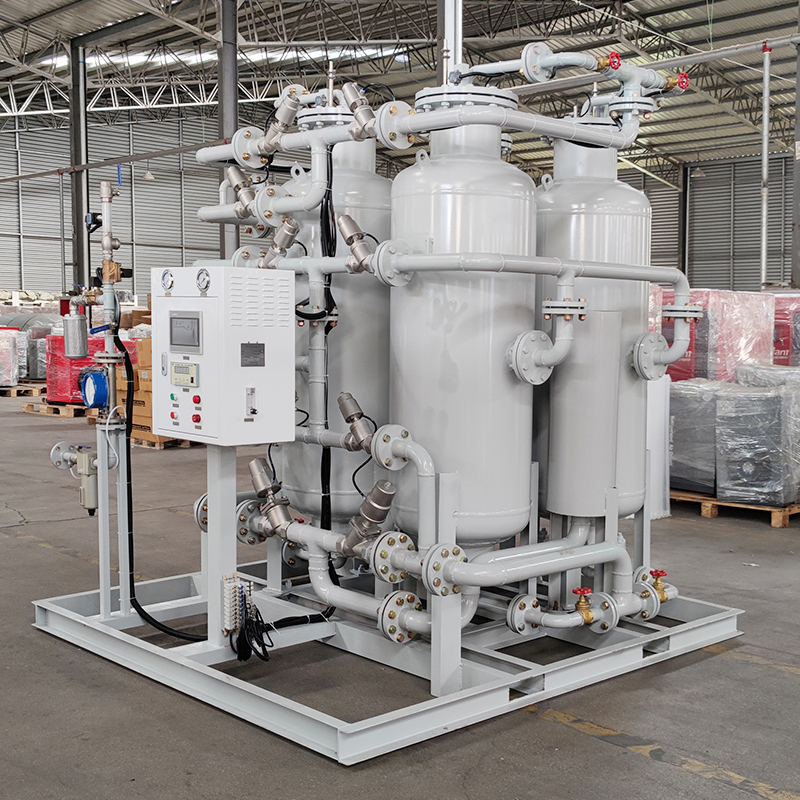
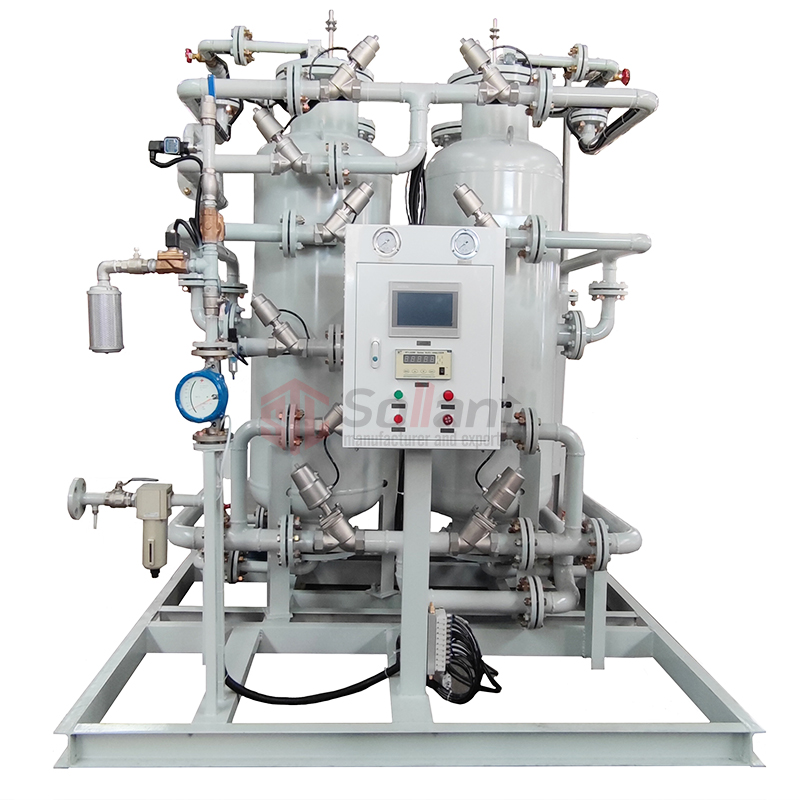
Industrial nitrogen generator is a kind of equipment specially used to produce high-purity nitrogen, which is widely used in various industries. Its core function is to extract nitrogen from the air through specific separation technology and remove oxygen and other impurities to achieve the required purity. Nitrogen generators usually produce nitrogen through two main technologies: pressure swing adsorption (PSA) and membrane separation.
1. Definition and working principle of industrial nitrogen generator
The basic definition of industrial nitrogen generator is a device that separates nitrogen from air by physical or chemical methods and provides stable and pure nitrogen output. Air contains about 78% nitrogen, but it is usually mixed with oxygen and other trace gases. The task of nitrogen generator is to extract nitrogen with a purity of up to 95%-99.999% from air through specific technical means.
Pressure Swing Adsorption (PSA)
Pressure swing adsorption is one of the most common working principles of industrial nitrogen generators. PSA nitrogen generators introduce air into an adsorption tower and use materials such as carbon molecular sieves to selectively adsorb oxygen, and the remaining nitrogen is collected. Since the adsorption capacity of adsorbent materials for oxygen is different at different pressures, the nitrogen generator achieves a continuous nitrogen extraction process by alternating the pressure in the adsorption tower. The advantage of this technology is that it has low energy consumption and controllable nitrogen purity.
Membrane separation technology
Membrane separation technology is another nitrogen production technology that uses the different permeation rates of nitrogen and oxygen molecules in specific membrane materials for separation. When air passes through the membrane module, oxygen will pass through the membrane material faster than nitrogen, leaving nitrogen with higher purity. The advantages of membrane separation technology are compact equipment structure and easy operation, but the nitrogen purity is usually low, which is suitable for application scenarios where the nitrogen purity requirements are not too high.
2. The relationship between nitrogen generator and food packaging industry
In the food packaging industry, nitrogen is widely used as a protective gas to extend the shelf life of food. Traditionally, food packaging may rely on bottled nitrogen supplied from outside, but this method has high transportation and storage costs, as well as the risk of supply chain disruption. In contrast, industrial nitrogen generators provide food companies with a more flexible and economical nitrogen supply solution.
By installing nitrogen generators in factories, food companies can produce high-purity nitrogen in real time according to demand and apply it directly to packaging production lines. This not only ensures the stability of nitrogen supply, but also reduces procurement and logistics costs. In addition, the nitrogen production capacity of nitrogen generators can be adjusted according to the production scale of the enterprise to meet different production needs.
The use of industrial nitrogen generators also helps to improve production efficiency because it avoids production stagnation caused by waiting for nitrogen supply. At the same time, the high-purity nitrogen provided by nitrogen generators can better protect food and ensure that the product remains fresh when it reaches the hands of consumers. The application of this technology not only improves the quality and safety of food, but also enhances the market competitiveness of enterprises.
In the food packaging process, nitrogen, as an inert gas, plays a vital role. It not only helps to extend the shelf life of food, but also plays multiple roles in maintaining food quality. The following are the three core functions of nitrogen in food packaging: preventing food oxidation, inhibiting the growth and reproduction of microorganisms, and protecting the physical form and texture of food.
1. How Nitrogen Prevents Food Oxidation
Oxidation is one of the main causes of food spoilage, especially in foods containing oils, proteins or other easily oxidizable ingredients. When food is exposed to air, oxygen reacts with the chemical components in the food, causing the food to spoil. This oxidation reaction can cause the food to change color, lose nutrients, and even produce unpleasant odors and tastes.
As an inert gas, nitrogen does not react with the ingredients in the food. By replacing the oxygen in the package with nitrogen during the packaging process, the oxidation reaction can be effectively prevented. This process is called nitrogen displacement, which can greatly delay the oxidation process of the food, thereby maintaining the flavor, color and nutritional value of the food. For many foods, especially products such as potato chips, nuts, and coffee, nitrogen packaging has become an important means to maintain their freshness.
2. Prevent the growth and reproduction of microorganisms
The growth and reproduction of microorganisms is also another major cause of food spoilage. Many microorganisms rely on oxygen to maintain their life activities. Therefore, reducing the oxygen content in food packaging can effectively inhibit the reproduction of microorganisms. This is crucial to extend the shelf life of food and ensure food safety.
By filling the packaging bag with nitrogen, the oxygen concentration is greatly reduced, so that the growth environment of anaerobic microorganisms is inhibited, thereby slowing down the rate of food spoilage. This method is particularly suitable for foods that are susceptible to microbial contamination, such as cooked foods, baked goods and dairy products. The application of nitrogen not only reduces the dependence on preservatives, but also provides consumers with safer and healthier food choices.
3. Protect the physical form and texture of food
The physical form and texture of food have an important impact on consumers’ purchasing decisions. For example, the crispness of potato chips, the softness of bread, and the shape of candy are all important factors in the attractiveness of food. However, during transportation and storage, food is easily affected by external pressure, friction and humidity changes, resulting in deformation or texture changes.
Nitrogen packaging can help maintain the physical form and texture of food. By filling the nitrogen, a certain pressure is formed inside the packaging bag, which can prevent the food from being damaged by external forces. For example, nitrogen-filled potato chip packaging can not only prevent the chips from breaking, but also prevent moisture from entering, maintaining its crisp taste. For foods that are easily compressed, such as bread and cakes, nitrogen packaging can maintain their softness and shape, so that they remain in the best condition when they are transported to consumers.
In summary, the application of nitrogen in food packaging provides strong support for food preservation and quality maintenance. By preventing oxidation, inhibiting microbial growth, and protecting the physical form of food, nitrogen packaging has become a key technical means for the food industry to ensure product quality and extend shelf life.
Specific application of industrial nitrogen generator in food packaging
In the food packaging industry, the application of industrial nitrogen generators has become an indispensable part of many companies. As a highly efficient protective gas, nitrogen is widely used in the packaging process of various foods. The following will introduce in detail the technical process of filling packaging bags with nitrogen, common food types and their nitrogen packaging applications, and the preservation effect analysis of different foods.
1. Technical process of filling packaging bags with nitrogen
The process of filling packaging bags with nitrogen is usually called “nitrogen replacement packaging” or “nitrogen filling packaging”. This technical process is relatively simple, but it requires high precision and control of the equipment to ensure that nitrogen can effectively replace the air in the package to achieve the desired preservation effect. The following are the basic steps of nitrogen filling packaging:
Step 1: Product bagging
On the packaging line, food is first packed into bags by automated equipment. At this point, there is still a certain amount of air in the bag, which contains a large amount of oxygen.
Step 2: Nitrogen replacement
After bagging, the bags are sent to the nitrogen filling station. The industrial nitrogen generator generates high-purity nitrogen and injects it into the bag through a specific nozzle or pipe. As the nitrogen is injected, the oxygen in the bag is gradually discharged until the bag is almost completely filled with nitrogen. Normally, the purity of nitrogen is required to be above 95% to ensure the filling effect.
Step 3: Sealed packaging
After the nitrogen filling is completed, the bag is immediately sealed by a heat sealing device. This process needs to be quick and precise to prevent oxygen from re-entering the bag, so as to ensure that the nitrogen environment in the package is maintained.
Step 4: Quality inspection
After sealing, the bag will pass through the inspection device to ensure that the seal is intact and the nitrogen content in the bag meets the standard. After these steps are completed, the packaged food can enter the warehouse or be sent directly to the market.
2. Common food types and their nitrogen packaging applications
Nitrogen packaging is suitable for various types of food, especially those that are susceptible to oxidation, deliquescence or pressure damage. The following are some common food types and their specific applications for nitrogen packaging:
Potato chips
As a high-fat puffed food, potato chips are very easy to lose their crispy taste due to oxidation and produce rancidity. Using nitrogen packaging can prevent oxidation reactions and keep potato chips crispy. At the same time, nitrogen-filled packaging bags can also prevent them from breaking during transportation.
Dried fruits and nuts
Dried fruits and nuts are rich in fats and are also prone to oxidation and deterioration. Nitrogen packaging not only extends the shelf life of these foods, but also prevents them from losing their original flavor and texture due to moisture. In addition, nitrogen packaging can protect the appearance of nuts, so that they still look good after long-term storage.
Coffee
Coffee beans and coffee powder have extremely high requirements for freshness. When exposed to air, they will quickly lose their aroma and produce odors. Using nitrogen packaging can effectively lock in the aromatic components of coffee and avoid quality degradation caused by oxygen. Many high-end coffee brands use nitrogen packaging to ensure the freshness of their products.
Baked goods
Bread, cakes and other baked goods are easily damaged by pressure and become dry and hardened when exposed to air. By packaging with nitrogen, these foods can not only remain soft, but also prevent the packaging bags from being compressed and deformed, thus extending the shelf life.
Advantages of Industrial Nitrogen Generator in Food Packaging
As the food industry continues to increase its demand for product quality and freshness, the application of industrial nitrogen generators in food packaging has gradually become a mainstream trend. Compared with traditional packaging methods, the use of nitrogen generated by industrial nitrogen generators for packaging has brought many advantages, not only extending the shelf life of food, but also optimizing the production process, reducing costs, and being more environmentally friendly. The following are the four main advantages of industrial nitrogen generators in food packaging.
1. Improve product shelf life and reduce waste
Nitrogen is an inert gas that can effectively isolate oxygen, thereby preventing food from oxidizing. Oxidation is one of the important reasons for food spoilage, loss of flavor and nutrition. By filling packaging bags with nitrogen, the shelf life of food can be greatly extended, ensuring that food remains fresh after long-term storage and transportation.
Extending the shelf life is not only beneficial to consumers, but also helps food manufacturers reduce product waste. Because nitrogen packaging effectively delays the spoilage process of food, companies are able to sell their products for a longer period of time, thereby reducing economic losses caused by expiration or spoilage.
2. Achieve a more efficient production and packaging process
The use of industrial nitrogen generators can significantly improve the efficiency of production and packaging processes. First, nitrogen generators can generate nitrogen on site in real time, avoiding the waiting time of relying on external supply, which allows the production line to operate continuously and stably. Secondly, nitrogen packaging is faster and simpler than traditional air packaging, reducing packaging problems caused by oxidation, such as bag expansion or product discoloration.
The industrial nitrogen generator has a high level of automation and can be seamlessly connected with modern packaging production lines, further improving packaging efficiency. Efficient production processes mean that food companies can respond to market demand more quickly, while reducing equipment idle time and improving overall production capacity.
3. Reduce the cost of relying on external gas supply
Traditional food packaging often relies on bottled or canned nitrogen supplied from outside. As the scale of production expands, the cost of external supply will increase rapidly. In addition, the transportation and storage of these gases will also increase the logistics costs and management difficulties of the company. Industrial nitrogen generators provide a more economical solution. By generating nitrogen directly at the production site, it not only reduces dependence on external supply, but also reduces transportation and storage costs.
Industrial nitrogen generators have a high return on investment. Although the initial equipment investment may be large, over time, the operating cost of the nitrogen generator will be significantly lower than the cost of purchasing external nitrogen in the long term. For large-scale production companies, the use of industrial nitrogen generators can effectively reduce overall operating costs and increase profit margins.
4. More environmentally friendly packaging solutions
Environmental issues are an issue that cannot be ignored in today’s food industry. The application of industrial nitrogen generators in food packaging helps to reduce carbon footprint and provide more environmentally friendly packaging solutions. Traditional gas transportation and storage processes usually consume a lot of energy and are accompanied by carbon dioxide emissions, while the use of on-site nitrogen generators can greatly reduce energy consumption in these links.
In addition, nitrogen itself is a harmless gas. The use of nitrogen packaging does not involve chemical preservatives and has no negative impact on the environment. At the same time, nitrogen packaging can reduce food waste and indirectly reduce the environmental impact during food production and disposal. By adopting this environmentally friendly packaging method, food companies can not only respond to the market’s demand for sustainable development, but also enhance the brand’s social responsibility and market competitiveness.
In general, the application of industrial nitrogen generators in food packaging not only significantly improves the food preservation effect and production efficiency, but also provides companies with a more cost-effective and environmentally friendly solution. With the continuous development of the food industry, nitrogen packaging technology will play an increasingly important role in the future.
Choosing an Industrial Nitrogen Generator for Food Packaging
In the field of food packaging, choosing the right industrial nitrogen generator is crucial. It not only affects production efficiency, but is also directly related to the food preservation effect and the company’s operating costs. In order to ensure that the industrial nitrogen generator can meet the needs of food packaging, companies need to consider key factors such as nitrogen production, nitrogen purity, and energy efficiency when selecting equipment. The following will discuss these considerations in detail and provide equipment selection recommendations for food companies of different sizes.
1. Considerations
1.1 Nitrogen production
Nitrogen production refers to the amount of nitrogen that a nitrogen generator can produce in a certain period of time, usually in standard cubic meters per hour (Nm³/h). Nitrogen production is the primary consideration for selecting an industrial nitrogen generator because it determines whether the nitrogen generator can meet the nitrogen demand of the production line.
Small food companies: For small food companies with low production, the daily packaging volume is relatively limited, and nitrogen generators with a nitrogen production of 10-50 Nm³/h are usually required. This type of equipment can ensure the stability of small-batch production while avoiding resource waste.
Medium-sized food companies: Medium-sized companies need higher nitrogen production to meet larger packaging needs. Generally speaking, nitrogen generators with a nitrogen production of 50-150 Nm³/h are more suitable and can meet the continuous operation needs of medium-sized production lines.
Large food companies: Large food companies usually have multiple production lines and large nitrogen production demands. Therefore, they need to be equipped with nitrogen generators with a nitrogen production capacity of more than 150 Nm³/h. They may even need multiple nitrogen generators to work together to ensure a stable and sufficient supply of nitrogen.
1.2 Nitrogen Purity
Nitrogen purity directly affects the preservation of food. Food packaging usually requires nitrogen purity above 95%. Some foods with higher preservation requirements even require nitrogen purity above 99%.
General food: For most dried fruits, nuts, baked goods and puffed foods, 95%-98% nitrogen purity is usually sufficient. Such purity can effectively prevent oxidation and extend the shelf life of food.
High-demand food: For coffee, medicines, some high-end foods or foods that need to be stored for a long time, nitrogen purity above 99% may be more suitable to ensure that the food can maintain the best quality and flavor for a long time.
1.3 Energy efficiency
Energy efficiency refers to the energy efficiency consumed by the nitrogen generator in the process of producing nitrogen, usually expressed in kilowatt-hours per cubic meter of nitrogen (kWh/Nm³). Highly energy-efficient equipment can reduce electricity consumption while producing nitrogen, thereby reducing operating costs.
Small businesses: For small businesses with limited budgets, it is crucial to choose a nitrogen generator with higher energy efficiency, so that energy consumption and operating costs can be controlled while meeting production needs.
Medium and large enterprises: Medium and large enterprises usually focus on the overall energy efficiency performance of the equipment. When choosing a nitrogen generator, you should not only pay attention to the energy efficiency of the equipment, but also consider the equipment’s automated control system to optimize nitrogen production and energy use, and further improve the efficiency of the overall production line.
2. Equipment selection recommendations for food companies of different sizes
2.1 Small food companies
For small food companies, equipment investment and operating costs are the main considerations. It is recommended to choose a nitrogen generator with low nitrogen production (10-50 Nm³/h) and high energy efficiency. This equipment is usually more economical and easy to operate. In addition, choosing a nitrogen generator with basic automation functions can simplify the operation process and reduce labor costs.
2.2 Medium-sized food companies
Medium-sized companies need to consider the adaptability of nitrogen production and the scalability of equipment in equipment selection. It is recommended to choose a nitrogen generator with a nitrogen production of 50-150 Nm³/h, which can meet the needs of different production scales. The energy efficiency of the equipment and the purity of nitrogen are also key considerations. It is best to choose a nitrogen generator with high energy efficiency and adjustable nitrogen purity to meet the packaging needs of different products. In addition, equipment equipped with remote monitoring and intelligent control systems can improve production efficiency and optimize nitrogen use.
2.3 Large food companies
Large food companies usually need large-scale, high-efficiency nitrogen production equipment. It is recommended to choose a nitrogen generator with a nitrogen output of more than 150 Nm³/h and consider the solution of joint operation of multiple devices. The nitrogen purity should be able to be adjusted to more than 99% to meet the packaging requirements of various high-end foods. In terms of equipment selection, nitrogen generators with intelligent management systems should also be given priority, which can improve production efficiency, reduce operating costs, and ensure the stability of nitrogen supply through automated management, energy optimization and remote monitoring.
When choosing an industrial nitrogen generator suitable for food packaging, you need to consider multiple factors such as nitrogen production, nitrogen purity, and energy efficiency. Food companies of different sizes should choose the most cost-effective nitrogen generator based on their own production needs, budgets, and long-term development plans to ensure that they can provide a stable and efficient nitrogen supply for food packaging.
Feel Free to Share
Request a Quick Quote Now
Shanghai Sollant Energy Saving Technology Co., Ltd.
Drawing on our years of experience and expertise in air separation and PSA technologies, we deliver customized solutions tailored to your specific needs.