
Analysis of common faults of oilfield oil well gas compressors: carbon deposition, vibration and lubrication problems

In the modern oil and gas industry, oilfield oil well gas compressors are key equipment in the oilfield oil well production process. They are responsible for pressurizing and transporting natural gas to ensure the normal operation and efficient production of oil and gas fields. However, due to the complexity of its working environment, the characteristics of continuous operation and the particularity of the medium, oilfield oil well gas compressors are prone to various faults during operation, among which carbon deposition, vibration and lubrication problems are particularly common. These faults will not only affect the working efficiency and service life of the compressor, but may even cause downtime and cause huge economic losses. Therefore, in-depth analysis of the causes, manifestations and solutions of these common faults is of great significance to ensure the smooth progress of oilfield production.
Overview of oilfield oil well gas compressors
Oilfield oil well gas compressors are indispensable core power equipment in the process of oil and gas extraction, gathering, processing and transportation. Their main function is to pressurize natural gas to meet the requirements of subsequent process or transportation. According to their specific application scenarios and working principles in oil and gas fields, oilfield oil well gas compressors can be subdivided into multiple types, each with its unique working characteristics and scope of application.
Classification of working principles
According to their working principles, oilfield oil well gas compressors can be mainly divided into two categories:
Positive displacement compressors:
This type of compressor inhales, compresses and discharges gas by changing the volume of the working chamber. Its characteristics are that the exhaust volume is proportional to the speed, and the compression ratio range is wide, and it has good adaptability to fluctuations in gas flow. In oilfield applications, the most common ones are:
Reciprocating compressors:
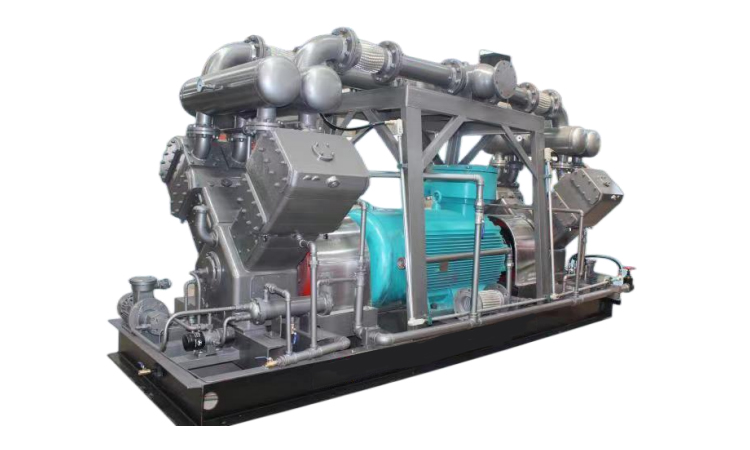
This is the most commonly used positive displacement compressor in oilfield oil wells. It periodically changes the volume of the cylinder through the reciprocating motion of the piston in the cylinder, thereby achieving the suction, compression and discharge of natural gas. The reciprocating compressor has a relatively simple structure, low manufacturing and maintenance costs, and can achieve a high compression ratio, which is very suitable for handling working conditions with large pressure changes. However, its disadvantages are large vibration and noise, and due to the reciprocating motion of the piston, there is a certain mechanical inertia force imbalance problem. In oilfields, reciprocating compressors are widely used in natural gas boosting, gathering and transportation, gas injection and production, compressor stations, and wellhead associated gas recovery. They can handle wet gas containing a certain amount of liquid, which is an important advantage in the actual working conditions of oil fields.
Screw compressor:
Screw compressors achieve continuous compression of gas by rotating a pair of intermeshing spiral rotors in the casing. It has the advantages of compact structure, smooth operation, low noise, and continuous and uniform exhaust. In oil field applications, screw compressors are often used in occasions with relatively small gas volume and low pressure requirements, such as some low-pressure associated gas recovery or auxiliary gas systems. Its disadvantages are relatively low efficiency and certain requirements for gas cleanliness.
Vane compressor:
The vanes on the rotor rotate in the cylinder to change the working volume to compress the gas. This type is relatively less used in the oil field and is mainly used for some small, low-pressure gas transportation.
Speed compressor:
This type of compressor works on the gas through the high-speed rotating impeller to make it gain kinetic energy, and then converts the kinetic energy into pressure energy, thereby achieving gas pressurization. It is characterized by large flow, smooth operation, low noise, and pulsation-free exhaust. In oilfield applications, the common ones are:
This is another speed compressor widely used in oilfields. It generates centrifugal force on the gas through a high-speed rotating impeller (usually with multiple cascade impellers), which increases the gas flow rate, and then converts kinetic energy into pressure energy through a diffuser. Centrifugal compressors have the advantages of large single-machine flow, stable operation, high reliability, and long maintenance cycle. They are particularly suitable for handling large flow, medium and low pressure natural gas boosting. In oilfields, they are often used for boosting in large natural gas processing plants, gas transmission stations, and large-scale gas injection and production projects. However, its disadvantage is that it has high requirements for gas cleanliness, and it is easy to “surge” under low flow conditions, and it needs to be equipped with an anti-surge control system.
Axial flow compressor:
Through a series of axially arranged moving blades and stationary blades, the gas flows along the axial direction and is pressurized step by step. Axial flow compressors have the advantages of large flow, high efficiency, and small size, but their structure is complex, the manufacturing cost is high, and their adaptability to working conditions is not as good as centrifugal compressors. In the oil field, axial flow compressors are mainly used for supercharging extremely large natural gas transmission pipelines or certain specific large-scale natural gas processing projects.
Composition and auxiliary systems
No matter what type of oil field oil well gas compressor, it is usually composed of the following main parts and auxiliary systems:
Prime Mover: Provides power for the compressor. Common drivers include:
Gas Turbine: Very common in oil field applications, it can directly use the natural gas produced by the oil field as fuel, has the advantages of fast start-up, high power, reliable operation, etc., and is often used to drive large centrifugal or reciprocating compressors.
Electric Motor: Suitable for occasions with reliable power supply, with the characteristics of clean and environmental protection, easy control, and stable operation.
Gas Engine: Similar to a car engine, it uses natural gas as fuel and is often used to drive small and medium-sized reciprocating compressors.
Compressor Body: The core component for achieving gas compression, including cylinders, pistons, valves (reciprocating), or impellers, diffusers (centrifugal), etc.
Cooling System: Compressing natural gas will generate a lot of heat. The cooling system (such as air cooler, water cooler) is used to reduce the gas temperature, improve the compression efficiency, and protect the equipment from overheating damage.
Lubrication System: Provide lubrication for the moving parts inside the compressor (such as bearings, piston rings), reduce friction and wear, and take away some heat. Usually includes oil tanks, oil pumps, filters, coolers, etc.
Sealing System: Prevent gas or lubricating oil leakage. Common ones include mechanical seals, labyrinth seals, dry gas seals, etc.
Control System: Start, stop, load, unload, safety protection, and remote monitoring of the compressor to ensure safe and efficient operation of the equipment. Usually composed of PLC, DCS, etc.
Other auxiliary equipment: such as air intake filters (remove impurities in the gas), separators (separate liquids from the gas), silencers (reduce noise), etc.
Application scenarios
Oilfield oil well gas compressors are widely used in multiple links of the oil and gas industry chain:
Oil and gas gathering and transportation: pressurize the low-pressure associated gas produced in the oil well and send it to the processing station or gas pipeline.
Natural gas processing: in the natural gas processing plant, it is used to pressurize the gas for dehydration, desulfurization, liquefaction and other processes.
Gas injection and recovery: pressurize natural gas or other inert gases and inject them into underground oil reservoirs to increase the recovery rate (such as natural gas drive, miscible drive, etc.).
Natural gas storage and transportation: used for gas injection and gas production in natural gas storage, and the operation of long-distance pipeline booster stations.
Associated gas recovery and utilization: recover and pressurize the low-pressure natural gas associated with the oil field, convert it into usable resources, reduce venting and combustion, and reduce environmental pollution.
In summary, the oilfield oil well gas compressor is the “heart” equipment in the oilfield production system, and its safe and stable operation has a significant impact on the entire oil and gas production chain. Therefore, in-depth analysis of common failures of these equipment and formulation of effective prevention and solution measures are the key to ensuring efficient and safe production in oil fields.
Analysis of carbon deposits
Formation and hazards of carbon deposits
Carbon deposits refer to a black, hard carbonaceous deposit formed by incomplete combustion or thermal decomposition of fuel or lubricating oil under high temperature. In oilfield oil well gas compressors, carbon deposits mainly occur in valves, piston ring grooves, cylinder walls, and exhaust passages.
Hazards:
Failure of valves: Carbon deposits accumulate on valve seats and valve plates, causing valves to close loosely, resulting in gas leakage and reduced compression efficiency. In severe cases, the valve may become stuck or even damaged.
Piston ring stuck: Carbon deposits accumulate in the piston ring groove, causing the piston ring to lose elasticity, poor sealing, causing blowby and reducing compression efficiency.
Plug ring stuck will also accelerate the wear of the cylinder and piston ring.
Decreased cooling effect: Carbon deposits have a certain degree of heat insulation. If they are attached to heat dissipation parts such as cylinder walls, they will affect the cooling effect, causing component temperature to rise and aggravating thermal stress.
Increased wear: Carbon deposit particles are abrasive and will increase the wear of moving parts such as pistons, cylinders, and piston rings.
Causes of carbon deposits
Improper selection of lubricants or quality problems: Lubricants have poor thermal stability and are easily oxidized and decomposed to form carbon deposits at high temperatures.
Incomplete combustion: Poor fuel quality, improper air-fuel ratio, ignition system failure, etc. may lead to incomplete combustion and produce carbon deposit precursors.
Excessive operating temperature: When the compressor runs in a high temperature environment for a long time, it will accelerate the oxidation and decomposition of lubricants and fuels and promote the formation of carbon deposits.
Untimely maintenance: Failure to clean or replace the air filter and oil filter for a long time will cause impurities to enter the cylinder and promote the formation of carbon deposits.
Design defects: Some compressor designs may have local dead corners or high-temperature areas, which are prone to carbon deposits.
Solutions for carbon deposits
Optimize the selection of lubricants: Select special lubricants with good oxidation resistance, thermal stability, and not easy to form carbon deposits.
Control the operating temperature: Ensure the normal operation of the cooling system and modify the cooling system if necessary.
Improve combustion conditions: ensure fuel quality, optimize air-fuel ratio, and regularly check the ignition system.
Regular cleaning and maintenance: Regularly clean carbon deposits on valves, piston ring grooves and other parts, and check the freedom of piston rings.
Install carbon deposit inhibitors: Add an appropriate amount of carbon deposit inhibitors to the fuel or lubricating oil to delay the formation of carbon deposits.
Analysis of vibration problems
Harm of vibration
Vibration of oilfield oil well gas compressors is a common fault phenomenon, which not only affects the stability of equipment operation, but may also cause a series of serious consequences.
Equipment damage: Long-term severe vibration can cause fatigue damage to components, loose connections, increased bearing wear, seal failure, and even structural damage.
Production interruption: Excessive vibration may trigger the protection device, causing the compressor to trip and shut down, affecting oilfield production.
Safety hazards: Vibration may cause pipeline rupture, gas leakage, fire, explosion and other safety accidents.
Noise pollution: Vibration is often accompanied by noise, affecting the working environment of operators.
Causes of vibration
Rotor imbalance: manufacturing or installation errors of the rotor, as well as corrosion, wear and tear during operation, lead to uneven mass distribution and centrifugal force.
Poor alignment: The axis between the compressor and the driver is not aligned, resulting in uneven torque transmitted by the coupling and vibration.
Bearing failure: Bearing wear, excessive clearance, poor lubrication or improper installation can cause vibration.
Surge: Under low flow conditions, the centrifugal compressor causes internal pressure pulsation due to unstable airflow, resulting in severe vibration and noise.
Unsound foundation: The compressor foundation is loose, sinking or insufficient in strength, and cannot effectively absorb and transmit vibration.
Pipeline resonance: The pipeline system connected to the compressor is not designed reasonably or is not firmly fixed, and resonates with the compressor vibration at a specific frequency.
Imbalanced piston reciprocating force: Reciprocating compressors produce periodic vibrations due to unbalanced inertial force of piston movement.
Air flow pulsation: When gas flows at high speed in the pipeline or passes through the valve, air flow pulsation is generated, which is transmitted to the equipment and causes vibration.
Vibration Solution
Dynamic balancing correction: Accurately balance the rotor to eliminate unbalanced forces.
Precise alignment: Regularly check and correct the alignment between the compressor and the driver to ensure that it is within the allowable error range.
Bearing maintenance and replacement: Regularly check the bearing status, replenish or replace the lubricating oil in time, and replace the bearing in time when it is severely worn.
Surge prevention and control: Optimize operating parameters to avoid entering the surge zone; install an anti-surge control system.
Reinforce the foundation: Check the compressor foundation and reinforce or re-cast it if necessary.
Pipeline support and shock absorption: Optimize pipeline design, increase support, and install shock absorbers.
Shock absorption measures: Install shock pads or shock absorbers on the base of the equipment to absorb part of the vibration energy.
Monitoring and diagnosis: Install a vibration monitoring system to monitor vibration data in real time, perform fault diagnosis and trend analysis.
Analysis of lubrication problems
Harm of poor lubrication
Lubrication plays a vital role in the operation of oilfield oil well gas compressors. It can reduce friction, reduce wear, dissipate heat, prevent corrosion, seal and transmit power. Poor lubrication will directly lead to equipment performance degradation or even serious failure.
Increased wear: The lubricating film is broken or insufficient, resulting in direct metal contact, rapid wear and tear, and greatly shortened component life.
Rising temperature: The heat generated by friction cannot be dissipated in time, resulting in increased component temperature and even component burning.
Seal failure: The lubricating oil forms an oil film between the piston ring and the cylinder to play a sealing role. Poor lubrication can cause seal failure and gas leakage.
Increased corrosion: The lubricating oil has an anti-corrosion effect, and poor lubrication can make the components more susceptible to corrosion.
Increased energy consumption: Increased friction leads to increased energy consumption of the compressor.
Causes of lubrication problems
Improper selection of lubricating oil: Inappropriate lubricating oil viscosity, poor oxidation resistance, poor wear resistance, mismatch with working conditions, etc.
Lubricating oil pollution: impurities such as water, particles, and gas enter the lubricating oil, causing its performance to deteriorate.
Insufficient or interrupted oil supply: lubricating oil pump failure, oil circuit blockage, low oil level, lubricating system leakage, etc.
Lubricating system failure: cooler blockage, filter failure, abnormal oil pressure, oil temperature is too high or too low, etc.
Lubricating oil deterioration: lubricating oil is used for a long time, affected by high temperature, oxidation and other factors, and its performance deteriorates or even emulsifies.
Seal failure: aging or damage of seals such as oil seals and gaskets leads to lubricating oil leakage.
Improper maintenance: not changing lubricating oil for a long time, not cleaning the oil tank, not changing the filter element, etc.
Solutions to lubrication problems
Correct selection of lubricating oil: select special lubricating oil that meets the requirements according to factors such as compressor type, working conditions, gas medium, etc.
Regular oil analysis: regularly sample and analyze lubricating oil, monitor its viscosity, acid value, moisture, particle content and other indicators, and find and solve problems in time.
Keep the lubricating oil clean: replace the filter element regularly, clean the oil tank, and ensure that the lubricating oil is not contaminated.
Ensure sufficient oil supply: check the oil level regularly to ensure the normal operation of the oil pump, check whether the oil circuit is unobstructed, and deal with leaks in time.
Maintain the lubrication system: regularly check the cooler, filter, oil pressure gauge, oil thermometer, etc. to ensure the normal operation of the lubrication system.
Replace seals: regularly check and replace aging oil seals and gaskets to prevent lubricating oil leakage.
Establish a sound lubrication management system: including the purchase, storage, use, replacement and waste oil treatment of lubricating oil.
Comprehensive troubleshooting and solutions
In actual operation, the failure of oilfield oil well gas compressors is often not a single one, but the result of multiple factors interrelated and working together. Therefore, a comprehensive analysis is needed to find out the root cause when troubleshooting.
Fault phenomenon analysis: carefully observe the fault phenomenon, such as abnormal sound, vibration, temperature increase, abnormal pressure, leakage, etc., and record detailed information.
Parameter monitoring and trend analysis: Obtain historical data of operating parameters (temperature, pressure, flow, vibration, etc.) through the SCADA system or field instruments, conduct trend analysis, and find abnormal fluctuations.
Equipment inspection: Conduct a comprehensive inspection of the compressor and its auxiliary systems, including appearance, connectors, pipelines, valves, instruments, etc.
Disassembly inspection: When necessary, disassemble and inspect suspected faulty components, such as gas valves, pistons, bearings, etc., and observe wear, carbon deposition, corrosion, etc.
Professional diagnostic tools: Use professional tools such as infrared thermometers, vibration analyzers, and endoscopes for fault diagnosis.
Fault tree analysis: Establish a fault tree, analyze the fault phenomenon step by step, and find out the root cause.
Multi-factor comprehensive judgment: Combine various information, conduct cross-validation, and avoid one-sided judgment.
Fault prevention and suggestions for improving the performance of oilfield oil well gas compressors
Fault prevention
Operate strictly in accordance with the operating procedures: Ensure that the compressor operates within the design operating range and avoid overload operation.
Establish a complete maintenance plan: including daily inspections, regular maintenance, planned overhauls, etc., and strictly implement them.
Strengthen equipment monitoring: install advanced online monitoring systems, monitor key parameters in real time, and detect abnormalities in time.
Regularly conduct oil analysis and testing: master the condition of lubricants and replace them in time.
Optimize fuel and lubricant management: ensure the quality, storage and use of fuel and lubricants meet the specifications.
Operator training: improve the skill level and fault identification ability of operators.
Spare parts management: establish a complete spare parts management system to ensure the timely supply of key spare parts.
Improve the performance of oilfield oil well gas compressors
Technology upgrade and transformation: consider introducing more advanced compressor technology, or upgrade and transform existing equipment to improve efficiency and reliability.
Optimize system matching: ensure that the compressor matches well with the previous and next process flows, pipeline systems, etc., and reduce system losses.
Energy efficiency management: pay attention to the energy consumption of compressor operation, and take measures to reduce energy consumption, such as frequency conversion control, optimization of cooling system, etc.
Intelligent management: Introduce technologies such as big data and artificial intelligence to conduct in-depth analysis of equipment operation data and achieve predictive maintenance.
Conclusion
The carbon deposition, vibration and lubrication problems of oilfield oil well gas compressors are common “roadblocks” in their operation. The occurrence of these failures is often the result of the combined effect of multiple factors. Therefore, solving these problems requires fundamental measures and comprehensive measures. By strengthening preventive maintenance, optimizing equipment management, improving operator skills, and combining advanced monitoring and diagnosis technologies, the failure rate can be effectively reduced, the operating reliability and efficiency of oilfield oil well gas compressors can be improved, and a solid guarantee can be provided for the stable operation of oil and gas production in oilfields. Only in this way can we ensure that oilfield enterprises maintain their leading position in the fierce market competition and achieve sustainable development.
Request a Quick Quote Now

Shanghai Sollant Energy Saving Technology Co., Ltd.
Drawing on our years of experience and expertise in air separation and PSA technologies, we deliver customized solutions tailored to your specific needs.
