Menu Close

Application Prospects of Liquid Nitrogen Generators in Food Preservation

Food preservation has always been one of the core challenges of the global food industry. As consumers’ requirements for food safety and quality increase, companies are urgently required to adopt more advanced and effective technical means to extend the shelf life of food while ensuring that the nutrition and flavor of the food are not compromised. As an emerging technical tool, liquid nitrogen generator is gradually favored by food manufacturers and processing companies because of its significant advantages in the field of food preservation. This section will introduce the working principle and function of the liquid nitrogen generator, and discuss the main problems faced in the food preservation process.

Liquid nitrogen generator is a device that produces high-purity liquid nitrogen by separating and liquefying nitrogen in the air. Its working principle is mainly based on air separation technology, usually using cryogenic distillation (also called cryogenic separation) method to separate nitrogen, oxygen and other gases in the air. In this way, the nitrogen generator can generate liquid nitrogen with a purity of up to 99.999%, which has unique advantages in the food preservation process.

The main characteristics of liquid nitrogen include extremely low temperature (about -196°C) and inertness, which make it effective in preventing oxidation and microbial growth of food during storage and transportation. In addition, liquid nitrogen can quickly reduce the temperature of food and help maintain the texture, color and flavor of food. Therefore, liquid nitrogen generators are widely used in food processing links that require efficient freezing, quick freezing and improved modified atmosphere packaging.

During the production, storage and transportation of food, oxidation and microbial growth are two major factors affecting the shelf life and quality of food. Oxidation reactions mainly occur when food is exposed to air, especially foods with high fat content such as meat, dairy products and fried foods. Oxygen reacts with the fats in food, causing the oxidation of fatty acids, producing unpleasant odors and flavors, a process known as rancidity. In addition, oxidation will destroy the vitamins in food, especially vitamin C and vitamin E, thereby reducing the nutritional value of food.

Microbial growth is another factor that seriously affects food safety and quality. Microorganisms in food include bacteria, yeast and mold, which multiply rapidly under suitable temperature and humidity conditions, causing food spoilage. Certain pathogenic bacteria, such as Salmonella, E. coli and Listeria, may even produce harmful toxins in food, endangering consumers’ health.

To address these challenges, traditional food preservation methods include refrigeration, freezing, drying, salting, candiing, and smoking. However, these methods have limited effectiveness in extending the shelf life of food and may affect the nutrition and taste of the food. Therefore, the food industry urgently needs to introduce more efficient, economical and fresh-keeping technologies that do not affect food quality. It is in this context that liquid nitrogen generators, as an emerging food preservation solution, have shown great application prospects.
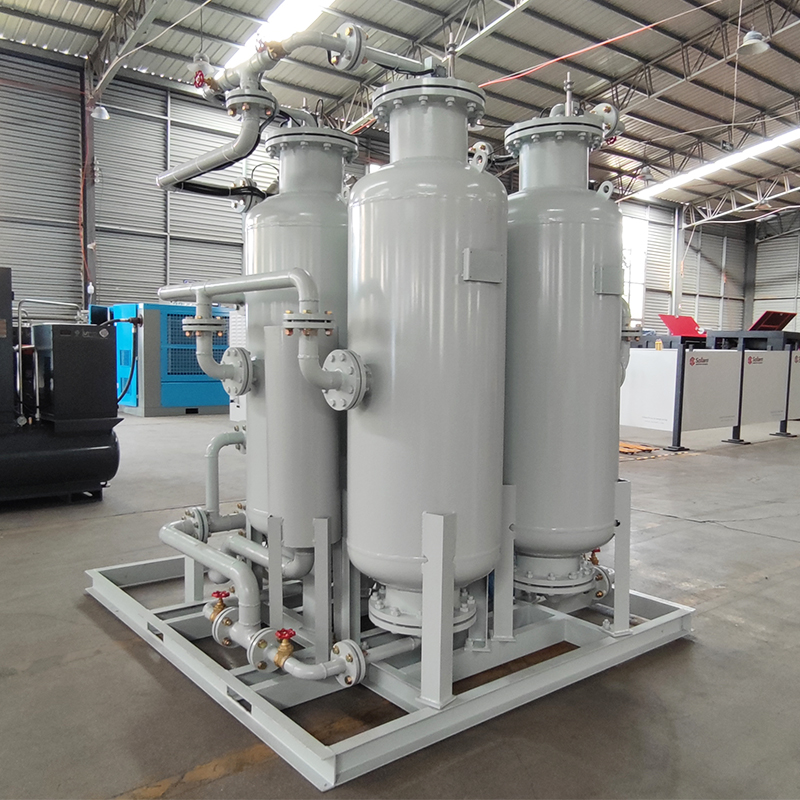
Liquid Nitrogen Generators

The liquid nitrogen produced by the liquid nitrogen generator can not only effectively isolate oxygen and delay the occurrence of oxidation reactions, but also quickly inhibit the growth and reproduction of microorganisms through its ultra-low temperature, providing a more comprehensive and effective guarantee for food preservation. As the quality requirements of the food industry continue to improve, the application prospects of liquid nitrogen generation technology will become increasingly broad.
Food preservation has always been one of the core challenges of the global food industry. As consumers’ requirements for food safety and quality increase, companies are urgently required to adopt more advanced and effective technical means to extend the shelf life of food while ensuring that the nutrition and flavor of the food are not compromised. As an emerging technical tool, liquid nitrogen generator is gradually favored by food manufacturers and processing companies because of its significant advantages in the field of food preservation. This section will introduce the working principle and function of the liquid nitrogen generator, and discuss the main problems faced in the food preservation process.

Liquid nitrogen generator is a device that produces high-purity liquid nitrogen by separating and liquefying nitrogen in the air. Its working principle is mainly based on air separation technology, usually using cryogenic distillation (also called cryogenic separation) method to separate nitrogen, oxygen and other gases in the air. In this way, the nitrogen generator can generate liquid nitrogen with a purity of up to 99.999%, which has unique advantages in the food preservation process.

The main characteristics of liquid nitrogen include extremely low temperature (about -196°C) and inertness, which make it effective in preventing oxidation and microbial growth of food during storage and transportation. In addition, liquid nitrogen can quickly reduce the temperature of food and help maintain the texture, color and flavor of food. Therefore, liquid nitrogen generators are widely used in food processing links that require efficient freezing, quick freezing and improved modified atmosphere packaging.

During the production, storage and transportation of food, oxidation and microbial growth are two major factors affecting the shelf life and quality of food. Oxidation reactions mainly occur when food is exposed to air, especially foods with high fat content such as meat, dairy products and fried foods. Oxygen reacts with the fats in food, causing the oxidation of fatty acids, producing unpleasant odors and flavors, a process known as rancidity. In addition, oxidation will destroy the vitamins in food, especially vitamin C and vitamin E, thereby reducing the nutritional value of food.

Microbial growth is another factor that seriously affects food safety and quality. Microorganisms in food include bacteria, yeast and mold, which multiply rapidly under suitable temperature and humidity conditions, causing food spoilage. Certain pathogenic bacteria, such as Salmonella, E. coli and Listeria, may even produce harmful toxins in food, endangering consumers’ health.

To address these challenges, traditional food preservation methods include refrigeration, freezing, drying, salting, candiing, and smoking. However, these methods have limited effectiveness in extending the shelf life of food and may affect the nutrition and taste of the food. Therefore, the food industry urgently needs to introduce more efficient, economical and fresh-keeping technologies that do not affect food quality. It is in this context that liquid nitrogen generators, as an emerging food preservation solution, have shown great application prospects.

The liquid nitrogen produced by the liquid nitrogen generator can not only effectively isolate oxygen and delay the occurrence of oxidation reactions, but also quickly inhibit the growth and reproduction of microorganisms through its ultra-low temperature, providing a more comprehensive and effective guarantee for food preservation. As the quality requirements of the food industry continue to improve, the application prospects of liquid nitrogen generation technology will become increasingly broad.

The role of liquid nitrogen in food preservation

Nitrogen (N2) is a colorless, tasteless, odorless gas that is in gaseous form at room temperature and pressure and accounts for 78% of the Earth’s atmosphere. The inert properties of nitrogen make it play a vital role in food preservation. Inert gases refer to gases that are not easy to react chemically with other substances, and nitrogen is such a gas. Since nitrogen is not easy to participate in chemical reactions, it can effectively inhibit the occurrence of oxidation reactions, thereby delaying the deterioration of food.

In food preservation, the main role of nitrogen is to reduce the oxygen content by filling or replacing oxygen. Oxygen is the main cause of food oxidation. It can cause the oxidation of fatty acids, which can cause food to have odor, rancidity, and even damage the nutritional components of food. By using nitrogen to replace oxygen, these oxidation processes can be effectively slowed down and the shelf life of food can be improved. Especially in the packaging and storage links, the use of nitrogen filling technology (modified atmosphere packaging, MAP) can effectively extend the shelf life of food.

One of the main functions of liquid nitrogen is to inhibit the oxidation reaction of food by reducing the contact with oxygen. Liquid nitrogen is a gas at room temperature, but is cooled to liquid at extremely low temperatures (about -196°C). Liquid nitrogen is used to seal the air in the package, making the oxygen content in the package extremely low, thereby reducing the contact between food and oxygen.

The application of liquid nitrogen in food packaging includes:

  1. Modified atmosphere packaging (MAP): Liquid nitrogen can be used together with other inert gases (such as carbon dioxide) to fill the gas in the food package, reduce the oxygen content, and delay the oxidation reaction.
  2. Gas replacement: During the sealing packaging process, the air in the package is replaced by liquid nitrogen to further reduce the impact of oxygen on the food.

This low-oxygen environment can not only extend the shelf life of food, but also maintain the color and flavor of the food. For example, when packaging fresh fruits, vegetables, meat and other foods, liquid nitrogen can effectively prevent the color and flavor of these foods from fading and decreasing.

The application of liquid nitrogen is particularly important in the fields of freezing and quick freezing. Due to its ultra-low temperature (approximately -196°C), liquid nitrogen can quickly reduce the temperature of food and prevent the formation of large ice crystals during the freezing process, which is crucial to maintaining the texture and flavor of food.

  1. Quick freezing technology: Liquid nitrogen can quickly reduce the temperature of food to below -40°C. This rapid freezing process can prevent ice crystals from forming in food cells, thereby maintaining the cell structure and texture of food. For example, quick-frozen vegetables and seafood can maintain their original flavor and texture during the freezing process with liquid nitrogen.
  2. Texture protection: During the slow freezing process, moisture will form larger ice crystals inside the food, causing cell walls to rupture and affecting the texture of the food. Rapid freezing with liquid nitrogen can significantly reduce the formation of ice crystals, thereby reducing damage to food texture.
  3. Flavor retention: Rapid freezing can also effectively retain the flavor components in food and prevent the loss of flavor substances during the freezing process.

The application of liquid nitrogen in food processing not only improves production efficiency, but also ensures that the food retains its original flavor and texture after thawing, meeting the demand of modern consumers for high-quality food.

Specific application cases of liquid nitrogen generator in food preservation

The application of liquid nitrogen generator in food preservation has proven its remarkable effect and wide applicability. The following will discuss in detail the specific application cases of liquid nitrogen generators in food preservation, including liquid nitrogen packaging (MAP) technology, fruit and vegetable preservation, and frozen preservation of meat and seafood.

Liquid Nitrogen Packaging (MAP) Technology

Modified Atmosphere Packaging (MAP) is a technology that extends the shelf life of food by adjusting the gas composition inside the package. The application of liquid nitrogen machine in MAP technology enables the gas environment inside the packaging to be significantly optimized, thereby improving the food preservation effect.

Application Overview: The application of liquid nitrogen in MAP technology is mainly reflected in its reduction of oxygen content in packaging, reducing oxidation reactions and inhibiting microbial growth. Liquid nitrogen is used to replace the air in packaging and replace gases such as oxygen and carbon dioxide, thereby creating a low-oxygen, low-temperature environment and delaying food spoilage and deterioration.

Practical examples: Liquid nitrogen is widely used in the packaging of fresh foods, such as fresh-cut fruits, prepared meals and frozen foods. By using liquid nitrogen during the packaging process, it can effectively prevent food surface oxidation and maintain the color and flavor of food. For example, when packaging sliced ​​fruit, liquid nitrogen can quickly replace the oxygen inside the package, extending the freshness and taste of the fruit.

Advantages: MAP technology using liquid nitrogen can significantly extend the shelf life of food, reduce food waste, improve supply chain efficiency, and ensure food quality during storage and transportation.

Application of liquid nitrogen in fruit and vegetable preservation

Liquid nitrogen plays an important role in the preservation of fruits and vegetables, significantly extending the shelf life of these perishable foods through rapid freezing and packaging optimization.

Application Overview: The main application of liquid nitrogen in fruit and vegetable preservation is to delay the ripening and spoilage of fruits and vegetables through quick freezing (quick freezing) and low-oxygen packaging. Liquid nitrogen can reduce the temperature of fruits and vegetables to extremely low levels in a short period of time, thereby inhibiting enzyme activity and preventing the loss of nutrients and changes in taste.

Practical cases: Liquid nitrogen is widely used during the processing and freezing storage of agricultural products, such as quick-frozen fruits (such as strawberries, blueberries) and frozen vegetables (such as spinach, green beans). Rapid freezing of fruits and vegetables with liquid nitrogen preserves their original texture and flavor. Liquid nitrogen is also used in packaging to reduce oxygen content and further extend the shelf life of fruits and vegetables.

Advantages: Liquid nitrogen can effectively reduce the formation of ice crystals during the freezing process, thus maintaining the texture of fruits and vegetables. Compared with traditional freezing methods, liquid nitrogen freezing can better protect the nutrients and flavor of food and improve product quality.

Application of liquid nitrogen in meat and seafood preservation

Liquid nitrogen shows significant advantages in the cryopreservation of meat and seafood, effectively extending the shelf life of these high-value foods while maintaining their taste and nutritional value.

Application Overview: Meat and seafood often face problems of cell structure destruction and moisture loss during the freezing process. Due to its extremely low temperature, liquid nitrogen can freeze meat and seafood to the required temperature in a very short time, thereby reducing the formation of ice crystals and maintaining the texture and flavor of the food.

Practical cases: Liquid nitrogen is widely used in the freezing process of meat (such as beef, pork, chicken) and seafood (such as fish, shrimp, shellfish). For example, liquid nitrogen can quickly freeze fish and shrimp during the freezing process, preventing intracellular water from freezing and thus avoiding texture changes after thawing. Liquid nitrogen is also used for quick freezing of meat to maintain the tenderness and original flavor of the meat.

Advantages: Using liquid nitrogen for freezing can significantly increase the shelf life of food and reduce the impact of ice crystals on food texture. In addition, it can effectively maintain the color and flavor of meat and seafood, ensuring high-quality products in the hands of consumers.

Overall, the application of liquid nitrogen generators in food preservation demonstrates its great potential in improving food quality, extending shelf life and reducing food waste. Through the efficient application of liquid nitrogen, the food industry can provide better quality products to meet consumers’ needs for fresh and safe food.

Advantages and market prospects of liquid nitrogen generators

As an advanced food preservation technology, liquid nitrogen generator is gradually changing the face of the food processing and storage industry with its high efficiency, economy and environmental protection. The following will discuss in detail the efficiency and economy of liquid nitrogen generators, environmental benefits and sustainable development, as well as market demand and growth potential.

High efficiency and economy of liquid nitrogen generator

The efficiency and economy of the liquid nitrogen generator are reflected in its optimization and cost control of the food preservation process:

  • Improve efficiency: The liquid nitrogen generator can quickly generate high-purity liquid nitrogen and provide a stable supply, which makes modified atmosphere packaging and quick-freezing operations during food processing and storage more efficient. The ultra-low temperature characteristics of liquid nitrogen enable it to quickly reduce the temperature of food to the required level during freezing and quick-freezing processes, thereby significantly shortening freezing time and improving production efficiency.
  • Reduced costs: Although the initial investment of a liquid nitrogen generator is higher, its long-term operating costs are lower. The use of liquid nitrogen can reduce food losses caused by oxidation and microbial growth, and reduce the waste rate. In addition, liquid nitrogen’s efficient freezing and packaging technology can increase the shelf life of food and reduce food waste, thereby lowering overall operating costs.
  • Economic benefits: The use of liquid nitrogen machines can enhance the market competitiveness of food, especially in the high-end food market. By improving the preservation effect of food, companies can provide higher-quality products that meet consumers’ requirements for freshness and taste, thereby leading to higher sales and profits.

Environmental benefits and sustainable development

Liquid nitrogen machines not only perform well in terms of economic benefits, but their environmental benefits and sustainable development potential cannot be ignored:

  • Reduce food waste: Liquid nitrogen can significantly reduce food waste caused by spoilage by improving the preservation effect of food. Reducing food waste is not only beneficial to the environment, but also reduces resource consumption and processing costs, thereby achieving the goal of sustainable development.
  • Energy saving and environmental protection: Compared with traditional refrigeration and freezing methods, liquid nitrogen technology has a higher energy efficiency ratio. The freezing process of liquid nitrogen is more efficient and can reach the required low temperature in a shorter time, thereby reducing energy consumption. At the same time, liquid nitrogen itself is an environmentally friendly inert gas and will not cause pollution to the environment.
  • Reduced carbon footprint: Liquid nitrogen technology helps reduce the carbon footprint of the food supply chain by reducing losses in food transportation and storage. Enterprises using liquid nitrogen technology can make a positive contribution in reducing energy consumption and greenhouse gas emissions, complying with global requirements for emission reduction and environmental protection.

Market demand and growth potential

With the continuous improvement of global food quality and safety requirements, the demand and growth potential of liquid nitrogen generators in the food preservation market are significant:

  • Market demand: The global food industry’s demand for efficient preservation technology continues to grow, especially in the context of increased demand for high-quality food. Liquid nitrogen technology can meet these needs and provide efficient and reliable freshness preservation solutions. Especially in the fields of fresh fruits, vegetables, meat and seafood, the application of liquid nitrogen has become an industry standard.
  • Growth potential: The liquid nitrogen generator market is expected to continue to expand in the next few years. With the continuous advancement of technology and the gradual reduction of costs, more food companies will adopt liquid nitrogen technology to improve production efficiency and food quality. In addition, the rise of emerging markets and the improvement of food safety standards will also drive the growth of the liquid nitrogen generator market.
  • Industry development: The growth of the liquid nitrogen generator market is not only reflected in the food industry, but also includes the expansion of applications in other fields such as medicine, chemicals, and electronics. With the development of science and technology and the expansion of application scenarios, the market prospects of liquid nitrogen generators will be broader.

In short, liquid nitrogen generators are showing great potential in the field of food preservation with their advantages of high efficiency, economy and environmental protection. With the growth of market demand and the continuous development of technology, the application of liquid nitrogen generators will become more extensive, which is of great significance to promoting the sustainable development of the food industry and improving food quality.

Request a Quick Quote Now

  • Shanghai Sollant Energy Saving Technology Co., Ltd.

    Drawing on our years of experience and expertise in air separation and PSA technologies, we deliver customized solutions tailored to your specific needs.

  • Subscribe to Our Blog

    We will never rent or sell your email to anyone.