Menu Close

The Key Role of Industrial Oxygen Generators in Steel Production

Steel production is the cornerstone of modern industry and has a profound impact on the development of the economy and infrastructure. As a core link in heavy industry, steel production involves a large amount of energy consumption and raw material use. The steel production process usually includes the smelting of ore to the processing of finished steel, which requires a high temperature and efficient reaction environment to ensure the quality and production efficiency of the final product.

In the steel production process, blast furnace ironmaking and converter steelmaking are the two main production links. These processes require a lot of heat energy and oxygen to maintain high temperature reactions and optimize chemical reactions to produce high-quality steel products. Therefore, oxygen, as a key auxiliary material, plays an important role in improving production efficiency, improving product quality and reducing energy consumption.

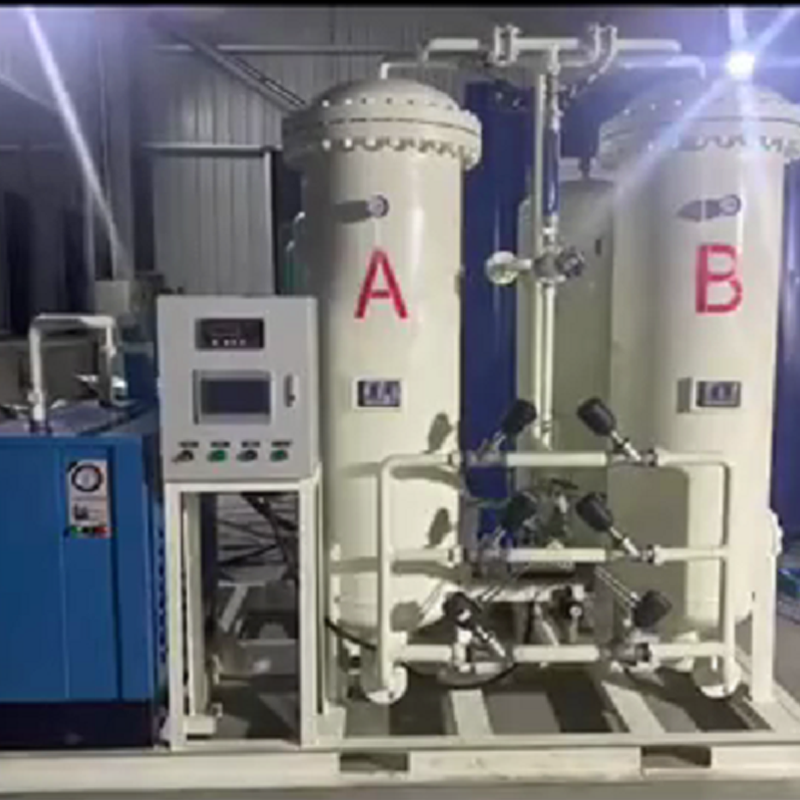
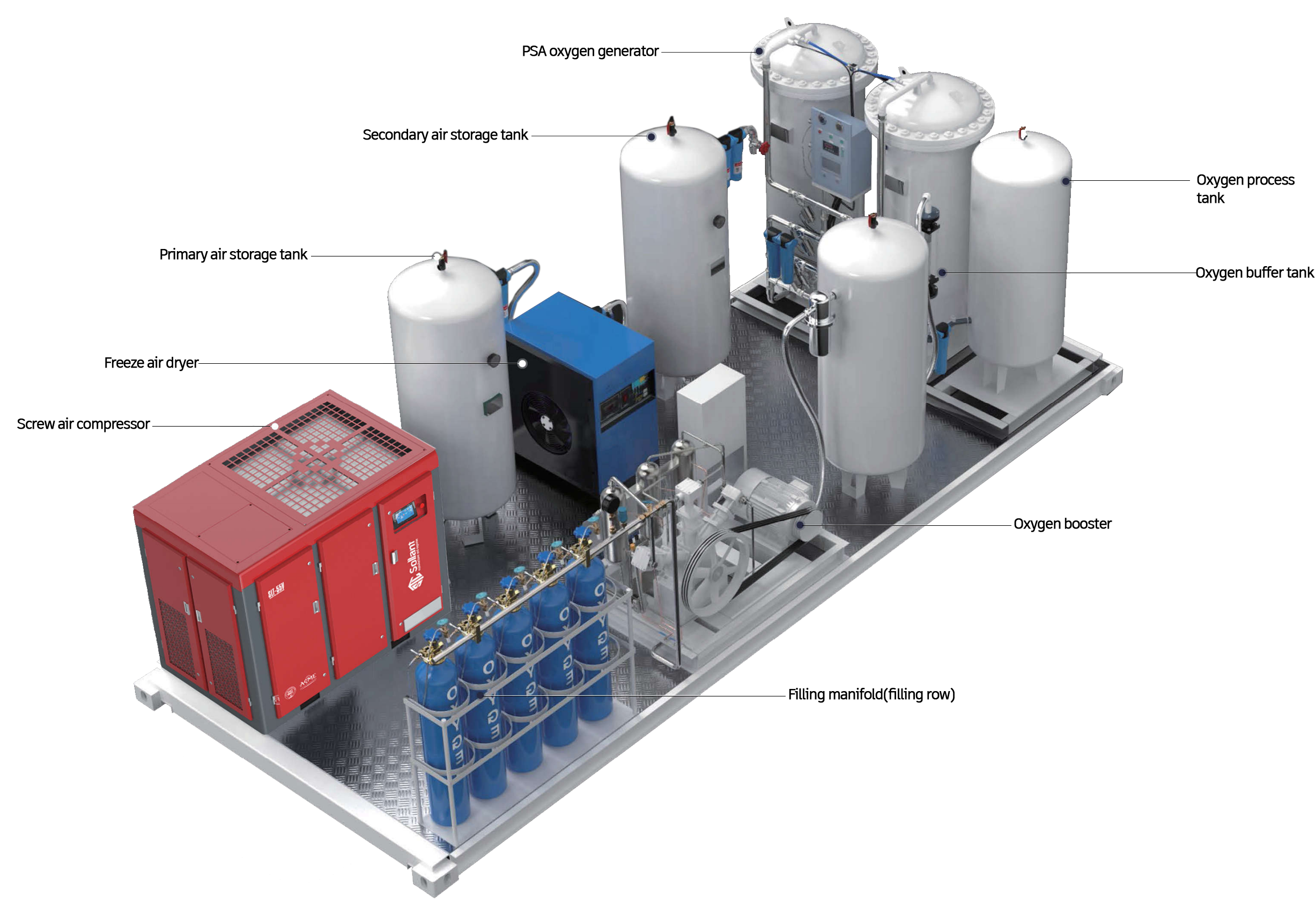
Industrial oxygen generator is a device specially used to separate and extract oxygen from air. Its basic function is to separate oxygen from other gases (such as nitrogen, carbon dioxide) in the air and provide high-purity oxygen for industrial applications. The working principles of industrial oxygen generators are mainly as follows:

  1. Pressure swing adsorption (PSA) technology: By compressing air and passing it through a specific adsorption material, oxygen and nitrogen are separated by utilizing the adsorption characteristics of different gases on the material. PSA oxygen generators have the advantages of simple operation and low maintenance cost.
  2. Vacuum pressure swing adsorption (VPSA) technology: Similar to PSA, but a vacuum system is used during operation to improve the separation efficiency of oxygen. Suitable for application scenarios that require a large flow of oxygen.
  3. Liquid oxygen preparation technology: By cooling air to a liquefied state and then distilling out oxygen. Liquid oxygen preparation equipment is usually used in large industrial applications that require high-purity oxygen.

These oxygen production technologies can provide a stable and reliable supply of oxygen according to different industrial needs, and help steel production companies improve production efficiency, reduce energy costs and improve product quality by optimizing the purity and flow of oxygen. By adopting industrial oxygen generators, steel production companies can achieve more efficient production processes and promote sustainable development of the industry.
Oxygen Requirements for Steel Production

The role of oxygen in steel production

Steel production is a complex and energy-intensive process in which the use of oxygen plays a crucial role. Oxygen not only promotes reactions during the production process, but also significantly improves production efficiency and product quality. The two main links in steel production – blast furnace ironmaking and converter steelmaking, each have their own characteristics in terms of demand and utilization of oxygen.

Blast furnace ironmaking: oxygen combustion, increase furnace temperature, and optimize the reaction process

Blast furnace ironmaking is the process of converting iron ore into liquid pig iron. In this process, coal and coke, as the main reducing agents, react with oxygen in the iron ore to produce iron and carbon dioxide. Since the reaction needs to be carried out at extremely high temperatures, the supply of oxygen becomes crucial.

  1. Combustion-supporting effect: In the blast furnace, oxygen is mainly used to support combustion. By injecting an oxygen-rich gas flow into the furnace, the combustion efficiency of coke can be improved, so that the furnace temperature can reach the required level. High temperature helps to speed up the reduction reaction, thereby improving production efficiency.
  2. Increase furnace temperature: By increasing the supply of oxygen, the blast furnace can achieve a higher furnace temperature, which is essential for the reduction process of iron ore. Higher furnace temperatures help melt iron ore, promote chemical reactions, and ultimately increase the output and quality of pig iron.
  3. Optimize the reaction process: The effective supply of oxygen can optimize the chemical reaction in the furnace, improve the quality of molten iron and production efficiency. It can reduce incomplete combustion in the furnace, reduce waste gas emissions, and improve the utilization rate of coke.

BOF steelmaking: Oxygen is used to oxidize impurities and improve the quality of molten steel

BOF steelmaking is the process of converting pig iron from a blast furnace into steel. In this process, the role of oxygen is mainly reflected in the following aspects:

  1. Oxidation of impurities: In BOF steelmaking, oxygen is used to oxidize impurities in molten iron, such as sulfur, phosphorus and carbon. By injecting oxygen, these impurities are converted into gas or molten material and removed from the molten steel. In particular, the removal of sulfur and phosphorus is essential for the strength and toughness of steel.
  2. Improving the quality of molten steel: An efficient oxidation process helps improve the quality of molten steel. By controlling the amount of oxygen injected, the chemical composition of the molten steel can be precisely adjusted to meet the required steel standards, thereby producing high-quality steel.
  3. Speeding up steelmaking: The introduction of oxygen can also accelerate the reaction rate of the steelmaking process, shorten the production cycle, and improve overall production efficiency.

Oxygen demand: Specific oxygen demand at different production stages

The demand for oxygen varies significantly at different stages in steel production, as follows:

Blast furnace ironmaking: Blast furnace ironmaking requires large amounts of oxygen to maintain high temperatures and promote reactions. Usually, the consumption of oxygen during the production of each ton of pig iron is about 1000-1500 cubic meters. The specific demand depends on factors such as the size of the furnace, production technology and coal quality.

Converter steelmaking: Oxygen demand is higher in converter steelmaking because the molten steel needs to be oxidized. During the production of each ton of molten steel, oxygen consumption is approximately 500-800 cubic meters. This amount may vary depending on the initial composition of the molten steel, the steel standard required, and the steelmaking process.

By rationally configuring and using industrial oxygen generators, steel production companies can ensure a stable oxygen supply and meet the oxygen needs of different production stages, thereby optimizing the production process, improving efficiency, and reducing costs.

Industrial Oxygen Generators

Benefits of Industrial Oxygen Generator

1. Improve production efficiency

The application of industrial oxygen generators has brought significant production efficiency improvements in steel production, which is mainly reflected in the following aspects:

Furnace temperature increase: production advantages brought by higher temperatures

Industrial oxygen generators provide high-purity oxygen, which helps increase furnace temperatures in blast furnaces and converters. Under high temperature conditions, the reduction and oxidation reactions in the steel production process are more intense, the reaction speed is faster, and the production efficiency is greatly improved. Increasing the temperature of the blast furnace can melt the iron ore faster and speed up the production of molten iron, thereby increasing production. During the converter steelmaking process, high temperature helps to remove impurities in the molten steel faster and improve steelmaking efficiency.

Accelerated response: shortened production cycle

Chemical reactions in steel production are accelerated because oxygen increases reaction rates. This not only shortens the production cycle, but also makes the overall operation of the production line more efficient. Faster reaction speed means that the same equipment can handle more raw materials, further improving production efficiency.

2. Energy saving and consumption reduction

The contribution of industrial oxygen generators in energy saving and consumption reduction is also significant:

Fuel Utilization: Greater Fuel Efficiency

By increasing the oxygen concentration in the furnace, more complete combustion can be achieved. In this way, the fuel utilization rate is greatly improved and the waste of fuel is reduced. In blast furnace ironmaking, the increased oxygen allows coke to burn more efficiently, reducing the amount of coke required per ton of pig iron. This efficient combustion not only reduces fuel costs but also has a positive impact on the economics of the production process.

Reduce energy consumption: Optimize energy use

The high temperature and efficient combustion process result in more optimized energy use. Steel production companies can reduce overall energy consumption by reducing energy losses. The use of industrial oxygen generators helps steel plants better control furnace temperatures and reaction conditions, thereby avoiding energy waste and reducing energy expenses.

3. Improve product quality

The use of industrial oxygen generators also plays an important role in improving steel quality:

Purity of molten steel: reduce impurities and improve steel performance

During the converter steelmaking process, oxygen is used to oxidize impurities in the molten steel, such as sulfur, phosphorus and carbon. By optimizing the supply of oxygen, these impurities in the molten steel can be removed more efficiently, resulting in higher purity steel. High-purity molten steel can significantly improve the strength, toughness and overall performance of steel to meet the requirements of high-quality products.

4. Environmental impact

The role of industrial oxygen generators in reducing environmental pollution cannot be ignored:

Reduced emissions: more efficient combustion processes reduce pollutants

More efficient combustion processes not only improve production efficiency, but also reduce harmful emissions. In steel production, industrial oxygen generators provide pure oxygen to make the combustion process more complete, thereby reducing the emission of carbon dioxide, carbon monoxide and other pollutants. Effective oxygen supply helps to reduce waste gas emissions during the production process, thereby reducing the impact on the environment.

In summary, industrial oxygen generators not only improve production efficiency, save energy, and improve product quality in steel production, but also make positive contributions to environmental protection. Its application is an important driving force for the development of modern steel production towards high efficiency, energy saving and environmental protection.

Future development trends

The future development of industrial oxygen generators will be affected by technological progress, environmental protection requirements and market trends.

With the continuous advancement of technology, oxygen concentrators will usher in a series of innovations. Emerging high-efficiency oxygen production technologies, such as membrane separation technology, advanced pressure swing adsorption (PSA) technology and liquid oxygen recovery technology, will play an important role in steel production. Membrane separation technology uses special membrane materials to efficiently separate oxygen and nitrogen. The operating pressure is low, which can significantly reduce energy consumption and operating costs, thereby improving production efficiency. The new generation PSA system further improves the speed and purity of oxygen production by optimizing adsorption materials and operating conditions. These technological improvements not only make steel production more economical but also achieve better results in resource utilization. At the same time, liquid oxygen recovery technology recovers and reuses oxygen in the waste gas generated during the steel production process, reducing the need for external oxygen procurement, reducing production costs and optimizing resource utilization.

In terms of environmental protection, future oxygen concentrators will face more stringent environmental requirements. As the steel industry continues to focus on reducing its environmental impact, the environmental performance of oxygen concentrators will become a key consideration. The new generation of oxygen generation equipment will be dedicated to reducing energy consumption and improving energy efficiency to reduce negative impacts on the environment. In addition, these equipment will pay more attention to reducing exhaust emissions, reducing emissions of carbon dioxide and other harmful gases by optimizing the combustion process and improving equipment design. At the same time, oxygen generators will be more integrated into the concepts of waste gas recovery and resource recycling, such as recovering and reusing oxygen in industrial waste gases, which not only reduces the need for external oxygen supply, but also reduces the impact of waste gas on the environment.

Market trends will also significantly affect the demand trend for oxygen concentrators. As the demand for high-quality steel in the industrial and construction fields increases, steel production companies have a growing demand for efficient and stable oxygen generators. In order to produce steel that meets high standards, companies need more precise and efficient oxygen supply solutions. At the same time, the increasing awareness of energy conservation and environmental protection has made companies tend to adopt oxygen concentrators that can provide high energy efficiency and environmental protection performance. This trend has promoted the growth of demand for advanced and efficient oxygen production technology. In addition, the intelligent and digital transformation of the steel production process has prompted changes in companies’ demand for oxygen concentrators. Intelligent oxygen concentrators can optimize oxygen supply through data analysis and real-time monitoring, improve production efficiency and reduce maintenance costs. The expansion of the global market has also caused the demand for oxygen concentrators to grow rapidly in emerging markets and developing countries, promoting the development of the global oxygen concentrator market.

Overall, technological innovation, environmental protection requirements and changes in market demand will jointly shape the future development direction of industrial oxygen concentrators. Enterprises need to keep up with these trends and adjust and optimize oxygen production equipment to adapt to the changing market environment and production needs.

Request a Quick Quote Now

  • Shanghai Sollant Energy Saving Technology Co., Ltd.

    Drawing on our years of experience and expertise in air separation and PSA technologies, we deliver customized solutions tailored to your specific needs.

  • Subscribe to Our Blog

    We will never rent or sell your email to anyone.