
Is your natural gas compressor experiencing insufficient discharge pressure? 7 Major Causes and Solutions

As core equipment in the natural gas transportation, storage, and utilization processes, the stable and efficient operation of natural gas compressors is crucial to the safety and economic viability of the entire system. However, in actual operation, insufficient discharge pressure in natural gas compressors is a common problem. This problem not only affects production efficiency but can also lead to equipment damage and even accidents. Knowing how to quickly and accurately diagnose the cause and implement effective solutions is a critical skill that every equipment maintenance personnel and engineer must master.
This article will delve into the seven common causes of insufficient discharge pressure in natural gas compressors, providing detailed diagnostic methods and practical solutions for each. By systematically studying and applying this knowledge, you will be able to more effectively address the challenge of insufficient discharge pressure in natural gas compressors and ensure the long-term stable operation of your equipment.
Clogged Natural Gas Compressor Inlet Filter
Cause Analysis:
The intake filter is the first line of defense for natural gas compressors, filtering impurities such as dust, particulate matter, and water droplets from the natural gas entering the compressor, protecting internal components from wear and corrosion. However, over time or with poor natural gas quality, contaminants can accumulate in the filter element, leading to clogging. When the intake filter becomes clogged, the natural gas flow rate entering the compressor decreases, causing intake pressure to drop, which directly leads to insufficient discharge pressure from the compressor.
A clogged intake filter can have a number of negative consequences:
Increased intake resistance: Contaminants on the filter element form a resistance layer, making it more difficult for natural gas to pass through the filter, resulting in increased pressure loss in the intake line.
Increased compressor load: To maintain the set flow rate, the compressor must perform more work to overcome the increased intake resistance, resulting in increased energy consumption and reduced operating efficiency.
Degraded compressor performance: Insufficient intake air flow directly affects the compressor’s volumetric efficiency, preventing it from achieving its rated discharge capacity and pressure.
Shortened filter life: Excessive clogs accelerate filter element wear, requiring more frequent replacement and increasing operating costs.
It can even cause filter element rupture: In extreme cases, if the filter element is severely clogged and not cleaned and replaced promptly, the significant pressure differential can cause the filter element to rupture, allowing unfiltered natural gas to enter the compressor, causing serious damage to internal components.
Diagnostic Methods:
Observe the differential pressure gauge: Most natural gas compressors have differential pressure gauges installed before and after the intake filter to monitor the pressure difference across the filter. If the differential pressure continues to rise and exceeds the manufacturer’s recommended upper limit, the filter may be clogged.
Inspect the filter: Regularly inspect the exterior of the intake filter for visible dust accumulation, oil stains, or deformation. While a visual inspection cannot fully confirm internal blockage, it can provide a preliminary basis for diagnosis.
Analyze operating parameters: Compare the intake pressure, exhaust pressure, current, and other parameters during normal compressor operation and during insufficient exhaust pressure. If the intake pressure is significantly lower than normal while other parameters remain unchanged, the intake filter is likely clogged.
Disassembly Inspection: While the compressor is shut down, remove the intake filter element and visually inspect the surface for contamination. If the filter element becomes darker in color, is covered in dust, or is oily, it indicates a clogged element.
Solution:
Regularly clean or replace the filter element: This is the most direct and effective solution. Establish a reasonable filter cleaning or replacement cycle based on the manufacturer’s recommendations and actual operating conditions. Washable filter elements should be cleaned using specialized cleaning agents and methods; non-washable filter elements should be replaced promptly. Install a differential pressure alarm: Install a differential pressure alarm on the intake filter. When the differential pressure exceeds the set value, an automatic alarm sounds, alerting operators to take prompt action.
Optimize filter selection: Select the appropriate filter type, filter fineness, and size based on factors such as natural gas composition, impurity content, and compressor flow rate, ensuring sufficient dirt holding capacity and a low initial pressure drop.
Enhance daily inspections: Inspect the compressor daily or every shift, observe the differential pressure gauge reading on the intake filter, and record operating data to promptly detect abnormalities.
Consider bypass design: For certain critical applications, consider installing a bypass valve next to the intake filter to ensure filter maintenance or replacement without disrupting normal compressor operation. However, this operation should be performed with caution, ensuring that the bypass opening time is minimized and that other backup filtering measures are in place.
Internal compressor leakage
Cause analysis:
Internal compressor leakage occurs when natural gas leaks from the high-pressure area to the low-pressure area during the compression process due to various reasons, resulting in reduced compression efficiency and insufficient discharge pressure.
Internal leaks typically occur in the following key areas:
Worn or damaged piston rings: For reciprocating compressors, piston rings are critical components for sealing the gap between the piston and the cylinder wall. If piston rings are worn, broken, or lose their elasticity, natural gas can leak from the high-pressure side to the low-pressure side, reducing compression efficiency.
Poor sealing of gas valves (suction and exhaust valves): Gas valves control the intake and exhaust of natural gas. If the valve disc or seat is worn or deformed, or if the valve spring fails, the valve may not close tightly, causing natural gas backflow or leakage.
Failed interstage seals: For multi-stage compressors, interstage seals (such as labyrinth seals and floating ring seals) are used to prevent natural gas leakage between different compression stages. If interstage seals are damaged or fail, natural gas can leak from the high-pressure stage to the low-pressure stage, affecting overall compression performance.
Worn cylinder inner wall: Long-term operation or poor lubrication can cause wear on the cylinder inner wall, increasing the clearance between the piston and the cylinder wall and causing natural gas leakage. Stuffing Box Leakage: For compressors where the piston rod extends beyond the crankcase, the stuffing box seals the gap between the piston rod and the compressor body. Worn or improperly installed packing can cause natural gas to leak from the stuffing box.
Internal leakage is a direct cause of a sharp drop in compressor efficiency, increasing wasteful power consumption, raising exhaust temperatures, and ultimately causing exhaust pressure to fail to meet design requirements.
Diagnostic Methods:
Abnormally Increased Exhaust Temperature: Internal leakage can cause frictional heat generation during the leakage of natural gas, leading to an abnormally high exhaust temperature.
Abnormal Compressor Operating Sounds: Piston ring wear or valve leakage can cause unusual metallic friction, slapping, or leaking sounds within the compressor.
Increased Power Consumption: Despite insufficient exhaust pressure, the compressor may consume more electricity or fuel to overcome losses caused by internal leakage, resulting in increased current or fuel consumption.
Decreased Volumetric Efficiency: By calculating the ratio of the compressor’s actual exhaust volume to its theoretical exhaust volume, you can determine whether volumetric efficiency has decreased. A significant decrease in volumetric efficiency is a typical sign of internal leakage. Auscultation: Use a stethoscope (or a long rod) to hold the cylinder head, valve cover, stuffing box, and other parts close together, and listen carefully for any “hissing” sound that could indicate air leaks.
Soapy water inspection (for external leaks): If you suspect leakage in external seals such as the stuffing box, apply soapy water to these areas and observe for bubbles.
Valve plate inspection: For reciprocating compressors, disassemble the valves and visually inspect the valve plates for wear, deformation, or cracks, and the valve seats for grooves or damage.
Oil analysis: If natural gas contains liquid hydrocarbons or water, internal leakage may allow these substances to enter the lubrication system, and oil analysis can reveal these abnormalities.
Solutions:
Replace worn parts: Based on the diagnostic results, promptly replace worn or damaged piston rings, valve plates, valve springs, packing, and other parts.
Lapping valve seats: Minorly worn valve seats can be lapped to restore their sealing properties.
Repairing the cylinder wall: Severely worn cylinder walls may require boring or chrome plating to restore the cylinder’s dimensional accuracy and surface finish. Adjust or replace interstage seals: Check and adjust interstage seal clearances, or replace seals with new ones.
Regular maintenance and inspections: Strictly follow the manufacturer’s recommendations for regular maintenance, including valve inspection and cleaning, piston ring replacement, etc.
Use appropriate lubricants: Ensure lubricants that meet compressor requirements are used to reduce friction and wear and extend component life.
Control intake impurities: Ensure that the intake natural gas is adequately filtered and dried to reduce the ingress of impurities and liquids, thereby reducing wear and corrosion on internal components.
Exhaust Valve Failure
Cause Analysis:
The exhaust valve is a critical component in a natural gas compressor, responsible for discharging high-pressure natural gas from the cylinder into the exhaust line after the compression stroke. A malfunctioning exhaust valve can prevent the natural gas from being discharged smoothly, or cause backflow after discharge, resulting in insufficient exhaust pressure.
Common exhaust valve failures include:
Cracked or worn valve disc: The valve disc is the core sealing component of the exhaust valve. Prolonged high-speed movement and gas impact can cause fatigue, wear, or cracking of the valve disc, preventing it from sealing tightly against the valve seat, leading to leakage.
Failed valve spring: The valve spring is responsible for keeping the valve disc closed when not in use and providing the opening and return force during exhaust. If the valve spring breaks, fatigues, or loses its elasticity, the valve disc may not close properly or may not close tightly, resulting in backflow of natural gas.
Worn or deformed valve seat: The valve seat serves as the reference surface for the valve disc’s sealing. Grooves, scratches, or deformation on the valve seat surface can result in a poor seal between the valve disc and seat. Carbon or coking: Small amounts of oil vapor or incomplete combustion products present in natural gas can form carbon or coking deposits on the exhaust valve surface at high temperatures, obstructing valve movement or preventing the valve from fully closing.
Foreign matter stuck: Particles or loose metal debris in the pipeline can become lodged inside the exhaust valve, preventing the valve from closing properly.
Any leakage in the exhaust valve can cause compressed natural gas to return to the cylinder during discharge, resulting in ineffective compression, reduced exhaust volume, and ultimately insufficient exhaust pressure.
Diagnostic methods:
Abnormally elevated exhaust temperature: A leaky exhaust valve causes repeated compression and expansion of gas at the valve, generating additional heat and causing abnormally elevated exhaust temperature.
Abnormal exhaust line pulsation: A leaky exhaust valve can cause increased pressure fluctuations in the exhaust line, resulting in abnormal pulsation.
Auscultation: Place a stethoscope close to the exhaust valve cover and listen carefully for any “hissing” or unusual clacking sounds that indicate air leakage. If the valve is cracked, a more intense metallic clacking sound may be heard. Increased Power Consumption: Due to ineffective compression caused by exhaust valve leakage, the compressor may require increased power to maintain output.
Disassembly Inspection: This is the most direct diagnostic method. With the exhaust valve shut down, disassemble the exhaust valve and visually inspect the valve disc, valve spring, and valve seat for wear, cracks, deformation, carbon deposits, or foreign matter. Pay particular attention to the finish of the valve disc edge and valve seat surface.
Pressure Test (Professional): If conditions permit, individual exhaust valves can be pressure-tested to assess their sealing performance.
Solution:
Replace Damaged Parts: Based on the inspection results, promptly replace worn, cracked, or deformed valve discs and valve springs.
Grind Valve Seats: For slightly worn valve seats, special tools can be used to grind them to restore their flatness and smoothness, ensuring a proper fit with the valve disc.
Remove Carbon Deposits and Foreign Matter: Carefully clean the exhaust valve from carbon deposits and foreign matter. Severe carbon deposits may require chemical cleaning or ultrasonic cleaning.
Check the Lubrication System: Ensure the compressor’s lubrication system is functioning properly and uses the correct lubricant to minimize carbon deposits. Control intake air quality: Ensure that natural gas is adequately filtered to reduce particulate matter and oil vapor entering the compressor, thereby minimizing the risk of exhaust valve wear and carbon deposits.
Perform regular maintenance: Strictly follow the manufacturer’s recommendations for regular inspection, cleaning, and maintenance of the exhaust valve, including checking for valve plate wear and spring fatigue.
Record operating data: Regularly record operating data such as exhaust temperature and pressure, and create trend charts to promptly detect and prevent abnormalities.
Motor Drive Problems
Cause Analysis:
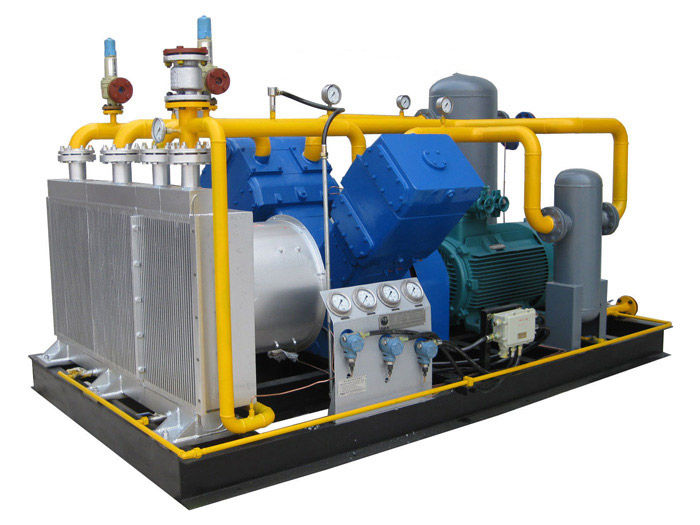
For electric motor-driven natural gas compressors, proper motor operation is essential for maintaining compressor exhaust pressure. Any problems that result in insufficient motor output power or abnormal speed will directly impact compressor performance, leading to insufficient exhaust pressure.
Common motor drive problems include:
Unstable or low power supply voltage: Fluctuating or persistently low power supply voltage can prevent the motor from receiving sufficient power output, resulting in a drop in speed and impacting the compressor’s compression capacity.
Motor failures: These include stator winding short circuits, open circuits, insulation aging, rotor failures (such as broken bars), and bearing wear. These failures can reduce motor efficiency and output power, and may even prevent the motor from starting properly. Inverter Failure (if using a variable frequency drive): The inverter is a key device for regulating motor speed. Damage to internal components, incorrect parameter settings, or abnormal control logic can prevent the motor speed from reaching the set value, thereby affecting discharge pressure.
Drive System Failure: If the compressor is connected to the motor via a belt or coupling, drive system failures such as belt slippage, poor coupling alignment, or loose keys can reduce power transmission efficiency and cause the compressor to underspeed.
Motor Overload: Long-term overloaded operation can cause the motor to heat up and degrade insulation performance, ultimately leading to insufficient power output. This may be due to excessive load on the compressor itself or improper motor selection.
Control System Failure: Failure of control components such as measuring instruments, sensors, and actuators can prevent the compressor from receiving correct operating instructions, affecting normal operation.
Motor drive problems directly affect the compressor’s “power source,” and therefore have a fundamental impact on discharge pressure.
Diagnostic Method:
Check the power supply voltage and current: Use a multimeter or clamp-on ammeter to measure the power supply voltage and current at the motor input. Compare these values to the rated values to determine if there are any abnormalities. Observe the motor’s operating status: Observe the motor for abnormal vibration, noise, or overheating. Smell for a burning odor.
Check the motor speed: Use a tachometer to measure the actual motor speed and compare it to the rated speed. If the speed is significantly lower than the rated value, there is a problem.
Check the inverter display and fault codes: If using an inverter, check the inverter display for fault codes or alarm messages. Verify that the inverter’s output frequency, current, and other parameters are normal.
Check the drive system: Check for loose, worn, or slipping belts; check for loose, misaligned, or damaged couplings.
Inspect with a thermal imager: Use a thermal imager to examine the temperature distribution of the motor windings, bearings, and other areas to identify abnormally high temperatures.
Insulation resistance test: Use a megohmmeter to test the insulation resistance of the motor windings to determine the insulation condition.
Professional electrical testing: Complex issues may require specialized electrical testing equipment (such as a winding tester) for more in-depth diagnosis.
Solution:
Stabilize the power supply: Check and resolve any unstable power supply voltage issues, and install voltage stabilization equipment if necessary. Motor Repair or Replacement: For internal motor faults, repairs should be performed based on the fault type, such as rewinding the coil or replacing bearings. If the fault is severe and the repair cost is high, consider replacing the motor with a new one.
Inverter Overhaul or Parameter Adjustment: Inspect the inverter’s internal components and troubleshoot. Reset or optimize the inverter parameters based on the compressor’s operating requirements.
Drive System Maintenance: Regularly inspect and tighten the belts, replacing worn belts. Precisely align the couplings to ensure a secure connection.
Overload Elimination: Inspect the compressor for abnormal resistance or reassess the compatibility between the motor and compressor to ensure adequate motor power.
Control System Inspection and Repair: Check sensors, instruments, and control circuits for proper function and troubleshoot any faults.
Regular Maintenance: Perform regular motor maintenance, including cleaning, lubricating bearings, and inspecting fasteners.
Compressor Speed Excessively Low
Cause Analysis:
Compressor speed is a key parameter that determines its exhaust volume and discharge pressure. Excessively low speed means reduced intake and exhaust volumes per unit time. Even if the compressor’s efficiency is good, it will not be able to achieve the rated discharge pressure. There are many reasons for compressor speed to be too low.
In addition to the motor drive issues mentioned above, there are also the following:
Driver failure (non-motor): If the compressor is driven by a gas turbine, diesel engine, or other engine, insufficient fuel supply, ignition system failure, incomplete combustion, or mechanical component wear can all lead to insufficient output power, resulting in low compressor speed.
Control system settings or failure: Compressor speed is typically regulated by a control system (such as a PLC or DCS) based on parameters such as exhaust pressure and flow. If the control system setting is too low, or if there are sensor failures (such as speed sensors or pressure sensors), or actuator failures (such as speed control valves or inverters), the compressor speed may not increase.
Speed regulator failure: Whether the driver is an electric motor or an internal combustion engine, a failure in the speed regulator (or inverter) can prevent the output speed from being accurately controlled, resulting in low speed.
Excessive load: If the compressor operates under high load for a long period of time or if there is abnormal system resistance, even if the driver power is normal, the speed may not increase to the rated value due to excessive load. Insufficient gas supply (for gas-powered engines): If the fuel supply pressure or flow rate of the gas engine driving the compressor is insufficient, the engine’s output power will decrease, leading to a reduction in compressor speed.
Excessively low speed directly affects the compressor’s volumetric efficiency and compression capacity, making it a common and direct cause of insufficient exhaust pressure.
Diagnostic Methods:
Check the compressor speed: Use a tachometer to directly measure the actual compressor speed and compare it with the designed speed.
Check the driver operating parameters:
Electric motor: Measure voltage, current, and frequency, and check the inverter output parameters.
Internal combustion engine: Check the fuel supply pressure and flow rate, exhaust temperature, oil pressure, engine speed, and any abnormal vibration or noise.
Check the control system settings: Review the compressor speed settings in the control system (e.g., PLC, DCS) to ensure they meet requirements.
Check sensors and actuators: Check that the speed sensor, pressure sensor, etc. are functioning properly and that the data is accurate. Check that actuators such as the speed control valve and inverter are responding properly to control signals. Observe the exhaust volume: If the exhaust pressure is low and the exhaust volume is significantly lower than normal, the speed is likely too low.
Load Test: Within the safe range, gradually increase the system load and observe the changes in the compressor speed and exhaust pressure.
Solution:
Adjust or Repair the Driver: Depending on the driver type, address the issue causing the insufficient power, such as overhauling the electric motor, maintaining the internal combustion engine, or inspecting the fuel supply system.
Adjust or Repair the Control System: Check and correct the setpoints in the control system. Repair or replace faulty sensors and actuators.
Inspect the Governor: Inspect, calibrate, or replace the governor (or inverter) to ensure it can accurately control the speed.
Reducing the System Load: Inspect the compressor’s downstream system for any abnormal resistance, such as clogged pipes or partially opened valves, and address these issues.
Ensure Adequate Fuel Supply: For gas-powered compressors, ensure that the gas supply pressure and flow meet requirements.
Optimize Operational Strategies: Based on actual operating requirements, adjust the compressor’s operating parameters appropriately to ensure that the speed remains within the economic operating range while maintaining adequate exhaust pressure. Regular calibration: Regularly calibrate speed sensors, pressure sensors and other instruments to ensure data accuracy.
System Pipeline Blockage or Leakage
Cause Analysis:
The compressor system consists of more than just the compressor itself; it also includes complex piping, valves, separators, coolers, and other accessories. Any failure in these system components can directly affect the flow of natural gas within the system, leading to insufficient exhaust pressure.
Blockage:
Exhaust Pipeline Blockage: Accumulation of foreign matter (such as rust, welding slag, silt, and ice), carbon deposits, and scale within the pipes can reduce the effective diameter of the pipes, increase resistance to gas flow, and cause a loss of exhaust pressure.
Cooler Blockage: If the heat exchange piping within the cooler is clogged with carbon deposits, oil, or scale, this will increase exhaust pressure. However, since the gas cannot be effectively cooled, this can cause misinterpretation by downstream pressure sensors or reduce actual delivery capacity. For air-cooled coolers, dust clogged fins can also affect heat dissipation, thereby reducing exhaust pressure.
Separator or Filter Blockage: If the oil-gas separator, buffer tank, or filter in the exhaust pipeline is clogged, it will also increase gas flow resistance, resulting in insufficient exhaust pressure. Incomplete Valve Opening: Manual or automatic valves (such as shut-off valves and regulating valves) in the exhaust pipeline fail to fully open, restricting gas flow and resulting in insufficient exhaust pressure.
Leakage:
Exhaust Pipeline Leaks: Leaks occur at pipe joints (flanges, threaded connections), welds, valve stuffing boxes, safety valves, and other locations. Compressed natural gas escapes into the atmosphere from the leak before reaching end users or storage facilities, reducing actual delivery volume and lowering exhaust pressure.
Valve Internal Leakage: Poor internal seals in check valves, control valves, and other components in the exhaust pipeline lead to natural gas backflow or leakage, reducing delivery efficiency.
Safety Valve Leakage: A safety valve with an excessively low set pressure or a failed internal seal can cause frequent valve opening or persistent micro-leakage, resulting in natural gas loss.
Other Accessory Leaks: Poor seals at accessories such as pressure gauges, thermometers, and sampling ports can also cause micro-leakage.
Blockages and leaks in system piping directly affect the compressor’s effective exhaust volume, preventing the set exhaust pressure from being maintained.
Diagnostic Methods:
Abnormal Pressure Gauge Readings: Install pressure gauges at different locations in the exhaust pipe and compare the pressures at each point. If there’s a significant pressure drop in a specific area, a blockage may be present. For example, a large pressure differential across the cooler suggests a blockage.
Auscultation: Listen carefully for any hissing sounds from the exhaust pipe, valves, or flange connections.
Soapy Water Check: Apply soapy water to suspected leaking connections and observe for bubbles.
Abnormal Flow Meter Readings: If a flow meter is installed in the exhaust pipe, observe if the flow meter reading is significantly lower than normal. Combined with insufficient exhaust pressure, a leak may be present.
Thermographic Imager Inspection: In the case of a leak, escaping gas removes heat, potentially causing the temperature around the leak to drop. A thermal imager can help detect a blockage. In the case of a blockage, increased local resistance may cause the temperature to rise.
System Partitioning: If the system is large and complex, isolate the system in sections and perform pressure or flow tests on each section to narrow down the scope of the fault.
Valve Opening Check: Check the opening of all valves in the exhaust pipe to ensure they are fully open. Observe for water or oil accumulation: If the cooler or separator is clogged, water or oil accumulation may be observed.
Solution:
Clear the blockage: For pipe blockages, use methods such as purging, pigging, chemical cleaning, or disassembly and cleaning to clear the blockage.
Clean or replace the cooler: Regularly clean the internal heat exchange tubes and external fins of the cooler. Consider replacing a severely clogged or damaged cooler.
Clean or replace the separator/filter: Regularly clean or replace the filter element inside the separator, the mist eliminator, and the filter elements in subsequent process sections.
Check and fully open valves: Ensure that all valves in the exhaust pipe are fully open. For automatic valves, check their actuators and control signals for proper operation.
Repair leaks: For leaks at pipe connections, retighten the flange bolts and replace the gaskets. For leaks at welds, repair welding is required. For valve leaks, replace the packing, seals, or repair the valve interior.
Calibrate or replace safety valves: Regularly calibrate safety valves to ensure accurate opening pressures. If the safety valve leaks frequently, inspect it for trapped foreign matter or damaged seals, and repair or replace it.
Optimize pipeline design: When designing a new system, fully consider the impact of factors such as pipe diameter, elbows, and valves on pressure loss, and optimize the pipeline layout.
Regular inspections: Strengthen routine inspections of the exhaust pipeline to promptly identify and address leaks.
Oil contamination or lubrication system failure
Cause Analysis:
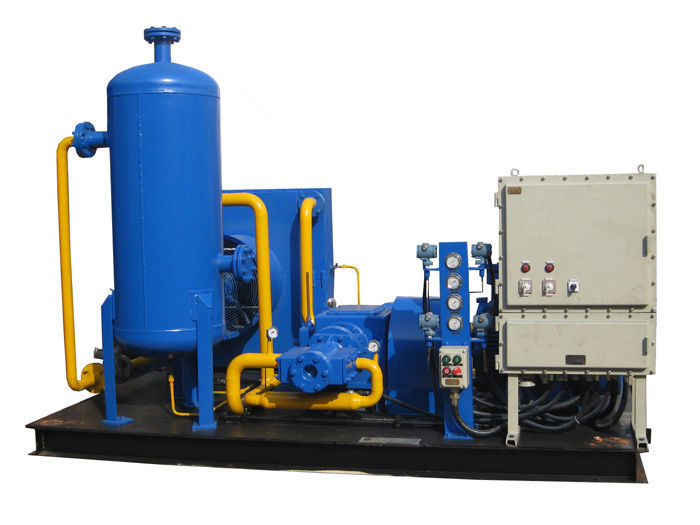
The lubrication system is crucial to the proper operation of a natural gas compressor. It not only lubricates moving parts and reduces friction and wear, but also provides sealing, cooling, and cleaning functions. Oil contamination or lubrication system failure can affect compressor performance in multiple ways, ultimately leading to insufficient exhaust pressure:
Incomplete oil-gas separation leads to exhaust pressure loss: Small amounts of lubricating oil are entrained in the natural gas discharged from the compressor. To ensure natural gas quality and recover the lubricating oil, a high-efficiency oil-gas separator is typically installed. If the oil-gas separator’s efficiency decreases (due to clogged or damaged filters), a large amount of oil mist will be discharged with the natural gas, increasing exhaust pipe resistance and potentially accumulating in downstream equipment, further causing system pressure loss. Furthermore, excessive oil entering downstream systems can also affect subsequent processes.
Clogged oil lines or insufficient oil pressure can exacerbate internal leakage: Lubricating oil not only lubricates moving parts but also seals piston rings, stuffing boxes, and interstage seals. If a lubrication system malfunction (such as a malfunctioning oil pump, clogged oil lines, or low oil levels) results in insufficient lubricating oil supply or low oil pressure, the oil film in these seals can be disrupted, allowing gas to leak through these areas and reducing compression efficiency.
Lubricating oil deterioration or contamination can increase friction: If lubricating oil is contaminated with moisture, solid particles, or hydrocarbons, or if it degrades over time (oxidative deterioration), its lubricating properties can be significantly reduced. This increases frictional resistance between moving parts within the compressor (such as piston rings and cylinder walls, and bearings), increasing compressor loads and reducing efficiency, which in turn affects discharge pressure.
Poor cooling: Lubricating oil also contributes to internal compressor cooling. A clogged oil cooler, insufficient oil pump flow, or air bubbles in the oil lines can lead to poor cooling of the lubricating oil, causing the compressor’s internal temperature to rise. High temperatures not only accelerate lubricant deterioration but also cause the volume of gases to expand, affecting compression efficiency.
Automatic drain valve malfunction: Some oil-gas separators are equipped with an automatic drain valve at the bottom to periodically drain separated lubricant. If this valve malfunctions (either permanently open or permanently closed), it can lead to excessive oil accumulation in the oil-gas separator, affecting separation efficiency, or causing the oil to drain out directly.
Oil contamination and lubrication system failures often develop gradually and require routine maintenance and monitoring to prevent and detect.
Diagnostic Methods:
Inspect the oil-gas separator: Check the pressure differential across the oil-gas separator. A large differential may indicate a clogged filter element. Check for a large amount of oil mist being discharged from the oil-gas separator outlet.
Check the lubricant oil level and pressure: Observe the oil level in the lubricant tank and the oil pressure gauge to ensure it is within the specified range.
Check lubricant quality: Regularly analyze the lubricant to test for viscosity, acidity, moisture, particulate matter, and metallic wear elements to determine if the lubricant has deteriorated or been contaminated. Check the oil cooler: Check the temperature difference between the front and rear ends of the oil cooler. If the temperature difference is too small, it may indicate poor cooling performance. Check the cooler fins for cleanliness.
Check the exhaust port for large oil droplets: If large oil droplets are discharged from the exhaust port, the oil-air separator may be malfunctioning.
Auscultate: If poor lubrication causes increased friction, you may hear unusual grinding sounds from bearings or moving parts.
Observe the compressor temperature: If poor lubrication causes increased friction or poor cooling performance, the compressor body temperature may rise abnormally.
Solution:
Clean or replace the oil-air separator filter: Regularly inspect and clean or replace the oil-air separator filter to ensure oil-air separation efficiency.
Check and replenish the lubricating oil: Ensure the lubricating oil level is within the normal range. If the oil level is too low, replenish it promptly.
Replace the lubricating oil: Based on the oil analysis results and operating time, replace any deteriorated or contaminated lubricating oil promptly, using high-quality lubricating oil that meets the manufacturer’s specifications.
Inspect the lubricating oil pump: If the oil pressure is low, check whether the lubricating oil pump is functioning properly and repair or replace it if necessary. Clean or repair the oil line: Clear any clogged oil lines to ensure smooth lubrication.
Clean the oil cooler: Clean the oil cooler regularly to ensure efficient heat exchange.
Inspect and repair the automatic oil drain valve: Ensure it functions properly and promptly drain any separated lubricating oil.
Control intake air quality: Reduce the ingress of liquid hydrocarbons and water from natural gas to minimize contamination of the lubricating oil.
Strengthen routine inspections and maintenance: Regularly inspect all lubrication system components, including oil level, oil pressure, oil temperature, and oil quality, and strictly adhere to the lubrication maintenance schedule.
Conclusion
Insufficient discharge pressure in a natural gas compressor is a complex fault with a wide range of causes. This article’s in-depth analysis of seven major causes (clogged intake filter, internal compressor leakage, exhaust valve failure, motor drive problems, low compressor speed, system pipe blockage or leakage, oil contamination, or lubrication system failure) reveals that these faults may exist independently or be interrelated, collectively impacting compressor performance.
Request a Quick Quote Now

Shanghai Sollant Energy Saving Technology Co., Ltd.
Drawing on our years of experience and expertise in air separation and PSA technologies, we deliver customized solutions tailored to your specific needs.
