
Why Do Natural Gas Compressors Need Cooling? An Analysis of Five Cooling Technologies
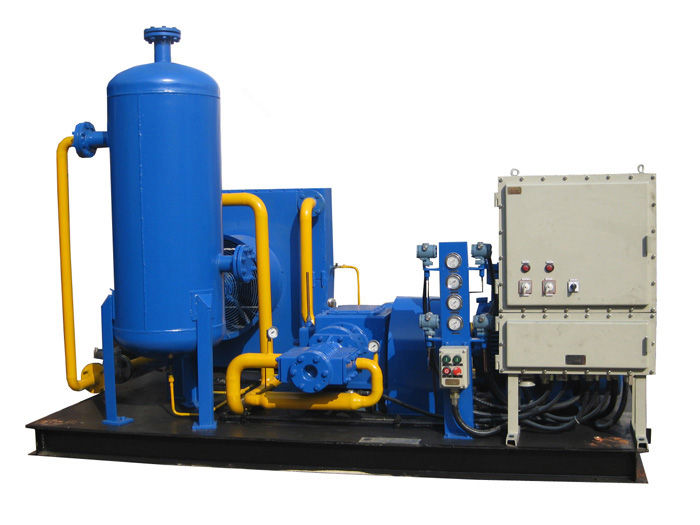
Amidst the global energy transition, natural gas, as a clean and efficient fossil energy source, is increasingly strategically positioned. From upstream extraction and purification to midstream gathering and transportation, pipeline transmission, and downstream as city gas, industrial fuel, and chemical feedstock, natural gas relies on compression, a crucial process. As the core equipment for gas pressurization, the performance of natural gas compressors directly determines the economic viability and safety of the entire natural gas industry chain. However, an unavoidable physical phenomenon is that the energy conversion during natural gas compression inevitably generates heat. If this heat cannot be effectively and promptly removed, it will not only severely damage the compressor’s core components and shorten their service life, but also directly affect compression efficiency, increase operating costs, and even cause safety incidents. Therefore, an in-depth exploration of the fundamental reasons for natural gas compressor cooling and a systematic analysis of the five major cooling technologies it relies on are crucial for ensuring the sustainable development of the natural gas industry. This article will gradually unravel this complex topic, aiming to provide readers with a comprehensive and in-depth perspective.
Working Principle and Heat Generation of Natural Gas Compressors
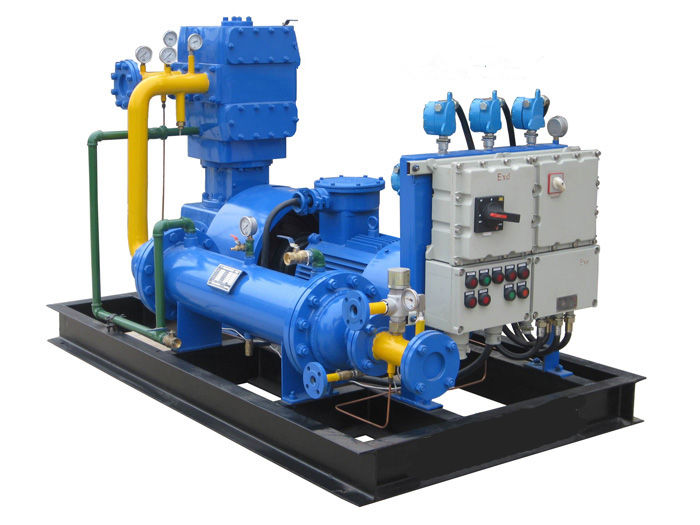
To understand the root causes of heat generation, we first need to have a clear understanding of the working principles of natural gas compressors. As the name suggests, natural gas compressors use mechanical energy to reduce the volume of gas, thereby increasing its pressure to meet storage, transportation, or specific process requirements. There are various operating modes, the most common of which include:
Positive displacement compressors: such as piston, screw, and vane compressors. These compressors draw in, compress, and exhaust gas by changing the volume of the working chamber. For example, piston compressors achieve volume changes through the reciprocating motion of a piston within a cylinder; screw compressors rely on the rotation of intermeshing male and female rotors, gradually reducing the gas volume to achieve compression.
Speed-flow compressors: such as centrifugal and axial-flow compressors. These compressors impart kinetic energy to the gas through a high-speed rotating impeller, which then converts this kinetic energy into pressure energy. For example, a centrifugal compressor uses centrifugal force to throw gas toward the periphery, reducing its velocity and increasing its pressure. Regardless of the compression principle used, according to the first law of thermodynamics, part of the work performed on the gas is converted into its internal energy (manifested as an increase in temperature), while the remaining part is dissipated as heat due to irreversible processes. Specifically for natural gas compressors, heat generation primarily stems from the following core mechanisms:
Isentropic Heating: This is the primary source of heat during the compression process. When gas is rapidly compressed within the compression chamber, if it does not have sufficient time to exchange heat with the outside world, its temperature rises dramatically. This idealized process is called adiabatic compression. While the actual compression process is not completely adiabatic, the trend is the same: a decrease in volume and an increase in pressure are accompanied by a significant increase in temperature.
Mechanical Friction Heat: A compressor contains numerous moving mechanical parts, such as the meshing surfaces between the piston rings and the cylinder wall, the screw rotor, bearings, gears, and seals. These parts inevitably generate friction when operating at high speeds, high pressures, and even high temperatures. The work performed by friction is converted into heat energy, causing the temperature of these components and the surrounding medium to rise. Fluid Friction and Turbulence Heat: When natural gas flows through the compressor’s internal flow channels (such as the inlet, exhaust, and interstage piping), fluid resistance is generated due to the gas’s inherent viscosity and friction with the pipe walls. This resistance also converts some kinetic energy into heat. Turbulence and eddies are particularly prone to forming in areas with high gas velocities and frequent changes in flow direction, further exacerbating energy dissipation and converting it into heat.
Leakage and Backflow Heat: In actual compressors, due to seal limitations or design gaps, a small amount of gas will always leak from high-pressure areas to low-pressure areas, or backflow may occur if the exhaust valve is not tightly closed. This leaked or backflowing gas expands due to the pressure differential. Although expansion itself is heat-absorbing, this unnecessary flow and mixing throughout the compression cycle reduces overall efficiency and may generate additional heat locally. Drive and Transmission Component Losses: The electric motor or gas turbine that drives the compressor, as well as transmission components such as couplings and gearboxes connecting the drive motor to the compressor main unit, also generate heat during operation due to electromagnetic and mechanical losses. Although this heat is not generated directly within the compression chamber, it contributes significantly to the total heat load of the compressor system and must be dissipated.
All these heat sources contribute to internal compressor temperatures significantly exceeding ambient temperature. If not controlled, this poses a serious threat to equipment operation.
Why Natural Gas Compressors Need Cooling
The necessity of cooling natural gas compressors is based on a combination of physical, chemical, and economic factors, not simply to keep the equipment cool to the touch. Its core drivers are:
Protecting equipment integrity and extending service life: High temperatures are the number one killer of mechanical equipment. Sustained high temperatures can lead to:
Material degradation: Key components such as the compressor’s main structure, rotors, impellers, and valves are primarily made of metal. High temperatures can degrade the mechanical properties of metal materials, such as strength, hardness, and toughness, accelerate fatigue damage, and even induce creep (permanent deformation over time under sustained stress).
Loss of dimensional accuracy and clearance changes: Metals expand thermally at high temperatures. If the expansion coefficients of components are mismatched or the expansion is excessive, the clearances can decrease or even disappear, leading to interference and increased friction between components. In severe cases, equipment seizure can occur. Conversely, if the expansion leads to excessive clearances, this can cause gas leakage and reduced efficiency.
Lubricant deterioration: The lubricating oil in the compressor oxidizes and decomposes rapidly at high temperatures, forming carbon deposits, sludge, and acidic substances. This reduces the viscosity of the lubricating oil, impairing its lubrication properties and preventing it from forming an effective oil film to protect moving parts, accelerating wear on components like bearings and piston rings. Furthermore, degradation products can clog oil lines and corrode the equipment.
Seal failure: Various dynamic and static seals (such as O-rings, packings, and mechanical seals) are typically made of materials such as rubber, polymers, or carbon graphite. High temperatures can cause these materials to age, harden, and lose their elasticity, leading to seal failure and gas or lubricant leakage. Ensuring Efficient Operation and Reducing Energy Consumption: Cooling is crucial to compressor efficiency:
Improving Volumetric Efficiency: As gas temperature increases, its density decreases (according to the ideal gas state equation, PV = nRT; at the same pressure, higher T means higher V, meaning lower ρ). This means that less gas can be drawn into the compression chamber of the same volume. Cooling the intake gas or interstage gas to lower its temperature increases the gas density, allowing more gas to be drawn in during each compression cycle and improving the compressor’s volumetric efficiency.
Reducing Compression Power Consumption: During gas compression, if the compression process is near-isothermal (achieved through cooling), the work required is less than that of adiabatic compression. Simply put, cooling can promptly remove the heat energy generated during compression, preventing it from being converted into internal energy in the gas, thereby reducing the external work required to drive the compressor. This directly impacts energy consumption, and for large compressors, the energy savings can be substantial.
Optimizing Interstage Efficiency: In multi-stage compressors, if interstage cooling is not performed, the high-temperature gas entering the next stage of compression will result in excessively high inlet temperatures, reducing the volumetric efficiency of the next stage and increasing power consumption for the entire compression process. Interstage cooling effectively lowers the starting temperature of each compression stage, making the overall compression process more isothermal and minimizing total power consumption.
Ensuring operational safety and preventing process problems:
Fire and explosion risks: Natural gas is flammable and explosive. Excessively high gas temperatures can cause it to reach its autoignition point or explosive limit. Once exposed to a fire source or static electricity, this can easily lead to a fire or explosion, with catastrophic consequences for personnel and equipment. Cooling can keep the gas temperature below a safe threshold.
Preventing gas precipitation and condensation: Natural gas often contains impurities such as water vapor, heavy hydrocarbons (such as propane and butane), or hydrogen sulfide. During the compression process, if temperature control is inadequate, these components may condense after cooling or pressure reduction, forming liquid water (causing pipeline corrosion and hydrate blockage) or liquid hydrocarbons (causing liquid hammer and impacting downstream processes). Cooling can precisely control the dew point to prevent the precipitation of harmful liquids. Protecting Downstream Equipment: Directly delivering uncooled, high-temperature natural gas to downstream equipment, such as dryers, purification units, metering stations, and even civil pipelines, can damage the materials and seals of these devices, impacting their normal operation and even posing safety hazards.
Meeting Process and Product Quality Requirements:
Complying with Transmission Specifications: Natural gas in long-distance pipelines typically has upper temperature limits to ensure pipeline safety and integrity.
Adapting to Subsequent Processing: In many industrial processes, such as natural gas liquefaction (LNG), synthetic ammonia, and methanol production, natural gas requires specific temperature and pressure conditions before entering the next process. Cooling enables natural gas to meet these stringent process requirements.
Improving Product Purity: Cooling can better separate condensate and impurities from the gas, improving natural gas purity.
In short, natural gas compressor cooling is not a simple technical add-on; it is a critical technology that has a decisive impact on multiple dimensions, including equipment lifespan, operational efficiency, safety, and process optimization.
Common Cooling Technology 1: Air Cooling
Air cooling, as the name suggests, uses ambient air as a cooling medium to remove heat generated within the compressor through convection. It is one of the most basic and widely used cooling methods.
How it works:
Direct air cooling: In some small compressors or specific components (such as the motor housing), heat can be dissipated directly through natural convection or forced convection (using a fan). Heat is transferred from the surface of the equipment to another surface through conduction, and then to the surrounding air through convection.
Indirect air cooling (radiator type): This is the more common air cooling method. Heat within the compressor is first removed by a circulating cooling medium (such as lubricating oil, water, or the compressed gas itself). This heated medium is then transferred to one or more air coolers (typically fin-and-tube heat exchangers). The air cooler contains a bundle of tubes that carry the hot fluid, and a large number of fins on the outside to increase the contact area with the air. A fan forces ambient air over the fins, where it absorbs heat, raising its temperature before being discharged into the atmosphere. The cooled fluid (oil, water, or gas) is recirculated back to the compressor for further cooling.
Advantages:
Resource independence: No water source is required, making it ideal for water-scarce areas or sites far from water sources.
System simplicity: Compared to water-cooled systems, air-cooled systems typically have a simpler structure, eliminating the need for complex cooling water treatment equipment, pump stations, cooling towers, etc., reducing initial investment and operational complexity.
Relatively low maintenance costs: No issues such as scaling, corrosion, or algae growth need to be addressed, resulting in relatively low maintenance workload and costs.
Environmentally friendly: No wastewater is generated, minimizing environmental impact.
Wide applicability: Suitable for compressors of all sizes, especially small and medium-sized compressors and mobile compressors.
Disadvantages:
Cooling efficiency is significantly affected by ambient temperature: When ambient temperature is high, the temperature difference between the air and the cooled medium decreases, resulting in lower heat transfer efficiency and significantly reduced cooling performance, potentially failing to meet heat dissipation requirements. In extremely hot weather, the compressor may even shut down due to overheating. Large Floor Space: Because air has a much lower specific heat capacity and thermal conductivity than water, air coolers typically require a larger heat exchange area and air volume to achieve the same cooling effect. This results in a larger unit size and a correspondingly larger floor space requirement.
Noise Issue: High-power fans generate considerable noise during operation, and additional noise reduction measures may be required.
High Energy Consumption: Driving high-volume fans consumes a relatively high amount of electrical energy, especially in high-temperature environments. Increasing air volume to improve cooling efficiency further increases energy consumption.
Typical Applications: Small piston air compressors, some small screw compressors, outdoor gas booster stations, mobile compressor units, and other applications where cooling requirements are less stringent. Air coolers are also used in some natural gas dehydration plants to pre-cool compressed natural gas.
Common Heat Dissipation Technology 2: Water Cooling
Water cooling is an efficient, stable, and widely used heat dissipation method. Its core principle is to utilize the excellent thermodynamic properties of water: its high specific heat capacity and high thermal conductivity. Working Principle:
Direct Water Cooling: Certain compressor components (such as cylinder liners and compressor casings) are designed with dedicated cooling water jackets or channels inside. Cooling water flows directly through these channels, absorbing heat from the components and raising its temperature.
Indirect Water Cooling (Heat Exchanger): More commonly, the lubricating oil or compressed gas (such as natural gas in an interstage cooler) inside the compressor is first heated. This heated fluid then exchanges heat with cooling water through a separate heat exchanger (such as a shell-and-tube heat exchanger or a plate heat exchanger). Heat is transferred from the high-temperature fluid to the cooling water, raising its temperature.
Cooling Water Circulation: The heated cooling water is typically sent to an external cooling device for cooling, such as a cooling tower.
Cooling Towers: Utilizing the principle of evaporative heat removal, a portion of the water evaporates, removing heat and lowering the remaining water temperature.
Closed Coolers: Cooling water flows in a closed loop and is cooled by forced convection with external air or by heat exchange with another independent cooling water circuit (usually from a cooling tower). Open ponds or rivers: In some cases, cooling water can be discharged directly into a large body of water (subject to environmental regulations), or cold water can be pumped from a source for a single cooling step.
The cooled water is then circulated back to the compressor by a water pump, forming a continuous cooling loop.
Advantages:
High cooling efficiency: Water has a specific heat capacity approximately four times that of air, meaning that the same mass of water can absorb more heat with less temperature rise. Water’s thermal conductivity is also much higher than that of air, resulting in higher heat transfer efficiency. Therefore, water-cooled systems provide more stable and efficient cooling, effectively controlling compressor temperatures even in high ambient temperatures.
Precise temperature control: Due to water’s high heat transfer efficiency, the temperature of the cooled medium (such as natural gas or lubricating oil) can be precisely controlled, which is critical for process stability and product quality in certain processes.
Compact equipment: Compared to air-cooled systems, water-cooled heat exchangers are generally smaller, requiring less floor space.
Lower noise: Compared to the large fans in air-cooled systems, the noise from water pumps and cooling towers is generally easier to control. Disadvantages:
Dependence on water: A sufficient and stable water source is required. Water cooling systems may be impractical or costly in areas with water scarcity or locations far from water sources.
High Water Quality Requirements: Circulating cooling water requires rigorous water quality treatment to prevent scaling (calcium and magnesium ion deposition in the water), corrosion (oxygen and ion corrosion), and microbial growth (algae and bacteria clogging pipes). These problems can severely impact heat exchange efficiency and equipment lifespan, increasing operating and maintenance costs.
System Complexity: A complete cooling water circulation system is required, including pumps, piping, cooling towers/closed-loop coolers, water treatment equipment, valves, and instrumentation. This requires a significant initial investment and complicates system operation, maintenance, and management.
Potential Leakage Risk: Cooling water piping and equipment are susceptible to leakage. Leaks can affect the normal operation of the compressor and even cause environmental pollution or safety incidents.
Winter Freeze Protection: In cold regions, freezing protection of the cooling water is important, which may require the addition of antifreeze or heating. Typical Applications: Large, high-power natural gas compressor units, particularly in industrial settings such as petrochemicals, refineries, and natural gas processing plants, where temperature control and reliability are extremely critical. High-efficiency water cooling is also commonly used in interstage and final stage coolers in multi-stage compressors.
Common Heat Dissipation Technology Three: Oil Cooling
In modern natural gas compressors, particularly screw compressors and some piston compressors, oil cooling plays a dual role: lubrication and cooling. Lubricating oil not only reduces friction between moving parts but also effectively absorbs and removes heat generated within the compression chamber.
Operating Principle:
Integrated Lubrication and Cooling: Lubricating oil is pumped through a circulation loop within the compressor to areas requiring lubrication, such as bearings, gears, and screw rotors. Within these areas, the oil directly absorbs heat generated by friction, compression, and leakage through its flow and contact with the components.
Oil Injection Cooling: In oil-injected screw compressors, lubricating oil is injected directly into the compression chamber. During the compression process, these oil droplets come into direct contact with the high-temperature gas, absorbing a significant amount of the heat of compression through convection. This effectively controls the gas temperature, achieving a near-isothermal compression and improving compression efficiency. Furthermore, the injected oil fills the gaps between the rotors, acting as a seal and further improving volumetric efficiency.
Oil-gas separation and cooling: After absorbing heat, the high-temperature oil-gas mixture (in an oil-injected screw compressor) or the high-temperature lubricating oil (in an oil-free compressor lubrication system) enters the oil-gas separator, where the gas and oil are separated. The separated high-temperature lubricating oil is then directed to the oil cooler.
Oil cooler: Oil coolers are typically air-cooled (using a fan to force air to cool the lubricating oil) or water-cooled (using cooling water to cool the lubricating oil). In the oil cooler, the lubricating oil transfers heat to the cooling medium (air or water), reducing its temperature.
Filtration and circulation: After the cooled lubricating oil passes through a filter to remove impurities, it is pumped back to the compressor, completing the cooling cycle. Advantages:
Efficient Cooling: Lubricating oil can enter the compression chamber directly or contact key heat sources, effectively removing compression and frictional heat. This is particularly true in oil-injected screw compressors, significantly reducing exhaust gas temperatures and improving compression efficiency.
Versatility: Simultaneously lubricating, cooling, sealing, noise reduction, and impurity removal simplify system design.
Optimized Temperature Distribution: Circulating lubricating oil helps even out temperature distribution within the compressor, reducing localized hot spots.
Reduced Carbon Deposits: Effective oil cooling lowers the surface temperature of high-temperature components, reducing the tendency of lubricating oil to form carbon deposits due to high-temperature decomposition.
Disadvantages:
High Oil Quality Requirements: Lubricating oil must operate under high-temperature and high-pressure conditions for extended periods, placing stringent demands on properties such as oxidation stability, demulsibility, and defoaming properties. Oil deterioration can directly impact cooling and lubrication effectiveness.
Complex Oil System: Requires additional components such as an oil pump, oil filter, oil-gas separator, and thermostatic valve, increasing system complexity and maintenance points. Potential Leakage Risk: Leaks in the oil line can not only cause oil loss and compromise lubrication and cooling performance, but can also pose a fire hazard and environmental pollution.
Oil Replacement Cost: Lubricating oil requires regular testing and replacement, which represents a significant operating cost.
Environmental Sensitivity: The efficiency of the oil cooler is affected by the temperature of the cooling medium (air or water).
Typical Applications: Widely used in screw natural gas compressors, particularly wet (oil-injected) screw compressors. Cooling the crankcase lubricating oil is also essential in some piston compressors.
Common Cooling Technology 4: Hybrid Cooling
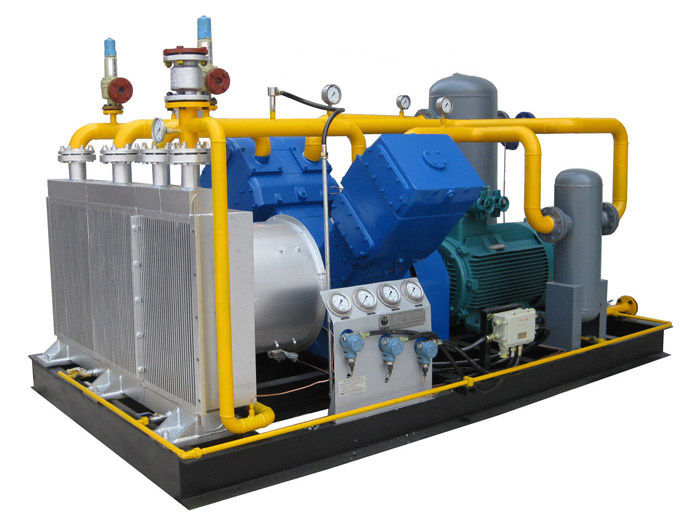
In actual engineering applications, a single cooling method often fails to meet the full cooling requirements of large, complex natural gas compressor trains, especially when operating under extreme conditions or seeking higher efficiency. Therefore, “hybrid cooling” solutions, which organically combine two or more cooling technologies, have emerged. Hybrid cooling aims to leverage the strengths and weaknesses of hybrid cooling, maximizing cooling efficiency while optimizing system costs and operational flexibility.
Working Principle and Common Combinations:
Air + Water Cooling: This is the most common form of hybrid cooling. For example, a large natural gas compressor train might employ the following strategies:
Primary Water Cooling: For core compressor components (such as the cylinder block, interstage cooler, and lubricating oil cooler), a highly efficient water cooling system is used for primary heat dissipation, ensuring stable core temperature control.
Auxiliary Air Cooling: For secondary components (such as motors and gearboxes) or as a supplement to water cooling systems (for example, in applications where water resources are limited or environmental protection requirements are stringent, water cooling can be used to initially reduce the temperature, followed by further cooling to a lower temperature using air cooling). An air cooler can even serve as the final radiator (water/air heat exchanger) in a water-cooled system, using the air to cool the circulating water.
Oil + Water/Air Cooling Combination: In oil-injected screw compressors, oil cooling itself is the core cooling method. The oil cooler is further cooled with water or air.
Water cooling of the oil cooler: When extreme cooling efficiency and compactness are required.
Air cooling of the oil cooler: When a stable water source is lacking or environmental protection is a priority.
Combination of Interstage and Final Cooling: In multi-stage compressors, the gas temperature varies between compression stages. An interstage cooler is typically installed after each compression stage, primarily using water cooling to effectively lower the gas temperature entering the next stage. An aftercooler is also installed at the compressor discharge port, using either water or air cooling depending on the final gas temperature requirement. Advantages:
Optimize cooling performance and energy efficiency: Combining the advantages of different cooling methods achieves superior heat dissipation performance, ensuring the compressor maintains optimal operating temperature under various operating conditions, thereby improving overall compression efficiency and energy efficiency.
Improve system reliability and flexibility: Complementary cooling methods enhance system redundancy. If one cooling method fails or is limited, another can partially assume or provide emergency cooling, enhancing system reliability. Furthermore, the operating modes of different cooling circuits can be flexibly adjusted based on seasonal changes, ambient temperature, or load fluctuations.
Adapt to complex operating conditions: In some extreme environments, a single cooling method may not meet the requirements. Hybrid cooling provides a more robust solution.
Reduced operating costs: Through appropriate configuration, water consumption, electricity consumption, and maintenance costs can be optimized while ensuring cooling performance. For example, in winter or when ambient temperatures are low, air cooling can be relied upon more to reduce the load on the water cooling system, saving water resources and water treatment costs.
Disadvantages:
Increased system complexity: The introduction of multiple cooling methods and related equipment complicates the design, installation, and operation and maintenance of the entire compressor system, requiring more specialized knowledge and skills. High initial investment: The integration of two or even multiple cooling systems requires additional equipment procurement, piping installation, and automated control system investments.
Control and coordination challenges: Coordinated control and optimized operation between different cooling circuits present a technical challenge, requiring precise management using an advanced DCS (distributed control system) or PLC (programmable logic controller).
Typical applications: Large-scale long-distance pipeline booster stations, large natural gas processing plants, liquefied natural gas (LNG) plants, and natural gas compressor units in large petrochemical complexes. In these applications where reliability, efficiency, and safety are paramount, hybrid cooling solutions are the mainstream choice.
Common Cooling Technology 5: Heat Exchanger Cooling
Although the aforementioned air cooling, water cooling, and oil cooling can all be considered “cooling technologies,” they are essentially inseparable from a core, universal device: the heat exchanger. A heat exchanger itself is not a standalone cooling medium, but rather a “bridge” for heat transfer and the cornerstone of an efficient cooling system. It can be said that almost all modern industrial cooling systems rely on heat exchangers. Working Principle: The basic principle of a heat exchanger is to utilize heat transfer principles to enable two or more fluids of different temperatures to exchange heat without direct contact. Heat is transferred from a high-temperature fluid to a low-temperature fluid through conduction (through solid walls) and convection (heat transfer between fluids and walls), thereby achieving either cooling or heating. Its core components are heat transfer surfaces (such as tube bundles and plates) to maximize heat transfer area and improve heat transfer efficiency.
Application Types and Functions in Natural Gas Compressor Cooling:
Interstage Cooler: This is a crucial heat exchanger in multi-stage compressors. After the first stage of compression, the temperature of natural gas rises significantly. An interstage cooler (typically a shell-and-tube or plate heat exchanger) uses cooling water or air to cool the high-temperature natural gas. Its main functions are:
Lowering the temperature of the gas entering the next stage of compression, thereby reducing power consumption in the next stage and improving overall compression efficiency.
Lowering the gas temperature increases its density, improving the volumetric efficiency of the next stage. Cooling the natural gas causes the water and heavy hydrocarbons it carries to condense and precipitate, which are then removed through a separator to prevent scaling or corrosion in downstream equipment.
Aftercooler: Located after the compressor discharge port, it cools the final compressed natural gas. Its purpose is to:
Reducing the natural gas temperature to a safe temperature that meets downstream storage, transportation, metering, or processing requirements (such as dehydration and liquefaction).
Fully condensing any water vapor and heavy hydrocarbons in the natural gas allows for complete removal through a gas-liquid separator, protecting pipelines and downstream equipment.
Lube oil cooler: Used to cool the high-temperature lubricating oil in the compressor’s lubrication system. Typically a shell-and-tube or fin-type heat exchanger, the cooling medium can be cooling water or ambient air. Cooling the oil maintains its viscosity and lubricity, extending its life and preventing overheating of moving parts such as bearings.
Water jacket: Some piston compressors or screw compressor heads are designed with a cooling water jacket directly around the cylinder. Cooling water circulates through the jacket, directly absorbing heat from the components. Although not strictly separate heat exchangers, they share the same principle.
Gas-to-Gas Exchanger: In certain processes, such as natural gas liquefaction, low-temperature cold air or fluid may be used to pre-cool high-temperature natural gas to improve overall energy efficiency.
Common Heat Exchanger Types:
Shell-and-Tube Heat Exchanger: The most widely used, featuring a robust structure and relatively easy cleaning and maintenance, suitable for high-pressure, high-temperature applications.
Plate Heat Exchanger: High heat transfer efficiency, compact structure, and small footprint, but generally suitable for medium- and low-pressure, medium- and low-temperature applications.
Fin-and-Tube Heat Exchanger (Air Cooler): Relying on a fan to force air through a bundle of finned tubes, it is primarily used in air-cooled systems, such as natural gas air coolers and oil air coolers.
Brazed Plate Heat Exchanger: Compact and efficient, used for refrigeration and industrial cooling.
Advantages:
Efficient Heat Transfer: Through optimized design, extremely high heat transfer efficiency can be achieved, quickly and efficiently transferring heat from high-temperature to low-temperature media. High Flexibility: Different heat exchanger types and sizes can be selected based on different media (gas-gas, gas-liquid, liquid-liquid), flow rates, temperature differentials, and pressure requirements.
Precise Temperature Control: By adjusting the flow rate or temperature of the cooling medium, the outlet temperature of the cooled fluid can be precisely controlled.
Energy Recovery: In some cases, heat exchangers can not only dissipate heat but also recover energy, using waste heat to preheat other fluids and improving the overall energy efficiency of the system.
Disadvantages:
Scaling and Clogging: After long-term operation, impurities, scale, or microbial growth in the fluid may form a fouling layer on the heat exchange surface, reducing heat transfer efficiency and requiring regular cleaning.
Corrosion: Different fluids may corrode the heat exchanger material, shortening the equipment lifespan. Therefore, it is important to select suitable corrosion-resistant materials.
Leakage Risk: Heat exchangers contain high and low temperature fluid channels. Corrosion perforation or seal failure can lead to fluid mixing or leakage.
Pressure Drop: Fluid flow through a heat exchanger generates a certain amount of pressure loss, which increases the power consumption of the pump or compressor. Typical Applications: As a core component of all cooling systems, heat exchangers are widely used in natural gas compressors for interstage cooling, final stage cooling, lubricating oil cooling, and other applications requiring heat exchange between fluids.
Conclusion
Natural gas compressor cooling is not simply an auxiliary function but a fundamental guarantee for its safe, efficient, and economical operation. From the microscopic mechanisms of heat generation within the compressor to its macroscopic impact on equipment lifespan, energy efficiency, safety, and process, its core value is evident. Air cooling is popular for its simplicity and ease of use; water cooling is the preferred choice for large units due to its efficiency and stability; oil cooling, with its integrated lubrication and cooling capabilities, is a leading option for certain compressor types; and hybrid cooling demonstrates excellent adaptability and reliability under complex operating conditions. The successful implementation of all these cooling technologies relies on the support of heat exchangers as core heat transfer devices.
With the continued growth of global energy demand and the increasing emphasis on clean energy, the natural gas industry will usher in broader development opportunities. Faced with increasingly stringent environmental regulations and energy efficiency requirements, natural gas compressor cooling technology will continue to innovate. Future development trends will focus on more efficient heat exchange materials and structural designs, smarter cooling system control (such as AI-based predictive maintenance and optimized operations), more environmentally friendly cooling media (such as reducing water consumption and avoiding traditional refrigerants), and deep integration with other energy systems (such as cogeneration) to achieve cascaded energy utilization. A thorough understanding and appropriate application of these cooling technologies will not only ensure the long-term stable operation of natural gas compressors but also contribute to the economic benefits and sustainable development of the entire natural gas industry chain.
Request a Quick Quote Now

Shanghai Sollant Energy Saving Technology Co., Ltd.
Drawing on our years of experience and expertise in air separation and PSA technologies, we deliver customized solutions tailored to your specific needs.
