
The difference between high-pressure and low-pressure compressors: how to choose the best type for you?
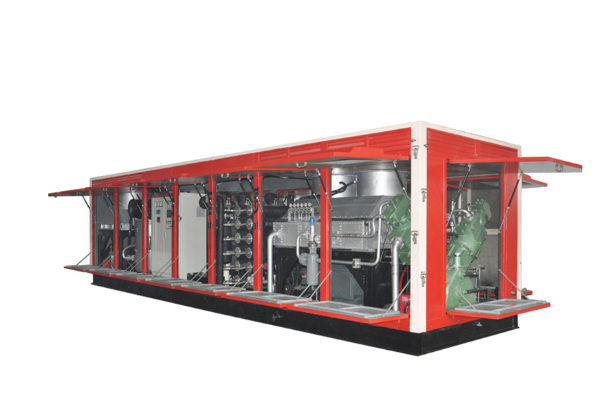
Compressors play an indispensable role in the blood vessels of modern industry. They are the power source of many production processes and daily operations. From driving sophisticated automation equipment to providing pneumatic support for large machinery, to extreme applications such as deep-sea exploration and life-saving, compressed air or gas is everywhere. However, faced with a wide variety of compressor equipment with different functions on the market, especially when it comes to the two core concepts of “high pressure” and “low pressure”, many decision makers, engineers and even ordinary users may fall into a dilemma of choice. What is high pressure? What is low pressure? What are the essential differences between them? More importantly, how can you accurately choose the type of compressor that best meets your specific needs, is the most economical and safe?
Definition of high-pressure compressors and low-pressure compressors
The key to understanding high-pressure and low-pressure compressors lies in their “pressure” output capacity. This “pressure” usually refers to the maximum working pressure or rated exhaust pressure that the compressor can reach after compressing the gas. Although the precise definition of high and low pressure in the industry may vary slightly depending on the application field and national standards, there is generally a widely accepted benchmark.
Low-pressure compressor:
As the name suggests, low-pressure compressors refer to compressor equipment with relatively low rated exhaust pressure. In the general industrial field, this “low pressure” usually refers to compressors with an output pressure below 0.7 MPa (megapascals) or 7 bar (bar). This pressure range is sufficient to meet the needs of most industrial and commercial applications. For example, common factory pneumatic tools (such as air drills, air wrenches, spray guns), cylinder drives for automation equipment, simple material transportation, tire inflation, small sandblasting operations, and control air sources for some industrial equipment are all typical applications of low-pressure compressors.
The reason why low-pressure compressors are so popular is that their design concept focuses on providing large flows of compressed air or gas efficiently, stably and economically. They usually use single-stage or two-stage compression, with relatively simple structures and low manufacturing and maintenance costs. Common types of low-pressure compressors on the market include piston (reciprocating), screw (twin screw, single screw) and small centrifugal compressors. Their core goal is to meet users’ demand for stable and reliable gas supply under conventional pressure.
High-pressure compressor:
High-pressure compressors are defined as compressor equipment that can produce far beyond the conventional low-pressure range. Its exhaust pressure is usually higher than 0.7 MPa and can reach amazing values, such as 10 MPa, 20 MPa, and even up to 35 MPa or higher. These extreme pressures are not required for ordinary applications, but to meet the special needs of high-energy gases in specific fields.
The design and manufacturing concept of high-pressure compressors is completely different from that of low-pressure compressors. Because they need to withstand and generate extremely high pressures, they have extremely strict requirements in material selection (such as high-strength alloy steel), structural design (such as multi-stage compression, reinforced fuselage, precision sealing), safety protection (such as multiple pressure relief valves, temperature monitoring, vibration monitoring) and manufacturing processes (such as high-precision machining, heat treatment). In order to effectively achieve high pressure, high-pressure compressors often use multi-stage series compression. After each stage of compression, the gas will be cooled through an intercooler, which can not only effectively reduce the gas temperature and prevent overheating, but also significantly improve the efficiency and safety of the next stage of compression.
The main difference between high-pressure and low-pressure compressors
High-pressure and low-pressure compressors show significant differences in multiple dimensions, which directly affect their performance, cost, application and maintenance.
Working principle and structural design:
Low-pressure compressor:
Piston type (reciprocating): The gas is sucked, compressed and discharged by the reciprocating motion of the piston in the cylinder. Usually single-stage or two-stage, the structure is relatively simple and easy to maintain. Small piston machines are often used for intermittent or small flow requirements, while large ones can be used for stable gas supply.
Screw type: The intermeshing yin and yang rotors rotate in the casing to continuously compress the gas through volume changes. Screw machines have become the mainstream of industrial low-pressure compressors because of their smooth operation, low noise, high energy efficiency and 24-hour continuous operation. They are usually single-stage oil-lubricated or oil-free compression.
Centrifugal: Relying on the high-speed rotating impeller to make the gas gain kinetic energy, and then convert the kinetic energy into pressure energy through the diffuser. Mainly used for large flow and low pressure applications, such as blowers in sewage treatment plants, large air conditioning systems, etc.
High-pressure compressor:
Multi-stage piston type: This is the most common form of high-pressure compressor. In order to achieve high pressure, the gas needs to be compressed in multiple stages in series, and the compression ratio of each stage is relatively low to avoid excessive temperature rise and energy loss. An intercooler is provided between each stage to reduce the gas temperature to close to the ambient temperature, which is essential for improving compression efficiency, extending equipment life and ensuring operational safety. For example, a 30 MPa breathing air compressor may require 3 to 5 stages of compression.
Diaphragm type (diaphragm type): A special high-pressure compressor that compresses the gas through the reciprocating motion of a flexible diaphragm. The diaphragm completely isolates the compression chamber from the transmission mechanism to ensure that the compressed gas is absolutely oil-free and pollution-free. This compressor is suitable for high-pressure applications with extremely high gas purity requirements, such as medical oxygen, high-purity hydrogen or nitrogen filling, semiconductor industry, etc.
Booster: Strictly speaking, a booster does not generate compressed air from scratch, but rather boosts gas that already has a certain pressure (such as gas from a low-pressure compressor) to a higher pressure. They can be piston, screw or scroll type, and are usually used to boost 0.7-1.0 MPa factory air to a higher pressure to meet local high-pressure needs.
Pressure and flow characteristics:
Low-pressure compressor: The core advantage is the ability to output a large flow of compressed air with low energy consumption, and the pressure is stable between 0.1-0.7 MPa. For example, a 37kW low-pressure screw machine can provide about 6-7 cubic meters of 0.7 MPa compressed air per minute.
High-pressure compressor: The main advantage is the ability to generate extremely high pressure. In order to achieve high pressure, its output flow is usually relatively small at the same input power. Because the energy is mainly used to increase the pressure level of the gas, rather than to push a large amount of gas. For example, a high-pressure compressor used to fill diving cylinders may only provide a few hundred liters per minute (less when converted to standard cubic meters per minute) of 30 MPa high-pressure air.
Energy consumption and efficiency:
Energy consumption: It takes more energy to compress the same volume of gas to a higher pressure. Due to its high compression ratio, the energy consumption (specific power) per unit flow of high-pressure compressors is usually higher than that of low-pressure compressors. Although multi-stage compression and intercooling can improve overall efficiency, the total energy consumption is still huge.
Efficiency: Within their respective applicable pressure ranges, properly designed low-pressure compressors can usually achieve a high energy efficiency ratio. Due to its complex compression process and multi-stage cooling losses, the energy conversion efficiency of high-pressure compressors may be slightly lower than that of the best low-pressure compressors overall. However, high-pressure compressors are irreplaceable when it comes to achieving their specific pressure targets.
Equipment cost and maintenance:
Initial purchase cost: The initial purchase cost of low-pressure compressors, especially standardized mass-produced screw and piston types, is usually much lower than that of high-pressure compressors. High-pressure compressors have extremely high requirements for material strength, processing accuracy, safety systems and multi-stage cooling, and the R&D and manufacturing costs have increased significantly, resulting in high prices.
Operation and maintenance costs: Low-pressure compressors are relatively simple to maintain, and spare parts are also cheaper. High-pressure compressors are more complicated to maintain and require professional technicians. In addition, their high-pressure components (such as valve plates, seals, and high-pressure piston rings) have a relatively short life, are replaced more frequently, and spare parts are more expensive. In addition, the safety inspection and certification costs of high-pressure compressors are also higher.
Noise and vibration:
Generally speaking, high-pressure compressors (especially multi-stage piston types) often generate more noise and vibration during operation than low-pressure compressors of the same power (especially silent screw compressors) due to their high-pressure operation and multi-stage reciprocating motion. This is because the high-pressure force and frequent piston reciprocating motion will produce greater mechanical shock.
Modern low-pressure screw compressors have invested heavily in noise control. Through optimized design and sound insulation measures, the noise level can be controlled to a very low range.
Safety:
High-pressure gas has huge energy. Once it leaks or gets out of control, it may cause serious accidents. Therefore, high-pressure compressors must follow extremely strict safety standards and regulations during design, manufacturing, installation and operation. They are usually equipped with multiple safety valves, over-temperature protection, over-pressure protection, vibration monitoring, emergency shutdown and other functions. Operation and maintenance personnel also need to receive special training.
Although low-pressure compressors have lower pressure, they also need to follow basic safety regulations, but their potential risks are much lower than those of high-pressure equipment.
How to choose a high-pressure or low-pressure compressor based on demand?
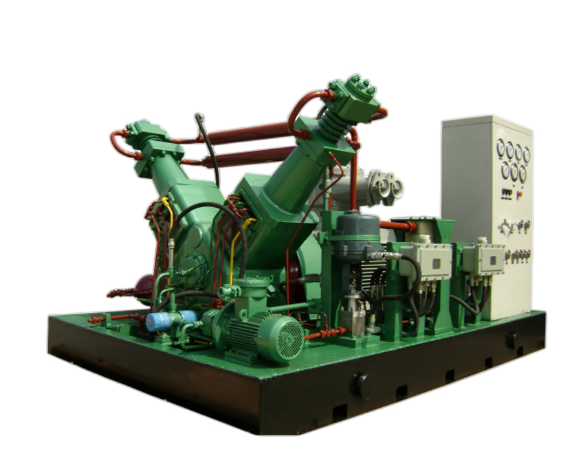
Making the right choice requires considering multiple dimensions, not just price. A systematic decision-making process can help you find the best solution.
Core demand analysis: Pressure level is the first consideration
Identify the maximum working pressure: First, thoroughly sort out the maximum working pressure required for compressed air or gas for all your pneumatic equipment and process flows. This is a black-and-white choice: If any of your applications requires a pressure of more than 0.7 MPa, then a low-pressure compressor will not meet the requirements.
Accurate calculation of flow requirements:
Total gas consumption estimation: List all gas-using equipment and their individual gas consumption (usually expressed in L/min or m³/min) and frequency of use. Add up the gas consumption of all equipment and multiply it by a “simultaneous use coefficient” (usually 0.6-0.8, adjusted according to actual conditions) to estimate the total average gas consumption.
Peak flow: Identify possible instantaneous high gas consumption situations and calculate the peak flow. The compressor should be selected to meet your peak flow requirements with a certain margin (usually 10-20%).
Flow and pressure trade-off: Remember that at the same input power, low-pressure compressors generally provide greater flow, while high-pressure compressors provide higher pressure but relatively smaller flow. If your demand is “large flow + high pressure”, you may need a higher-power high-pressure compressor, or consider a booster solution (boosting the low-pressure, large-flow gas source).
Application industry and gas purity requirements:
Industry standards: Different industries have different standards for the quality of compressed air. For example, the food and beverage, pharmaceutical, and electronic semiconductor industries have extremely strict requirements on the oil content, water content, and particulate matter of compressed air, and may require oil-free compressors and additional post-processing equipment (such as precision filters, adsorption dryers). High-pressure compressors are favored for their pollution-free characteristics in the filling of certain high-purity gases (such as hydrogen and nitrogen).
Environmental impact: Some applications require compressed air to be discharged directly into the environment, and the cleanliness of the exhaust gas also needs to be considered.
Running time and load characteristics:
Continuous operation vs intermittent operation: If your equipment needs to run continuously for 24 hours, screw low-pressure compressors or high-pressure compressors designed for continuous operation are better choices because they have better stability and energy efficiency. Although piston compressors are cheaper, they may have higher wear and energy consumption if they need to run continuously for a long time.
Load variation: If your gas consumption fluctuates greatly, choosing a compressor with a variable frequency drive (VSD) can significantly save energy. Variable frequency technology is used in both low-pressure and high-pressure compressors.
Economic analysis: long-term costs and initial investment
Initial acquisition cost (CAPEX): This is the most direct cost, and low-pressure compressors are usually more advantageous. High-pressure compressors have a high initial investment due to their complexity.
Operation cost (OPEX):
Electricity cost: This is the largest cost of operating a compressor. Compare the specific power (electricity consumption per unit flow) of different models. High-pressure compressors usually have a higher specific power and require a higher electricity budget.
Maintenance and spare parts: High-pressure compressors may have shorter maintenance cycles, and spare parts (such as high-pressure valves and seals) are more expensive.
Installation costs: High-pressure compressors may require stronger foundations, more professional piping systems, and stricter machine room safety measures.
Total cost of ownership (TCO): When making decisions, the total cost of ownership of the compressor over its entire life cycle should be calculated, including the cost of acquisition, installation, operation, maintenance, spare parts, energy consumption, and final scrapping. Sometimes, equipment with higher initial investment is more economical in the long run due to its high efficiency and low maintenance costs.
Site conditions and environmental factors:
Space constraints: Some high-pressure compressors are large in size and require a separate machine room and sufficient heat dissipation space.
Noise requirements: If the equipment is located in a noise-sensitive area (such as near residential areas, inside office buildings), it is necessary to select a low-noise compressor and consider additional sound insulation measures.
Ambient temperature and humidity: High temperature or high humidity may affect the performance and life of the compressor, and a model suitable for local climate conditions needs to be selected.
Power supply: Confirm that your power supply capacity and voltage level can meet the requirements of the selected compressor.
Comparison of advantages and disadvantages of high-pressure and low-pressure compressors
The following is a detailed comparison of advantages and disadvantages of high-pressure compressors and low-pressure compressors in various characteristic dimensions:
Low-pressure compressor (exhaust pressure is usually ≤ 0.7 MPa)
Advantages:
Excellent economy: Low-pressure compressors have significant advantages in initial purchase costs. Due to their high degree of standardization and sufficient market competition, the equipment price is relatively low and is more easily accepted by most companies and users. This means that low-pressure compressors are usually a more feasible and economical choice under limited budgets.
Relatively low operating costs: Under the premise of meeting conventional pressure requirements, low-pressure compressors usually have lower specific power (i.e., power consumption per unit flow) and higher energy efficiency. This means that they consume less electricity during operation, which significantly reduces the electricity bill expenditure for long-term operation, which is very beneficial to the company’s operating cost control.
Wide range of applications: Low-pressure compressors cover almost all pneumatic needs in general industrial, commercial and service fields. From driving pneumatic tools and cylinders, to providing air sources for automated production lines, to tire inflation and small sandblasting operations, its application scenarios are extremely wide and are indispensable basic equipment in many industries.
Easy maintenance: Low-pressure compressors, especially the common screw and piston types, have a relatively simple structure, and daily inspection and maintenance operations are easy to master. The replacement cost of parts is also low, and the maintenance cycle is relatively long, which further reduces the overall maintenance cost and downtime, and improves the availability of equipment.
Low noise and vibration: Especially modern low-pressure screw compressors, a lot of research and development has been invested in the design, and advanced sound insulation technology and vibration reduction measures have been adopted. This enables them to control the noise and vibration levels to a very low range during operation, with less interference to the working environment and the surrounding environment, which is more in line with the environmentally friendly requirements of modern factories and commercial places.
Disadvantages:
Unable to reach high pressure: This is the core limitation of low-pressure compressors. Due to their inherent design and working principle, the maximum output pressure of low-pressure compressors is strictly limited and cannot meet special application scenarios that require a pressure of 1.0 MPa (or higher, such as several MPa or even tens of MPa).
Specific application limitations: When faced with specific application scenarios that have rigid requirements for pressure, low-pressure compressors seem powerless. For example, high-pressure cutting, PET plastic bottle blowing, diving cylinder filling, high-pressure gas testing, laser cutting assistance and other operations must rely on high-pressure compressors to achieve.
High-pressure compressor (exhaust pressure is usually > 0.7 MPa)
Advantages:
Meet extreme pressure requirements: This is the most fundamental and irreplaceable advantage of high-pressure compressors. They can generate and maintain extremely high gas pressures, easily reaching the level of several megapascals or even tens of megapascals. This ability is something that low-pressure compressors can never achieve, so in the high-pressure field, high-pressure compressors are the only choice.
Expanding application boundaries: The existence of high-pressure compressors has made a series of applications that were originally impossible or difficult to achieve a reality. For example, the blow molding of PET plastic bottles requires high-pressure air; breathing cylinders used by firefighters, divers and medical first aid require high-pressure filling; high-end manufacturing processes such as laser cutting and water jet cutting require high-pressure gas assistance; gas injection and deep-sea exploration of oil and gas fields are also inseparable from high-pressure technology. They have greatly broadened the boundaries of industrial production and scientific and technological exploration.
Advanced technology and reliability: In order to withstand and generate high pressure, high-pressure compressors have reached a very high technical level in design and manufacturing. They usually use advanced technologies such as multi-stage compression, intercooling, precision sealing, and high-strength special alloy materials to ensure efficient operation and excellent reliability under extreme pressure. In addition, safety is fully considered in the design, and multiple safety protection systems are equipped, such as multi-stage pressure relief valves, automatic shutdown for over-temperature and over-pressure, etc., to ensure safe operation.
Irreplaceable in specific fields: In many key fields, high-pressure compressors play an irreplaceable role. For example, in the field of life support (diving breathing gas, fire breathing gas filling), energy development (CNG/LNG filling stations), precision manufacturing (high-pressure welding, cutting), and scientific research experiments, high-pressure compressors are the only equipment that can provide the required high-pressure gas. Its value and necessity cannot be replaced by any low-pressure solution.
Improve production efficiency: In many high-pressure applications, the use of high-pressure gas can significantly improve operating efficiency. For example, the use of high-pressure gas for purging and cleaning is much more efficient and effective than low-pressure gas; high-pressure gas-assisted laser cutting can complete thicker material cutting at a faster speed and obtain smoother cut surfaces.
Disadvantages:
Huge initial investment: The R&D, design and manufacturing process of high-pressure compressors are extremely complex, and the requirements for material strength, wear resistance, processing accuracy and safety systems are extremely high. These factors cause their manufacturing costs to be much higher than low-pressure compressors, making the initial purchase cost extremely expensive, which has become one of their most significant disadvantages.
High operating energy consumption: Compared with low-pressure compressors, high-pressure compressors need to overcome greater compression resistance when compressing gases to extremely high pressures, so they consume more electricity. Although multi-stage compression and intercooling are used in the design to improve efficiency, the high compression ratio itself requires more energy input, resulting in a significant increase in operating electricity costs.
High and complex maintenance costs: High-pressure components (such as high-pressure valve plates, piston rings, and high-pressure seals) work under extreme pressures, wear relatively quickly, and are replaced more frequently. The price of these high-pressure special spare parts is usually very expensive. In addition, the maintenance of high-pressure compressors requires professional skills and special tools, and the operation process is complex and has extremely high safety requirements, resulting in longer downtime and higher total maintenance costs.
Noise and vibration: Multi-stage piston high-pressure compressors, in particular, tend to generate large noise and vibration during operation due to their high-speed reciprocating motion and the impact of high-pressure gas flowing in valves and pipes. This may require additional sound insulation and shock absorption measures to meet the noise standards of the working environment.
High safety risk: High-pressure gas contains huge energy. Once leakage, pipeline rupture or equipment failure occurs, it may cause serious safety accidents such as explosions, fires or shock waves, posing a huge threat to personnel and property. Therefore, high-pressure compressors require extremely high professional training for operators and maintenance personnel, and must strictly abide by relevant safety regulations, operating procedures and national regulations to minimize risks.
Large footprint and heat dissipation requirements: Some large high-pressure compressors are large in size and weight, requiring more spacious installation space and a more solid foundation. At the same time, since a large amount of heat is generated during high-pressure compression, a more powerful cooling system and good ventilation conditions are required, and higher requirements are placed on the design of the machine room, which may increase the construction cost.
Conclusion
In today’s rapidly developing industry, the importance of compressors as the provider of “industrial blood” is self-evident. However, as this article explores in depth, high-pressure and low-pressure compressors are not simply “big” and “small”. They represent two completely different technical routes and application philosophies, and each plays an irreplaceable role in a specific field.
The core of choosing a high-pressure or low-pressure compressor is not which type is more “advanced” or “better”, but which type can most accurately match your actual needs. This is a complex decision-making process that requires multi-faceted considerations, rather than a simple judgment based solely on price.
Request a Quick Quote Now

Shanghai Sollant Energy Saving Technology Co., Ltd.
Drawing on our years of experience and expertise in air separation and PSA technologies, we deliver customized solutions tailored to your specific needs.
