
Why is the sealing performance of diaphragm compressors better than traditional compressors?
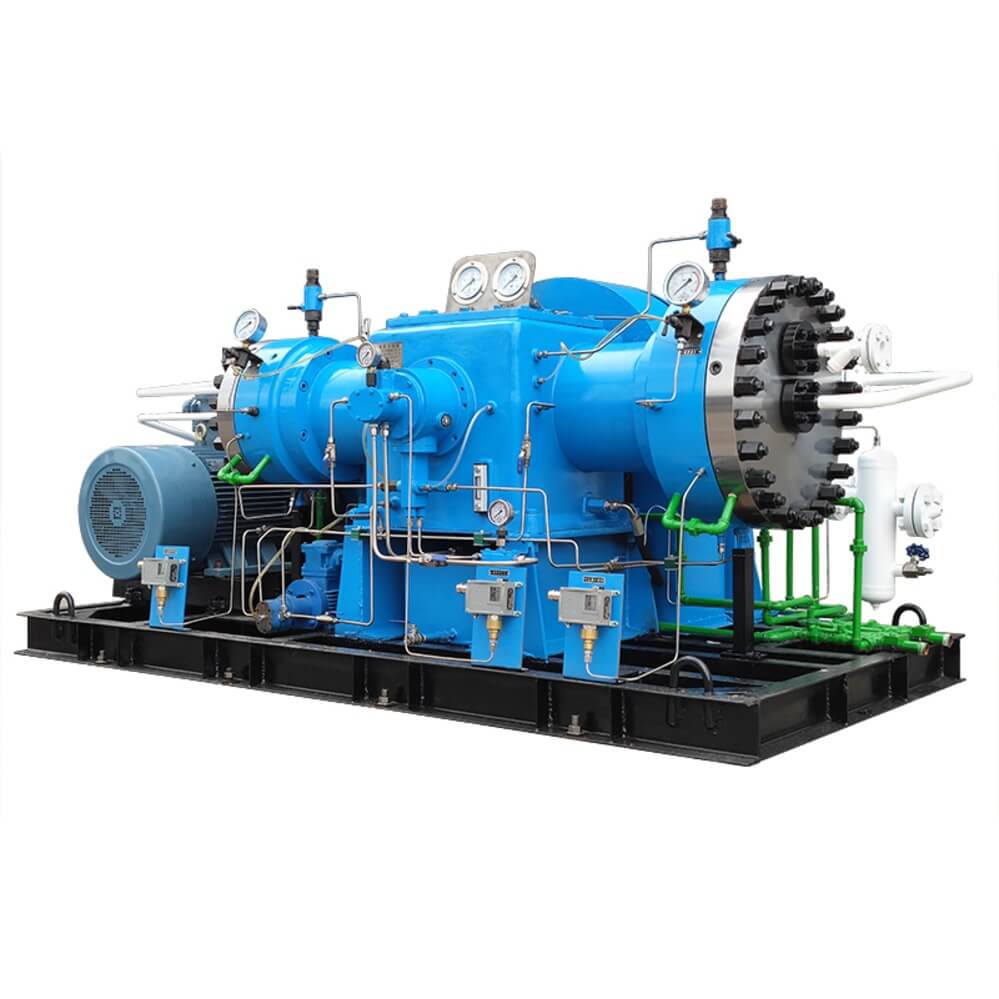
In modern industrial production, compressors are core power equipment, and their performance is directly related to production efficiency, product quality and even safety and environmental protection. Whether it is petrochemicals, pharmaceuticals and medical treatment, or food processing and electronic manufacturing, compressors play a vital role. However, among many types of compressors, sealing performance has always been a key indicator to measure their advancement and reliability. For a long time, traditional compressors have faced many challenges in sealing, which not only limits their application in specific fields, but also increases operating costs and safety risks.
It is in this context that diaphragm compressors stand out with their unique structure and excellent sealing performance, and have become the first choice for many industries with extremely high requirements for gas purity and sealing. So, how do diaphragm compressors achieve their excellent sealing performance? What are its significant advantages over traditional compressors? This article will explore the working principle, sealing characteristics and wide application scenarios of diaphragm compressors in depth, and compare them with traditional compressors, aiming to comprehensively analyze why diaphragm compressors can dominate in sealing performance.
Sealing Challenges of Traditional Compressors
Traditional compressors, such as piston compressors and screw compressors, will inevitably face various sealing problems when compressing gas. These challenges are mainly reflected in the following aspects:
Leakage of dynamic seals: Traditional compressors usually use dynamic seals such as piston rings, stuffing boxes, and mechanical seals. These sealing components are prone to wear and aging under the action of high-speed movement and high pressure difference, which leads to gas leakage. Especially when compressing toxic, flammable, explosive or corrosive gases, even a small leak may cause serious safety accidents or environmental pollution.
Contamination of lubricants: In order to reduce friction and wear, the moving parts of traditional compressors usually require lubricating oil. However, lubricating oil is easy to vaporize or atomize under high temperature and high pressure environment, and mix into the compressed gas, causing gas pollution. For industries with extremely high requirements for gas purity, such as food, medicine, semiconductors, etc., this kind of pollution is absolutely not allowed. Removing these pollutants requires additional filtering and purification equipment, which increases production costs and complexity.
Seal failure under high pressure differential: As the compressor outlet pressure increases, the internal and external pressure differential also increases, which places higher requirements on the pressure bearing capacity of the seal. Traditional seals are more likely to deform and damage under high pressure differentials, resulting in seal failure, which affects the efficiency and stability of the compressor.
High maintenance cost: The seals of traditional compressors are consumable parts and need to be inspected, replaced and maintained regularly. This not only increases downtime, but also brings high maintenance costs and manpower investment. Frequent maintenance operations may also increase the risk of equipment failure.
Limited range of applicable gases: Due to the above-mentioned sealing challenges, traditional compressors are limited in handling certain special gases. For example, highly corrosive gases, high-purity gases or radioactive gases, if compressed using traditional compressors, will face serious risks of leakage and contamination.
These challenges have prompted the industry to seek more reliable and efficient compression technology, and diaphragm compressors have emerged.
Working principle of diaphragm compressors
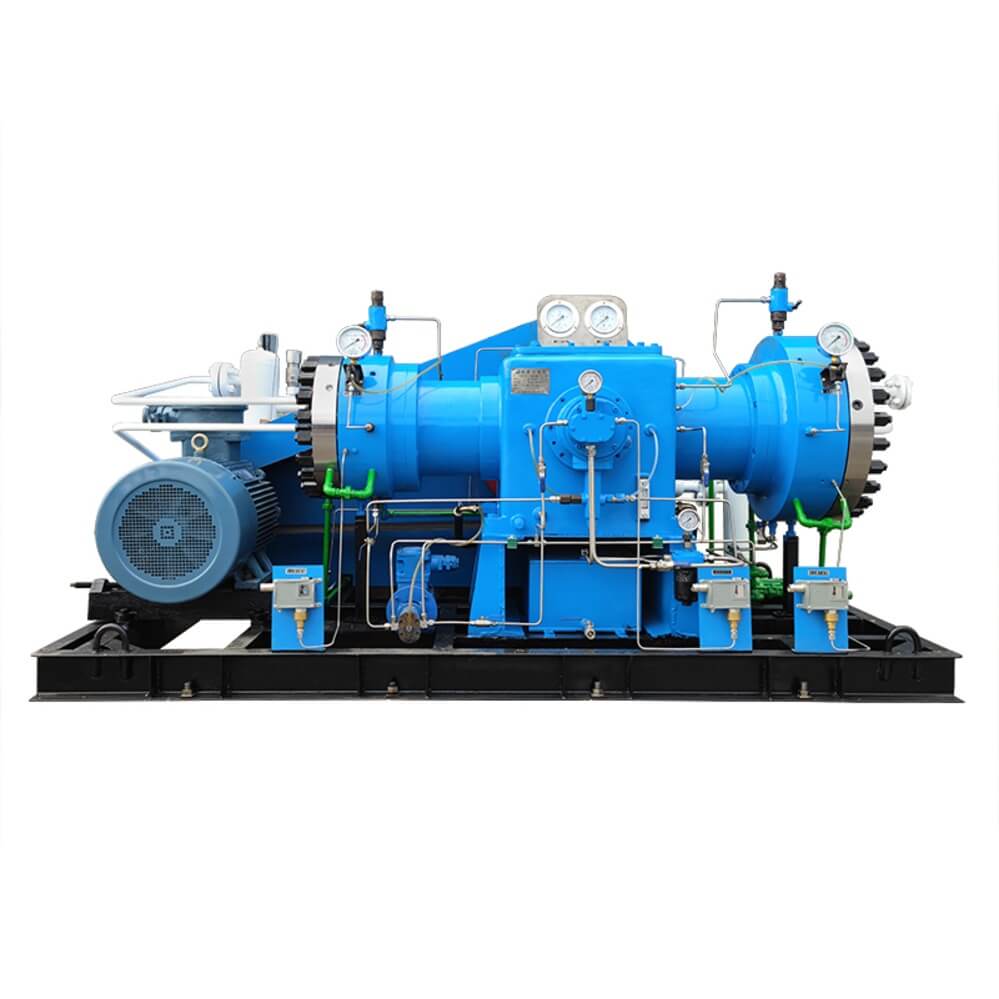
As the name suggests, the core of diaphragm compressors lies in a flexible and extremely sealed metal or non-metal diaphragm. Its working principle is significantly different from that of traditional piston compressors:
Diaphragm as isolation medium: The diaphragm divides the compression chamber into two parts: one side is the compression chamber in contact with the gas, and the other side is the hydraulic chamber (or mechanical chamber) that drives the diaphragm to move. The compression medium is completely isolated from moving parts such as the piston, cylinder wall, crankcase, etc., which is the key to its excellent sealing.
Hydraulic drive or mechanical drive: The reciprocating motion of the diaphragm is usually driven by hydraulic oil or a mechanical connecting rod mechanism. When the hydraulic oil (or connecting rod) pushes the diaphragm to move toward the gas side, the volume of the compression chamber decreases and the gas is compressed; when the hydraulic oil (or connecting rod) retreats, the diaphragm also retreats, the volume of the compression chamber increases, and the gas is sucked in.
One-way valve controls airflow: One-way valves are respectively provided at the inlet and exhaust ports to ensure that the gas can only flow in one direction when inhaling and discharging. When the diaphragm inhales, the inlet valve opens and the exhaust valve closes; when the diaphragm compresses and exhausts, the inlet valve closes and the exhaust valve opens.
Oil-free lubrication: Since the gas does not contact the moving parts at all, the diaphragm compressor does not need lubricating oil during the compression process, which fundamentally eliminates the risk of oil contamination and ensures the purity of the compressed gas.
It is this unique “non-contact” compression method that brings revolutionary sealing performance to the diaphragm compressor.
Advantages of Diaphragm Compressor Sealing Performance
The advantages of diaphragm compressors in sealing performance are multifaceted and significant, mainly reflected in:
Zero leakage realization: This is the core advantage of diaphragm compressors. Since the diaphragm itself is a complete, non-porous barrier that completely isolates the compressed medium from the external environment and the drive mechanism, “zero leakage” compression can be achieved in theory. This is crucial for handling highly toxic, flammable, explosive, radioactive, high-purity or corrosive gases, greatly improving production safety.
Pure gas without oil pollution: As mentioned earlier, diaphragm compressors do not require lubricating oil to lubricate moving parts, so there will be no oil-gas mixing or oil mist contamination of the gas. This makes diaphragm compressors the only choice for producing ultra-high purity gases, and they are widely used in industries with strict requirements on gas purity, such as semiconductors, medical, food and beverages.
Strong corrosion resistance: The choice of diaphragm materials is very flexible. According to the properties of the compressed gas, special alloys or polymer materials that are corrosion-resistant, high-temperature-resistant, and wear-resistant, such as stainless steel, Hastelloy, polytetrafluoroethylene (PTFE), etc., can be selected. This enables diaphragm compressors to reliably handle various corrosive gases, while traditional compressors are helpless in this regard or have a very short life.
Low maintenance cost and long life: Since there is no complex wear problem of dynamic seals, the maintenance of diaphragm compressors is greatly reduced, and the main maintenance is regular inspection and replacement of diaphragms. Compared with the frequent replacement of piston rings, stuffing boxes, etc. in traditional compressors, diaphragm compressors operate more stably and reliably, reducing downtime and maintenance costs and extending the service life of the equipment.
Environmental friendliness: The zero leakage feature means that less harmful gases are discharged into the atmosphere, which complies with increasingly stringent environmental regulations. At the same time, oil-free operation also avoids the problem of waste lubricating oil disposal and reduces environmental pollution.
Wide adaptability: Diaphragm compressors can not only handle various gases, including rare gases, special gases, mixed gases, etc., but also adapt to a wide pressure range, from low pressure to ultra-high pressure (up to thousands of bars) can achieve effective compression.
Application scenarios of diaphragm compressors
Due to their unparalleled sealing performance and oil-free and pure characteristics, diaphragm compressors have been widely used in many high-tech and special fields:
Chemical industry: compressing and transporting various highly toxic, flammable, explosive, and corrosive gases, such as chlorine, fluorine, hydrogen, oxygen, ethylene, propylene, etc., to ensure the safety and environmental protection of the production process.
Pharmaceutical and food industries: producing and transporting oil-free, sterile, high-purity compressed air or nitrogen for drug production, aseptic packaging, fermentation processes, etc., which is directly related to product quality and consumer health.
Semiconductor and electronics industries: supplying ultra-high purity nitrogen, argon, hydrogen, etc., for key processes such as chip manufacturing, photolithography, and cleaning. Any tiny impurities may cause the product to be scrapped.
Gas filling and mixing: used for filling high-purity gases (such as medical oxygen, special gases, and mixed gases) to ensure the accuracy and purity of gas composition.
Nuclear industry: handling radioactive gases, its zero leakage characteristics are the key to ensuring nuclear safety.
Scientific research and laboratories: provide pure gas sources for various precision experiments to avoid the impact of experimental results on contamination.
New energy field: in the field of hydrogen energy, used for hydrogen compression and storage, especially high-pressure hydrogen refueling stations, which have extremely high requirements for the purity and sealing of hydrogen.
Special gas recovery: recovery and reuse of rare gases or expensive gases, such as helium, krypton, etc., to reduce production costs.
In-depth comparative analysis of traditional compressors and diaphragm compressors
In order to more comprehensively and intuitively understand the superiority of diaphragm compressors in performance, especially their excellent sealing ability, it is necessary to conduct an in-depth comparative analysis between them and traditional piston compressors (as a common and representative type of traditional compressors). This comparison will cover multiple dimensions from core technical principles to actual operating benefits.
Fundamental differences in sealing methods
Traditional piston compressors: Traditional piston compressors mainly rely on a series of dynamic sealing components to prevent gas leakage. This includes piston rings, stuffing boxes (usually composed of multiple layers of flexible packing), and mechanical seals used in some cases. These seals achieve sealing through close contact with moving parts (such as piston rods). However, it is this contact that brings inherent challenges:
Friction and wear: Friction between moving parts and seals inevitably leads to wear. Over time, wear will cause the geometry of the seal to change and the sealing gap to increase, resulting in gas leakage. Especially under high-pressure and high-speed operating conditions, the wear rate will accelerate.
Heat accumulation: The heat generated by friction will accelerate the aging and performance degradation of the sealing material, further affecting the sealing effect.
Lubrication dependency: To reduce friction and wear, these dynamic seals usually require lubrication. The presence of lubricant, while aiding sealing, introduces the possibility of gas contamination.
Leakage paths: Even well-designed dynamic seals have difficulty completely eliminating tiny leakage paths, especially when dealing with extremely light molecules (such as hydrogen) or under extreme pressure differentials.
Diaphragm compressors: Diaphragm compressors use a completely different sealing philosophy – static isolation. At its core is an intact and flexible diaphragm, which acts as an insurmountable barrier to completely separate the gas compression chamber from the drive mechanism (such as the hydraulic oil chamber or the crank-connecting rod mechanism).
Non-contact sealing: The diaphragm itself does not rub against any moving parts, so there is no leakage caused by wear. This allows diaphragm compressors to achieve near-perfect sealing, theoretically reaching a “zero leakage” level.
Material selection: The material of the diaphragm can be customized according to the characteristics of the compressed gas (such as corrosiveness, temperature, pressure, etc.), such as stainless steel, Hastelloy, polytetrafluoroethylene (PTFE), etc. This ensures that the diaphragm itself will not be corroded by the gas or affect its sealing integrity.
Static integrity: The diaphragm itself is a continuous, seamless barrier that does not rely on relative movement between components to maintain the seal, so its sealing integrity is extremely high.
Fundamental differences in gas leakage risks
Traditional piston compressors: As mentioned in the sealing method, traditional piston compressors are difficult to avoid gas leakage due to the inherent characteristics of dynamic seals. This leakage is not only an economic loss (loss of compressed gas), but may also bring serious safety hazards and environmental problems:
Safety risks: For flammable, explosive, toxic or corrosive gases, even a trace amount of leakage may cause fire, explosion, poisoning or equipment corrosion, endangering the safety of life and property.
Environmental pollution: Leaked toxic and harmful gases are directly discharged into the atmosphere, which will cause environmental pollution and violate environmental regulations.
Product purity impact: Leakage may cause external air or impurities to enter the system, affecting the purity of the compressed gas.
Diaphragm compressor: Diaphragm compressors have reached an unprecedented level in gas leakage control by virtue of their static isolation principle.
True “zero leakage”: For critical applications, such as handling highly toxic (such as chlorine), flammable (such as hydrogen), explosive (such as acetylene) or radioactive gases, diaphragm compressors are the only equipment that can provide absolute safety guarantees, because it almost eliminates the possibility of gas leakage and ensures a safe operating environment.
Prevent cross contamination: The isolation effect of the diaphragm also means that there is no contact between the driving medium (such as hydraulic oil) and the compressed gas, completely eliminating cross contamination between the two.
The decisive influence of gas purity
Traditional piston compressors: One of the core problems of traditional compressors is the contamination of gas purity by lubricating oil.
Oil-gas mixing: In order to lubricate moving parts such as piston rings and cylinder walls, piston compressors must use lubricating oil. During the high-pressure and high-temperature compression process, part of the lubricating oil will vaporize or atomize and mix with the compressed gas to form oil mist or oil droplets.
Particle contamination: Wear of piston rings and cylinder walls will also produce tiny metal particles or other wear products, which will also be mixed into the gas.
High purification cost: For industries that require high-purity gas (such as food, medicine, and electronic semiconductors), complex, multi-stage oil-water separators, fine filters, adsorbers and other purification equipment must be added after the compressor to remove these pollutants. This not only increases equipment investment and operating costs, but may also affect the reliability of the system.
Diaphragm compressor: Diaphragm compressors have an overwhelming advantage in gas purity.
Absolutely oil-free compression: Since the diaphragm completely isolates the gas from all moving parts, the gas does not come into contact with any lubricating oil during the compression process. This means that diaphragm compressors can provide absolutely oil-free pure gas.
No wear particles: The gas also does not come into contact with any parts that can produce wear particles, further ensuring the purity of the gas.
Suitable for extreme purity requirements: This feature makes it the only choice for the production and delivery of ultra-high purity gases (such as 99.9999% or even higher purity nitrogen, helium, and hydrogen), which are widely used in semiconductor manufacturing, precision instrument calibration, scientific research and other fields with stringent requirements on gas purity.
Fundamental differences and derivative effects of lubrication requirements
Traditional piston compressors: Most traditional piston compressors require lubricating oil to reduce the friction between the piston ring and the cylinder wall and provide a certain sealing effect.
Lubrication system: This means that a complex lubrication system is required, including oil pumps, oil tanks, filters, coolers, etc., which increases the complexity and maintenance points of the equipment.
Oil consumption and replacement: Lubricating oil will be consumed and aged with the running time, and needs to be replenished and replaced regularly, resulting in additional operating costs and waste oil disposal problems.
Diaphragm compressor: Diaphragm compressor is a true “oil-free lubrication” equipment.
Simplified design: Since the gas side does not require lubrication, the complex lubrication system is eliminated, making the equipment structure simpler.
Environmentally friendly: Eliminating the consumption of lubricating oil and the disposal of waste oil meets increasingly stringent environmental protection requirements and reduces potential pollution to the environment.
Simplified maintenance: The maintenance workload is greatly reduced, and there is no need to pay attention to oil quality, oil level inspection and oil change cycle.
Expansion of applicable gas range
Traditional piston compressors: Traditional compressors face many limitations when handling special gases.
Corrosiveness: Corrosive gases (such as chlorine and sulfur dioxide) will quickly corrode pistons, cylinders and seals, causing equipment damage and leakage. Even with special materials, it is difficult to resist strong corrosion for a long time.
Toxicity/flammability: For toxic, flammable and explosive gases, the inherent risk of leakage makes the use of traditional compressors strictly restricted or even prohibited.
Rare/expensive gases: A trace amount of leakage means the loss of expensive gas, which is extremely economical.
Diaphragm compressors: Diaphragm compressors show great flexibility and superiority in gas applicability.
All-round compatibility: With its unique sealing principle and selectable diaphragm materials, diaphragm compressors can safely and efficiently compress and transport almost all types of gases, including but not limited to:
Highly toxic gases: chlorine, fluorine, phosgene, sulfur dioxide, hydrogen sulfide, etc.
Flammable and explosive gases: hydrogen, acetylene, methane, liquefied petroleum gas (LPG), etc.
Corrosive gases: moist chlorine, acidic gases, halogen gases, etc.
High-purity gases: ultra-high purity gases such as nitrogen, oxygen, argon, helium, krypton, and xenon.
Radioactive gases: special gases in certain nuclear industry applications.
Adaptation to special working conditions: Whether it is ultra-high pressure (up to several thousand bar) or special gas composition, diaphragm compressors can provide reliable solutions.
Maintenance frequency and operating life
Traditional piston compressors: The maintenance frequency of traditional piston compressors is relatively high.
Consumable parts: Dynamic seals such as piston rings, stuffing boxes, and mechanical seals are consumable parts. They are affected by friction and wear and need to be regularly inspected, adjusted, or even replaced.
Lubrication system maintenance: Lubricating oil replacement, oil filter cleaning or replacement are also routine maintenance items.
Bearing wear: The bearings of moving parts such as crankshafts and connecting rods are also worn and may need to be regularly inspected and replaced.
Downtime: Frequent maintenance means more downtime, which affects production efficiency.
Diaphragm compressor: The maintenance of diaphragm compressor is significantly reduced.
Fewer major wear parts: Since there is no friction and wear of moving parts on the gas side, the main wear part is only the diaphragm. The life of the diaphragm depends on the material, operating conditions and gas characteristics, but it is usually longer than the dynamic seal of traditional compressors.
Simplified maintenance: Maintenance work mainly focuses on regular inspection of the integrity of the diaphragm and inspection and replacement of the hydraulic oil on the drive side (if hydraulic drive is used).
Extended service life: The lower wear rate and simplified structure make the overall service life of the diaphragm compressor longer and reduce long-term operating costs.
Trade-off between operating costs and initial investment
Traditional piston compressors: Generally speaking, the initial purchase cost of traditional piston compressors is relatively low.
Later costs: However, its later operating costs may be high, including lubricating oil consumption, filter element replacement, frequent spare parts replacement (piston rings, seals, etc.), purification equipment operation and maintenance costs, and hidden costs such as product scrapping or environmental fines due to leakage or contamination.
Diaphragm compressors: The initial investment cost of diaphragm compressors is usually higher than that of traditional piston compressors.
Long-term benefits: However, from the perspective of full life cycle costs, diaphragm compressors are often more economical. The reduced gas loss caused by zero leakage, the elimination of purification equipment and its maintenance costs due to oil-free operation, the longer service life and lower maintenance frequency, and the avoidance of huge losses caused by safety accidents or environmental pollution make it show excellent economic benefits in long-term operation. For the compression of high-value or high-risk gases, the premium of the initial investment can be quickly compensated by the subsequent operational advantages.
Safety and environmental impact
Traditional piston compressors:
Safety risk: The risk of leakage is its main safety hazard, especially when handling hazardous gases.
Environmental pollution: Leaking gas and waste lubricating oil cause potential pollution to the environment.
Noise: Some piston compressors are noisy and vibrate loudly.
Diaphragm compressors:
Extremely high safety: The zero leakage feature fundamentally eliminates the risk of hazardous gas leakage and greatly improves operational safety.
Environmentally friendly: Leak-free and oil-free operation means minimal impact on the environment and meets the most stringent environmental standards.
Noise and vibration: Compared with traditional piston compressors, diaphragm compressors usually run more smoothly with less noise and vibration.
Through the above in-depth comparison, we can clearly see that the superiority of diaphragm compressors in sealing performance is not a single technical improvement, but the result of a series of technological innovations and structural optimization. It not only solves many pain points of traditional compressors at the technical level, but also shows significant advantages in safety, economy and environmental friendliness, making it an ideal choice when modern industry has extreme requirements for gas compression.
Conclusion
In summary, the fundamental reason why diaphragm compressors are significantly better than traditional compressors in sealing performance lies in their unique “diaphragm isolation” working principle. This design physically eliminates the contact between gas and the external environment and the drive mechanism, thereby achieving true zero leakage and oil-free compression. This breakthrough technology not only solves the long-standing sealing problems and gas pollution problems of traditional compressors, but also broadens the application boundaries of compressors in high-precision fields such as chemical industry, pharmaceuticals, semiconductors, and new energy.
As the industry’s requirements for production safety, product quality and environmental protection continue to increase, the importance of diaphragm compressors will become increasingly prominent. Although its initial cost is relatively high, considering its high safety, low maintenance, ultra-high purity gas supply and environmental friendliness, diaphragm compressors are undoubtedly the development trend of the future industrial gas compression field, providing a solid driving force for the progress of all walks of life.
Request a Quick Quote Now

Shanghai Sollant Energy Saving Technology Co., Ltd.
Drawing on our years of experience and expertise in air separation and PSA technologies, we deliver customized solutions tailored to your specific needs.
