
How to choose lubricating oil for natural gas compressors? The best choice under different working conditions
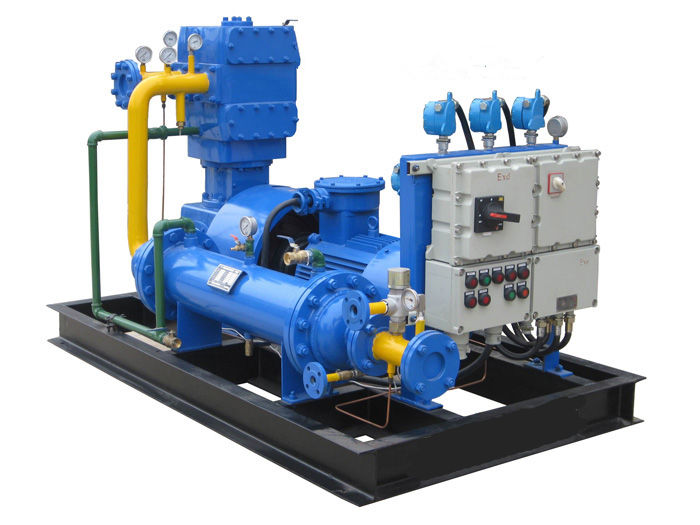
Against the backdrop of global energy structure transformation, natural gas, as a clean and efficient fossil fuel, is increasingly widely used in industrial, commercial and civil fields. From the exploitation of natural gas fields, the transportation of long-distance pipelines, liquefied storage to the final user-end distribution, natural gas compressors play a pivotal role. As the heart of energy, the stable and efficient operation of natural gas compressors is the cornerstone of the smooth operation of the entire natural gas industry chain. As the “blood” of natural gas compressors, the performance of lubricating oil directly determines the operating efficiency, energy consumption, equipment life and maintenance cost of the compressor.
However, the working environment of natural gas compressors is extremely complex and harsh. Not only does it face extreme conditions of high pressure and high temperature, it also needs to deal with corrosive media (such as hydrogen sulfide, carbon dioxide), water vapor, and the dissolution and dilution effect of light hydrocarbon components that may exist in natural gas. These challenges make the selection of lubricating oil for natural gas compressors far from a simple purchasing behavior, but a systematic project that requires deep expertise and careful analysis. Wrong lubricating oil selection may lead to increased equipment wear, reduced efficiency, frequent failures, and even safety accidents, resulting in huge economic losses.
This article aims to provide a comprehensive and in-depth guide to selecting lubricants for natural gas compressors for the majority of natural gas industry practitioners, equipment managers and technical maintenance personnel. We will start with the working principle of natural gas compressors and the severe operating environment they face, and analyze in detail the key functions of lubricants in them. More importantly, this article will explain the best selection strategy for lubricants for different types of compressors, different natural gas components and various extreme working conditions, and share how to judge the quality and applicability of lubricants through scientific methods. By reading this article, you will be able to more accurately select the most suitable lubricant for your natural gas compressor, thereby ensuring the long-term efficient and stable operation of the equipment, optimizing operating costs, and improving the overall safety management level.
Working principle and operating environment of natural gas compressors
To deeply understand the role of lubricants in natural gas compressors, we must first have a clear understanding of the working principles of different types of compressors and their operating environments. Natural gas compressors are mainly divided into two categories: positive displacement and speed type. Among them, the positive displacement type is most common with reciprocating (piston) and screw types, and the speed type is represented by centrifugal compressors.
Common types of natural gas compressors and their working principles:
Reciprocating (piston) compressor: This type of compressor completes the suction, compression and exhaust processes repeatedly through the reciprocating motion of the piston in the cylinder. During the suction stroke, the piston moves backward, the cylinder volume increases, and the low-pressure natural gas is sucked in; during the compression stroke, the piston moves forward, the cylinder volume decreases, and the natural gas is compressed to high pressure; finally, it is discharged through the exhaust valve. The friction of components such as piston rings, cylinder walls, and connecting rod bearings is the focus of its lubrication. Its advantages are high efficiency and a wide pressure range, but the vibration and noise are relatively large.
Screw compressor: The screw compressor consists of a pair of intermeshing yin and yang rotors that rotate at high speed in the housing. As the rotor rotates, the volume of the screw tooth groove changes continuously. The gas enters from the suction port, and as the rotor rotates, the gas is trapped in the gradually decreasing tooth groove space and is compressed. Lubricating oil not only provides lubrication in the screw compressor, but also has the functions of cooling, sealing and noise reduction. Its characteristics are compact structure, smooth operation and easy maintenance.
Centrifugal compressor: Centrifugal compressor is a speed-type compressor. It works on natural gas through a high-speed rotating impeller (or impeller), accelerating the natural gas from the inside to the outside, so that it gains kinetic energy. Subsequently, the gas enters the diffuser, and the kinetic energy is converted into pressure energy, thereby achieving supercharging. Centrifugal compressors are usually oil-free compression, that is, no lubricating oil is required in the compression chamber, but its high-speed bearings, gearboxes (if any) and sealing systems still require precision lubrication. Its advantages are large flow, continuous air supply and low vibration.
Challenges of harsh operating environment to lubricants:
The operating environment of natural gas compressors poses more severe challenges to the performance of lubricants than general industrial equipment. Understanding these challenges is the key to choosing the right lubricant.
High temperature and high pressure: During the compression process of natural gas, due to the “adiabatic compression” effect, its temperature and pressure will rise sharply. For example, in a multi-stage reciprocating compressor, the exhaust temperature of the last stage may be as high as 150°C or above, and the local “hot spot” temperature may be even higher. This high temperature environment will accelerate the oxidation and decomposition of lubricating oil, resulting in increased oil viscosity, higher acid value, and the formation of carbon deposits and sludge, which will adhere to valves, piston rings and cylinder walls, seriously affecting equipment efficiency and life. High pressure may lead to increased permeability of lubricating oil and accelerate consumption.
The influence of natural gas components (media compatibility): Natural gas is not pure methane, but usually contains a variety of impurities and associated gases, which may undergo complex physical and chemical reactions with lubricating oil.
Acidic gases (H2S and CO2): Hydrogen sulfide (H2S) and carbon dioxide (CO2) are common acidic components in natural gas. When these gases combine with the water produced during the compression process, they will form highly corrosive acids (such as hydrogen sulfide and carbonic acid), which will have an acid catalytic effect on the lubricating oil itself and accelerate oxidation; at the same time, they will also corrode metal parts, causing pitting and stress corrosion cracking. Therefore, lubricating oil must have excellent acid resistance and corrosion resistance, and usually requires the addition of special acid neutralizers or corrosion inhibitors.
Light hydrocarbon components (methane, ethane, etc.): Light hydrocarbons such as methane, ethane, and propane in natural gas are easily dissolved in lubricating oil under pressure. This dissolution will cause the viscosity of the lubricating oil to drop significantly (dilution effect), thereby reducing the load-bearing capacity of the lubricating oil film and increasing the risk of wear. At the same time, the dissolved gas will be released in large quantities in the decompression area (such as the oil-gas separator), causing the lubricating oil to foam, affecting the oil-gas separation efficiency, and even causing oil leakage. Therefore, it is crucial to choose a lubricating oil with low solubility in natural gas hydrocarbons.
Moisture: Even after pretreatment, natural gas may still contain trace amounts of water vapor. During the compression process, water vapor may condense into liquid water. Water not only dilutes the lubricating oil, but also undergoes a hydrolysis reaction with the additives in the lubricating oil, destroying the efficacy of the additives; more seriously, water will cause the lubricating oil to emulsify and form a stable emulsion, causing the lubricating oil to lose its lubricating ability and accelerate the corrosion of the equipment. Therefore, the anti-emulsification property of the lubricating oil (i.e., the ability to quickly separate from water) is very critical.
Dust and impurities: Although there is a filter at the air inlet, tiny solid particles, sludge, grinding chips and other impurities in the air and natural gas may still enter the compressor. These impurities will contaminate the lubricating oil, increase the abrasive wear of the oil, block the oil circuit and filter, and accelerate the aging of the oil. The lubricating oil must have good cleaning and dispersing properties, be able to suspend these particles, and remove them through the filtration system.
Continuous operation and long cycle requirements: Many natural gas compression stations need to operate 24 hours a day, and the reliability of the equipment is extremely high. This means that the lubricating oil must have an ultra-long service life and stable performance to reduce the frequency and cost of downtime maintenance caused by lubricating oil deterioration.
In summary, the operating environment faced by natural gas compressors is a complex system with multiple factors and interactions. This requires that the selection of lubricating oil must take into account a variety of stringent requirements such as thermal stability, oxidation stability, medium compatibility, corrosion resistance, demulsification resistance, anti-foaming, viscosity-temperature performance, and clean dispersibility.
Basic functions and effects of lubricating oil
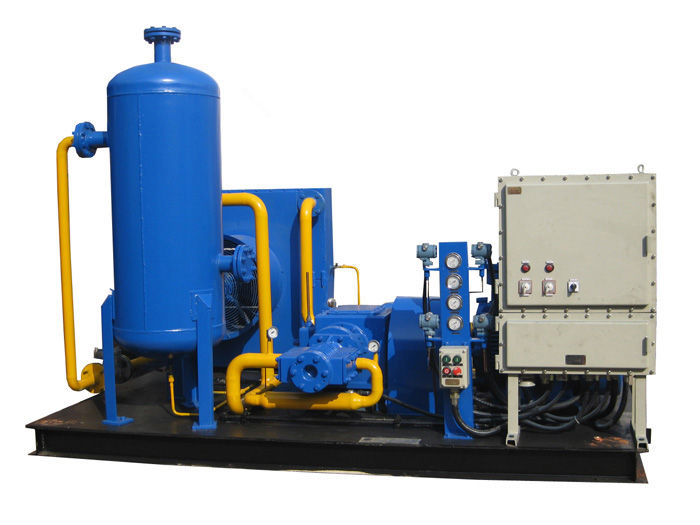
Lubricating oil plays an indispensable and multifunctional role in natural gas compressors, and its role is far more than simple “lubrication”. It is a key fluid to ensure the efficient, safe and long-life operation of equipment.
Detailed explanation of core functions:
Lubrication and reduction of friction and wear: This is the most basic and important function of lubricating oil. Lubricating oil forms a thin oil film between metal surfaces in relative motion, converting solid friction into liquid friction. This oil film can effectively isolate the metal surface and avoid direct contact, thereby significantly reducing the friction coefficient, reducing energy loss, and greatly delaying the wear of parts. Through scientific lubrication, the service life of the equipment can be extended and the frequency of maintenance and replacement of parts can be reduced.
Cooling and heat dissipation: During the operation of the compressor, a large amount of heat will be generated due to friction and gas compression. For example, in a positive displacement compressor, the temperature of the gas rises during the compression process, and the friction of the moving parts will also generate heat. During the circulation, the lubricating oil can absorb and take away the heat, dissipate the heat through the oil cooler, and effectively control the working temperature inside the compressor. Maintaining the proper working temperature is essential to prevent overheating and deformation of parts, oxidation and deterioration of lubricating oil, and improve compression efficiency.
Sealing and anti-leakage: In a positive displacement compressor, the lubricating oil forms an effective oil film seal between the piston ring and the cylinder wall, and between the screw rotor and the casing. This oil film can fill the tiny gaps on the surface of the parts to prevent high-pressure gas from leaking from the compression chamber to the low-pressure area, thereby ensuring that the compressor maintains a high volumetric efficiency and that the output gas pressure and flow meet the design requirements. In oil-free centrifugal compressors, lubricating oil is also used for bearing seals to prevent lubricating oil leakage or external contaminants from entering the bearings.
Washing and cleaning: During the circulation, the lubricating oil can effectively wash and take away the wear debris, carbon deposits, sludge, oxidation products generated on the surface of the moving parts inside the compressor, and dust particles invading from the outside. These pollutants will be suspended in the lubricating oil and intercepted and removed by the filter as the oil flows, thereby maintaining the cleanliness of key components inside the compressor and preventing the accumulation of pollutants that lead to increased wear or oil line blockage.
Rust and corrosion prevention: Rust inhibitors and corrosion inhibitors are usually added to lubricating oil. These additives can form an adsorption film on the metal surface, effectively preventing air, moisture and acidic components in natural gas (such as H2S, CO2) from directly contacting the metal surface, thereby preventing metal parts (such as cylinders, bearings, valves) from rusting and corroding, especially in working environments containing moisture or acidic gases. This function is particularly important.
Buffering and shock absorption: Lubricating oil forms an oil film between moving parts, and this oil film has a certain elasticity. When the machine is subjected to impact loads (such as the reversing impact of the reciprocating motion of the piston), the oil film can play a buffering role, absorb part of the impact energy, reduce the vibration and noise of parts, and improve the smooth operation of the equipment and the comfort of the operator.
Power transmission: In some compressors equipped with hydraulic control systems or hydraulic transmission devices, lubricating oil also has the function of transmitting pressure. As a hydraulic medium, it transmits power from one component to another to achieve control and drive of specific mechanisms.
The impact of lubricating oil performance on equipment operation:
Each function of lubricating oil is closely related to the operating efficiency, reliability and service life of natural gas compressors.
Poor lubrication: It will lead to increased friction, temperature and energy consumption, and eventually lead to wear of parts and even serious faults such as shaft seizure and cylinder pulling.
Insufficient cooling: It will cause the compressor to overheat, accelerate oxidation of lubricating oil, form carbon deposits, and reduce equipment efficiency.
Poor sealing: It will directly lead to a decrease in the volumetric efficiency of the compressor, insufficient output pressure, and increased energy consumption.
Poor cleanliness: The accumulation of pollutants will accelerate wear, block the oil circuit, and affect lubrication.
Failure of rust and corrosion protection: It will cause corrosion and damage to metal parts, affecting the life and safety of the equipment.
Therefore, the selection of lubricating oil for natural gas compressors must comprehensively consider these key functions to ensure that the selected oil can fully play its role under harsh working conditions and provide all-round protection for the compressor.
Selection of lubricating oil for natural gas compressors under different working conditions
The diversity of natural gas compressor working conditions determines the complexity of lubricating oil selection. There is no “universal” lubricating oil that can be applied to all situations. Accurate matching is the best practice. The following will elaborate on the selection strategy of lubricating oil from different dimensions.
Select lubricating oil according to compressor type:
Reciprocating (piston) natural gas compressor:
Feature analysis: The piston of this type of compressor reciprocates at high speed in the cylinder, and the friction between the piston ring and the cylinder wall is the main source of wear. Components such as exhaust valves and suction valves are also subjected to high temperatures and impacts. Due to the incompleteness of the piston seal, natural gas will contact and dissolve with the lubricating oil, and carbon deposits are easily generated during the compression process.
Selection focus:
High thermal stability and oxidation stability: to cope with the thermal decomposition and oxidation of lubricating oil under high temperature and high pressure, prevent the formation of carbon deposits and sludge, and ensure the cleanliness of valves and cylinders.
Excellent anti-wear performance: to ensure sufficient lubrication of key friction pairs such as piston rings, cylinder walls, connecting rod bearings, and reduce wear.
Good anti-dilution: Reduce the effect of natural gas dissolution on viscosity and maintain oil film thickness. Some manufacturers recommend the use of relatively high viscosity lubricants to compensate for the viscosity drop caused by dilution.
Low carbon deposition tendency: Use refined mineral base oils or high-performance synthetic base oils (such as PAO), as well as low-ash additive formulas to avoid the formation of hard carbon deposits on the surface of high-temperature components, which affects valve sealing and piston ring movement.
Excellent oil-water separation: If natural gas contains water, it is necessary to ensure that the lubricant can quickly separate the water to prevent emulsification and corrosion.
Compatibility with stuffing boxes and seals: Choose lubricants that will not cause seals to expand or shrink.
Common base oils: refined mineral oil or synthetic oils such as PAO and esters. Under extremely high pressure, high temperature or sour gas conditions, synthetic oils have more obvious advantages due to their excellent performance.
Screw natural gas compressor:
Feature analysis: In screw compressors, lubricating oil is directly sprayed into the compression chamber to mix with the gas, playing multiple roles of lubrication, cooling, sealing and noise reduction. Oil-gas separation efficiency, oil consumption and foaming problems are the core concerns.
Selection focus:
Excellent anti-oxidation stability and thermal stability: To cope with the high temperature in the compression chamber and ensure the long life of the oil.
Excellent anti-foaming and air release: After the lubricating oil is stirred at high speed, it is easy to produce a large amount of foam and dissolved air. If the foam cannot be broken and the air cannot be released quickly, it will affect the oil-gas separation efficiency, resulting in oil leakage, and even blockage of the oil circuit and insufficient lubrication.
Good oil-water separation (anti-emulsification): Quickly separate condensed water, avoid emulsification, and protect equipment.
Low volatility: Reduce oil evaporation loss, reduce oil consumption, and prevent lubricating oil from condensing in the aftercooler and pipeline.
Good compatibility with compressed gas: Reduce the viscosity dilution effect caused by gas dissolution.
Suitable viscosity: It must ensure lubrication and sealing, and facilitate oil-gas separation.
Common base oil: Due to its harsh operating environment and high performance requirements, screw natural gas compressors are usually recommended to use synthetic lubricants, such as polyalphaolefins (PAO) or ester synthetic oils. These synthetic oils have excellent viscosity-temperature characteristics, oxidation stability, low volatility and anti-foaming properties.
Centrifugal natural gas compressors:
Features: The compression chamber of a centrifugal compressor is usually oil-free, so the main focus is on the lubrication of high-speed bearings and gearboxes . These parts have high speeds and heavy loads, and have extremely high requirements for the cleanliness, anti-wear, anti-oxidation and air release of the lubricant.
Selection focus:
Excellent oxidation stability and thermal stability: Ensure that the lubricant does not deteriorate at high speeds and high temperatures and maintains a long life.
Excellent anti-emulsification and air release: Water and air in the bearing and gearbox oil grooves must be able to separate quickly to avoid emulsification and cavitation.
Excellent anti-wear and extreme pressure properties: Protect high-speed bearings and heavy-loaded gears from wear under boundary lubrication conditions.
High cleanliness: No particulate impurities are allowed in the lubricant to protect precision bearings.
Good viscosity-temperature characteristics: Ensure stable viscosity over a wide temperature range.
Commonly used base oils: High-quality turbine oil or industrial gear oil is usually selected, which can be refined mineral oil, but under more severe or long-term operating conditions, the performance advantages of synthetic oils are more prominent.
Select lubricants according to natural gas components:
The accompanying components in natural gas have a decisive influence on the selection of lubricants.
Dry gas (high methane content): For the compression of “dry gas” with extremely high methane content and no or very little H2S, CO2, and water vapor, the main consideration is the dissolution and dilution effect of methane on lubricants. Lubricants with low solubility in methane should be selected to maintain stable viscosity and reduce oil consumption.
Wet gas: If the water vapor content in natural gas is high, it is easy to condense into liquid water during the compression process. At this time, the lubricant must have excellent demulsibility. This means that the lubricant can quickly and thoroughly separate from water to form a clear oil-water interface, prevent the formation of emulsions, thereby ensuring the integrity of the lubricant film and preventing rust inside the equipment.
Sour gas : Compressing “sour gas” containing hydrogen sulfide (H2S) and carbon dioxide (CO2) is a very challenging working condition. These acid gases will form highly corrosive acids in the presence of water, which will not only accelerate the oxidation and hydrolysis of lubricants, but also corrode equipment parts.
Selection focus: Lubricants must have special acid resistance and corrosion inhibition. This is usually achieved by adding additives with good acid neutralization ability and efficient metal passivators and corrosion inhibitors. In some cases, it may be necessary to select special synthetic base oils, such as polyethers (PAG), which have low solubility in H2S and CO2 and excellent corrosion resistance, but attention should be paid to compatibility with traditional mineral oils and certain sealing materials.
Hydrocarbon-rich gas (high content of heavy hydrocarbons): If the natural gas contains a higher proportion of heavy hydrocarbons such as ethane, propane, butane, these hydrocarbons have a stronger solubility in lubricants, which will cause more serious viscosity dilution.
Selection focus: The anti-dilution ability of lubricants becomes the key. This may mean choosing a base oil with a higher viscosity grade, or a base oil with a specific structure (such as PAO or certain esters), which has a relatively low solubility in heavy hydrocarbons. At the same time, the viscosity changes of the oil in use should be closely monitored to avoid lubrication failure due to excessive viscosity dilution.
Select lubricants according to operating temperature and pressure:
High temperature and high pressure conditions: Lubricants face severe oxidation and thermal decomposition challenges under extreme high temperature and high pressure.
Selection focus: Lubricants with excellent thermal stability and oxidation stability must be selected. Generally, mineral oils will rapidly lose their antioxidant capacity at long-term operating temperatures exceeding 100-120°C. High-performance synthetic lubricants, such as PAO , esters , can maintain performance at higher temperatures due to their more stable molecular structure, provide longer service life, and effectively inhibit the formation of carbon deposits and sludge.
Low temperature environment or startup: In cold areas, the ambient temperature may be very low when the compressor starts.
Selection focus: Lubricants must have excellent low-temperature fluidity, that is, low pour point and low low-temperature viscosity. This ensures that the lubricant can still flow smoothly at low temperatures, quickly reach various lubrication points, and avoid cold start wear. Synthetic oils usually have better low-temperature fluidity than mineral oils.
Consider economic and environmental performance:
Cost-benefit analysis: Although the initial purchase cost of high-performance synthetic lubricants is higher than that of mineral oils, their longer service life (which can significantly extend the oil change cycle), lower oil consumption, higher equipment efficiency (reduced energy consumption) and reduced downtime maintenance frequency make their life cycle cost (LCC) lower. Therefore, when choosing, you should not only look at the unit price, but also conduct a comprehensive cost-benefit analysis.
Environmental regulations and sustainability: More and more countries and regions have put forward requirements for the environmental performance of lubricants, such as biodegradability, toxicity, and convenience of waste oil treatment. Selecting lubricants that comply with environmental regulations, have higher biodegradability or are easier to recycle and treat will help enhance the company’s image of sustainable development.
How to judge the quality and suitability of lubricants
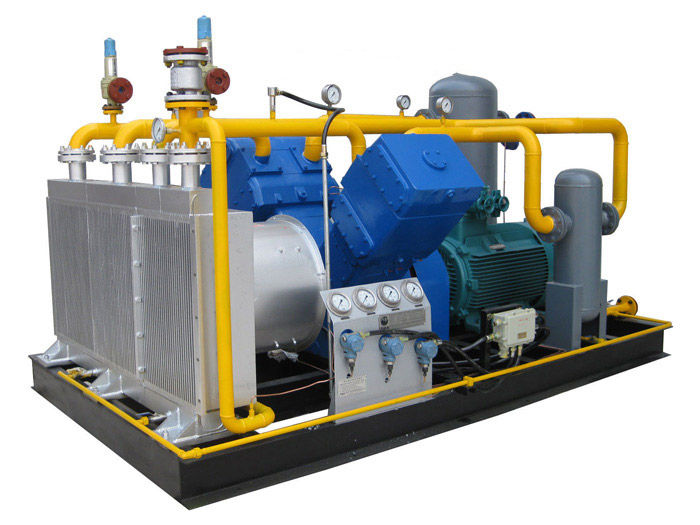
Choosing the right lubricant is only the first step. Ensuring that the selected lubricant is of reliable quality and maintains its suitability throughout its service life is the key to ensuring the safe and efficient operation of natural gas compressors.
Reviewing the product technical data sheet (PDS/TDS):
PDS or TDS is the “identity card” of the lubricant product, which contains all the key physical and chemical performance parameters of the oil. Before purchasing, be sure to carefully study these data and compare them with the equipment manufacturer’s recommendations and actual operating conditions.
Viscosity: One of the most critical parameters, usually measured at 40°C and 100°C. The manufacturer will clearly specify or recommend the viscosity grade of the lubricant . The correct viscosity ensures that sufficient oil film thickness is formed at different temperatures and takes into account energy consumption.
Viscosity Index (VI): A measure of the degree to which the viscosity of the lubricant changes with temperature. The higher the VI value, the less the viscosity of the lubricant is affected by temperature, and the more stable the performance over a wide temperature range. For working conditions with large temperature fluctuations, high VI oils are more advantageous.
Flash Point and Fire Point: measure the lowest temperature at which lubricating oil evaporates to form a combustible mixture, reflecting the safety performance of the oil. The higher the flash point, the better the safety of the oil.
Pour Point: measure the lowest temperature at which lubricating oil can still flow at low temperatures. The lower the pour point, the better the fluidity of the oil in a low temperature environment, which is conducive to cold start.
Acid Number: reflects the total amount of acidic substances in the lubricating oil. The acid value of new oil is usually very low. The increase in the acid value of used oil is an important indicator of oxidative deterioration of the oil.
Total Base Number: mainly for lubricating oils containing alkaline additives (such as engine oils), used to measure the reserve of alkaline additives in the oil, and used to neutralize acidic products.
Water Content: the lower the better. High water content can cause emulsification, corrosion and lubrication failure.
Air Release: The ability of lubricating oil to release dissolved air and bubbles. This is particularly important for screw compressors. Failure to release air quickly will result in excessive foaming, affecting oil-gas separation and oil pump supply.
Demulsibility: The ability of lubricating oil to separate from water. Good demulsibility ensures that when contaminated by water, oil and water can be quickly separated to prevent the formation of emulsions.
Oxidation Stability: A measure of the ability of lubricating oil to resist the action of oxygen and maintain its performance unchanged. The better the oxidation stability, the longer the service life of the oil. It is usually evaluated by the rotating oxygen bomb method or TOST test.
Anti-wear and extreme pressure : The wear resistance of lubricating oil under heavy load and boundary lubrication conditions is evaluated by four-ball machine, FALEX and other tests.
Material compatibility: Confirm that the lubricating oil has no adverse reactions with the seals, coatings, filter materials, etc. inside the compressor.
Choose well-known brands and reliable suppliers:
It is crucial to choose lubricant brands with a good reputation in the industry and certified suppliers. These brands usually have:
Strong R&D capabilities: ensure that the product formula is advanced and adapts to changing technical needs.
Strict quality control system: from base oil procurement to production and filling, the whole process is strictly controlled to ensure stable product quality.
Perfect technical services: provide professional selection advice, oil analysis services and on-site problem solutions.
Supply chain reliability: ensure timely delivery and avoid production interruptions.
Working with unreliable suppliers may face the risk of purchasing counterfeit and inferior products, unstable product quality or lack of service.
Follow the recommendations of equipment manufacturers:
Compressor manufacturers are the ultimate authority on the lubrication needs of their equipment. In the equipment manual, the recommended lubricant type, viscosity grade and oil change interval are usually clearly stated. These recommendations are based on a lot of testing and engineering experience to ensure that the equipment operates in the best condition. Without the manufacturer’s consent, changing the type of lubricant at will may invalidate the warranty and even cause irreversible damage to the equipment.
Regular oil analysis and monitoring (oil monitoring):
Oil monitoring is a core component of predictive maintenance, especially for natural gas compressors. It allows you to grasp the “health” of the lubricant and the wear trend of the equipment in real time.
Sampling frequency and specifications: According to the operating conditions and manufacturer’s recommendations, oil samples are collected from the specified sampling points regularly (such as every 3 months, 6 months or after a certain number of hours of operation). The sampling process must be standardized to avoid contamination.
Laboratory analysis items:
Conventional physical and chemical indicators: viscosity, acid value/TBN, moisture content, flash point, etc. Abnormal changes in these indicators directly reflect the aging and contamination of the oil.
Wear metal analysis: Detect the content of wear elements such as iron, copper, aluminum, chromium, and lead in the oil sample. These elements come from the wear parts inside the equipment. Its concentration and change trend can effectively indicate abnormal wear of bearings, gears, pistons and other components.
Pollution element analysis: Detect elements such as silicon , sodium, potassium, calcium, zinc, phosphorus , etc. to determine external pollution or additive consumption.
Particle counting and wear analysis: Quantify the number and size distribution of solid particles in the oil, and observe the wear particle morphology through a microscope to determine the type of wear (such as fatigue wear, abrasive wear, and corrosive wear).
Infrared spectroscopy (FTIR): Detect the presence and concentration of organic pollutants such as oil oxidation products, nitration products, sulfide products, water, fuel dilution, ethylene glycol, etc., and evaluate the chemical changes of oil products.
Data interpretation and trend analysis: Compare each analysis result with the new oil index, historical data and alarm limit values for trend analysis. For example, a sudden drop in viscosity may mean dilution, a rapid increase in acid value means increased oxidation, and a sudden surge in wear metal content indicates severe wear.
Guiding maintenance decisions: Based on the oil monitoring results, it can be scientifically determined whether oil change, additive supplementation, equipment inspection or maintenance are required, thereby achieving on-demand maintenance, extending the oil change cycle, reducing unplanned downtime, and optimizing maintenance costs.
Conduct field tests and evaluations:
When conditions permit, especially when introducing new brands or types of lubricants, small-scale field tests can be considered on non-critical equipment or small equipment.
Test cycle: Set a reasonable test cycle, such as 2000-4000 hours.
Monitoring indicators: Continuously monitor the performance indicators of lubricants and the operating parameters of equipment.
Comprehensive evaluation: After the test, comprehensively analyze the performance of lubricants, the impact on equipment operation, economic benefits and maintenance convenience, so as to make a decision on whether to promote them in full.
Conclusion
Natural gas compressors are indispensable core equipment in the natural gas industry chain, and their stable and reliable operation is crucial to ensuring energy supply. As its lifeline, the selection and management strategy of lubricants directly determines the performance, life and operating cost of the equipment. This article deeply explores the working principle of natural gas compressors, the challenges of harsh operating environments to lubricants, and the multiple key roles played by lubricants in them.
We emphasize that selecting lubricants for natural gas compressors is not a simple, one-size-fits-all task, but a systematic project that requires comprehensive consideration. This requires us to fully understand the unique lubrication requirements of different types of compressors, accurately identify the impact of various components in natural gas on lubricant performance, and make the most scientific decisions based on actual operating temperature, pressure and other operating parameters. Although the initial investment of high-performance synthetic lubricants may be high, their excellent oxidation resistance, thermal stability, anti-dilution and longer service life often bring significant economic benefits and higher operating reliability throughout the life cycle.
In addition, simply choosing a suitable lubricant is not enough. Continuous quality assurance and condition monitoring are also critical. By carefully reviewing product technical data, selecting reputable brands and suppliers, strictly following the recommendations of equipment manufacturers, and most importantly, establishing a complete lubricant fluid monitoring system and regularly performing oil analysis, we can grasp the health of lubricants and equipment in real time and realize the transition from “scheduled maintenance” to “predictive maintenance”. This proactive maintenance strategy can not only effectively extend the service life of lubricants and equipment, reduce the risk of unplanned downtime, and reduce maintenance costs, but also ensure the long-term efficient, safe, and environmentally friendly operation of natural gas compressors.
Faced with the growing demand for natural gas and escalating technical challenges, in-depth understanding, scientific selection, and refined management of natural gas compressor lubricants will be an important guarantee for the natural gas industry to enhance its core competitiveness and achieve sustainable development. We believe that through the professional guidance provided in this article, you will be able to find a “tailor-made” lubrication solution for your natural gas compressor, thereby contributing to the improvement of corporate efficiency and national energy security.
Request a Quick Quote Now

Shanghai Sollant Energy Saving Technology Co., Ltd.
Drawing on our years of experience and expertise in air separation and PSA technologies, we deliver customized solutions tailored to your specific needs.
