
In-depth analysis of the compression ratio of diaphragm compressors and its influencing factors
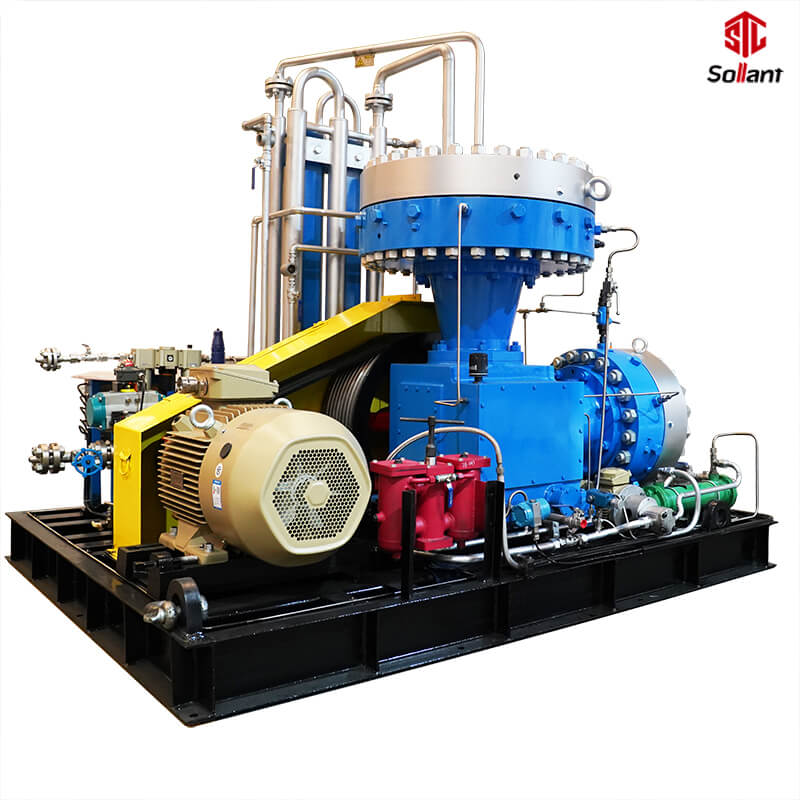
In modern industrial production, gas compression is an indispensable part of many process flows. Among the many types of compressors, diaphragm compressors, with their unique structure and excellent performance, play an important role in handling special media such as high-purity, flammable, explosive, toxic, and corrosive gases. Its core working principle is to use the reciprocating motion of the flexible diaphragm to achieve gas compression, thereby completely avoiding the contact between the compression chamber and the outside world, ensuring the purity of the compressed gas, and effectively eliminating leakage.
Understanding the various performance parameters of diaphragm compressors is crucial for their efficient and stable operation, and “compression ratio” is undoubtedly one of the core and frequently discussed indicators. The compression ratio is not only directly related to the working efficiency and energy consumption of the compressor, but also has a profound impact on the life, safety, and final gas quality of the equipment. Starting from the definition, this article will deeply explore the standard range, influencing factors, and the impact of high compression ratio of diaphragm compressors, and finally give optimization suggestions, aiming to comprehensively analyze this key parameter for readers and help them better understand and apply diaphragm compressors.
What is the compression ratio of diaphragm compressors?

Compression ratio is one of the important indicators to measure the performance of gas compression equipment. For diaphragm compressors, compression ratio refers to the ratio of the volume or pressure of the gas before and after it is compressed. Specifically, we can define it from two perspectives:
Volumetric Compression Ratio
Volumetric compression ratio refers to the ratio of the maximum gas volume that the compression chamber can accommodate to the minimum gas volume (i.e., dead point volume) during the movement of the piston or diaphragm from the bottom dead center (or lowest point) to the top dead center (or highest point).
Vmax (maximum volume): refers to the maximum gas volume in the compression chamber when the diaphragm is at the lowest point.
Vmin (minimum volume): refers to the minimum gas volume in the compression chamber when the diaphragm is at the highest point, also known as the dead point volume.
Therefore, the calculation formula of volume compression ratio is:
Volume compression ratio = Vmax/Vmin
For diaphragm compressors, due to their special structure, the dead point volume can be very small, theoretically even close to zero, which enables diaphragm compressors to achieve a higher volume compression ratio, thereby processing more gas in unit time.
Pressure Compression Ratio
The pressure compression ratio refers to the ratio of the discharge pressure to the suction pressure of the gas after it is compressed by the diaphragm compressor. This is a more intuitive and commonly used indicator in actual engineering applications because it directly reflects the ability of the compressor to increase the gas pressure.
Pd (discharge pressure): refers to the pressure at which the gas is discharged from the compressor after compression.
Ps (suction pressure): refers to the pressure at which the gas enters the suction port of the compressor.
Therefore, the calculation formula of the pressure compression ratio is:
Pressure compression ratio = Pd/Ps
It should be noted that although the volume compression ratio and the pressure compression ratio are related, they are not completely the same. The pressure compression ratio is affected by many factors such as gas properties (such as isothermal compression or adiabatic compression), leakage, and valve efficiency. In practical applications, engineers usually pay more attention to the pressure compression ratio, because this directly determines whether the diaphragm compressor can meet the pressure requirements of the process.
Diaphragm compressors are able to achieve high pressure compression ratios, thanks to their unique oil-free seal design, which can minimize internal leakage and maintain high pressure output. In addition, the selection of diaphragm materials and structural design also have an important impact on the compression ratio.
Standard range of compression ratio of diaphragm compressors
The compression ratio of diaphragm compressors does not have a fixed “standard range”, but varies according to many factors such as its design purpose, medium characteristics, number of stages, and the technical level of the manufacturer. However, we can roughly summarize some common compression ratio ranges based on its application areas and technical characteristics.
Single-stage diaphragm compressors
The compression ratio of single-stage diaphragm compressors is usually relatively low, generally between 2:1 and 10:1. This means that it can increase the gas pressure to 2 to 10 times the suction pressure. For example, if the suction pressure is 1 atmosphere, a single-stage diaphragm compressor can compress it to 2 to 10 atmospheres.
This type of diaphragm compressor is suitable for occasions where the compression ratio is not high, but there are strict requirements for gas purity or leakage. For example, in laboratory gas delivery, small gas source systems, or as a pre-compression stage for multi-stage compression.
Multi-stage diaphragm compressor
When a higher compression ratio is required, a multi-stage diaphragm compressor is usually used. By connecting multiple compression stages in series, each stage further increases the gas pressure on the basis of the previous stage, thereby achieving a higher total compression ratio. The compression ratio of a multi-stage diaphragm compressor can reach hundreds or even thousands to one, for example, compressing low-pressure gas (such as 1 atmosphere) to hundreds or even thousands of atmospheres.
For example, in the filling of high-purity gases such as hydrogen, helium, and nitrogen, as well as in the fields of petrochemicals, power, and nuclear industries, it is often necessary to compress the gas to extremely high pressures. At this time, the advantages of multi-stage diaphragm compressors are highlighted.
Factors affecting the compression ratio of diaphragm compressors
The compression ratio of diaphragm compressors is affected by a combination of many complex factors. A deep understanding of these factors is essential for optimizing compressor performance, improving efficiency, and extending life.
Suction and discharge pressures
This is the factor that most directly affects the compression ratio.
Suction pressure (Ps): The higher the suction pressure, the lower the compression ratio required at the same discharge pressure. Conversely, the lower the suction pressure, the higher the compression ratio is required to achieve the same discharge pressure. For diaphragm compressors, due to their good adaptability to low inlet pressures, they can work at lower suction pressures, but to achieve high compression ratios, more stages or stronger single-stage compression capabilities are required.
Discharge pressure (Pd): The higher the discharge pressure, the higher the compression ratio required. This is because the compressor needs to do more work to raise the gas to a higher pressure level.
In practical applications, the suction pressure is often determined by the upstream process, while the discharge pressure is determined by the downstream process requirements. Therefore, when designing a diaphragm compressor system, these two key parameters must be clarified first.
Gas properties
The physical and chemical properties of the compressed gas have a significant impact on the compression ratio.
Gas constant (R): Different gases have different gas constants. This affects the temperature change and power consumption during the compression process.
Specific heat ratio (k orγ): Specific heat ratio is the ratio of the specific heat capacity of a gas at constant pressure and constant volume. For adiabatic compression process, the larger the specific heat ratio, the higher the pressure compression ratio at the same volume compression ratio. This means that it is usually easier to compress monatomic gases such as helium and hydrogen to reach high pressure, while it is relatively difficult to compress polyatomic gases such as carbon dioxide and ammonia.
Molecular weight: The molecular weight of a gas affects its flow resistance during compression, which in turn affects the compression efficiency.
Temperature: Both the suction temperature and the discharge temperature affect the compression process. The higher the suction temperature, the higher the discharge temperature at the same compression ratio, and the greater the power consumption required for compression.
When a diaphragm compressor handles certain special gases, such as corrosive gases and toxic gases, it is necessary to select special diaphragm and valve materials, which will also limit the achievable compression ratio to a certain extent.
Materials and structures of diaphragms
The diaphragm is the core component of a diaphragm compressor, and its material and structural design play a decisive role in the compression ratio.
Diaphragm material: High-performance diaphragm materials (such as polytetrafluoroethylene PTFE, metal alloy diaphragms, etc.) should have excellent pressure resistance, fatigue resistance, corrosion resistance, high temperature resistance and other characteristics. The strength and elastic modulus of the material directly determine whether the diaphragm will be permanently deformed or ruptured when subjected to high pressure difference, thereby limiting the compression ratio. For example, metal diaphragms can usually withstand higher pressures than non-metallic diaphragms.
Diaphragm thickness: Under the premise of ensuring strength, appropriately reducing the diaphragm thickness can reduce the dead volume, thereby increasing the volume compression ratio. However, a diaphragm that is too thin may lead to insufficient strength.
Diaphragm shape: The curvature and corrugated design of the diaphragm will affect its force distribution and deformation capacity, thereby affecting the compression efficiency and life. Optimizing the diaphragm shape can make it deform more under the same pressure, thereby improving the compression efficiency.
Diaphragm and cavity coordination: The gap and coordination accuracy between the diaphragm and the compression cavity affect the size of the dead volume and the flow characteristics of the gas during the compression process.
Valve design and efficiency
The suction valve and exhaust valve are key components in diaphragm compressors, and their performance directly affects the compression ratio.
Valve flow path design: The smaller the flow resistance of the valve, the smoother the gas in and out, and the higher the compression efficiency, which is conducive to improving the compression ratio.
Valve material: The valve material should have the characteristics of wear resistance, corrosion resistance, and high temperature resistance to ensure its stability and sealing in long-term operation.
Valve opening and closing response speed: The valve should be opened and closed quickly at the right time to reduce the backflow and leakage of gas during the compression process, thereby improving the volumetric efficiency and thus the compression ratio.
Valve leakage: Poor valve sealing can cause gas leakage, reduce compression efficiency, and thus reduce the actual compression ratio. Even a small leak can significantly affect performance under high pressure difference.
Cooling system efficiency
The temperature of the gas will increase significantly during the compression process.
Adiabatic compression and isothermal compression: The ideal compression process is isothermal compression, that is, the gas temperature remains unchanged, but the actual compression process is closer to adiabatic compression, that is, there is no heat exchange, and the gas temperature will rise sharply. The increase in temperature will cause the gas density to decrease, resulting in a decrease in the mass of gas in the same volume, thereby reducing the compression efficiency.
Cooling method: An effective cooling system (such as water cooling and air cooling) can promptly take away the heat generated during the compression process, making the actual compression process closer to isothermal compression, thereby improving the compression efficiency and achieving a higher compression ratio. For multi-stage diaphragm compressors, interstage cooling is particularly important, which can effectively reduce the temperature of the gas entering the next stage, thereby improving the overall compression efficiency.
The impact of high compression ratio on diaphragm compressors
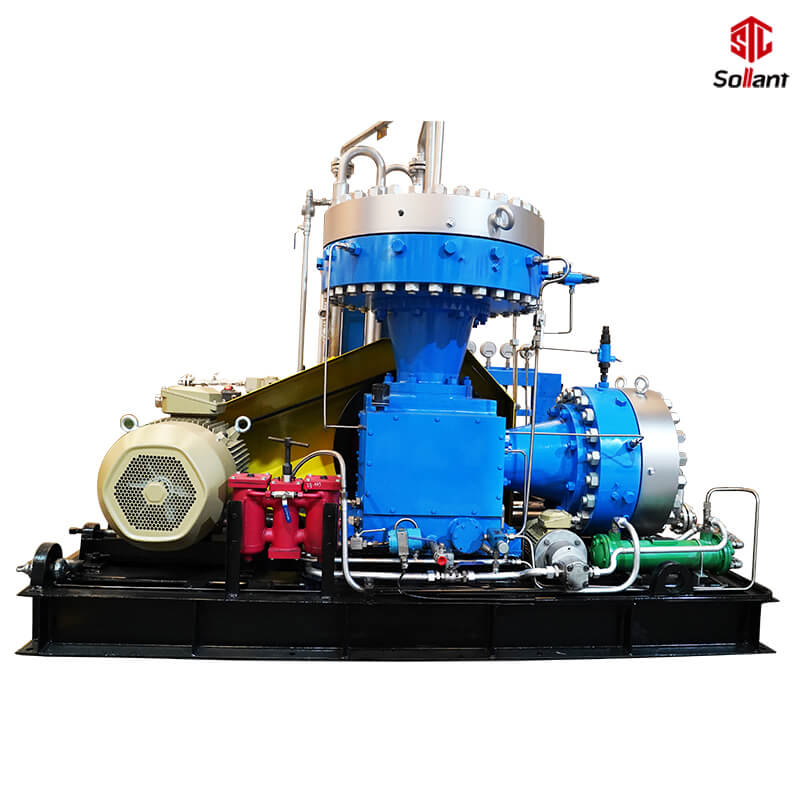
Higher compression ratio is not always better. Although a high compression ratio means stronger gas boosting capability, it also brings a series of challenges and impacts to diaphragm compressors.
Increased power consumption and reduced energy efficiency
Work requirements: Compressing gas to a higher pressure requires more energy input, that is, the diaphragm compressor needs to consume more work. This means that at the same flow rate, achieving a high compression ratio will significantly increase the power consumption of the motor.
Rising temperature: The higher the compression ratio, the more heat the gas generates during the compression process, and the higher the discharge temperature. If the cooling system is inefficient, the excessive temperature will further reduce the compression efficiency, forming a vicious circle.
Energy efficiency loss: Although a high compression ratio can meet specific process requirements, an excessively high compression ratio is often accompanied by reduced energy efficiency. It is necessary to balance the compression ratio and energy efficiency during design to avoid over-compression.
Equipment wear and shortened life
A high compression ratio means that the internal components of the diaphragm compressor are subjected to a greater load, which will lead to faster wear.
Diaphragm fatigue: The diaphragm frequently reciprocates under high pressure differentials. High compression ratios increase the stress on the diaphragm and accelerate material fatigue, thus shortening the life of the diaphragm. Especially when dealing with corrosive gases, high pressure differentials can exacerbate corrosion damage to the diaphragm.
Valve wear: The valve frequently opens and closes under high pressure differentials, which accelerates wear and causes reduced sealing performance or even damage.
Bearing and crankshaft loads: Bearings, crankshafts and other components in the drive mechanism will be subject to greater alternating loads, accelerate wear, and require more frequent maintenance or replacement.
Seal aging: High temperature and high pressure will accelerate the aging of other seals and increase the risk of leakage.
Increased exhaust temperature
This is one of the most direct physical effects of high compression ratios.
Heat generation: Gas compression is an exothermic process. The higher the compression ratio, the tighter the gas molecules are compressed, the more violent the collisions between them, and the more heat is generated.
Equipment impact: Excessively high exhaust temperatures can damage the materials of the diaphragm compressor, especially the diaphragm, valves and lubricating oil. If these components cannot withstand high temperatures, failure may occur.
Process impact: In some processes, excessive exhaust temperature may have an adverse effect on downstream equipment or product quality. For example, when filling flammable gases, strict temperature control is required to prevent safety accidents. Therefore, an effective cooling system is crucial in high compression ratio diaphragm compressors.
Increased vibration and noise
Uneven load: A high compression ratio means greater pressure changes in the compression stroke, resulting in uneven force on the drive mechanism, which in turn produces greater vibration.
Air flow pulsation: The discharge of high-pressure gas is accompanied by stronger air flow pulsation, which also increases noise.
Equipment stability: Continuous strong vibration will not only accelerate equipment wear, but may also affect the stability of surrounding equipment and even affect the plant structure.
Increased safety risks
High-pressure gas itself is potentially dangerous, and high compression ratios further increase safety risks.
Leakage risk: Any tiny sealing defect under high pressure may lead to serious leakage, especially when handling flammable, explosive, and toxic gases. Leakage may cause fire, explosion or poisoning accidents.
Overpressure risk: If the control system fails or the safety valve fails, a high compression ratio may cause system overpressure, causing catastrophic accidents such as explosion.
Component failure: Sudden failure of components caused by fatigue wear may also cause safety problems.
Therefore, for diaphragm compressors with high compression ratios, stricter material selection, more sophisticated manufacturing processes, more complete safety protection systems and more frequent maintenance are required.
How to optimize the compression ratio of diaphragm compressors?
The purpose of optimizing the compression ratio of diaphragm compressors is to maximize their efficiency, extend their life and ensure safe operation while meeting process requirements. This requires comprehensive consideration from multiple aspects such as design, selection, operation and maintenance.
Reasonable determination of the number of stages
This is the most direct and effective way to increase the compression ratio of diaphragm compressors.
Advantages of multi-stage compression: When the required total compression ratio is high, a single-stage compressor is difficult to meet the requirements. By connecting multiple (or multiple cylinders) diaphragm compressors in series to form a multi-stage compression system, the total compression ratio can be decomposed into each stage. The compression ratio of each stage is reduced, which reduces the temperature rise of each stage, making it easier to perform interstage cooling and improve the overall efficiency.
Interstage cooling: In multi-stage compression, the gas temperature will increase after each stage of compression. Before entering the next stage, the gas temperature is reduced by the cooler, which can significantly improve the compression efficiency of the next stage and reduce the final exhaust temperature. This is not only conducive to improving the compression ratio, but also effectively protects the equipment.
Stage selection: The selection of the number of stages needs to be comprehensively balanced according to the required total compression ratio, medium characteristics, cooling capacity and economy. Too many stages will increase equipment investment and maintenance costs, while too few stages may lead to a single-stage compression ratio that is too high and inefficient.
Optimizing diaphragm design and material selection
The diaphragm is the core of the diaphragm compressor, and its optimization is crucial.
High-strength fatigue-resistant materials: Select diaphragm materials with excellent pressure resistance, fatigue resistance, corrosion resistance and high temperature resistance. For example, for high-pressure applications, special metal alloy diaphragms can be considered; for corrosive media, polymers (such as PTFE) or composite diaphragms are required.
Precise diaphragm shape design: Through tools such as finite element analysis (FEA), the curvature, corrugation, thickness distribution, etc. of the diaphragm are optimized to make it deform evenly when under pressure and minimize stress concentration, thereby improving its fatigue resistance and life, and minimizing the dead volume.
Surface treatment technology: Special treatment of the diaphragm surface, such as coating and polishing, can improve its wear resistance and corrosion resistance and extend its service life.
Improve valve efficiency and sealing performance
The performance of the valve directly affects the volumetric efficiency and compression ratio of the compressor.
Optimize valve structure: Use low-resistance, high-flow, and fast-response valve structure design, such as ring valves and plate valves, to reduce the pressure loss of gas passing through the valve.
High-performance valve materials: Select valve sheet materials and sealing rings that are wear-resistant, corrosion-resistant, elastic, and have excellent sealing performance.
Precise processing and assembly: Ensure the processing accuracy and assembly quality of valve components to ensure good sealing and reliable operation.
Regular inspection and maintenance: Regularly check the wear of the valve plate and the aging of the sealing ring, replace the worn parts in time, and ensure the good sealing of the valve.
Improve the cooling system
Effective cooling is essential for high compression ratio diaphragm compressors.
Efficient cooler: Configure interstage coolers and final stage coolers with excellent performance to ensure that the gas can be fully cooled before entering the next stage or before being discharged.
Selection of cooling medium: Select the appropriate cooling medium according to the actual situation, such as water cooling, air cooling or oil cooling.
Optimize cooling water circulation: For water cooling systems, ensure that the cooling water flow is sufficient, the water quality meets the requirements, and regularly clean the dirt in the cooling water circuit.
Heat dissipation design: Optimize the external heat dissipation design of the compressor to ensure that the unit can effectively dissipate heat during operation.
Conclusion
As an important gas compression equipment, the compression ratio of the diaphragm compressor is the core indicator to measure its performance. A deep understanding of the definition, standard range and influencing factors of the compression ratio is of great significance for us to correctly select, efficiently operate and optimize the maintenance of diaphragm compressors.
High compression ratio can meet stringent industrial needs, but it also brings challenges such as increased power consumption, equipment wear, temperature rise and safety risks. Therefore, in practical applications, we cannot blindly pursue too high a compression ratio. Instead, we should comprehensively optimize the performance of diaphragm compressors by reasonably determining the number of stages, optimizing the design of diaphragms and valves, improving the cooling system, minimizing the dead volume, precise control and monitoring, and regular maintenance, etc., on the premise of meeting process requirements, so as to achieve the best balance between energy efficiency, life and safety.
With the continuous development of industrial technology, the demand for high-purity and high-pressure gases is increasing, and the application prospects of diaphragm compressors will be broader. In the future, with the continuous advancement of new materials, new processes, and intelligent control technologies, the compression ratio of diaphragm compressors will be expected to reach a higher level, while maintaining higher efficiency and reliability, providing strong support for industrial production in more fields. Continuous technological innovation and refined management will be the key to promoting the development of the diaphragm compressor industry.
Request a Quick Quote Now

Shanghai Sollant Energy Saving Technology Co., Ltd.
Drawing on our years of experience and expertise in air separation and PSA technologies, we deliver customized solutions tailored to your specific needs.
