
PSA nitrogen generator: analysis of molecular sieve adsorption technology
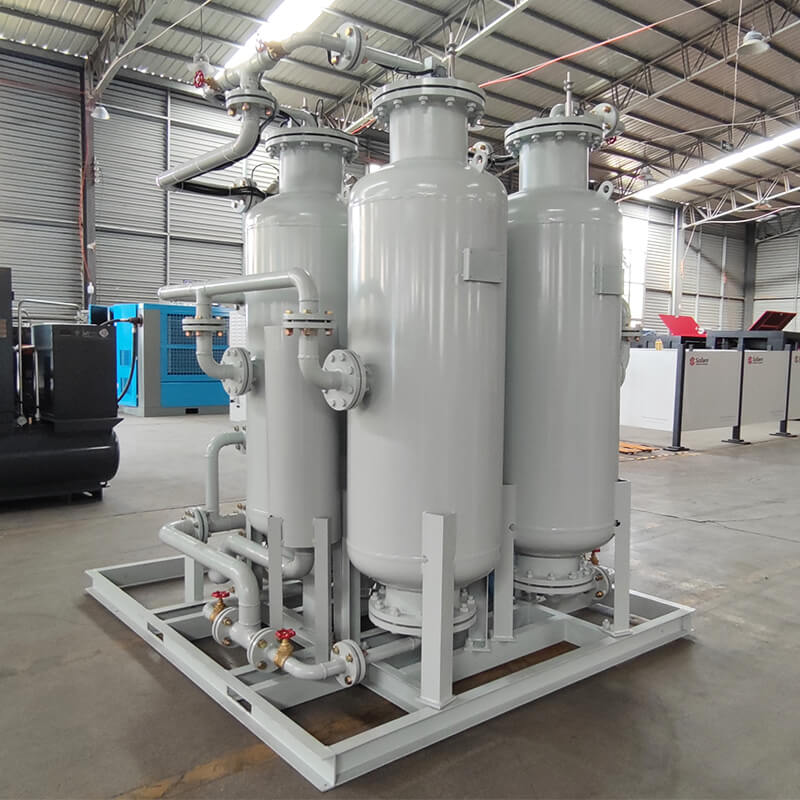
In the grand picture of modern industry, nitrogen plays a pivotal role. With its inert, colorless, odorless and non-toxic characteristics, it is widely used in all walks of life, from packaging gas to ensure the freshness of food, to the indispensable protective atmosphere in semiconductor manufacturing, to the inert medium and fire prevention and explosion extinguishing tool in chemical production. It can be said that without nitrogen, many modern industrial productions will be difficult to proceed.
However, for a long time, industrial nitrogen has mainly relied on traditional deep-cold air separation nitrogen production plants to produce liquid nitrogen on a large scale, and transport it to the demand side by tank trucks, and then transport it by high-pressure gasification. Although this method can provide high-purity nitrogen, it faces many challenges such as high transportation costs, cumbersome logistics management, huge storage and transportation safety risks, and nitrogen loss. In addition, the traditional high-pressure cylinder nitrogen supply method also has the disadvantages of limited gas supply, frequent replacement, and susceptibility to contamination, which is increasingly difficult to meet the modern industry’s demand for nitrogen “instant, on-demand, safe, and economical”.
It is in this context that an innovative on-site nitrogen generation technology, PSA nitrogen generator, came into being and quickly became popular. It completely subverts the traditional nitrogen supply mode by cleverly using air as raw material to achieve nitrogen and oxygen separation at room temperature and low pressure. With its significant economic benefits, excellent operation convenience, high safety and environmental friendliness, PSA nitrogen generator is becoming an ideal choice for more and more companies to improve production efficiency, reduce operating costs and ensure production safety.
1.Working principle of PSA nitrogen generator: exquisite cycle and system composition of pressure swing adsorption
The core of PSA nitrogen generator’s ability to efficiently and continuously extract high-purity nitrogen from the air lies in a set of ingenious and precise pressure swing adsorption (PSA) circulation system. This is not just a simple adsorption process, but also a highly integrated and automated complex project.
1.1 Air pretreatment system: purity is the cornerstone of efficiency
Before the air enters the core adsorption tower of the PSA nitrogen generator, strict and comprehensive air pretreatment is a crucial first step. This system is designed to remove all impurities in the air, ensuring that the performance and life of the molecular sieve are not affected.
Air compressor: the source of power. This is the “heart” of the entire system, responsible for compressing the air in the atmosphere to a working pressure of 0.6-0.8 MPa (or higher). Common types include piston type, screw type, etc., and factors such as gas production, energy consumption, and noise should be considered when choosing. A stable and clean gas source is the basis for subsequent separation.
Gas storage tank: stabilizes air pressure and buffers pulses. The compressed air first enters the gas storage tank. Its main function is to stabilize the air pressure, absorb the air flow pulses that may be generated by the compressor, ensure that the air flow entering the subsequent processing equipment is smooth and uniform, and provide the necessary buffer capacity for the PSA system to cope with instantaneous air volume fluctuations.
Precision filter group: filter layer by layer, no trace of particles. Usually includes three or more levels of filters with different filtration precisities:
Main line filter: preliminarily removes large particles of dust, liquid water and oil.
Oil-water separator/oil removal filter: specially designed for efficient separation of oil mist and liquid oil droplets carried in compressed air. Oil is extremely harmful to molecular sieves. It will clog the molecular sieve pores, causing it to lose its adsorption capacity and causing the adsorbent to be scrapped.
Fine filter/ultra-fine filter: removes finer particles to ensure the cleanliness of the air entering the dryer. The filtration accuracy is usually 0.01 microns.
Freeze dryer: low-temperature dehumidification to prevent water damage. The air contains a lot of water vapor. The freeze dryer condenses water vapor into liquid water and discharges it by cooling the compressed air below the dew point temperature. This can effectively reduce the water content of the air and prevent water vapor from condensing during the subsequent adsorption process, thereby protecting the molecular sieve from being saturated with water and extending its life. Moisture will reduce the molecular sieve’s adsorption efficiency for oxygen and affect the purity of nitrogen.
Activated carbon filter (optional): deep oil removal. For systems with extremely high requirements for nitrogen purity or oil-lubricated compressors, an additional activated carbon filter will be configured. Activated carbon can effectively absorb residual oil vapor and odor in the air to ensure that the air entering the molecular sieve reaches an “oil-free” state.
1.2 Adsorption tower and molecular sieve bed: core separation zone
The pre-treated clean compressed air enters the core part of the PSA nitrogen generator – the adsorption tower. The PSA nitrogen generator usually consists of two (or more) parallel adsorption towers, each of which is filled with a specific adsorbent – carbon molecular sieve (CMS).
Adsorption tower structure: The adsorption tower is usually a vertical cylindrical pressure vessel with a gas distributor inside to ensure that the airflow passes through the molecular sieve bed evenly to avoid short-circuit effect. There is a support structure under the tower body to ensure stable filling of the molecular sieve.
Molecular sieve filling: The carbon molecular sieve is filled in the tower at a certain density to form an adsorption bed. The filling amount and filling method of the molecular sieve are crucial to the adsorption effect.
1.3 Detailed explanation of PSA pressure swing adsorption cycle: the art of dynamic balance
PSA technology cleverly uses the principle of “pressurized adsorption and reduced pressure desorption” to achieve continuous nitrogen production through the alternating operation of two adsorption towers. A complete PSA cycle usually includes the following four stages:
Adsorption stage:
Pretreated compressed air enters Tower A through the air inlet valve.
At the set working pressure (such as 0.6-0.8 MPa), oxygen (O2), carbon dioxide (CO2), water vapor (H2O) and other trace impurities in the air are selectively adsorbed by the carbon molecular sieve, with fast adsorption speed and large adsorption capacity.
Due to the weak adsorption effect of nitrogen (N2) on molecular sieves and slow diffusion rate, nitrogen molecules can penetrate the molecular sieve bed and flow out from the top of Tower A as product gas into the nitrogen storage tank.
This stage lasts from a few seconds to tens of seconds, depending on the design of the nitrogen generator and the required nitrogen purity.
Equalization stage:
When Tower A is about to reach adsorption saturation, stop the air intake of Tower A.
At this time, there is still a certain pressure and residual nitrogen inside Tower A. In order to save energy and recover this part of high-pressure nitrogen, Tower A will perform pressure equalization operation with Tower B, which is in the process of desorption and ready to enter the adsorption stage.
Through the pressure equalization valve, part of the high-pressure gas (rich in nitrogen) in Tower A is released to Tower B, so that the pressure of the two towers tends to balance. This not only recovers part of the nitrogen, but also provides pre-pressure for the subsequent adsorption of Tower B, reducing the energy consumption of the next cycle.
Desorption/Regeneration Phase (Regeneration/Depressurization):
After the pressure equalization is completed, Tower A quickly reduces the pressure in the tower to normal pressure (atmospheric pressure) through the exhaust valve, and even performs vacuum suction (VPSA).
With the sudden drop in pressure, impurities such as oxygen, carbon dioxide, and water vapor previously adsorbed by the molecular sieve lose their adsorption force and are resolved from the surface of the molecular sieve.
These resolved waste gases are discharged from the system through the exhaust port, usually with a slight noise.
In order to completely remove impurities and optimize the regeneration effect of the molecular sieve, part of the pure finished nitrogen will be refluxed from the other tower (Tower B, which is currently adsorbing) to the bottom of Tower A through the backflush valve for backflush. The backflush airflow helps to completely purge the resolved impurities from the molecular sieve pores, and “clean” and activate the molecular sieve to restore it to the optimal adsorption state.
Repressurization:
After regeneration is completed, Tower A is ready to enter the next adsorption cycle. At this time, the air inlet valve of Tower A is opened again, and compressed air enters Tower A again, gradually increasing its pressure to the working pressure.
At this stage, the molecular sieve in Tower A begins to adsorb a small amount of oxygen and impurities, and prepares for the subsequent adsorption and nitrogen production.
When the pressure of Tower A reaches the set value, it will enter the adsorption stage again, exchanging roles with Tower B, and repeating this cycle to achieve a continuous and stable supply of nitrogen.
1.4 Automatic control system: the “brain” of precise operation
The operation of the entire PSA nitrogen generator is managed by an advanced PLC (programmable logic controller) automatic control system.
Core function: accurately control the opening and closing timing of all pneumatic valves to ensure accurate switching of various stages such as adsorption, pressure equalization, desorption, and pressure increase.
Monitoring and adjustment: real-time monitoring of key parameters such as system pressure, flow, and nitrogen purity. When the purity does not meet the standard, it will automatically alarm and switch to emptying mode until the purity returns to normal.
Human-machine interface: usually equipped with a touch screen or host computer system, providing an intuitive operation interface, convenient for users to set parameters, query status and diagnose faults.
Interlocking protection: Linked with air compressors, cold dryers and other equipment, when any link fails, the system can automatically shut down for protection to ensure the safe operation of the equipment.
Through the close cooperation and efficient coordination of the above parts, the PSA nitrogen generator can efficiently convert the air we breathe daily into high-purity industrial nitrogen to meet the stringent needs of different industries.
2.Molecular sieve: The “magic” material of PSA nitrogen generator – the microscopic world of carbon molecular sieve
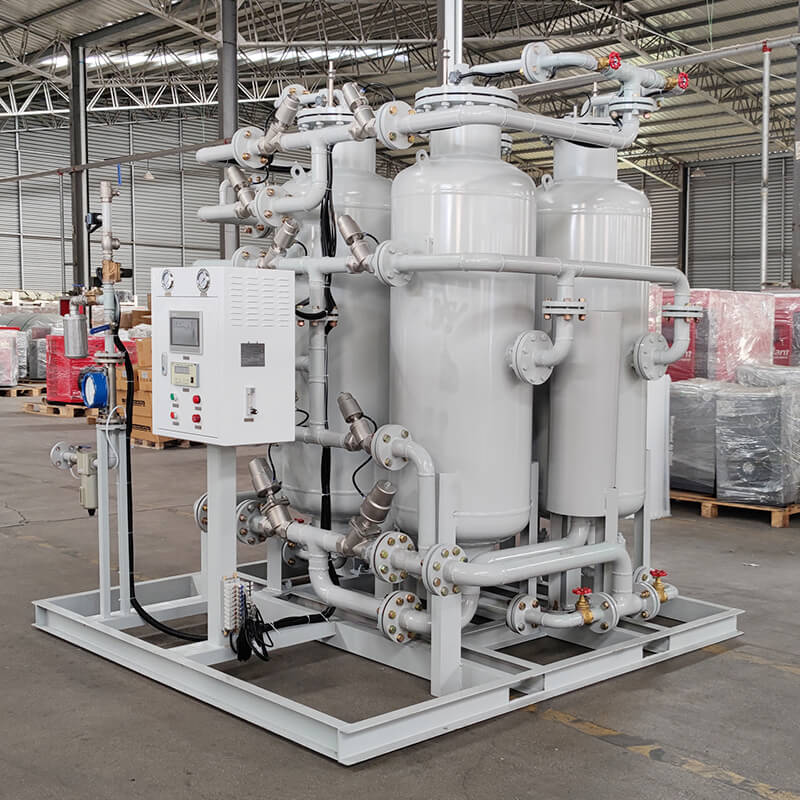
In the core work of PSA nitrogen generator, molecular sieve is undoubtedly the key role that performs the “magic”. It is not an ordinary filter material, but a special substance with highly fine and selective adsorption ability. In the field of PSA nitrogen production, we usually refer to carbon molecular sieve (Carbon Molecular Sieve, CMS).
2.1 Definition of molecular sieve:
Molecular sieve (Molecular Sieve) broadly refers to a class of substances with uniform microporous structure, whose pore size is similar to the molecular diameter, so it can selectively separate gas mixtures according to the size, shape and polarity of molecules like a sieve.
2.2 Microstructure and formation mechanism of carbon molecular sieve:
The “magic” of carbon molecular sieve comes from its unique microstructure. It usually exists in the form of black cylindrical or spherical particles, filled with countless evenly distributed micropores.
Structural features: The skeleton of carbon molecular sieve is a honeycomb or layered structure composed of carbon atoms, forming a large number of regular, nano-scale micropores inside it. The size of these micropores is very precise, usually between 0.29nm and 0.4nm, which is close to the molecular diameter of oxygen (dynamic diameter of about 0.29nm) and nitrogen (dynamic diameter of about 0.30nm), the main components of air.
Manufacturing process: The preparation of carbon molecular sieve is a precise carbonization and activation process.
Raw material selection: Carbon-rich organic materials with specific structures are usually selected, such as asphalt, coal, or specific polymers.
Carbonization: The raw materials are thermally decomposed at high temperatures (several hundred degrees Celsius) in an oxygen-free or inert atmosphere to remove volatile components and form a carbon skeleton. This step forms the precursor of the pore structure.
Activation: The carbonized material is further treated at high temperature in a controlled oxidizing atmosphere (such as water vapor, carbon dioxide or oxygen). This step is the key to forming and precisely adjusting the microporous structure. By controlling the activation temperature, time, and type and concentration of the activator, the pore size distribution and surface chemical properties of the molecular sieve can be precisely adjusted to enable it to exhibit ideal selective adsorption capacity for oxygen and nitrogen.
Micropore pore size distribution: Excellent carbon molecular sieves have a very narrow and concentrated pore size distribution. This means that the vast majority of pores are concentrated in a very narrow size range, thus ensuring its high selectivity for different gas molecules.
2.3 Adsorption mechanism of carbon molecular sieves: speed difference determines separation
Unlike zeolite molecular sieves, which mainly adsorb based on molecular size and polarity, the selective separation of nitrogen and oxygen by carbon molecular sieves mainly depends on the difference in adsorption kinetics rather than the difference in adsorption equilibrium capacity.
Kinetic diameter and diffusion rate:
The diameters of oxygen molecules (kinetic diameter of about 0.29nm) and nitrogen molecules (kinetic diameter of about 0.30nm) are very close.
However, oxygen molecules have a faster diffusion rate in the micropores of carbon molecular sieves. It can be understood figuratively that oxygen molecules are slightly smaller in size and more flexible in posture, and can shuttle faster through the narrow channels of the molecular sieve to reach the adsorption site. Although nitrogen molecules are only slightly larger, their diffusion resistance in these nanoscale channels is significantly increased, resulting in their entry and exit speeds being much slower than oxygen.
Selective adsorption (preferential adsorption):
When compressed air enters the adsorption tower, oxygen molecules enter the micropores of the carbon molecular sieve at a faster rate and are adsorbed. In a short adsorption cycle, the molecular sieve will adsorb most of the oxygen, while the nitrogen molecules, due to their slow diffusion rate, have not yet entered the molecular sieve channels and directly flow out through the molecular sieve bed, thereby achieving the separation of nitrogen and oxygen.
This separation is based on the difference in adsorption rate, not the difference in adsorption amount at equilibrium. At equilibrium, the amount of nitrogen adsorbed by carbon molecular sieves may be similar to that of oxygen, or even slightly higher. However, PSA technology utilizes the speed difference in the dynamic process.
Weak adsorption and renewability:
The adsorption of oxygen and nitrogen by carbon molecular sieves belongs to physical adsorption, that is, adsorption caused by intermolecular forces (van der Waals forces). This adsorption force is weak and the adsorption process is reversible.
When the pressure is reduced, the adsorbed gas molecules (mainly oxygen) can be easily desorbed (analyzed), so that the molecular sieve can restore its original adsorption capacity, thereby achieving repeated recycling, which is an important guarantee for the economic efficiency of PSA technology.
2.4 Key parameters and challenges affecting the performance of carbon molecular sieves:
The performance of carbon molecular sieves directly determines the nitrogen production efficiency, purity, energy consumption and operating stability of PSA nitrogen generators.
Pore size distribution uniformity and accuracy: the most critical parameters. If the pore size is too large, the selectivity is poor; if the pore size is too small, the adsorption capacity is low and the diffusion resistance is large.
Adsorption capacity and selectivity: The larger the adsorption capacity for oxygen, the better, and the smaller the adsorption capacity for nitrogen, the better. The greater the difference between the two, the better the separation effect.
Mechanical strength: Molecular sieve particles need to maintain structural stability under frequent pressure changes and airflow impacts, without breaking or pulverizing, otherwise it will affect the uniformity of airflow and even block the pipeline.
Specific surface area and bulk density: affect adsorption capacity and bed resistance.
Thermal stability: can withstand temperature changes within a certain range.
Water resistance and oil resistance: Despite pretreatment, the tolerance of molecular sieves to small amounts of water vapor and oil gas is also important. Long-term contact with oil pollution will cause molecular sieve poisoning and irreversible decrease in adsorption capacity.
Service life: Excellent carbon molecular sieves can usually be used for 5-10 years, but the actual life is affected by factors such as air quality, operating conditions, and maintenance conditions.
It is precisely with this special microstructure and exquisite adsorption kinetics that carbon molecular sieves have become an irreplaceable “magic” material in PSA nitrogen generators, efficiently separating nitrogen from the air to meet various needs of industrial production.
3.The core principle of molecular sieve adsorption technology: scientific analysis of the deep mechanism of nitrogen and oxygen separation
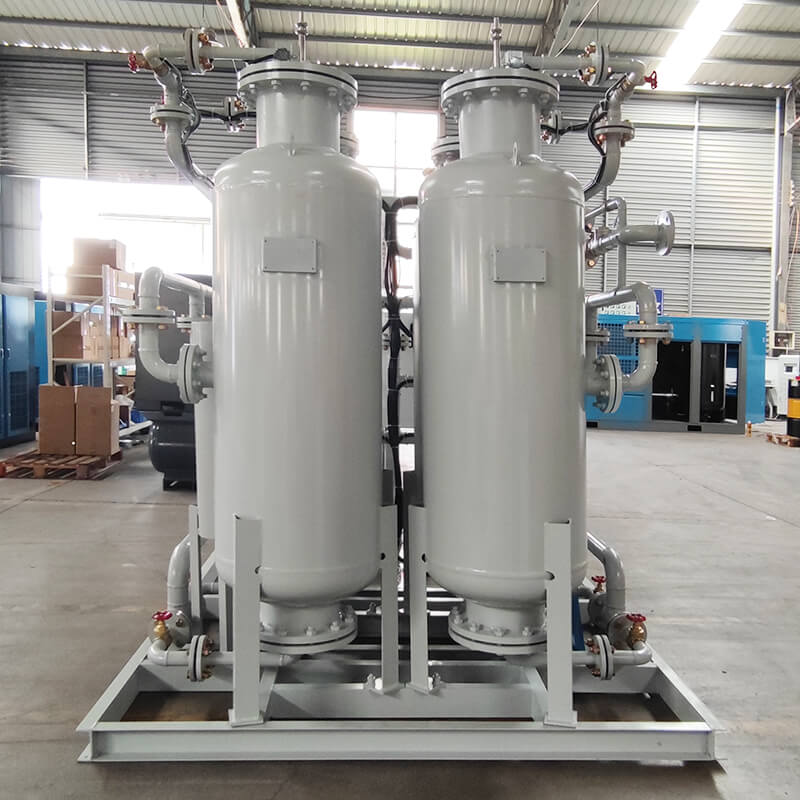
To understand how the PSA nitrogen generator works, it is not only necessary to understand its surface operation cycle, but also to explore the deep physical and chemical principles behind the molecular sieve adsorption technology. This includes gas adsorption theory, diffusion mechanism and the driving force of pressure swing adsorption.
3.1 Theoretical basis of gas adsorption:
Physical adsorption (Physisorption): In PSA technology, the interaction between gas molecules and molecular sieves belongs to physical adsorption. This is a weak force, mainly caused by van der Waals forces (such as London dispersion forces, dipole-dipole forces, etc.). Physical adsorption is reversible, and the adsorption process is usually exothermic. When the temperature increases or the pressure decreases, the adsorbed gas molecules will desorb.
Adsorption equilibrium: At a given temperature, when the gas adsorption and desorption rates are equal, the adsorption equilibrium is reached. The adsorption equilibrium amount usually increases with increasing pressure and decreases with increasing temperature.
Adsorption Isotherm:
The adsorption isotherm describes the relationship between the amount of gas (or concentration) adsorbed per unit mass of the adsorbent and the equilibrium partial pressure (or concentration) of the gas at a constant temperature.
For the application of carbon molecular sieves in air, we mainly focus on the adsorption isotherms of oxygen and nitrogen. Although the equilibrium adsorption amount of nitrogen may be slightly higher than that of oxygen in certain pressure ranges, PSA nitrogen generator does not use this equilibrium amount difference.
Adsorption Kinetics:
Adsorption kinetics studies the rate at which gas molecules diffuse from the gas phase to the surface and interior of the adsorbent and are adsorbed.
This is the key to the separation of nitrogen and oxygen in the PSA nitrogen generator. The microporous structure of carbon molecular sieves makes the diffusion rate of oxygen molecules in the pores (D_O2) much higher than that of nitrogen molecules (D_N2), that is, D_O2 >> D_N2.
This huge difference in diffusion rate allows most oxygen molecules to quickly enter and occupy the adsorption sites of the molecular sieve during a short period of pressurized adsorption, while most nitrogen molecules do not have time to enter the molecular sieve due to the large diffusion resistance, and thus directly pass through the adsorption tower as product gas.
3.2 Microscopic mechanism of molecular sieve adsorption: size exclusion and kinetic control
Aperture selectivity (Steric Hindrance): The pore size of the carbon molecular sieve is very cleverly designed, and its size is close to the diameter of oxygen and nitrogen molecules, but slightly different. This precise pore size can produce different “obstruction” effects on molecules of different sizes. Oxygen molecules can enter relatively smoothly, while nitrogen molecules will encounter greater diffusion resistance.
Molecular diffusion and penetration:
When compressed air flows through the molecular sieve bed, the oxygen and nitrogen molecules in the air are trying to penetrate the outer boundary of the molecular sieve particles and diffuse toward the center along the micropores inside them.
Because the oxygen molecule diffuses faster, it can enter the adsorption site inside the molecular sieve more deeply during the adsorption cycle.
Although nitrogen molecules may eventually be adsorbed, most of them have already passed through the adsorption tower with the airflow to form nitrogen products before they have time to diffuse to the adsorption sites during the adsorption cycle.
Adsorption sites and saturation:
There are a large number of adsorption sites on the surface and internal pore walls of the molecular sieve.
During the adsorption stage, oxygen molecules quickly occupy these sites until they are partially saturated. Once the adsorption sites are occupied by oxygen, it is difficult for subsequent oxygen molecules to enter again, resulting in penetration. This is why the adsorption cycle cannot be infinitely long and needs to be regenerated in time.
3.3 Driving force and cycle optimization of pressure swing adsorption:
Pressure change:
High-pressure adsorption: Increasing the pressure increases the partial pressure of gas molecules. According to Henry’s law, the solubility of gas in the adsorbent (i.e., adsorption amount) increases. At the same time, high pressure also provides a greater driving force to promote the diffusion of gas molecules into the molecular sieve.
Low-pressure desorption: Reducing the pressure, the partial pressure of gas molecules decreases, the adsorption equilibrium moves in the direction of desorption, and the adsorbed gas molecules are parsed out of the molecular sieve. This “pressure difference” is the fundamental driving force of PSA technology.
Energy efficiency and pressure equalization:
In order to improve energy efficiency, a pressure equalization step is introduced in the PSA nitrogen generator cycle. Before the adsorption tower is desorbed, the remaining high-pressure gas is released to the adsorption tower to be pressurized. This part of the gas can not only recover part of the energy, but also pre-increase the pressure of the adsorption tower to be adsorbed, reducing the energy consumption of subsequent pressure increase.
In addition, the backwash gas (usually finished nitrogen) during regeneration can also effectively remove the adsorbed impurities and help the molecular sieve to reach a better state before the next adsorption.
Optimization of cycle time:
The working cycle of the PSA nitrogen generator is usually carefully optimized. If the cycle is too short, it will cause energy waste and valve wear; if the cycle is too long, it may cause the molecular sieve to be saturated with adsorption, oxygen penetration, and affect the purity of nitrogen.
An excellent PSA nitrogen generator system can dynamically adjust the cycle time according to the actual working conditions (such as ambient temperature, required nitrogen purity, flow rate, etc.) to achieve the best balance between energy consumption and purity.
Trade-off between gas purity and recovery rate:
In PSA operation, there is a certain restrictive relationship between gas purity and recovery rate (the ratio of nitrogen production to total intake gas volume).
To obtain higher purity nitrogen, longer adsorption time or more thorough regeneration may be required, which usually leads to lower recovery rate.
Conversely, improving recovery rate may mean a slight decrease in nitrogen purity.
PSA nitrogen generator achieves the best balance between the two through precise valve switching, tower design and molecular sieve selection to meet users’ needs for specific purity nitrogen.
In summary, PSA nitrogen generator is not a simple “air filter”, but a high-tech system based on the difference in molecular sieve adsorption kinetics and precise control of gas separation process through pressure cycle. A deep understanding of these core scientific principles is the key to optimizing PSA system design and improving its performance and reliability.
4.Advantages and Challenges of Molecular Sieve Adsorption Technology: Objectively Evaluate Its Application Prospects
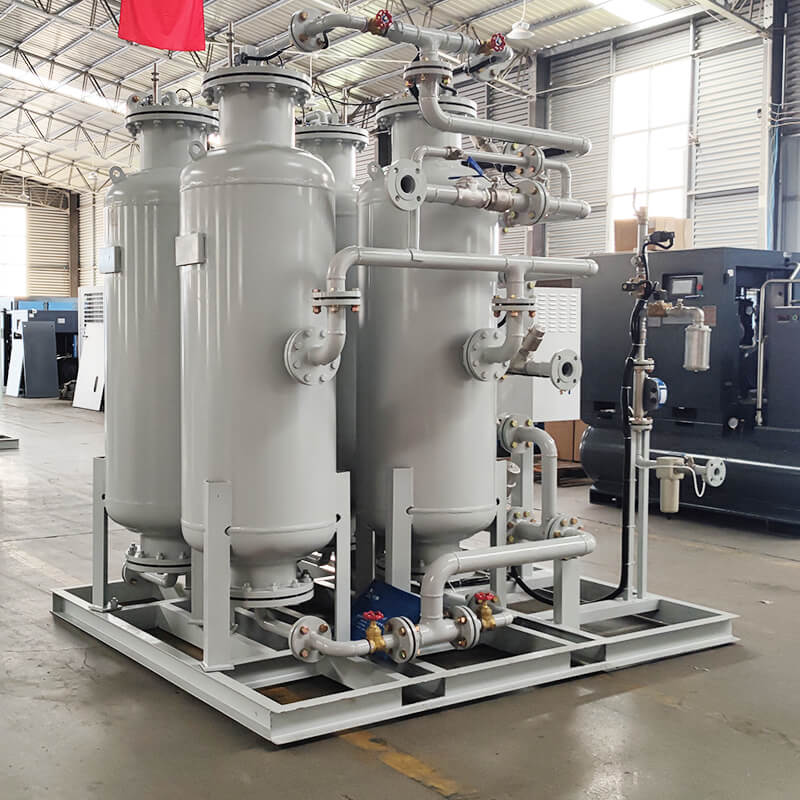
Like any technology, molecular sieve adsorption technology brings about great changes, but also comes with its inherent advantages and challenges. A comprehensive review of these aspects will help us more objectively evaluate its potential and limitations in industrial applications.
4.1 In-depth Analysis of Core Advantages:
Excellent economic benefits: This is one of the most attractive features of PSA nitrogen generators.
Low operating costs: Compared with traditional bottled gas or liquid nitrogen, the main operating costs of PSA nitrogen generators are electricity (for air compressors) and a small amount of maintenance costs. It saves the high cost of purchasing liquid nitrogen, transportation costs, cylinder rental and manual handling costs. In the long run, its total cost of ownership (TCO) is significantly reduced. Many companies can recover their investment after 1-2 years of operation.
No additional storage costs: On-site nitrogen production does not require a large amount of storage space, nor does it require the construction or maintenance of cryogenic storage tanks.
Production on demand to avoid waste: Nitrogen is used as soon as it is produced, avoiding the loss of liquid nitrogen volatilization and the waste of residual gas in cylinders.
Ease of operation and maintenance:
High automation: Modern PSA nitrogen generators generally use PLC intelligent control systems to achieve one-button start and stop, automatic operation, fault self-diagnosis and alarm, greatly reducing the need for manual intervention.
Unattended operation: It can be integrated into the DCS (distributed control system) or SCADA (supervisory control and data acquisition) system to achieve remote monitoring and management, and can be unattended 24 hours a day.
4.2 Challenges and limitations:
Upper limit of nitrogen purity:
Although PSA nitrogen generators can provide 99.9% or even higher nitrogen purity, PSA technology is usually not directly able to meet ultra-high purity applications such as semiconductors and special optical fibers that require nitrogen purity of 99.999% (5 nines) or higher (6 nines). Such applications still need to rely on cryogenic air separation or other more sophisticated purification technologies.
The nitrogen produced by PSA technology usually contains a small amount of oxygen and trace amounts of argon (about 0.93% in air), while cryogenic air separation can separate higher purity nitrogen and liquid oxygen and liquid argon.
Strict requirements for air pretreatment:
This is one of the main pain points of PSA nitrogen generators. Molecular sieves are very sensitive to impurities such as oil, water, and dust. If the pretreatment system is improperly maintained or the selection is inappropriate, causing oily and water-containing air to enter the adsorption tower, it will irreversibly contaminate the molecular sieve, causing its adsorption capacity to decrease or even completely fail, resulting in reduced nitrogen purity, insufficient gas production, and even the need to replace expensive molecular sieves, greatly increasing operating costs.
Users must strictly follow the requirements to regularly replace filter elements, maintain cold dryers, etc. to ensure the quality of air entering the adsorption tower.
The service life and replacement cost of molecular sieves:
Although the molecular sieve is designed to have a long life, its performance will slowly decay over time. Under harsh working conditions or improper pretreatment, the decay rate will accelerate.
Once the performance of the molecular sieve is seriously reduced, it needs to be replaced, and the molecular sieve is one of the more expensive consumables in the PSA nitrogen generator.
Noise problem:
During the operation of the PSA nitrogen generator, especially in the emptying and desorption stage, rapid pressure relief will produce a certain amount of exhaust noise. Although manufacturers will take noise reduction measures (such as silencers), it still needs to be considered in noise-sensitive environments.
Air compressors are also a major noise source.
Dew point limit:
The dew point of nitrogen produced by PSA nitrogen generators is usually around -40℃ to -60℃. For some applications with extremely high requirements for gas dryness (such as precision electronic component storage, certain chemical reactions), additional precision drying equipment (such as adsorption dryers) may be required to further dry the nitrogen to achieve a lower dew point (such as -70℃ or even lower).
Conclusion
As an innovative on-site nitrogen generator based on molecular sieve adsorption technology, PSA nitrogen generator has fundamentally changed the supply mode of industrial nitrogen. It is no longer a simple cost-saving tool, but an important part of the transformation of industrial production automation, intelligence and greening. By deeply analyzing every exquisite link from air pretreatment to adsorption regeneration to intelligent control, as well as the unique kinetic mechanism of carbon molecular sieve to achieve nitrogen and oxygen separation at the microscopic level, we can get a glimpse of the rigorous scientific principles and excellent engineering wisdom behind this technology.
Although PSA nitrogen generators have certain challenges in terms of ultra-high purity requirements and air pretreatment maintenance, their outstanding advantages in terms of economy, ease of operation, environmental friendliness and safety make them an ideal choice for most industrial application scenarios. From food preservation to electronic manufacturing, from chemical safety to laser cutting, PSA nitrogen generators are providing a stable and pure nitrogen supply to all walks of life with their efficient and reliable performance, greatly improving production efficiency, reducing operating costs, and contributing to the sustainable development of enterprises.
Looking to the future, with the continuous advancement of new material science and intelligent control technology, PSA nitrogen generators will develop in a more efficient, energy-saving, intelligent and compact direction, and their application range will be further expanded. It can be foreseen that PSA nitrogen generators will continue to play a key role in the global industrial field, ushering in a new era of industrial nitrogen and jointly building a more efficient, safe and green production environment.
Request a Quick Quote Now
Shanghai Sollant Energy Saving Technology Co., Ltd.
Drawing on our years of experience and expertise in air separation and PSA technologies, we deliver customized solutions tailored to your specific needs.
