
Oilfield gas compressor: the core power and future challenges in oil well development
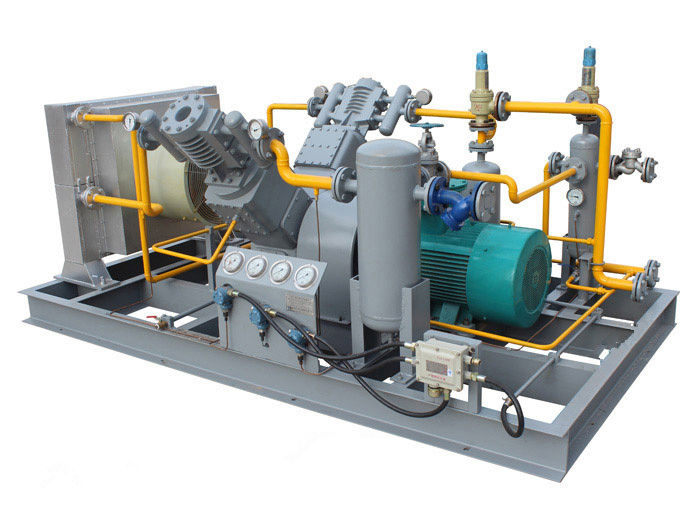
In the entire life cycle of oil and gas development, the treatment and utilization of oilfield gas (associated gas) is a crucial link. As the name suggests, associated gas is natural gas extracted from the ground at the same time as crude oil. It has a complex composition and often contains alkanes such as methane, ethane, and propane, as well as non-hydrocarbon components such as carbon dioxide and hydrogen sulfide. Historically, due to the lack of effective recycling methods, a large amount of associated gas was directly burned and discharged (flared), which not only caused a huge waste of precious resources, but also produced a large amount of greenhouse gases and other pollutants, causing a serious burden on the environment.
Oilfield gas compressors came into being and quickly developed into the “heart” equipment in the surface gathering and processing system of oil and gas fields. It is no longer just a simple boosting tool, but a core power that integrates complex technologies and shoulders multiple missions. From the early exploitation of oil wells to the later stable production, from the collection and utilization of associated gas to the long-distance transportation of natural gas, oilfield gas compressors play an irreplaceable key role. Every time it operates, it carries the expectation of converting underground treasures into clean energy, minimizing environmental load, and maximizing economic benefits.

1.Working principle of oilfield gas compressor
Oilfield gas compressors are indispensable equipment in oilfield exploitation. They are mainly used to compress natural gas in oil wells for transportation, storage or further processing. The working principle of gas compressors is similar to that of general gas compression equipment, but their structure and functions are optimized according to the special needs of oil fields. The following is the working principle of oilfield gas compressors, which is divided into several key points for explanation.
(1). Gas suction and compression
The core function of oilfield gas compressors is to compress low-pressure natural gas to a higher pressure by sucking it in. The first step in this process is gas suction. When natural gas from the oil well enters the gas compressor through the pipeline, the intake valve in the compressor opens to allow gas to enter the cylinder or compression chamber. The working principle of the compressor is based on the physical principle of gas compression and volume reduction.
When the gas enters the piston chamber or screw chamber of the compressor, the piston or screw compresses the gas through mechanical movement. By continuously reducing the volume of the gas, the pressure of the gas increases. This process relies on the movement of mechanical parts such as pistons, screws, rotors or impellers to reduce the volume of the gas and thus increase the pressure of the gas.
(2). Temperature changes during compression
Temperature is a very important factor in the gas compression process. According to the ideal gas law, during the compression process, the volume of gas decreases, the movement of gas molecules intensifies, and heat is generated, causing the gas temperature to rise. In order to avoid excessive temperature causing equipment damage or changes in gas properties, oilfield gas compressors are usually equipped with a cooling system.
The cooling system will perform heat exchange at different stages of the compressor, and remove the heat generated during the compression process through liquid cooling or air cooling to ensure that the temperature of the gas remains within a safe range. In addition, gas compressors are often equipped with a temperature control system to automatically adjust the flow rate and cooling effect of the coolant to ensure the efficient operation of the compressor.
(3). Gas discharge
After the gas is compressed to a predetermined pressure, the exhaust valve of the gas compressor will automatically open and discharge the high-pressure gas to the pipeline system of the oilfield. Through a series of pipelines, the gas will be transported to storage tanks, processing equipment or other production links for the oilfield.
The key to this process is to ensure that the gas can be discharged smoothly under high pressure to avoid gas waste or problems during transportation. The exhaust valve and outlet pipeline of the compressor must be designed to withstand high-pressure gas to avoid the risk of leakage or explosion.
2.The role of oilfield gas compressors in oil well development
The role of oilfield gas compressors in oil well development is multi-dimensional. It is not only a tool for achieving efficient energy utilization, but also an important guarantee for supporting the stable production and increase of oil and gas fields and achieving green development.
2.1 Enhanced Oil Recovery (EOR): The “Lifeline” of Oil Fields
As oil field development enters the middle and late stages, the formation energy gradually depletes and crude oil production naturally decreases. At this time, various EOR technologies are used to “awaken” the residual oil reservoirs underground and extend the life of the oil field, which has become the focus of oil and gas companies. Oilfield gas compressors play a pivotal role in this process.
2.2 Oil and gas gathering and processing: effective transformation of resources
In the process of oil field development, the effective separation, gathering and processing of the oil, gas and water mixture extracted from the underground is the prerequisite for subsequent refining and utilization. Compressors are also indispensable in this link.
Associated gas recovery and utilization: a green practice of turning waste into treasure
In the past, associated gas was often regarded as “waste gas” and directly vented through the flare, which not only wasted precious energy, but also caused serious environmental pollution. Today, with increasingly stringent environmental regulations and increasing awareness of resource conservation, the recovery and utilization of associated gas has become a “must-have” for oil and gas fields.
Recovery process: The associated gas separated from the oil-water separator, three-phase separator and other equipment usually has a low pressure and cannot be directly transported. At this time, the oilfield gas compressor pressurizes these low-pressure associated gases to reach the conditions of transportation pressure (entering the natural gas pipeline network) or further processing (such as desulfurization, dehydration, liquefaction, production of liquefied petroleum gas LPG, power generation, etc.).
Utilization method: The pressurized associated gas can be used as fuel to directly drive compressors and generators for production and life in the oil field; it can also be transported to cities or industrial users through long-distance natural gas pipelines; or liquefied natural gas (LNG) can be produced through low-temperature liquefaction technology for easy storage and transportation.
The effective recycling of associated gas has greatly improved the comprehensive economic benefits of oil and gas fields and minimized the environmental footprint.
Transmission pressurization: the beating of arteries
Natural gas often needs to be transported over long distances of hundreds or even thousands of kilometers from the production wellhead to the end user. Due to the friction of the inner wall of the pipeline and the pressure drop along the way, the pressure of natural gas will gradually decrease. In order to ensure the flow rate and efficiency of transportation, it is necessary to set up gas compressor stations along the way to re-pressurize the natural gas through large centrifugal or axial compressors. These compressors are the “heart” of the natural gas pipeline, ensuring the continuous beating of the natural gas artery.
2.3 Environmental protection and safety: the unity of responsibility and benefit
In modern oil and gas development, oilfield gas compressors are not only a guarantee of production efficiency, but also an important carrier of environmental protection and safe production.
(1) Reducing greenhouse gas emissions: a positive contribution to climate change
Methane (CH4) is one of the main greenhouse gases, and its greenhouse effect is dozens of times that of carbon dioxide. Flaring is one of the main sources of methane emissions in oil and gas fields. By effectively recovering associated gas and converting it into commodities or fuels using compressors, methane emissions directly into the atmosphere can be significantly reduced, making a positive contribution to addressing global climate change. This is not only in line with the global environmental protection trend, but also wins the company a “green” reputation.
(2) Reduce environmental pollution: Improve the working environment
In addition to greenhouse gases, flaring also produces harmful pollutants such as sulfides, nitrogen oxides, and particulate matter, which affect the surrounding air quality and may cause noise pollution and light pollution. By recovering associated gas through compressors, flaring can be effectively reduced, thereby reducing the emission of these pollutants, improving the oilfield working environment, and reducing the impact on the surrounding ecosystem and residents’ health.
(3) Safety production: protection under high pressure
Oilfield gases are mostly flammable and explosive substances, and operating under high pressure is potentially dangerous. Oilfield gas compressors must follow strict safety regulations during design, manufacturing, installation and operation, and be equipped with complete safety systems such as explosion protection, fire protection, overpressure protection, and leakage monitoring. The stable operation of the compressor is crucial to preventing gas leakage and explosion accidents, and is a key link in protecting the lives and property of oilfield workers.
3.Challenges faced by oilfield gas compressors
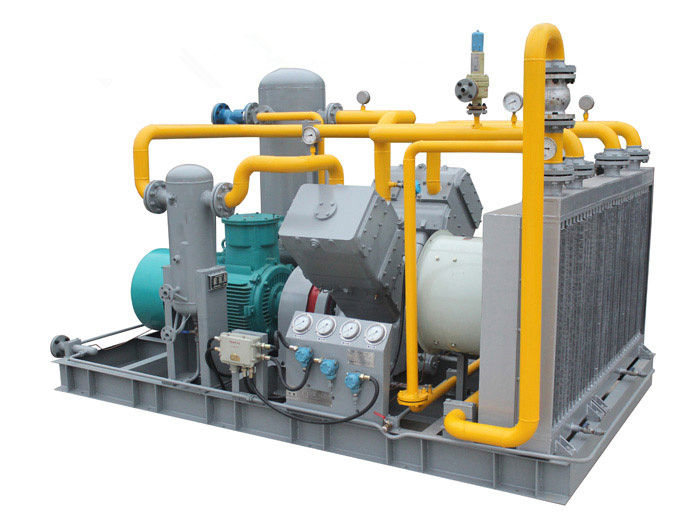
Oilfield gas compressors play a vital role in the process of oil and gas extraction, transportation and storage. However, with the deepening of oilfield extraction and the improvement of technical requirements, gas compressors also face many challenges in practical applications. The following are the main challenges faced by oilfield gas compressors:
(1) Adaptability to high temperature and high pressure environment
Oilfield gas compressors need to work in high temperature and high pressure environments, especially in deep well extraction and high pressure gas transportation. The compression of gas will generate a lot of heat, causing the internal temperature of the equipment to rise. If the compressor’s cooling system is insufficient or fails to effectively control the temperature, the gas compression efficiency will decrease and even damage the equipment. In addition, the high pressure environment will also increase the load on the equipment and increase the risk of equipment failure. How to improve the high temperature and high pressure resistance of gas compressors has become one of the main challenges faced by oilfield gas compressors.
(2) Corrosion and wear problems
Natural gas in oil fields often contains acidic gases (such as carbon dioxide and hydrogen sulfide), moisture and other impurities, which can cause corrosion and wear of compressor parts. Long-term operation can easily cause the surface of the metal parts of the gas compressor to corrode, especially the cylinder, piston, valve and other parts, which may even cause equipment failure in severe cases. In addition, there may be solid particles or moisture in the gas, which increases the degree of equipment wear and affects the service life and reliability of the equipment.
(3) Instability of gas composition
The composition of natural gas changes constantly due to factors such as oil field location, geological conditions, and recovery stage. This unstable gas composition makes the design and operation of oilfield gas compressors complicated. For example, hydrogen sulfide contained in the gas can cause corrosion to the metal parts of the compressor; the moisture in the gas may cause freezing or condensation, affecting the operating efficiency of the compressor. Therefore, oilfield gas compressors must have strong adaptability and be able to adjust according to changes in gas composition.
(4) Energy consumption and efficiency issues
The working process of oilfield gas compressors consumes a lot of energy, especially in high flow and high pressure environments, where energy consumption is more serious. With the increasing shortage of oil and gas resources, how to improve the energy efficiency of gas compressors and reduce energy consumption is a major challenge currently faced. Technically, although some new compressors use more efficient compression technology, energy waste is still a common problem in actual applications. Therefore, improving the energy efficiency of compressors and reducing operating costs are issues that oilfield companies urgently need to solve.
(5) Maintenance and operating costs
Due to the long-term operation of oilfield gas compressors in harsh environments, their maintenance and overhaul work is frequent and costly. High failure rates, short maintenance cycles, and frequent parts replacement all lead to high operating costs. Especially in remote oilfield areas, it is relatively difficult to obtain spare parts, repair tools, and professional technicians, which increases the difficulty of equipment maintenance. How to improve the reliability of compressors, extend maintenance cycles, and reduce maintenance costs has become an important challenge in the operation of oilfield gas compressors.
(6) Environmental protection and emission control
During the operation of oilfield gas compressors, certain gas emissions may be accompanied. In particular, natural gas containing harmful gases, such as carbon dioxide and hydrogen sulfide, may cause environmental pollution if not effectively treated during the compression and discharge process. Therefore, how to effectively control emissions during the operation of the compressor and comply with environmental protection regulations has become an important challenge facing the industry.
(7) Technology upgrade and intelligence
With the continuous development of industrial automation and intelligent technology, traditional oilfield gas compressors have gradually exposed many technical shortcomings. For example, old gas compressors lack real-time monitoring and remote control capabilities, and cannot detect equipment failures in a timely manner, resulting in sudden shutdowns and production interruptions. Modern oilfield gas compressors need to integrate more sensors, control systems and data analysis functions to achieve more intelligent operation and maintenance management. However, technology upgrades require high investments, and the application of new technologies also faces compatibility issues with existing equipment.
Conclusion
As an indispensable core power in the oil well development chain, the importance of oilfield gas compressors is self-evident. It is not only a key tool to improve crude oil recovery and extend the life of oil fields, but also a strategic equipment to achieve associated gas recycling, reduce greenhouse gas emissions, and promote the green transformation of the oil and gas industry. From energy replenishment deep in the formation to the arterial beating of the surface gathering and transportation system, from the economic benefits of efficient resource utilization to the social responsibility of environmental protection, oilfield gas compressors are playing their core value all the time.
However, we must also be aware that in the current context of global energy transformation, oilfield gas compressors face unprecedented challenges: complex and changeable gas source components, extremely harsh operating environment, high operating and maintenance costs, increasingly stringent environmental regulations, and the need for higher efficiency and smarter management. These challenges force the industry to undergo profound changes and innovations.
Looking to the future, we have reason to believe that with the deep integration of advanced digital technologies such as the Internet of Things, big data, artificial intelligence, and digital twins, as well as the continuous breakthroughs in new materials, new processes, and green energy technologies, oilfield gas compressors will usher in a new era of development. Intelligence will give it the ability to “think” and “foresee”, enabling it to autonomously optimize operations, predict faults, and achieve remote control; greening will make it more energy-efficient and environmentally friendly, and better adapt to the trends of “zero flare” and “carbon neutrality”; modularization and integration will make it more flexible and efficient, and adapt to the rapidly changing needs of oil and gas development.
Ultimately, oilfield gas compressors will not only be a simple mechanical equipment, but also an intelligent energy management hub that integrates cutting-edge technologies and carries multiple missions. Continuous technological research and development, high-quality talent training, and close cooperation between industries will be the key to meeting challenges and seizing opportunities. Only in this way can the oil and gas industry achieve its own sustainable development while ensuring global energy security, and make greater contributions to building a greener and smarter future.
Request a Quick Quote Now

Shanghai Sollant Energy Saving Technology Co., Ltd.
Drawing on our years of experience and expertise in air separation and PSA technologies, we deliver customized solutions tailored to your specific needs.
