
The key role of hydrogen compressors in the new energy industry
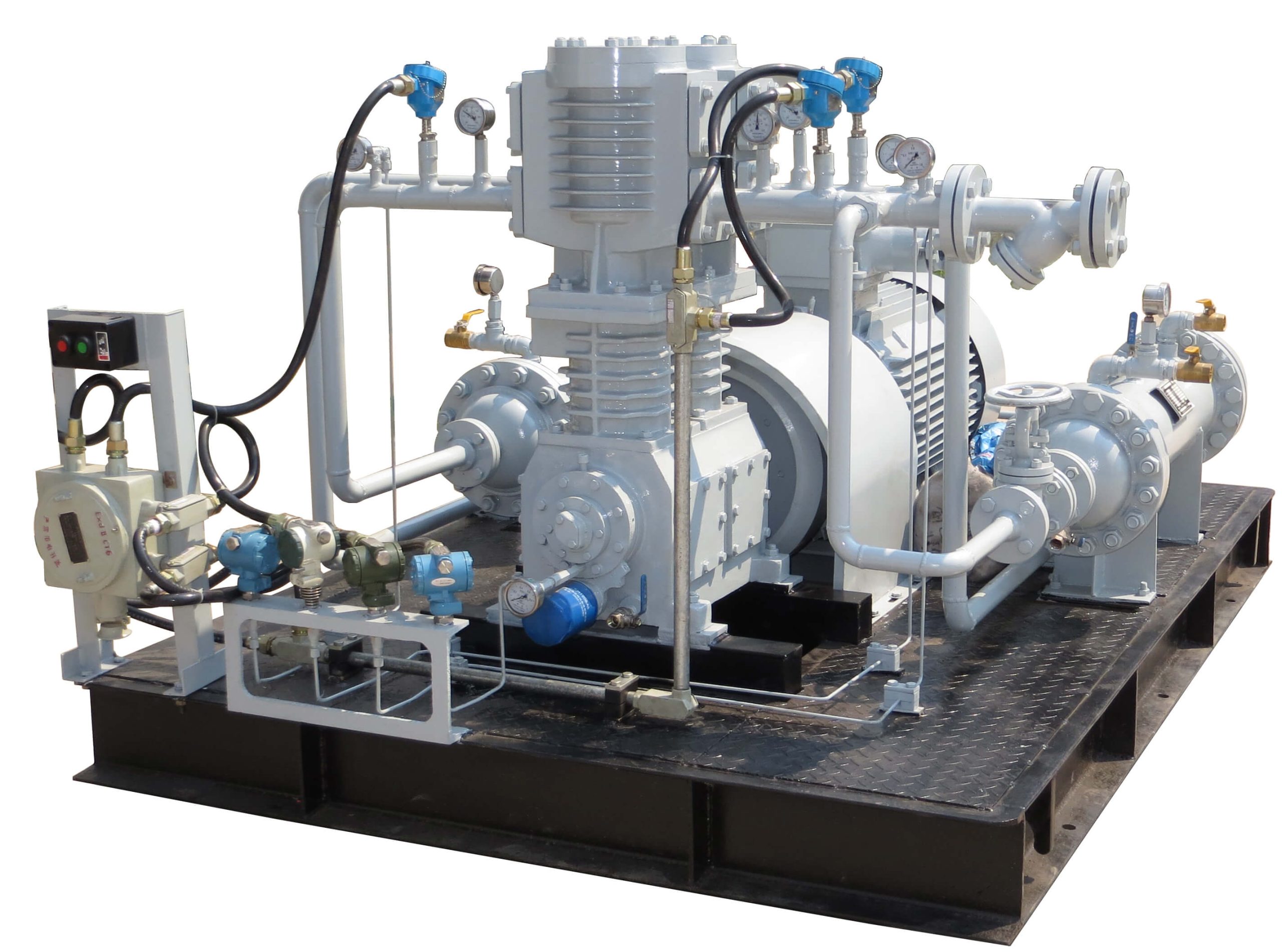
In the wave of global energy structure transformation towards clean and low-carbon, hydrogen energy, as an efficient and environmentally friendly secondary energy source, is increasingly attracting widespread attention. Not only does it have only water as a combustion product, which is zero pollution to the environment, but it also has high energy density and a wide range of application scenarios. It is regarded as an important part of the future energy system. However, the storage and transportation of hydrogen has always been a key problem restricting its large-scale application. Among them, hydrogen compressors play a vital role. They can convert low-pressure hydrogen into high-pressure hydrogen, thereby achieving high-density storage and efficient transportation of hydrogen, laying the foundation for the widespread application of hydrogen in the new energy industry.
1.Basic concept of hydrogen compressor
Hydrogen compressor is a device that compresses hydrogen. Its working principle is to reduce the distance between hydrogen molecules through mechanical energy, reduce its volume, and increase its pressure. According to different compression principles, hydrogen compressors are mainly divided into two categories: positive displacement compressors and speed compressors.
Positive displacement compressors: compress gas by changing the volume of the working chamber. Common ones are reciprocating compressors (such as piston compressors, diaphragm compressors) and rotary compressors (such as screw compressors, scroll compressors).
Piston compressor: The reciprocating motion of the piston in the cylinder realizes the inhalation, compression and discharge of hydrogen.
Diaphragm compressor: Hydrogen is compressed by the deformation of the diaphragm. Hydrogen does not contact the lubricant and has high purity. It is suitable for occasions with high requirements for hydrogen purity.
Screw compressor: Hydrogen is compressed by the rotation of the intermeshing screw rotors. It has the advantages of compact structure and smooth operation.
Scroll compressor: Hydrogen is compressed by the relative movement of the moving scroll and the static scroll. It has low noise and small vibration.
Speed compressor: The high-speed rotating impeller works on the gas to increase its speed, and then converts the kinetic energy into pressure energy through the diffuser. Common ones are centrifugal compressors and axial flow compressors.
Centrifugal compressor: Hydrogen is compressed by the centrifugal force generated by the high-speed rotation of the impeller. It is suitable for occasions with large flow and low pressure ratio.
Axial flow compressor: The blades arranged along the axial direction work on the hydrogen. It is suitable for occasions with large flow and high pressure ratio.
In the field of new energy, the requirements for hydrogen compressors are very strict. Not only compression efficiency, energy consumption, and safety must be considered, but also hydrogen purity, sealing, and protection against hydrogen embrittlement. Therefore, the development and optimization of hydrogen compressors based on hydrogen characteristics is an important part of promoting the development of hydrogen energy.
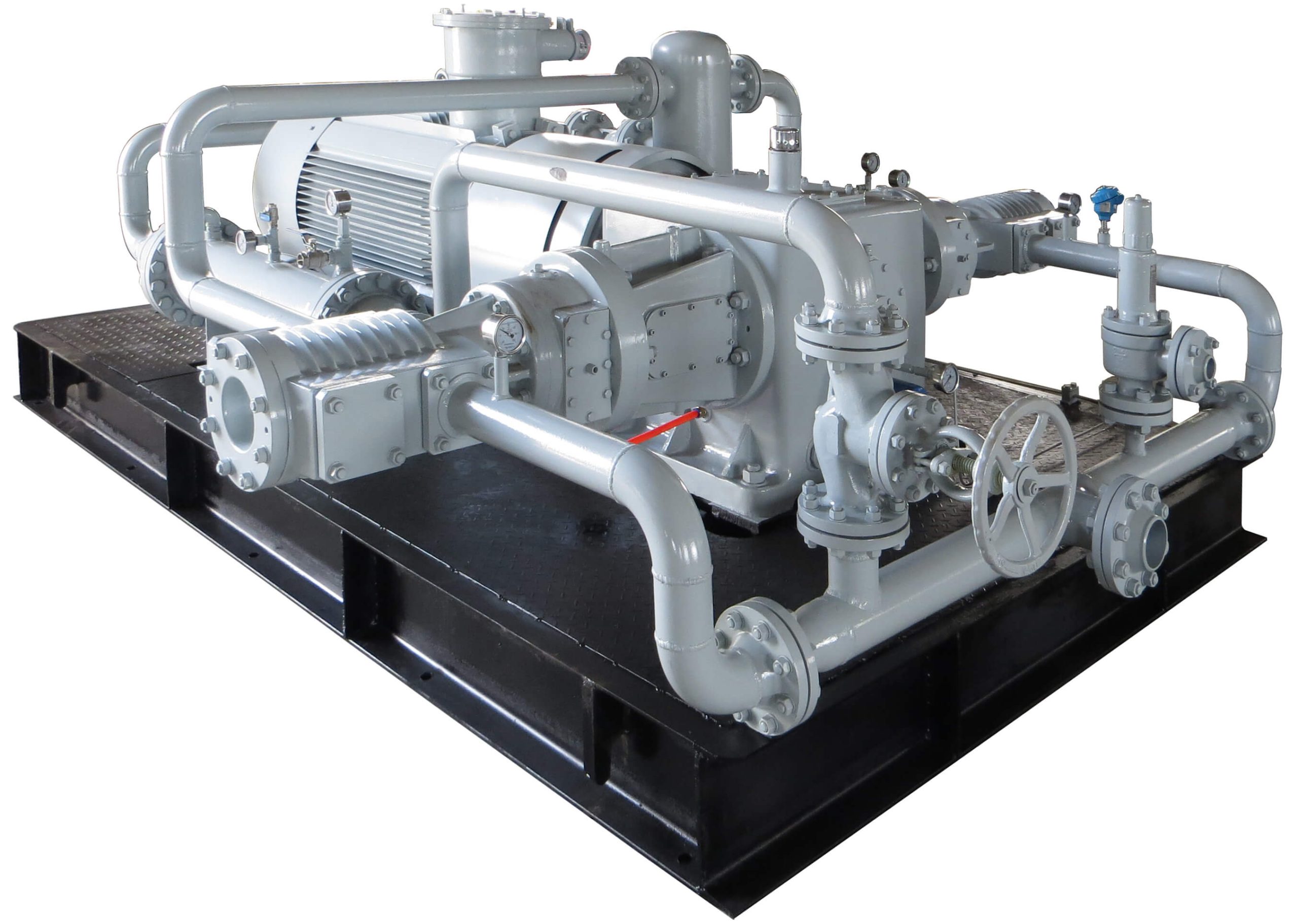
2.Background of the application of hydrogen compressors in the new energy industry
The development of the new energy industry, especially the rise of intermittent renewable energy such as wind energy and solar energy, has put forward higher requirements for energy storage. Hydrogen energy has become an important way to solve the problem of renewable energy volatility due to its high energy density, long storage cycle, and cross-seasonal storage. As a key link in the hydrogen energy industry chain, the role of hydrogen compressors is becoming increasingly prominent.
(1). Storage and utilization of renewable energy:
Wind power, photovoltaics and other renewable energy power generation is unstable, and power generation fluctuates with weather changes. When power generation is in excess, the excess electricity can be converted into hydrogen energy for storage by electrolyzing water to produce hydrogen. The hydrogen compressor is responsible for compressing the low-pressure hydrogen produced to high pressure for easy storage and transportation. When the power grid needs it, the high-pressure hydrogen can be used to generate electricity through fuel cells or directly burned to generate electricity, thus realizing the reuse of electricity. This “electricity-hydrogen-electricity” cycle mode can effectively solve the problem of renewable energy consumption and improve energy utilization efficiency.
(2). Development of hydrogen fuel cell vehicles:
Hydrogen fuel cell vehicles are an important development direction in the future transportation field. It uses hydrogen as fuel and converts the chemical energy of hydrogen into electricity to drive the motor through a fuel cell. The final emission is only water, which truly achieves zero emission. However, hydrogen fuel cell vehicles have high pressure requirements for the on-board hydrogen storage system, generally requiring 70MPa or even higher pressure to ensure the cruising range. The hydrogen compressor plays a core role in the hydrogen refueling station, compressing the low-pressure hydrogen transported from the outside to high pressure, and then filling it into the hydrogen storage tank of the fuel cell vehicle to provide power for the vehicle.
(3). Industrial application of hydrogen energy:
Hydrogen energy is not only used in the fields of transportation and electricity, but also has a wide range of applications in industrial production, such as chemical industry, metallurgy, glass manufacturing, etc. In these industrial fields, hydrogen is usually stored and transported in high pressure to meet the production process’s requirements for hydrogen purity, pressure and flow. Hydrogen compressors can ensure the stability and continuity of hydrogen supply and provide reliable hydrogen energy guarantee for industrial production.
3.The key role of hydrogen compressors in energy transformation
Energy transformation is an inevitable choice for the world to respond to climate change and achieve sustainable development. As a clean and efficient energy carrier, hydrogen plays an increasingly important role in energy transformation. As a key support for the hydrogen energy industry chain, the role of hydrogen compressors cannot be ignored.
(1). Improve hydrogen storage density and achieve large-scale energy storage:
The energy density of hydrogen is very high in terms of mass, but very low in terms of volume. At normal temperature and pressure, hydrogen is very fluffy and has a huge storage volume. Compressing hydrogen to hundreds of megapascals through hydrogen compressors can greatly increase its storage density and effectively reduce the volume of hydrogen storage containers, thereby achieving large-scale, high-density hydrogen energy storage. This is of great significance for solving the volatility problem of renewable energy and achieving cross-seasonal energy storage.
(2). Promote long-distance transportation of hydrogen and build a hydrogen energy network:
The transportation cost of hydrogen is one of the important factors restricting its large-scale application. Hydrogen can be compressed to high pressure by hydrogen compressors, and can be transported over long distances using high-pressure gas pipelines or liquid hydrogen tankers. High-pressure gas pipelines have the advantages of large transportation volume and low cost, and are an important way to build a hydrogen energy network in the future. Liquid hydrogen is stored by cooling hydrogen to -253℃. Although it has high energy consumption, it has a higher storage density and is suitable for ultra-long-distance transportation. Whether it is gaseous hydrogen or liquid hydrogen, hydrogen compressors are the prerequisite for efficient transportation.
(3). Support the construction of hydrogen energy infrastructure and promote industrial development:
Hydrogen energy infrastructure is the cornerstone of the development of the hydrogen energy industry, including hydrogen production, storage, transportation, and refueling. In these links, hydrogen compressors are everywhere. For example, after hydrogen is produced by electrolysis of water, compressors are needed to compress hydrogen; at hydrogen refueling stations, compressors are needed to refuel fuel cell vehicles with high-pressure hydrogen; in hydrogen pipeline transportation, compressors are also needed to provide transportation pressure. The advancement of hydrogen compressor technology and the reduction of costs directly affect the construction speed and operating costs of hydrogen energy infrastructure, and thus promote the healthy development of the entire hydrogen energy industry.
4.The role of hydrogen compressors in specific applications
(1). Hydrogen refueling station:
Hydrogen refueling station is a key link in the refueling of hydrogen fuel cell vehicles, and one of its core equipment is the hydrogen compressor. The source of hydrogen at the hydrogen refueling station can be low-pressure hydrogen transported from the outside or hydrogen produced within the station. Regardless of the source, the hydrogen needs to be compressed to 20MPa, 35MPa, 70MPa or even higher pressures by a hydrogen compressor, and then filled into the hydrogen storage tank of the fuel cell vehicle through a hydrogen refueling gun. Hydrogen refueling stations have very high requirements for hydrogen compressors. Not only compression efficiency and energy consumption must be considered, but also safety, reliability and refueling speed must be emphasized. At present, diaphragm compressors and hydraulic piston compressors are widely used in hydrogen refueling stations due to their high purity and high pressure characteristics.
(2). Hydrogen energy storage power station:
Hydrogen energy storage power station is a system that converts electricity generated by renewable energy into hydrogen energy and stores it, and then converts hydrogen energy into electricity when needed. In this system, the role of the hydrogen compressor is to compress the low-pressure hydrogen obtained by electrolyzing water to the pressure required by the hydrogen storage tank. The hydrogen storage tank can be a high-pressure gaseous hydrogen storage tank or a large-capacity hydrogen storage facility such as an underground salt cavern or an abandoned oil and gas well. Hydrogen energy storage power station can effectively smooth out power grid fluctuations, improve power grid stability, and provide flexible adjustment capabilities for the power grid.
(3). Hydrogen fuel cell power generation:
Hydrogen fuel cell power generation is the process of directly converting hydrogen into electricity through fuel cells, which has the advantages of high efficiency and zero emissions. Both distributed fuel cell power generation systems and centralized fuel cell power stations require a stable supply of high-pressure hydrogen. In this link, the hydrogen compressor transports the high-pressure hydrogen in the hydrogen storage tank to the fuel cell power generation system to ensure the normal operation and power generation efficiency of the fuel cell.
(4). Hydrogen pipeline transportation:
Hydrogen pipeline transportation is an important way to transport hydrogen on a large scale and over long distances in the future. Similar to natural gas pipelines, hydrogen can be transported over long distances through pipelines, connecting hydrogen production bases with hydrogen use terminals. In hydrogen pipeline transportation, hydrogen compressors serve as booster stations, responsible for increasing the hydrogen pressure in the pipeline to overcome pipeline resistance and ensure smooth hydrogen transportation. Building a complete hydrogen pipeline network will greatly reduce the cost of hydrogen transportation and promote the large-scale application of hydrogen energy.
5.Technological progress and innovation of hydrogen compressors
With the rapid development of the hydrogen energy industry, hydrogen compressor technology is also constantly innovating and breaking through to meet the needs of higher pressure, larger flow, lower energy consumption and higher safety.
(1). High pressure and large-scale:
In order to improve the storage density and transportation efficiency of hydrogen, hydrogen compressors are moving towards higher pressures. At present, there are studies and applications of 200MPa or even higher pressures. At the same time, in order to meet the needs of large-scale hydrogen energy applications, the flow of compressors is also increasing, and large-scale has become an important development trend.
(2). Efficiency improvement and energy consumption reduction:
The hydrogen compression process consumes a lot of energy, and reducing energy consumption is an important direction of technological innovation. By optimizing the compressor structure design, improving materials, and improving the intelligence level of the control system, the compression efficiency can be effectively improved and the compression energy consumption per unit of hydrogen can be reduced. For example, the use of variable frequency speed regulation technology and the optimization of the cooling system can effectively reduce energy consumption.
(3). Materials and sealing technology:
Hydrogen has special physical and chemical properties, such as hydrogen embrittlement effect, flammability and explosiveness, which put forward strict requirements on compressor materials and sealing technology. Research and development of new hydrogen embrittlement-resistant materials, improved sealing structures, and the use of non-contact sealing technology can effectively improve the safety and reliability of compressors and extend their service life. For example, the use of carbon fiber composite hydrogen storage bottles and metal diaphragm compressors are effective measures to deal with hydrogen embrittlement.
(4). Intelligence and integration:
With the development of technologies such as the Internet of Things, big data, and artificial intelligence, hydrogen compressors are also moving towards intelligence and integration. Through sensors that monitor operating status in real time, diagnose and predict faults, and perform remote control and optimization, the automation level of compressors can be improved, operation and maintenance costs can be reduced, and operating efficiency can be improved. At the same time, integrating compressors with hydrogen production equipment, hydrogen storage equipment, and hydrogenation equipment to build an integrated hydrogen energy system will further enhance the convenience of hydrogen energy utilization.
(5). New compression technology:
In addition to traditional mechanical compression technology, some new compression technologies are also being explored and developed, such as:
Ionic liquid compression: Hydrogen compression is carried out using the special properties of ionic liquids, which has the advantages of no mechanical moving parts and no oil pollution.
Adsorption compression: Hydrogen compression is achieved by utilizing the adsorption-desorption characteristics of adsorbent materials at different pressures, which has the advantages of low energy consumption and simple structure.
Metal hydride compression: Hydrogen compression is achieved by utilizing the adsorption-desorption characteristics of metal hydrides at different temperatures and pressures, which has the advantages of high storage density and good safety.
These new compression technologies are expected to provide more efficient and safer solutions for hydrogen compression in the future.
6.Challenges and solutions for hydrogen compressors in the new energy industry
Although hydrogen compressors play a key role in the new energy industry, their development still faces many challenges that require continuous technological innovation and policy support to solve.
(1). Safety challenges:
Hydrogen is flammable and explosive, and there is a risk of leakage under high pressure. Therefore, the design, manufacture, installation and operation of hydrogen compressors must strictly follow safety standards to ensure that there is no leakage and explosion-proof measures are in place.
Solutions:
Strengthen material research: Develop new materials with high strength, hydrogen embrittlement resistance and corrosion resistance.
Optimize structural design: Use redundant design and explosion-proof design to ensure the safety of equipment under extreme conditions.
Intelligent monitoring system: Introduce intelligent systems such as leak detection, pressure monitoring, and temperature monitoring to provide real-time warnings and automatically handle abnormal situations.
Strict operating procedures: Develop detailed operating SOPs and provide professional training for operators.
Improve safety standards and regulations: Establish and improve the hydrogen energy safety standard system to safeguard the development of the industry.
(2). Cost challenge:
At present, the manufacturing cost and operating cost of high-pressure hydrogen compressors are still high, which limits their large-scale application.
Solution:
Large-scale production: Reduce the manufacturing cost of each unit product by expanding the production scale.
Technological innovation: Develop more efficient and simpler compression technologies to reduce energy consumption and material costs.
Policy support: The government provides subsidies, tax incentives and other policies to encourage the research and development and application of hydrogen compressor technology.
Full life cycle cost optimization: Optimize costs from the perspective of the entire life cycle, including design, manufacturing, operation, maintenance, and scrapping, to improve economic efficiency.
(3). Hydrogen embrittlement:
Hydrogen easily penetrates into metal materials under high pressure, causing the materials to become brittle, reducing equipment life, and even causing safety accidents.
Solution:
Choose hydrogen embrittlement-resistant materials: Use materials that are not sensitive to hydrogen embrittlement, such as austenitic stainless steel and special nickel-based alloys.
Surface treatment technology: Coating or nitriding the metal surface to form a hydrogen penetration barrier.
Structural optimization: Avoid stress concentration areas and reduce the path of hydrogen penetration.
Regular inspection and maintenance: Regularly inspect the equipment to promptly detect and deal with damage caused by hydrogen embrittlement.
(4). Maintenance and reliability:
Hydrogen compressors operate under high pressure, high speed, and hydrogen environment for a long time, which puts higher requirements on equipment maintenance and reliability.
Solution:
Modular design: Modular design is adopted to facilitate fault diagnosis and component replacement, shortening maintenance time.
Remote diagnosis and predictive maintenance: Use the Internet of Things and big data technology to remotely monitor and predict faults of equipment, realize preventive maintenance, and improve equipment utilization rate.
Professional operation and maintenance team: Cultivate a professional hydrogen compressor operation and maintenance team to provide timely and efficient maintenance services.
Standardized components: Promote the standardization of key components to reduce spare parts costs and procurement difficulties.
(5). Industry chain collaboration:
The development of hydrogen compressors is inseparable from the coordinated development of the entire hydrogen energy industry chain, including hydrogen production, storage, transportation, refueling, and use.
Solution:
Establish an industry alliance: Build a hydrogen energy industry alliance to promote technical exchanges and cooperation between upstream and downstream enterprises in the industry chain.
Unify technical standards: Promote the standardization of hydrogen energy-related technologies, promote equipment interconnection and large-scale application.
Government guidance: The government provides support in terms of policies, funds, and planning to guide the coordinated development of the entire hydrogen energy industry chain.
International cooperation: Strengthen international cooperation in hydrogen energy technology, standards, and markets, and jointly promote the global development of hydrogen energy.
Conclusion
As an indispensable key equipment in the hydrogen energy industry chain, hydrogen compressors play a vital role in the new energy industry. It is not only the core of achieving high-density storage and efficient transportation of hydrogen, but also a key link in supporting scenarios such as hydrogen fuel cell vehicles, hydrogen energy storage power stations, and hydrogen energy industrial applications. With the vigorous development of the hydrogen energy industry, hydrogen compressor technology is also constantly innovating and breaking through, moving towards higher pressure, higher efficiency, higher safety, and higher intelligence.
Despite the challenges of safety, cost, hydrogen embrittlement, etc., hydrogen compressors will overcome these problems and contribute more to the construction of a clean, low-carbon energy system through the implementation of various solutions such as material innovation, structural optimization, intelligent monitoring, full life cycle management, and industrial chain collaboration. In the future, as hydrogen energy technology matures and costs decrease, hydrogen compressors will play an increasingly important role in the global energy transformation and help human society achieve sustainable development.
Request a Quick Quote Now

Shanghai Sollant Energy Saving Technology Co., Ltd.
Drawing on our years of experience and expertise in air separation and PSA technologies, we deliver customized solutions tailored to your specific needs.
