
How high-efficiency hydrogen compressors help the development of hydrogen-powered vehicles
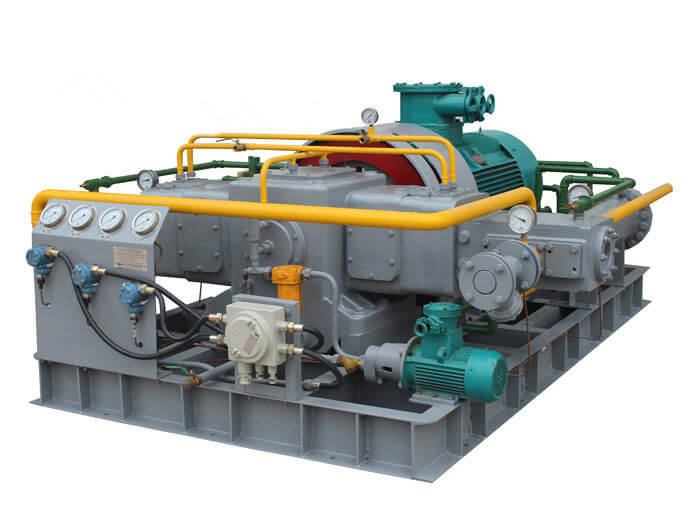
With the growing global demand for sustainable energy, hydrogen energy, as a clean and efficient energy carrier, is receiving more and more attention. As an important application of hydrogen energy in the transportation field, hydrogen fuel cell vehicles (FCEVs) have the advantages of zero emissions, high energy density, and long driving range, and are considered to be one of the important directions for the development of future automobiles. However, the storage and transportation of hydrogen are key challenges facing the development of hydrogen energy vehicles. In order to store hydrogen safely and efficiently in on-board high-pressure hydrogen storage tanks, hydrogen compressors play a vital role. This article will focus on high-efficiency hydrogen compressors, explore their basic principles, key roles in the development of hydrogen energy vehicles, and future development prospects and directions, aiming to explain how high-efficiency hydrogen compressors can help the rapid development of hydrogen energy vehicles.
1.Basic principles and functions of hydrogen compressors
Hydrogen compressors are mechanical devices used to increase the pressure of hydrogen. Its basic function is to compress low-pressure hydrogen to high pressure for easy storage, transportation and use. In hydrogen fuel cell vehicles, on-board hydrogen storage tanks need to store hydrogen under high pressure (usually 35MPa or 70MPa) to achieve sufficient driving range. The hydrogen compressor is responsible for compressing the low-pressure hydrogen (usually below the MPa level) produced in the hydrogen production process to the pressure required for hydrogen storage.
According to different working principles, common hydrogen compressors mainly include the following types:
Piston compressor: The reciprocating motion of the piston in the cylinder is used to change the cylinder volume to achieve hydrogen compression. Piston compressors have simple structures, mature technologies, and are widely used, but there are problems such as wear and leakage, and their efficiency is limited.
Diaphragm compressor: The flexural motion of the diaphragm is used to compress the gas. The diaphragm separates the cylinder from the transmission part, avoiding contact between hydrogen and lubricating oil, and is suitable for compressing high-purity hydrogen. Diaphragm compressors have a low risk of leakage, but a complex structure and high manufacturing cost.
Ionic liquid compressor: Using ionic liquid as a piston, hydrogen is compressed by changing the volume of the ionic liquid. Ionic liquid compressors have the advantages of good sealing, high efficiency, and low noise. They are a new compression technology that has developed rapidly in recent years.
Metal hydride compressor: Compression is achieved by using the characteristics of metal hydrides to absorb and release hydrogen. Metal hydrides have different adsorption and desorption capabilities for hydrogen at different temperatures and pressures, and hydrogen compression is achieved by changing temperature and pressure. Metal hydride compressors have no moving parts and are highly reliable, but they are large in size and weight and have high costs.
In the hydrogen energy vehicle industry chain, hydrogen compressors are not only used for on-board hydrogen storage, but are also widely used in hydrogen refueling stations, hydrogen production, pipeline transportation and other links. At hydrogen refueling stations, hydrogen compressors are responsible for compressing hydrogen obtained from hydrogen supply sources (such as hydrogen storage tanks, pipelines or hydrogen production devices) to high pressure in order to refuel hydrogen energy vehicles. The compressor performance of hydrogen refueling stations directly affects the efficiency and cost of hydrogen refueling, and is one of the key equipment for hydrogen refueling station construction.
The performance parameters of hydrogen compressors include:
Exhaust pressure: The maximum outlet pressure that the compressor can reach determines the filling pressure of the hydrogen storage tank.
Exhaust volume: The volume of hydrogen that the compressor can deliver per unit time, which affects the speed and efficiency of hydrogen refueling.
Efficiency: The efficiency of the compressor in converting the input energy into hydrogen pressure energy directly affects energy consumption and operating costs.
Reliability: The ability of the compressor to operate without failure within the specified time is related to the stability and safety of equipment operation.
Noise and vibration: Affect the equipment operating environment and user experience.
2.The key role of hydrogen compressors in the development of hydrogen-powered vehicles
.jpg)
Hydrogen compressors play an indispensable and key role in the development of hydrogen-powered vehicles, and their performance directly affects the promotion and popularization of hydrogen-powered vehicles. It is specifically reflected in the following aspects:
Onboard hydrogen storage efficiency: The hydrogen compressor determines the filling pressure of the onboard hydrogen storage tank. Higher filling pressure means that more hydrogen can be stored in the same volume of hydrogen storage tank, thereby increasing the vehicle’s cruising range. Efficient compressors can quickly and stably compress hydrogen to high pressure, improve hydrogenation efficiency, and reduce user waiting time.
Construction and operation costs of hydrogen refueling stations: The compressor of a hydrogen refueling station is an important core equipment, and its procurement cost, energy consumption, and maintenance cost account for a large part of the total cost of a hydrogen refueling station. Efficient compressors can reduce energy consumption in the hydrogenation process and reduce operating costs, thereby reducing the price of hydrogen refueling and improving the market competitiveness of hydrogen-powered vehicles.
Hydrogen purity and safety: During the hydrogen compression process, it is necessary to ensure that the purity of hydrogen is not affected and to prevent impurities from entering the fuel cell and affecting its performance and life. At the same time, hydrogen is a flammable and explosive gas, and the compression process must strictly control temperature and pressure to ensure safe operation. Some new oil-free compression technologies (such as diaphragm type and ionic liquid type) can effectively avoid the contamination of lubricating oil to hydrogen and improve the purity of hydrogen.
Hydrogen refueling convenience: A fast and efficient hydrogen refueling process is the key to improving user experience. The exhaust volume of the hydrogen refueling station compressor and the coordinated work of the refueling control system determine the hydrogen refueling speed. Efficient compressors can shorten the hydrogen refueling time, making it close to the refueling time of traditional fuel vehicles, and improve the convenience of daily use of hydrogen energy vehicles.
Coordinated development of the industrial chain: Hydrogen compressors are an important link connecting hydrogen production, storage, transportation and use. Efficient compressor technology can promote the coordinated development of all links in the hydrogen energy industry chain, reduce overall costs, and accelerate the construction of a hydrogen energy society.
In short, hydrogen compressors are one of the key technologies for the practical and commercialization of hydrogen energy vehicles. Improving the efficiency, reliability and safety of hydrogen compressors is of great significance for reducing the cost of hydrogen vehicles, improving user experience and accelerating the development of the hydrogen energy industry chain.
3.Support of high-efficiency hydrogen compressors for the development of hydrogen-powered vehicles
As a key technology in the hydrogen energy industry chain, high-efficiency hydrogen compressors provide strong support for the development of hydrogen-powered vehicles, mainly in the following aspects:
Improving the on-board hydrogen storage energy density: high-efficiency compressors can compress hydrogen to a higher pressure more stably and quickly, for example, from 35MPa to 70MPa or even higher. Higher hydrogen storage pressure means that more hydrogen can be stored in the same volume of hydrogen storage tanks, thereby significantly increasing the range of hydrogen-powered vehicles. This helps address consumers’ concerns about range and improves the practicality of hydrogen-powered vehicles.
Reducing hydrogen refueling costs: The energy consumption of hydrogen refueling stations is an important part of their operating costs, and compressors are the main power-consuming equipment of hydrogen refueling stations. High-efficiency hydrogen compressors can significantly reduce the energy consumption of the compression process, thereby reducing the operating costs of hydrogen refueling stations. This cost reduction can be transmitted to the hydrogen price, making the hydrogen price more competitive, reducing users’ vehicle costs, and increasing the market appeal of hydrogen-powered vehicles.
Shorten hydrogen refueling time: High-efficiency compressors usually have higher exhaust volume and more stable operating performance, and can complete the hydrogen compression and refueling process faster. This helps to shorten the waiting time of users at hydrogen refueling stations, improve hydrogen refueling efficiency, make the hydrogen refueling process more convenient, and enhance user experience. Fast hydrogen refueling is the key to the daily use of hydrogen energy vehicles, which helps to eliminate users’ concerns about the inconvenience of hydrogen refueling.
Improve equipment reliability: High-efficiency compressors usually adopt more advanced design and manufacturing processes, and the wear resistance, sealing and operating stability of parts are better. This can reduce the equipment failure rate, reduce the number and cost of maintenance, and improve the overall operating efficiency and reliability of hydrogen refueling stations. High-reliability hydrogen refueling stations are an important prerequisite for ensuring the normal use of hydrogen energy vehicles.
Promote the development of new hydrogen storage technologies: The development of high-efficiency compressor technology also provides support for new hydrogen storage technologies. For example, metal hydride hydrogen storage technology requires precise control of hydrogen adsorption and desorption pressures, and high-efficiency compressors can provide the required pressure conditions for these technologies.
Promote the coordinated development of the hydrogen energy industry chain: The application of high-efficiency hydrogen compressors is not limited to hydrogen refueling stations and on-board hydrogen storage, but can also be applied to hydrogen production, pipeline transportation and other links. Efficient compression technology can improve the efficiency of the entire hydrogen energy industry chain, reduce overall costs, and promote the accelerated construction of a hydrogen energy society.
Efficient hydrogen compressors are not only a key technology to improve the performance of hydrogen energy vehicles and reduce the cost of use, but also an important driving force for the development of the entire hydrogen energy industry chain. With the continuous advancement of technology and the reduction of costs, efficient hydrogen compressors will play an increasingly important role in the popularization of hydrogen energy vehicles in the future.
4.Prospects of hydrogen compressors in the hydrogen energy vehicle market
.jpg)
With the transformation of the global energy structure and the strict restrictions on carbon emissions by various countries, hydrogen energy vehicles, as representatives of clean energy transportation, have broad market prospects. As a key link in the hydrogen energy vehicle industry chain, hydrogen compressors will usher in huge development opportunities in the future hydrogen energy vehicle market.
The expansion of the hydrogen energy vehicle market has driven demand growth: With the maturity of technology and the reduction of costs, the market penetration rate of hydrogen energy vehicles will gradually increase. According to forecasts by the International Energy Agency (IEA) and other institutions, the global hydrogen energy vehicle ownership will increase significantly in the next few decades. The increase in the number of hydrogen energy vehicles is accompanied by an increase in demand for hydrogen refueling stations, and the core equipment of hydrogen refueling stations is hydrogen compressors. Therefore, the expansion of the hydrogen energy vehicle market will directly drive the rapid growth of the demand for hydrogen compressors.
The construction of hydrogen refueling station networks accelerates the market demand: Governments and enterprises are actively planning and building hydrogen refueling station networks to solve the problem of hydrogen refueling convenience for hydrogen energy vehicles. The construction of a large-scale hydrogen refueling station network will form a huge market demand for hydrogen compressors. Especially in densely populated areas and important transportation hubs, the construction density of hydrogen refueling stations will gradually increase, further driving the compressor market.
Technological progress promotes product upgrading: With the increase in requirements for compressor efficiency, reliability, safety and cost, existing compressor technology will continue to upgrade, and new high-efficiency compressor technology will gradually replace traditional technology. For example, new technologies such as ionic liquid compressors and metal hydride compressors are in a rapid development stage and are expected to occupy an important share in the market in the future. This technological upgrading will bring new development opportunities for compressor manufacturers.
The expansion of application areas increases market capacity: The application of hydrogen compressors is not limited to hydrogen refueling stations and on-board hydrogen storage. With the expansion of hydrogen energy applications in other fields, such as industrial hydrogen, hydrogen for power generation, aerospace, etc., the demand for hydrogen compressors will continue to increase. This provides a broader market space for hydrogen compressor companies.
Policy support and increased investment help market development: Governments around the world attach great importance to the development of the hydrogen energy industry and have introduced a series of support policies, including subsidies for the purchase of hydrogen energy vehicles, subsidies for the construction of hydrogen refueling stations, and support for the research and development of hydrogen energy technology. These policies will help reduce the cost of the hydrogen energy industry, accelerate market development, and provide a favorable policy environment for the hydrogen compressor market. At the same time, more and more companies and capital have also increased their investment in the hydrogen energy field, providing financial support for the research and development and industrialization of compressor technology.
Localized manufacturing and improved supply chain reduce costs: With the rapid development of China and other countries in the field of hydrogen energy industry, the localized manufacturing capacity of hydrogen compressors will continue to improve, and the supply chain will be gradually improved. This will help reduce the production cost of compressors and improve the market competitiveness of products.
Of course, the development of the hydrogen compressor market also faces some challenges, such as technology maturity, cost, safety, and standard unification. However, with the continuous advancement of technology and the coordinated development of the industry, these challenges are expected to be gradually overcome.
Overall, hydrogen compressors have great development potential in the future hydrogen energy vehicle market. With the continuous expansion of the hydrogen vehicle market, the accelerated construction of hydrogen refueling station networks, technological progress and policy support, the hydrogen compressor market will usher in sustained and rapid growth. This is both an opportunity and a challenge for hydrogen compressor manufacturers, who need to continuously innovate in technology, improve product performance, and reduce costs to meet market demand.
5.Future development direction of high-efficiency hydrogen compressors
In order to better meet the needs of hydrogen energy vehicle development, the future development of high-efficiency hydrogen compressors will focus on the following directions:
Improve efficiency and reduce energy consumption: Energy efficiency is an important indicator for measuring compressor performance. In the future, high-efficiency compressors will pay more attention to reducing energy consumption in the compression process and improving energy conversion efficiency. This can be achieved by optimizing the compressor structure design, adopting new compression technology, and improving control strategies. For example, variable frequency control technology, intelligent control technology, etc. can adjust the compressor operation status according to actual needs and reduce unnecessary energy consumption.
Improve reliability and extend life: As a key equipment, the reliability of hydrogen compressors directly affects the operating stability of hydrogen refueling stations and the normal use of hydrogen energy vehicles. In the future, compressors will pay more attention to improving equipment reliability and extending service life, reducing failure rate and maintenance costs. This requires the use of more durable materials, more advanced manufacturing processes, and more complete monitoring and fault diagnosis systems.
Reducing costs and achieving large-scale production: Cost is one of the key factors restricting the popularization of hydrogen energy compressors. In the future, the development of high-efficiency compressors will pay more attention to reducing manufacturing costs and operating costs, and achieving large-scale production, so as to reduce terminal hydrogen prices and improve the market competitiveness of hydrogen energy vehicles. This can be achieved through optimizing design, modular production, improving automation level, and improving industrial chain supporting facilities.
Improving safety: Hydrogen is a flammable and explosive gas, and safety is the primary consideration in the design and operation of hydrogen compressors. Future compressors will pay more attention to improving safety, adopt more stringent explosion-proof measures, and improve leak detection and emergency response systems to ensure the safety of equipment operation and hydrogenation process.
Integration and intelligence: With the development of technology, hydrogen compressors will pay more attention to integration and intelligence. For example, the compressor is integrated with other hydrogenation station equipment (such as hydrogen storage tanks, filling machines, control systems, etc.) to form a modular and compact hydrogenation station solution. At the same time, an intelligent control system is used to realize functions such as remote monitoring, fault diagnosis, and predictive maintenance of the equipment, thereby improving the operating efficiency and management level of the hydrogenation station.
Multi-stage compression and energy recovery: In order to achieve higher compression ratios and efficiency, future hydrogen compressors may adopt multi-stage compression technology, dividing the compression process into multiple stages, reducing the compression ratio of each stage, and improving overall efficiency. At the same time, the heat generated during the compression process is effectively recycled and converted into other forms of energy to further improve the energy efficiency of the system.
Development and application of new compression technologies: In addition to traditional piston and diaphragm compressors, new compression technologies such as ionic liquid compressors and metal hydride compressors are in a rapid development stage and are expected to play an important role in the field of efficient hydrogen compression in the future. These new technologies have the advantages of good sealing, high efficiency, low noise, and suitability for high-purity hydrogen, and are expected to become the mainstream technical direction of hydrogen compressors in the future.
Applicable to the needs of different application scenarios: Hydrogen energy has various application scenarios, including hydrogen refueling stations, on-board hydrogen storage, industrial hydrogen, pipeline transportation, etc. Different application scenarios have different requirements for the exhaust pressure, exhaust volume, and operation mode of the compressor. In the future, efficient hydrogen compressors will pay more attention to the development of customized products suitable for different application scenarios to meet the needs of different users.
In short, the future development direction of efficient hydrogen compressors is to develop in the direction of higher efficiency, higher reliability, lower cost, safer, and more intelligent. Technological innovation and application expansion will be the key to promoting the advancement of compressor technology and market development. With the realization of these development directions, efficient hydrogen compressors will better serve the development of hydrogen energy vehicles and help the early arrival of a hydrogen energy society.
Conclusion
As a key equipment in the hydrogen energy industry chain, hydrogen compressors play a vital role in the development of hydrogen energy vehicles. High-efficiency hydrogen compressors can significantly increase the energy density of on-board hydrogen storage, reduce the cost and time of hydrogen refueling, and improve the reliability and safety of equipment, thereby strongly supporting the promotion and popularization of hydrogen energy vehicles.
With the increasing global attention to the hydrogen energy industry and the continuous advancement of related technologies, the hydrogen compressor market has broad prospects. In the future, high-efficiency hydrogen compressors will develop in the direction of higher efficiency, higher reliability, lower cost, greater safety, and greater intelligence, and through technological innovation and application expansion, better serve the development of hydrogen energy vehicles and help build a clean and sustainable energy transportation system.
However, the development of hydrogen compressors still faces some challenges, such as technology maturity, cost, safety, and standard unification. It requires the joint efforts of governments, enterprises, scientific research institutions and other parties to increase R&D investment, improve the supporting industry chain, and promote technological progress and industrialization process in order to overcome these challenges and achieve the rapid development and widespread application of hydrogen compressors.
High-efficiency hydrogen compressors are an important engine for promoting the development of hydrogen energy vehicles. Their technological progress and market development will directly affect the speed of popularization and application scope of hydrogen energy vehicles. As technology continues to mature and costs decrease, high-efficiency hydrogen compressors will inevitably play an increasingly important role in future energy transformation and create a cleaner, greener future for mankind.
Request a Quick Quote Now

Shanghai Sollant Energy Saving Technology Co., Ltd.
Drawing on our years of experience and expertise in air separation and PSA technologies, we deliver customized solutions tailored to your specific needs.
