
Natural gas compressor energy-saving technology: the best choice to reduce operating costs
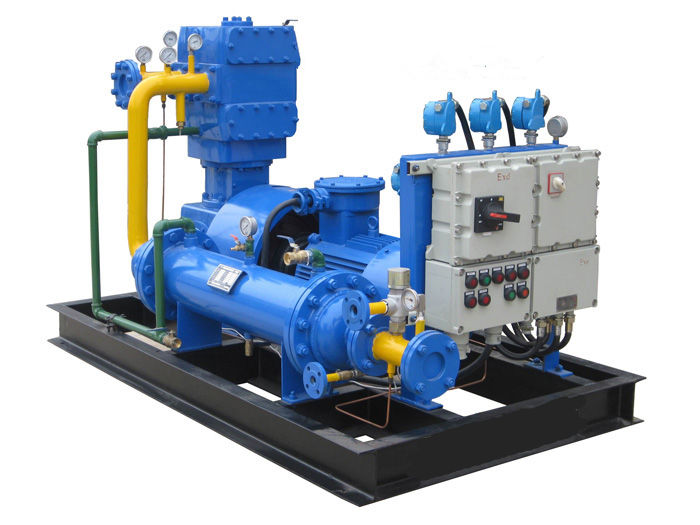
In modern industrial production, natural gas, as an important energy source, cannot be used without natural gas compressors. However, natural gas compressors consume a lot of electricity during operation, which not only increases the operating costs of enterprises, but also has a certain impact on the environment. Therefore, exploring and applying energy-saving technologies for natural gas compressors is not only an inevitable choice for enterprises to reduce costs and increase efficiency, but also an important measure to respond to the country’s “dual carbon” strategy and achieve sustainable development. This article will deeply explore the significance, working principle, common energy-saving technologies and applications of natural gas compressor energy saving, and look forward to future development trends to provide you with the best choice to reduce operating costs.
1.The significance of energy saving in natural gas compressors
Natural gas compressors play a vital role in industries such as petroleum, chemical industry, and natural gas transportation. However, with their efficient operation comes huge energy consumption. The power consumption of natural gas compressors accounts for a considerable proportion of the total cost during its life cycle. Therefore, the implementation of natural gas compressor energy-saving technology has many important significances:
Reducing operating costs: The most direct and significant benefit is to reduce the energy expenditure of enterprises. By reducing power consumption, enterprises can use the saved funds for other aspects and improve overall economic benefits.
Improve economic benefits: The reduction in energy costs directly translates into increased profits. In a highly competitive market environment, reducing costs means improving competitiveness.
Reduce carbon emissions: Reducing electricity consumption means reducing carbon emissions generated during power generation, which helps companies fulfill their social responsibilities and contribute to addressing climate change.
Improve environmental quality: Reducing energy consumption also means reducing pollutant emissions, which has a positive effect on improving regional environmental air quality.
Improve equipment reliability and life: Some energy-saving technologies, such as optimizing operating parameters and improving lubrication, help reduce equipment wear, extend equipment life, and reduce maintenance costs.
Respond to national policies: The Chinese government attaches great importance to energy conservation and environmental protection, and has introduced a series of policies to encourage enterprises to save energy and reduce emissions. Actively adopting energy-saving technologies is in line with national policy orientation.
2.Working principle of natural gas compressors
Before discussing energy-saving technologies, it is necessary to understand the working principle of natural gas compressors. Natural gas compressors are a type of equipment that raises low-pressure natural gas to high pressure. Its basic working principle is to compress gas molecules through mechanical energy, reduce their volume, and increase their pressure. Common types of natural gas compressors include:
➦ Positive displacement compressors: This type of compressor achieves gas compression by changing the volume of the working chamber.
Reciprocating piston compressor: Inhale, compress and discharge gas through the reciprocating motion of the piston in the cylinder. Its advantages are high efficiency and wide applicable pressure range; its disadvantages are complex structure, high noise and high maintenance requirements.
➦ Screw compressor: Compress gas through the rotation of a pair of intermeshing screws. Its advantages are compact structure, smooth operation, low noise and easy maintenance; its disadvantage is relatively low efficiency under high pressure.
➦Rotary piston compressor: For example, vane type, rotary piston type, etc., use the rotation of the rotor to change the volume of the working chamber.
➦ Speed compressor: This type of compressor works on the gas through the high-speed rotating impeller to increase the gas speed, and then converts kinetic energy into pressure energy through the diffuser.
➦ Centrifugal compressor: Natural gas is accelerated under the action of centrifugal force, and decelerated and increased in pressure in the diffuser. Its advantages are large flow, simple structure, easy maintenance, and suitable for continuous operation; its disadvantages are low efficiency at low flow and sensitive to changes in gas composition.
➦Axial flow compressor: Natural gas flows axially through the rotor blades, increasing its speed, and then decelerates and increases its pressure in the stationary blades. Its advantages are large flow rate, high efficiency, and suitability for large compressors; its disadvantages are complex structure and sensitivity to changes in gas composition.
Different types of natural gas compressors differ in operating characteristics, efficiency, and applicable operating conditions. Understanding these differences helps make more informed decisions when it comes to energy-saving renovations and new equipment selection.

3.Common energy-saving technologies for natural gas compressors
In order to reduce the energy consumption of natural gas compressors, engineers have developed a variety of energy-saving technologies. These technologies can optimize the working efficiency and operating mode of the compressor from different perspectives. The following are some common energy-saving technologies for natural gas compressors:
(1) Variable Frequency Drive Technology (VFD)
Variable Frequency Drive Technology (VFD) is one of the most widely used and effective energy-saving technologies for natural gas compressors. Traditional compressors are usually driven by fixed speed motors, and the flow rate is adjusted by unloading or venting. This adjustment method results in a large amount of energy loss. Variable frequency drive technology changes the frequency and voltage of the motor power supply to achieve precise control of the motor speed, thereby adjusting the flow rate and pressure of the compressor.
✓ Working principle:
The speed of AC asynchronous motor is proportional to the power frequency. The inverter can smoothly adjust the speed of the motor by changing the frequency of the output power. When the system’s demand for natural gas decreases, the inverter reduces the motor speed, and the compressor output flow decreases accordingly, thus avoiding unnecessary energy consumption.
✓ Energy saving effect:
The energy saving effect of variable frequency drive is closely related to the load rate of the compressor. The energy saving effect is particularly significant when running at low load. According to the “cubic law”, the power consumption of centrifugal compressors is proportional to the cube of the speed. This means that even a slight reduction in speed can bring considerable energy saving effects. For positive displacement compressors, although the power consumption and speed are not strictly cubic, variable frequency speed regulation can also effectively reduce power consumption.
✓ Advantages:
Significant energy saving: Especially under variable load conditions, the energy saving effect is obvious.
Precise control: It can achieve precise control of flow and pressure and improve system stability.
Reduce mechanical wear: The soft start and soft stop functions can reduce the impact and wear of the equipment and extend the life of the equipment.
Reduce noise: Reducing the speed can effectively reduce the operating noise of the compressor.
Improve power factor: Some high-performance inverters have power factor compensation function, which can improve the power factor of the power grid.
(2) Efficient cooling system
The compressor generates a lot of heat in the process of compressing natural gas. If this heat cannot be dissipated in time and effectively, it will cause the gas temperature to rise, reduce the compression efficiency, and even affect the safe operation of the equipment. The efficient cooling system can effectively reduce the temperature during the compression process, thereby improving the compression efficiency and achieving the purpose of energy saving.
✓ Working principle:
The efficient cooling system usually includes interstage cooling and post-cooling. Interstage cooling is to cool the gas at different stages of the compression process to reduce the intake temperature of the next stage, thereby reducing the compression work of the next stage. Post-cooling is to cool the high-pressure gas after the compression is completed to meet the requirements of subsequent processes or storage.
✓ Energy saving effect:
By reducing the compression temperature, the compression ratio of the gas can be reduced, thereby reducing the power consumption of the compressor. In addition, reducing the operating temperature also helps to improve the reliability of the equipment and reduce the failure rate.
✓ Technical means:
Optimize the design of the heat exchanger: Use high-efficiency heat exchangers to increase the heat exchange area and improve the heat exchange efficiency.
Select the appropriate cooling medium: Select water cooling, air cooling or other cooling medium according to the actual situation, and optimize the flow rate and temperature of the cooling medium.
Regular cleaning and maintenance: Keep the heat exchanger clean, remove dirt and carbon deposits, and ensure good heat exchange effect.
Use advanced cooling technology: For example, evaporative cooling, heat pipe technology, etc., to further improve cooling efficiency.
(3) Waste heat recovery technology
In addition to dissipating part of the heat generated by the natural gas compressor, a large part of the waste heat can be recycled. Recycling waste heat can not only reduce energy waste, but also provide heat energy for other process links, further reducing overall energy consumption.
✓ Working principle:
Waste heat recovery technology usually transfers the heat generated by the compressor to other media that require heat energy, such as water, steam, thermal oil, etc., through heat exchange equipment (such as waste heat boilers, heat exchangers, etc.).
✓ Energy saving effect:
Recovered waste heat can be used to produce hot water, steam, or provide heat source for heating, cooling, drying and other process processes. By recycling this part of energy, fuel consumption can be reduced and energy costs can be reduced.
✓ Technical means:
Install waste heat boiler: Use the high-temperature flue gas or cooling medium discharged from the compressor to heat water to produce steam or hot water.
Use heat pump technology: Use heat pump to increase the energy of low-temperature heat source to high-temperature heat source.
Use organic Rankine cycle (ORC): Convert low-grade waste heat into electrical energy.
Cogeneration: Combine compressor with gas turbine and other equipment to achieve coordinated production of electricity and heat.
(4) Low friction and high-efficiency lubrication technology
Friction is an important source of energy loss in mechanical equipment. In natural gas compressors, friction between moving parts consumes part of the energy and generates heat. By adopting low-friction design and high-efficiency lubrication technology, friction loss can be significantly reduced and compression efficiency can be improved.
✓ Working principle:
Low friction design: Optimize the structure and materials of moving parts to reduce contact area and friction coefficient. For example, use new bearings, seals, etc.
High-efficiency lubrication: Select suitable lubricants, establish a good lubrication film, and reduce direct contact between moving parts.
✓ Energy saving effect:
Reducing friction loss can directly reduce the consumption of mechanical energy, thereby reducing electricity consumption. In addition, good lubrication can also reduce equipment wear, extend equipment life, and reduce maintenance costs.
✓ Technical means:
Select high-performance lubricants: Select lubricants with excellent lubrication performance, anti-oxidation, anti-wear and other characteristics according to the compressor type and working conditions.
Optimize the lubrication system: Ensure that the flow, pressure and temperature of the lubricant meet the requirements, and replace the deteriorated lubricant in time.
Use advanced bearing and sealing technology: For example, magnetic bearings, gas seals, etc. can significantly reduce friction and leakage.
Surface treatment technology: Surface treatment of moving parts, such as coating, penetration layer, etc., can improve its wear resistance and reduce the friction coefficient.
(5) Intelligent control system
Traditional compressor control systems are usually based on simple on/off or fixed-point control. Intelligent control systems can collect a large amount of operating data through sensors, and use advanced control algorithms to monitor, optimize control and fault diagnosis of the compressor in real time, so as to achieve more efficient and stable operation and achieve energy saving.
✓ Working principle:
Intelligent control systems usually include data acquisition modules, data processing and analysis modules, control algorithm modules and execution modules. The system can monitor the pressure, flow, temperature, vibration and other parameters of the compressor in real time, and adjust the operating status of the compressor according to the preset optimization strategy and control algorithm to keep it in the best working condition.
✓ Energy saving effect:
The intelligent control system can achieve energy saving in the following ways:
On-demand operation: adjust the start and stop and load of the compressor according to actual needs to avoid unnecessary operation.
Optimize operating parameters: adjust the speed, interstage pressure and other parameters of the compressor according to the operating conditions to make it operate at the highest efficiency point.
Predictive maintenance: predict equipment failures through the analysis of operating data, perform maintenance in advance, and avoid energy waste caused by sudden failures.
Collaborative control: For a system composed of multiple compressors, the intelligent control system can coordinate the operation of each compressor to maximize its overall efficiency.
✓ Technical means:
Sensor technology: use high-precision and high-reliability sensors to obtain accurate operating data.
Data acquisition and transmission: establish a complete data acquisition system to transmit data to the control center in real time.
Data processing and analysis: use big data analysis, artificial intelligence and other technologies to process and analyze data and extract valuable information.
Advanced control algorithms: Fuzzy control, neural network control, model predictive control and other advanced control algorithms are used to achieve optimal control of the compressor.
Human-machine interface: A friendly human-machine interface is provided to facilitate operators to monitor and manage the system.

4.How to choose an energy-saving natural gas compressor
For enterprises that need to build or replace natural gas compressors, choosing an energy-saving compressor is the key to reducing energy consumption from the source. When choosing an energy-saving natural gas compressor, the following factors should be considered comprehensively:
Equipment type and technical characteristics: Select the appropriate compressor type according to actual needs and working conditions, and pay attention to the energy-saving technology used in its design, manufacturing and control. For example, choose a centrifugal compressor with advanced impeller design, or a screw compressor with high-efficiency screw rotor design.
Efficiency parameters: Pay attention to the efficiency parameters of the compressor such as shaft power and specific power. The lower the specific power, the higher the efficiency of the compressor in converting electrical energy into mechanical energy.
Variable load adaptability: If the operating conditions fluctuate frequently, a compressor with good variable load adaptability should be selected, such as a compressor with variable frequency drive.
Cooling system efficiency: Understand the design and efficiency of the compressor cooling system to ensure that it can effectively dissipate the compression heat.
Lubrication system: Understand the design and lubrication technology used in the compressor lubrication system to ensure that it can effectively reduce friction losses.
Control system: Pay attention to whether the compressor’s control system has functions such as intelligent control and optimized operation.
Supplier’s technical strength and after-sales service: Choose suppliers with rich experience and good reputation, and understand the technical support and after-sales service they provide to ensure the long-term stable operation and maintenance of the equipment.
Investment return analysis: When choosing an energy-saving compressor, a comprehensive investment return analysis should be conducted to compare the initial investment, operating costs and energy-saving benefits of different solutions, and select the most economical solution.
5.Future development trend of energy-saving technology for natural gas compressors
With the continuous advancement of science and technology and the increasing requirements for environmental protection, energy-saving technology for natural gas compressors is also constantly developing and innovating. The future development trend is mainly reflected in the following aspects:
More efficient compressor design: Engineers will continue to optimize the structure and pneumatic/volumetric design of the compressor to improve its inherent efficiency. For example, develop more efficient impellers and rotors to reduce internal leakage and flow losses.
More advanced material technology: The use of lighter, stronger and more wear-resistant materials can reduce the weight and friction loss of the equipment and improve the reliability of the equipment.
Intelligence and digitalization: Intelligent control systems will become more popular and advanced, and through technologies such as big data, artificial intelligence, and the Internet of Things, the full life cycle management and optimized operation of the compressor can be achieved. For example, remote monitoring and diagnosis based on cloud platforms, fault prediction and maintenance based on machine learning.
Innovation in energy recovery technology: More efficient and flexible energy recovery technologies will be developed, for example, using compression heat for comprehensive utilization of energy in various forms such as power generation, heating, and refrigeration.
Synergy with other energy systems: The natural gas compressor system will work more closely with other energy systems to achieve cascade utilization and optimal configuration of energy.
Modularization and integration: The future natural gas compressor system will be more modular and integrated, which is convenient for installation, maintenance and upgrading.
Environmentally friendly lubricants and seals: More environmentally friendly and efficient lubricants and seals will be developed to reduce the impact on the environment.
Conclusion
As a major energy consumer, natural gas compressors have great energy-saving potential and significance. By deeply understanding the working principle of natural gas compressors and actively applying a variety of energy-saving technologies such as variable frequency drive, efficient cooling, waste heat recovery, low friction and efficient lubrication, and intelligent control, enterprises can significantly reduce operating costs, improve economic benefits, and contribute to environmental protection. When selecting a natural gas compressor, its energy-saving performance should be fully considered, and a comprehensive technical and economic analysis should be conducted in combination with actual needs. In the future, with the continuous advancement of technology, natural gas compressor energy-saving technology will be more efficient, intelligent and environmentally friendly, providing strong support for the green and sustainable development of the natural gas industry. Actively embracing these advanced technologies is the best choice to reduce operating costs and enhance corporate competitiveness.
Request a Quick Quote Now

Shanghai Sollant Energy Saving Technology Co., Ltd.
Drawing on our years of experience and expertise in air separation and PSA technologies, we deliver customized solutions tailored to your specific needs.
