
Common faults of nitrogen generator
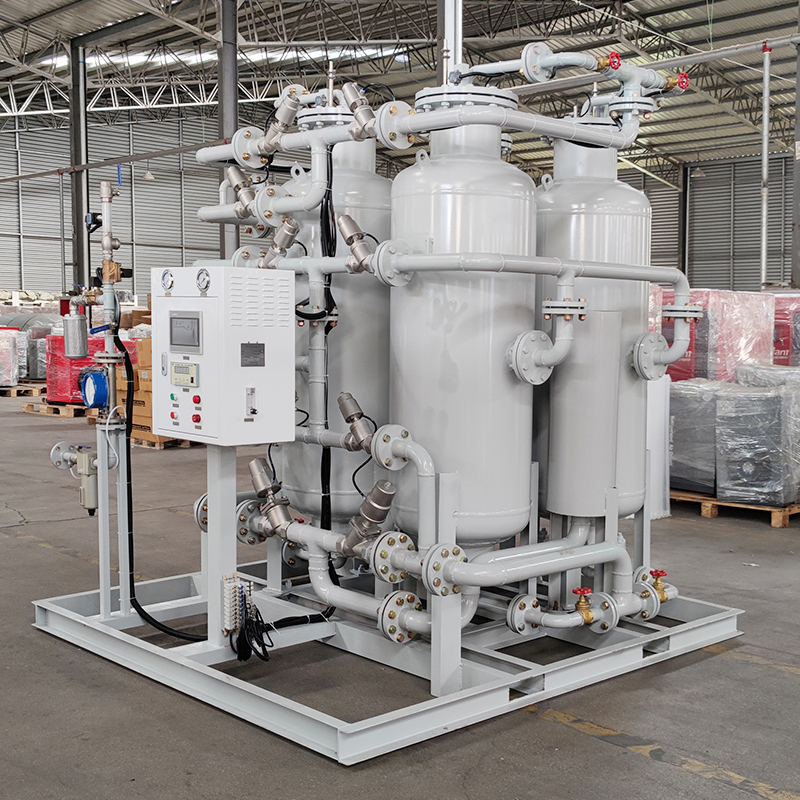
PSA (pressure swing adsorption) nitrogen generator is a common nitrogen production equipment. It removes oxygen from the air through pressure changes and the selection of adsorbents to collect nitrogen. During long-term operation, PSA nitrogen generators may have various faults, affecting the normal operation of the equipment and the production quality of nitrogen. The following is a detailed summary and analysis of common faults of PSA pressure swing adsorption nitrogen generators:
1. Incomplete exhaust and abnormal pressure
1. Leakage of one-way valve
Fault phenomenon: High-pressure gas reflux, resulting in a decrease in nitrogen purity and high pressure in the tower.
Cause of failure: The sealing performance of the one-way valve is reduced.
Solution: Check the wear of the one-way valve and its internal sealing ring, replace the damaged parts in time, and ensure the one-way flow of gas.
2. The back-blowing valve is opened too much
Fault phenomenon: Insufficient exhaust and reduced nitrogen purity.
Cause of failure: The back-blowing valve is opened too much.
Solution: Appropriately adjust the opening degree of the back-blowing valve to ensure the appropriate exhaust volume, and regularly check the wear of the back-blowing valve and replace damaged parts in time.
3. Pressure sensor failure
Failure phenomenon: The equipment pressure display is inaccurate or no pressure display.
Failure cause: The pressure sensor is damaged or malfunctioning.
Solution: Check and replace the faulty pressure sensor to ensure accurate pressure display.
4. Pipeline blockage or leakage
Failure phenomenon: Abnormal pressure, decreased nitrogen purity.
Failure cause: Impurities or leaks in the pipeline.
Solution: Clean the pipeline blockage, use a leak detector or soapy water to detect and repair the leak, and ensure smooth gas flow.
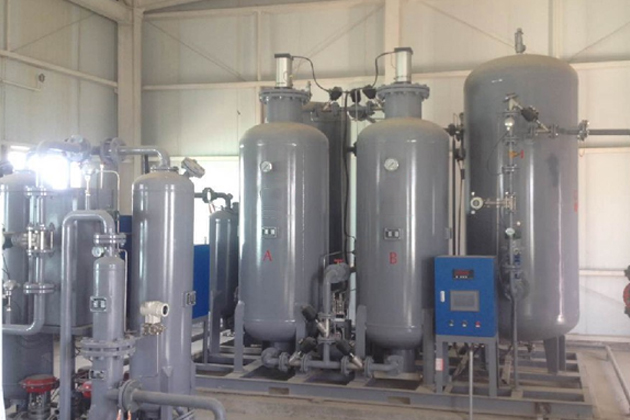
2. Nitrogen purity alarm
1. Unstable adsorption pressure
Failure phenomenon: Nitrogen purity fluctuates greatly.
Failure cause: The adsorption pressure is too high or too low, or unstable.
Solution: Adjust the intake pressure to the appropriate range, usually between 0.6 and 0.8 MPa; install an air storage tank at the inlet to stabilize the gas supply pressure.
2. Poor gas source quality
Failure phenomenon: Nitrogen purity decreases.
Failure cause: Too much water or oil in the gas source.
Solution: Check the operation of the cold dryer and the condition of the filter element, and replace the filter element regularly; if necessary, install an oil-water separator to ensure that the gas source is dry and pure.
3. Adsorbent failure
Failure phenomenon: Nitrogen purity continues to decrease.
Failure cause: Adsorbent poisoning, powdering or failure.
Solution: Replace the adsorbent regularly to ensure its adsorption performance; at the same time, pay attention to the protection and maintenance of the adsorbent to avoid contamination or damage.
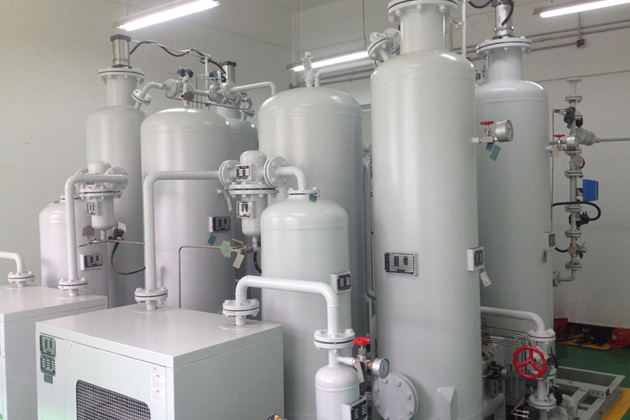
3. Automatic shutdown failure
1. Power failure
Failure phenomenon: The equipment suddenly stops and the power indicator light is off.
Failure cause: The fuse is blown or the power plug or socket has no power.
Solution: Check whether the fuse is normal. If it is blown, it needs to be replaced in time; check whether the power plug and socket have power. If there is no power, check the power line.
2. PLC failure
Failure phenomenon: The equipment stops and the display alarms.
Failure cause: PLC program error or hardware failure.
Solution: Determine whether the PLC is faulty by the alarm code on the display screen. If necessary, ask maintenance personnel to detect and repair or replace the PLC.
IV. Operation and control failure
1. Controller failure
Failure phenomenon: The equipment cannot start or runs abnormally.
Failure cause: The internal program of the controller is wrong or the hardware is damaged.
Solution: Check and replace the controller to ensure its normal operation.
2. Electrical wiring problem
Failure phenomenon: The equipment runs unstably or cannot start.
Failure cause: The electrical wiring is loose or damaged.
Solution: Reconnect the electrical wiring to ensure that the wiring is firm and reliable; check whether the electrical circuit is damaged, and replace it in time if it is damaged.
V. Other common faults
1. Insufficient air intake
Failure phenomenon: Low nitrogen production and slow pressure rise.
Failure cause: The air intake valve is not fully opened or the air supply is insufficient.
Solution: Open the air intake valve and increase the flow input of the air source; ensure that the air supply is stable and sufficient.
2. Noise or vibration problem
Failure phenomenon: Noise or vibration is generated when the equipment is running.
Cause of failure: loose or damaged equipment parts.
Solution: Check and repair equipment parts to ensure normal operation; tighten loose parts and replace damaged parts.
3. No display on the display board
Fault phenomenon: The display board does not respond after the equipment is turned on.
Cause of failure: power failure, loose circuit plug-in or damaged display screen.
Solution: Check whether the power supply is normal; check whether the circuit plug-in is firmly plugged in; if the display screen is damaged, replace it with a new one.
In summary, PSA pressure swing adsorption nitrogen generator may encounter various faults during operation. In order to ensure the normal operation of the equipment and the production quality of nitrogen, the operator should regularly maintain and service the equipment to promptly detect and eliminate potential faults. At the same time, the operator should also be familiar with the structure and working principle of the equipment, master the judgment and solution of common faults, so that measures can be taken quickly to deal with the equipment when it fails.
Request a Quick Quote Now
Shanghai Sollant Energy Saving Technology Co., Ltd.
Drawing on our years of experience and expertise in air separation and PSA technologies, we deliver customized solutions tailored to your specific needs.
